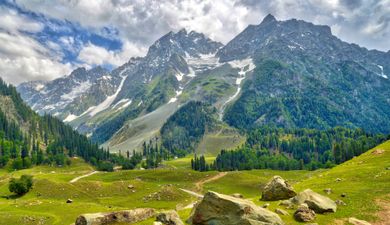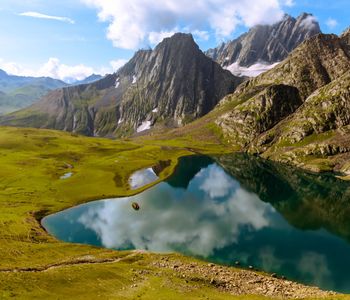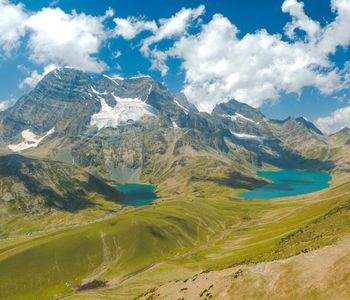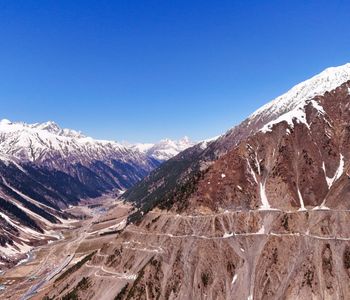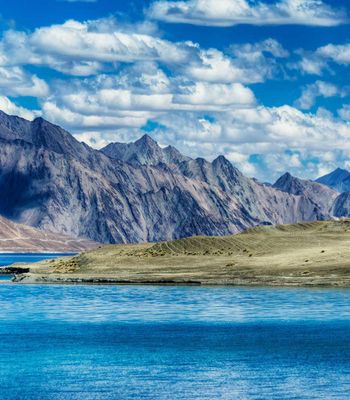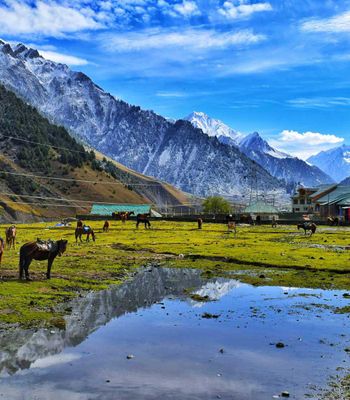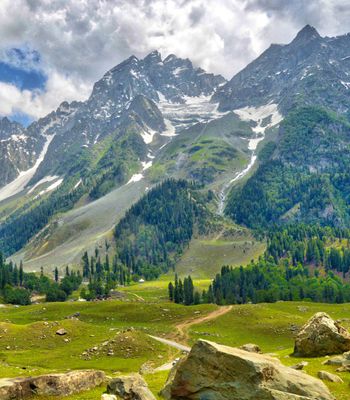
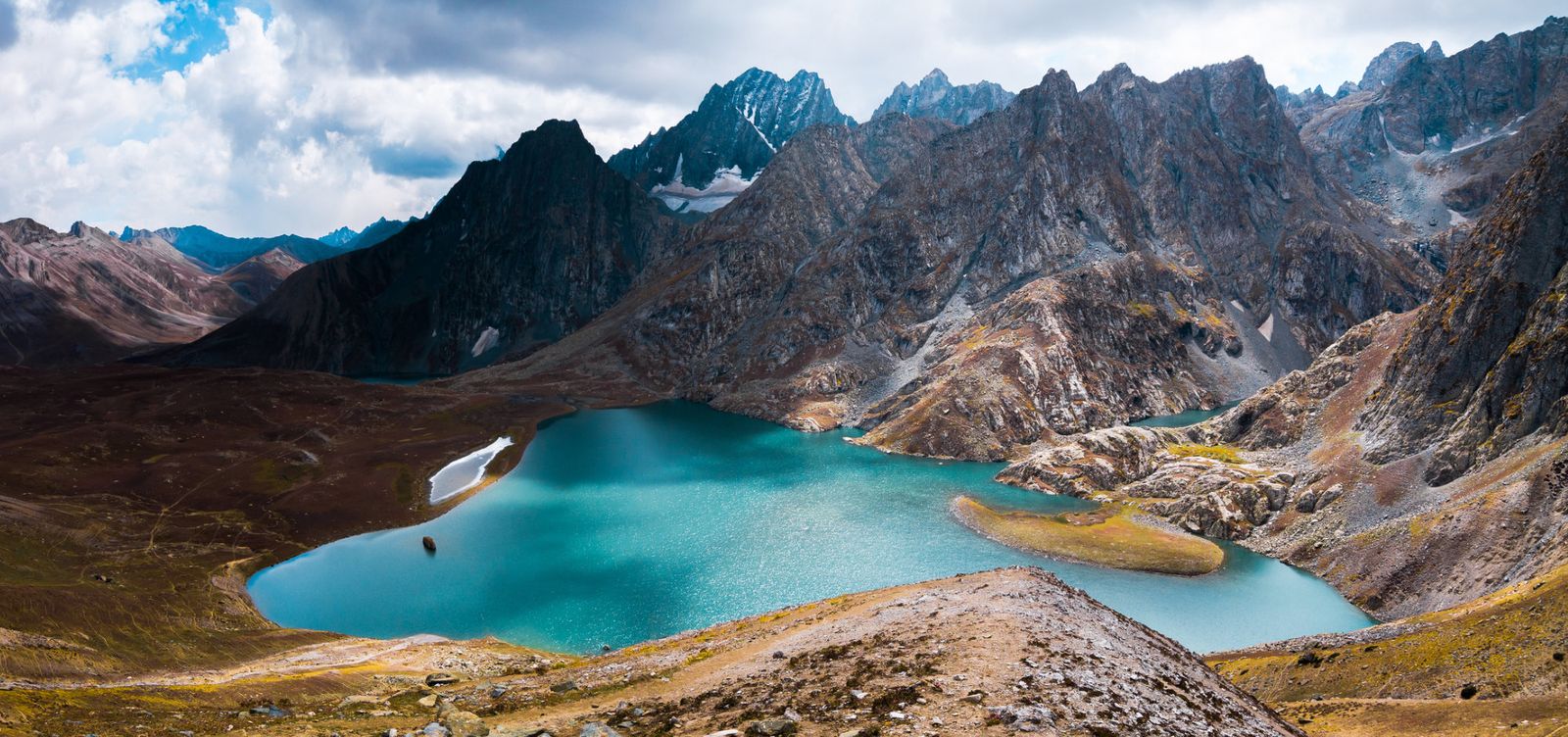
At roughly 12,000 feet above sea level, Krishnasar Lake occupies a high-altitude meadow above Sonamarg where the air turns thin enough to notice with every breath and sound behaves strangely — conversations drop to murmurs, footfalls land soft as whispers. The wind carries a metallic chill even in July. The water itself, glacial and impossibly clear, reflects the surrounding snowfields with such fidelity that the surface seems to vanish, leaving you staring into an inverted mountain range. This isn't a lake you visit for recreation. There are no boat rides, no vendors selling chai at the shore. Krishnasar rewards the effort of reaching it with something rarer than a good photograph: genuine stillness. The trek required to get here — a proper one — filters out the casual crowd, leaving the lake to those willing to work for it.
The Trek That Sorts You Out
The walk to Krishnasar covers approximately 9 to 10 kilometers from Sonamarg, gaining serious elevation across alpine meadows, rocky moraines, and snowbound ridgelines. Most trekkers start at the Sonamarg base and follow the trail toward Vishansar Lake, with Krishnasar appearing first — the closer of two glacial lakes sharing this basin. The path won't test your technical climbing skills. Altitude, though, will humble you. By the halfway point, your lungs have started filing formal complaints.
Hire a local guide. Don't debate this. Trail markers grow sparse once you leave the initial meadows, and afternoon fog drops without announcement, shrinking visibility to a few meters. Ponies are available from Sonamarg for sections of the route, but the final approach to the lake demands your own two feet across uneven ground. Budget a full day for the round trip — rushing this trek earns you nothing but exhaustion and regret.
Water Like Polished Glass
Here's what the photographs won't tell you: Krishnasar is most beautiful when the sky is overcast. On grey mornings, the water deepens to a steely blue-green that looks almost manufactured, as if someone tipped pigment into the basin. Bright sunshine, while pleasant on the skin, flattens everything and turns the surface into a blinding mirror. Photographers who've made this trek more than once tend to pray for the moody days, when the surrounding peaks emerge and dissolve behind clouds, giving the lake an atmosphere that no amount of post-processing can manufacture.
Glacial melt from the Thajiwas range feeds the lake, which explains both its startling clarity and its temperature. Dip a hand in and you'll feel an immediate ache crawl through your fingers. Swimming is neither advisable nor, frankly, tempting. The lakebed shows itself in the shallows — pale stones arranged in loose patterns by current, with occasional patches of dark sediment that shift the water's color from teal to ink.
The Twin Lake Nobody Mentions First
Krishnasar and its neighbor Vishansar are often spoken of together, connected by a narrow stream threading through a rocky channel. Most trekking itineraries treat Krishnasar as a waypoint on the path to Vishansar, which is larger and tends to dominate the photographs. This is a mistake. Krishnasar has a more intimate scale — its shoreline curves inward, forming a natural amphitheater of rock and snow. You can sit at one end and take in the entire lake without turning your head. That containment gives it a meditative quality that the broader Vishansar, for all its grandeur, simply doesn't possess.
The stream between them deserves a pause of its own. Cold water runs fast over smooth stones, and in July and August the banks on either side carry a carpet of short alpine grass stitched through with wildflower clusters. Walking from one lake to the other takes about 30 to 40 minutes, and this stretch ranks among the most striking passages of the entire Kashmir Great Lakes trek.
When the Mountains Allow It
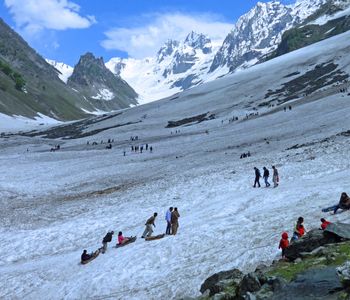
The window is narrow. Snow seals the route from October through May, and even in June the trail can turn treacherous where residual ice lingers on shaded sections. July through September offers the most reliable conditions — though "reliable" in the high Himalayas deserves permanent quotation marks. Afternoon thunderstorms roll through regularly in August, which makes early morning starts less a suggestion than a survival strategy.
Temperatures at the lake hover between 5 and 12 degrees Celsius during the trekking season, then drop hard after sunset. Layered clothing isn't optional. A waterproof outer shell earns its weight several times over when clouds break apart without warning. And here's the detail that catches people off guard: at this altitude, sunburn strikes fast even under grey skies. High-SPF sunscreen belongs in your daypack right next to the extra socks and emergency snacks.
What You Need to Know Before You Commit
Sonamarg serves as the staging point, sitting roughly 80 kilometers northeast of Srinagar along National Highway 1. Shared taxis and buses cover the route from Srinagar, and the drive takes about three hours — sometimes longer, depending on military convoy schedules that periodically halt civilian traffic on this strategic highway. Accommodation in Sonamarg ranges from basic guesthouses to more comfortable hotels, but don't arrive expecting luxury. The town exists as a gateway to the mountains, and its infrastructure says so plainly.
For the trek, arrange a guide and any pack animals through local operators in Sonamarg. Permits aren't currently required for the Krishnasar-Vishansar route specifically, though this can shift with security conditions in the Kashmir region. Check with local authorities before locking in dates. Carry your own water purification — the stream water looks pristine, but glacial runoff can carry fine sediment that wages quiet war on lowland stomachs.
There are no facilities at the lake. No restrooms, no shelters, no mobile signal. Whatever you carry in, you carry out. This absence of infrastructure is precisely the point.
More Than a Destination
Krishnasar Lake doesn't photograph as dramatically as some of Kashmir's more celebrated landscapes. It won't trend on social media with the same velocity as a manicured Mughal garden or a well-lit palace. What it offers instead is an experience that accumulates slowly — the burn in your calves on the ascent, the thinning air that forces you to breathe with deliberation, and then the sudden reveal of that impossible water sitting quietly in its stone basin, unchanged by centuries of visitors and thoroughly indifferent to your arrival. The lake doesn't perform. It simply exists, at an altitude where performance feels beside the point. That rare honesty, earned through kilometers of effort, is what makes the return trek feel lighter than the approach.