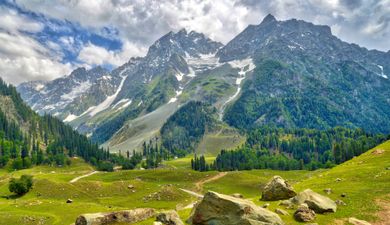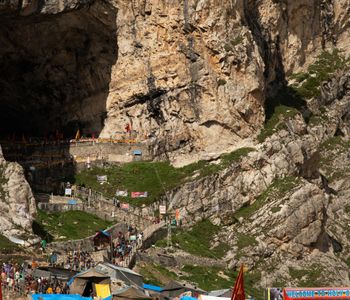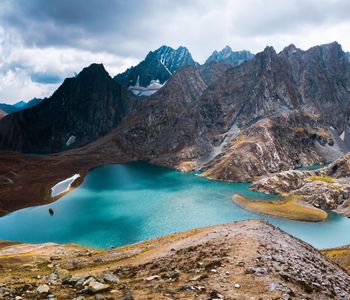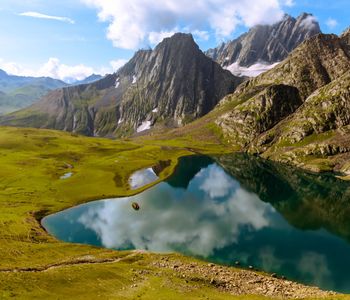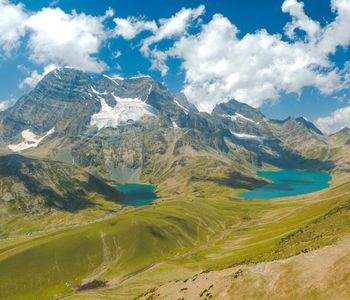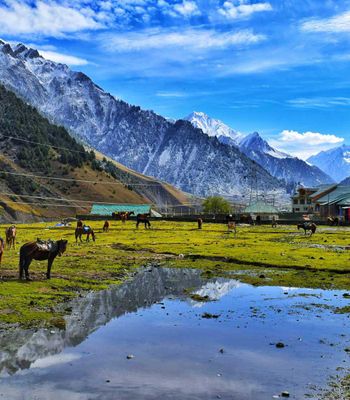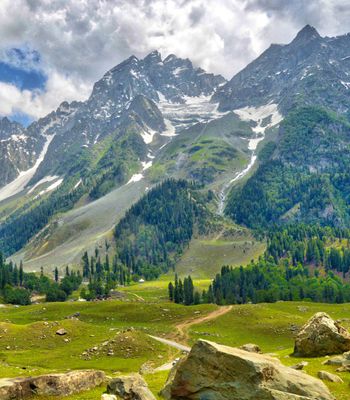
At 11,575 feet, the wind doesn't whisper across Zoji La — it shoves. This narrow mountain pass on National Highway 1 connects the Kashmir Valley to Ladakh, and in doing so, it cleaves two entirely different landscapes, climates, and ways of being alive. On one side, the green, rain-fed meadows of Sonamarg. On the other, the stark, arid moonscape of Drass and the long road onward to Leh. The transition happens in less than nine kilometers — one of the most violent geographical pivots you'll experience from the seat of a vehicle anywhere on Earth.
Zoji La isn't a destination in any traditional sense. Nobody lingers here. You cross it, and if you're lucky, you cross it without incident. But the passage itself — harrowing, raw, unforgettable — is precisely what makes it worth writing about.
A Road That Has Earned Every Story Told About It
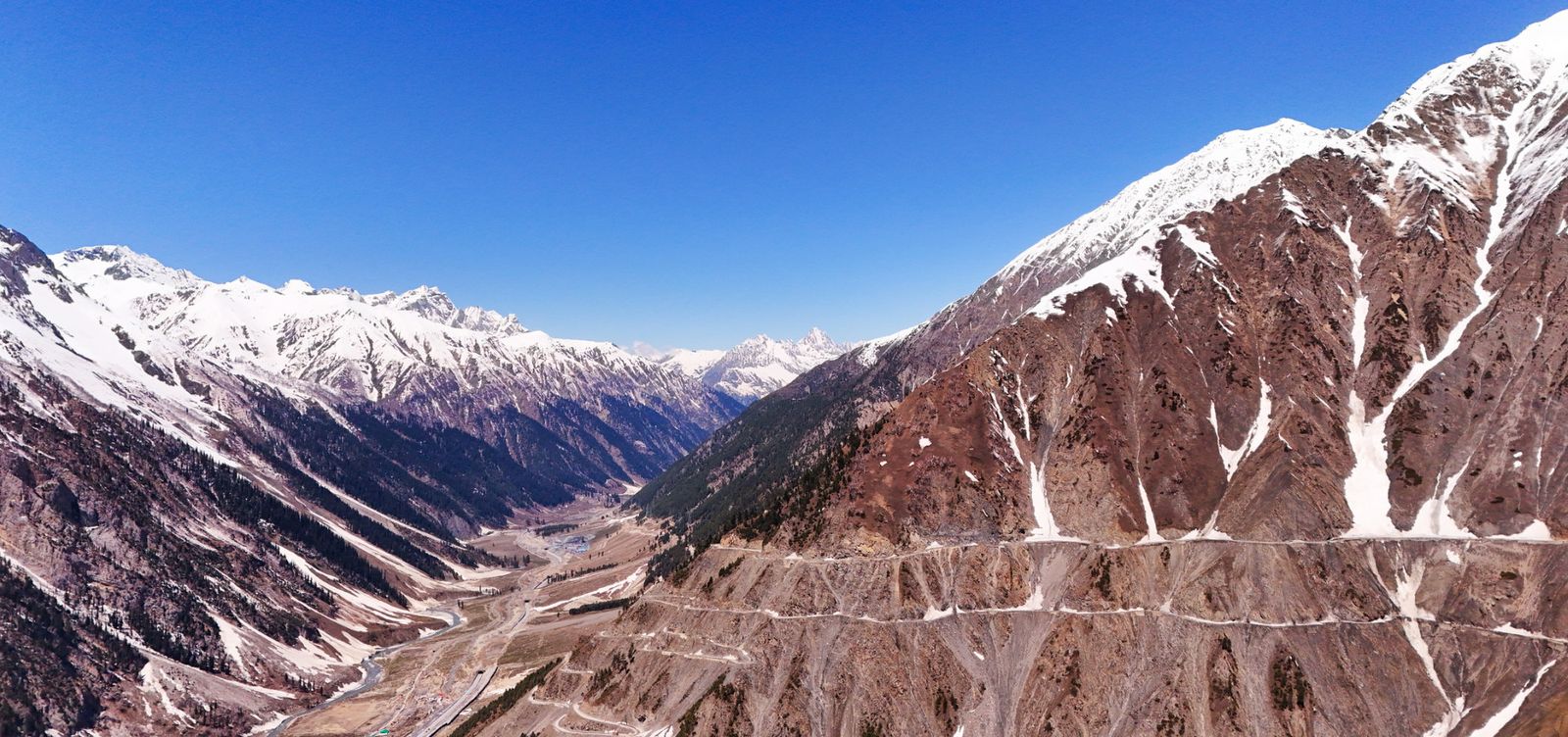
Forget smooth asphalt. For much of its length, Zoji La is an unpaved, single-lane track carved into the mountainside. During the crossing season, roughly May through November, the surface alternates between loose gravel, packed dirt, and stretches of mud thick enough to swallow a tire halfway. Military convoys share the route with civilian traffic, and when two vehicles meet head-on at a blind curve — which happens more often than anyone would like — one of them reverses until a passing point appears. Sometimes that's a very long way back.
The Indian Border Roads Organisation maintains the pass, and their crews work through brutal conditions to keep it passable. Rockslides and avalanche debris get cleared with heavy machinery, often within hours. Still, delays of two or three hours aren't unusual. Patience here isn't a virtue. It's a survival skill.
What catches most travelers off guard is the silence between the engine noise. When your vehicle stops — for a convoy, a landslide, a flock of sheep being driven across the road — you step out into thin, cold air and hear almost nothing. No birds. No traffic hum. Just wind scraping across bare rock, and the faint, distant rumble of a waterfall fed by snowmelt you can't quite locate.
Where the Map Lies About Difficulty
Here's the counterintuitive thing about Zoji La: it isn't especially high by Himalayan standards. Passes in Ladakh like Khardung La and Chang La sit thousands of feet above it. Yet Zoji La is widely considered more dangerous than either. The reason is plain: those higher passes have paved roads. Zoji La does not. Altitude alone doesn't define difficulty in these mountains — infrastructure does, and here, infrastructure barely exists.
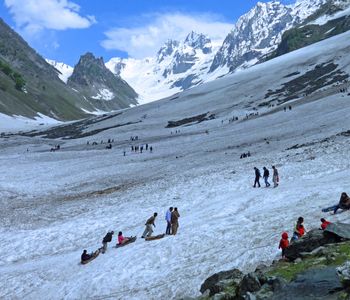
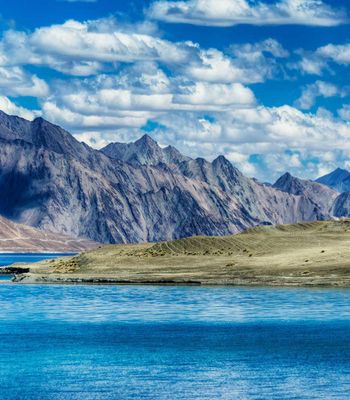
As you ascend from the Sonamarg side, the landscape holds its green for a while. Pine trees thin out gradually, giving way to scrub grass and patches of snow clinging to north-facing slopes even in July. Then the vegetation disappears entirely. The rock turns grey-brown, exposed and angular, as though the mountain shrugged off its topsoil and decided to show you what it's actually made of.
Cresting the pass, you'll notice the light change before anything else. Kashmir's soft, filtered haze gives way to a sharp, almost metallic clarity — Ladakhi sky, unmistakable once you've seen it. The air sits differently in your lungs: drier, thinner, carrying a faint mineral edge. It's the kind of shift that makes you understand why ancient traders considered mountain passes to be thresholds between realms, not just geography.
The Weight of Every Army That Passed This Way
Zoji La has served as a critical passage for centuries, connecting the Kashmir Valley to Central Asia's trade routes. Merchants, armies, and monks all funneled through this narrow gap in the Great Himalayan Range. During the Indo-Pakistani War of 1948, Indian forces recaptured the pass in a pivotal operation that secured the land route to Ladakh. Military markers and memorials along the approach road acknowledge this history without fanfare — small stone plaques set against enormous, indifferent landscapes.
The strategic importance hasn't faded. India's ongoing construction of the Zoji La Tunnel, a 14.15-kilometer passage that will bypass the pass entirely, aims to provide all-weather connectivity between Srinagar and Leh. Once completed, the tunnel will eliminate the seasonal closure that isolates Ladakh for nearly half the year. For the communities on the Drass side, who endure some of the coldest inhabited temperatures on the planet, this isn't a convenience project. It's a lifeline.
How to Cross Without Losing Your Nerve
Timing matters enormously. The pass typically opens in late May, though the exact date depends on snowfall and clearance operations. By late October or early November, it closes again. June and September tend to offer the most stable conditions. July and August bring monsoon moisture from the Kashmir side, which translates to fog, rain, and roads that turn to something closer to rivers.
Start early. Most experienced drivers leave Sonamarg by 6 a.m. to cross before midday traffic and military convoys choke the route. The drive from Sonamarg to the top of the pass covers roughly 15 kilometers but can take anywhere from one to four hours depending on conditions. Carry water, snacks, and a warm layer regardless of the season — temperatures at the pass can drop sharply even on a sunny afternoon.
Motion sickness is common. The switchbacks are tight, the surface uneven, and the drop-offs on the outer edge lack guardrails in many sections. If you're prone to nausea, sit in the front seat, keep your eyes fixed on the horizon, and take medication before you begin the ascent. Your driver will likely be a local who has made this crossing hundreds of times. Trust that driver. Don't watch the edge.
What Disappears When the Tunnel Arrives
When the Zoji La Tunnel eventually opens, the pass road may fall into disuse. That transformation will make Ladakh accessible year-round, reshape regional economics, and end the annual isolation that defines life in Drass and Kargil. It will also mean that fewer travelers experience this crossing as it has existed for centuries — exposed, unpolished, and entirely at the mercy of weather and geology.
There's something worth sitting with in that. Modern infrastructure improves lives, and no one who has waited days for the pass to reopen would argue otherwise. But the raw, unmediated encounter with the Himalayas that Zoji La forces upon you — the kind where the mountain doesn't accommodate you, and you simply cope — is increasingly rare on India's major routes. Soon it may not exist here at all.
The Crossing That Rearranges Your Map
Zoji La doesn't reward you with manicured viewpoints or souvenir shops. It rewards you with the unshakable memory of a landscape so indifferent to human comfort that crossing it feels like an accomplishment, even from a passenger seat. The moment you descend into the Drass Valley and see that vast, treeless expanse crack open before you, something in your understanding of the subcontinent permanently shifts. This is where India changes its mind about what it wants to be. Drive through it while the road still exists as it is — unmarked, unpaved, and entirely itself.