At nearly 8,780 feet above sea level, where barren granite peaks crack open to reveal terraced orchards heavy with golden apricots, Kargil stops you in your tracks. Most travelers blow through this rugged mountain town — a brief pause on the Srinagar-Leh highway, a night in a guesthouse, and gone by dawn. That's a mistake. Linger here, and you'll find something rare: a place where Tibetan, Balti, and Purig traditions converge along the banks of the glacier-fed Suru River, where the call to prayer echoes off canyon walls, and where the weight of centuries — from ancient Silk Road caravans to India's modern military history — settles into every stone. Kargil is Ladakh's second-largest town, but it feels like its best-kept secret.
A Crossroads Forged by Conflict and Commerce
Long before borders were drawn on maps, merchants hauled silk, wool, and precious cargo through this valley, their caravans linking Kashmir to Central Asia. Kargil wasn't just a waypoint — it was a prize. Rulers fought over it for centuries until the Dogra dynasty folded it into the princely state of Jammu and Kashmir in the 1800s.
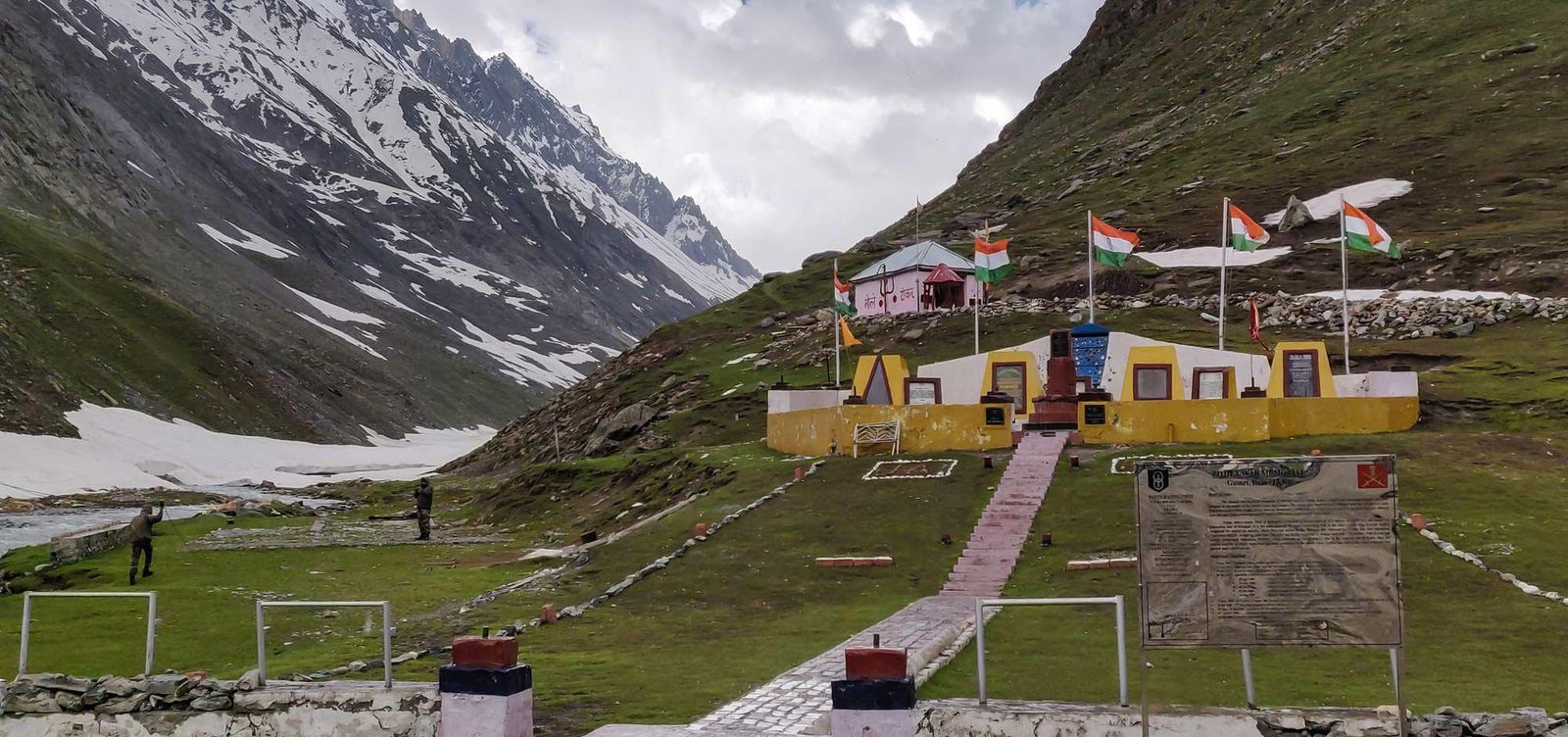
Then came 1999, and the world learned Kargil's name overnight. Pakistani soldiers seized strategic peaks overlooking the town, and the Indian military launched a fierce campaign through May and July to reclaim them. The scars of that conflict have faded from the mountainsides, but the memory endures at the Kargil War Memorial in Dras, about 60 kilometers away. Stand before those inscribed stone tablets, wind whipping across the plateau, and the silence hits harder than any documentary ever could. You read names, ranks, ages — many of them heartbreakingly young — and the imposing ridgelines above suddenly carry a different kind of gravity.
Where Minarets Meet the Mountains
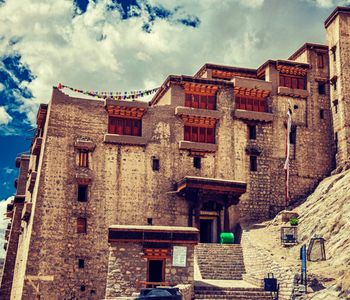
Forget everything you assumed about Ladakh being synonymous with Buddhist monasteries and prayer flags. Kargil's population is largely Shia Muslim, and that distinction reshapes the entire atmosphere. Minarets rise alongside traditional stone-and-timber houses that cling to the hillsides like stacked dice. The rhythm of daily life revolves around the mosque, not the gompa.
Visit during Muharram, and the narrow streets transform into rivers of solemn procession — chanting voices, black banners, a community bound together in shared remembrance. It's deeply moving, even for outsiders, and offers a perspective on Ladakh that most itineraries skip entirely.
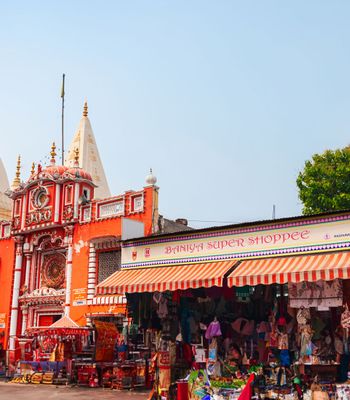
Wander into the central bazaar and you'll hear Purgi — a language braided from Tibetan and Balti roots — mingling with Hindi and Urdu in a lively linguistic tapestry. Shopkeepers don't just sell you things here; they pull up a stool and press a cup of noon chai into your hands, that distinctive pink salt tea warm and slightly savory, while stories about the town's past tumble out with genuine pride.
A Landscape That Doesn't Believe in Subtlety
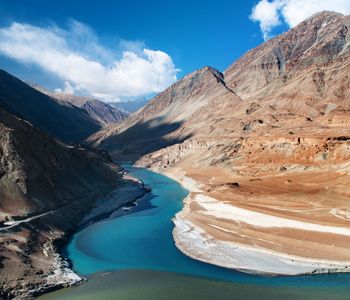
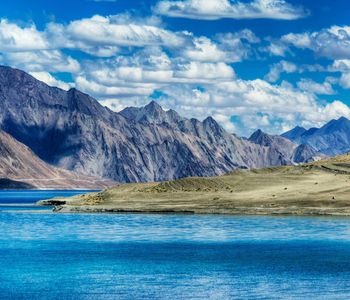
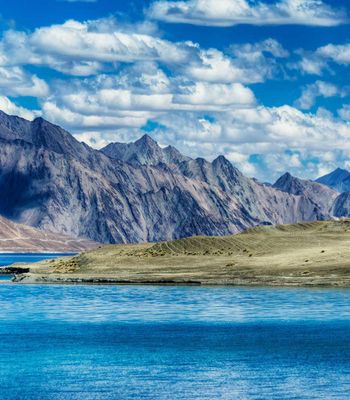
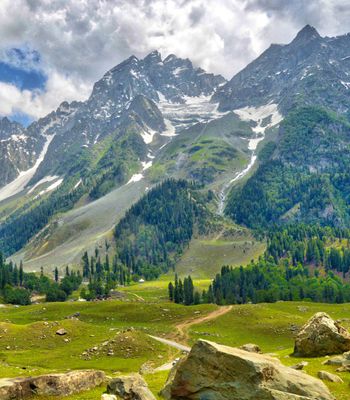
Kargil's terrain operates at full volume. Peaks exceeding 15,000 feet wall in the town on every side, their flanks stripped bare by wind and time, streaked in shades of rust, charcoal, and bone white. Below, the Suru River carves a lifeline through the valley floor, feeding terraced fields of barley and wheat — and those legendary apricots.
July and August bring the harvest, and suddenly rooftops across town blaze orange with drying fruit. The sweet, sun-concentrated smell drifts through every alley. Kargil's apricots rank among India's finest, and biting into one fresh off the branch — still warm from the afternoon sun, impossibly fragrant — is enough to ruin supermarket stone fruit for you forever.
Into the Suru Valley
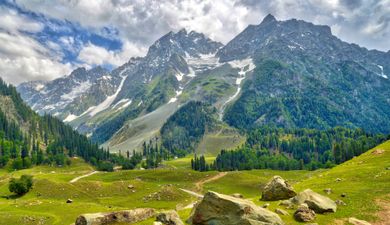
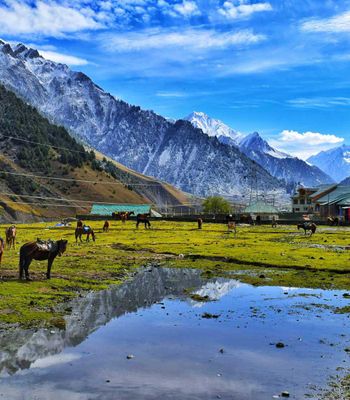
Head south from town, and the landscape exhales. The Suru Valley unfurls like a green carpet between the riverbanks, impossibly lush against the surrounding austerity. Dominating the horizon, the twin peaks of Nun and Kun pierce the sky — Nun topping out above 23,000 feet, the highest summit in the former Jammu and Kashmir state.
Serious mountaineers use Kargil as base camp before multi-day expeditions into this corridor. But you don't need ropes and crampons to soak it in. Day hikes along the Suru River deliver views so staggeringly beautiful they feel almost confrontational — like the mountains are daring you to look away.
Life Among the Rocks and Sky
Don't let the arid moonscape fool you. Wild roses bloom in sheltered crevices. Junipers grip the slopes with stubborn tenacity. Willows trace green lines along every waterway. Above it all, golden eagles and lammergeiers ride thermals in lazy spirals, their wingspans casting shadows across the ridgelines, while Himalayan magpies flash blue-black between boulders below.
Scramble to higher ground on a trekking trail and you might catch a marmot sunning itself on a flat rock, whiskers twitching, utterly unbothered by your presence. Because Kargil sees far fewer tourists than Leh, the wildlife here hasn't learned to scatter at the sound of a shutter click.
Where Every Side Road Leads Somewhere Extraordinary
Quiet as the town may seem at first glance, the surrounding region pulses with possibility. Drive up to Munee-la Pass on a clear morning and the panorama cracks open — Himalayan and Karakoram ranges stretching to the edge of vision, jagged summits stacked behind jagged summits, valleys dropping away into blue shadow.
Scattered along old trade routes near town, ancient rock carvings tell a story most visitors never expect. These petroglyphs — etched into weathered boulders centuries ago — depict animals, stupas, and human figures from Kargil's Buddhist past, long before Islam arrived. Run your fingers near the grooves (without touching, of course) and feel the sheer depth of time embedded in this landscape. Cultural tides have surged back and forth across these mountains for millennia, and the proof is literally carved in stone.
For the deepest immersion, arrange a homestay in a nearby village like Panikhar or Parkachik. Sit cross-legged on a carpeted floor while your host family ladles out steaming bowls of thukpa and plates of skyu — hearty, warming dishes built for high-altitude living — followed by fresh apricot jam so intensely flavored it barely resembles anything you've tasted from a jar. These meals aren't just food. They're invitations into a way of life.
Getting There: Two Unforgettable Drives
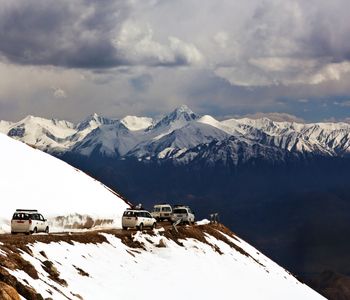
Every route to Kargil earns its keep in scenery. From Srinagar, the 205-kilometer drive follows National Highway 1 through the emerald meadows of Sonamarg before climbing to Zoji La, a mountain pass perched at roughly 11,575 feet. This stretch is white-knuckle gorgeous — hairpin turns, sheer drops, and snowfields that linger well into summer. Heavy snowfall closes Zoji La from late November through May, so time your trip accordingly.
Coming from Leh, the 220-kilometer route threads through Lamayuru's lunar landscape and over Fotu La pass, delivering one jaw-dropping vista after another. Whichever direction you choose, keep your camera within arm's reach — not buried in your bag. You'll regret it otherwise.
No commercial flights serve Kargil yet, though a military airstrip exists. Your nearest civilian airports sit in Srinagar and Leh. During summer months, government-operated buses run the Srinagar-Kargil route, and private taxis or shared vehicles depart regularly from both cities.
Before You Pack: What You Need to Know
June through September is your window. Roads are open, daytime temperatures hover between a comfortable 50 and 80 degrees Fahrenheit, and the valley shimmers in its greenest, most photogenic state. Winter? Brutal. Temperatures plunge well below zero, facilities shutter, and the town hunkers down beneath snow and silence.
Accommodation ranges from no-frills guesthouses to decent mid-range hotels and a handful of government-run properties. Because so many travelers pass through during peak season, rooms vanish fast — book ahead or risk scrambling. Meals along the main bazaar come cheap and satisfying: small restaurants dishing out Kashmiri and Ladakhi staples that fuel you for the road ahead.
One thing you can't afford to ignore: altitude. At 8,780 feet, your body notices. Drink more water than you think you need. Skip the ambitious hike on day one. Let yourself acclimatize — nap, stroll, sip tea. If you're driving in from Srinagar, the gradual elevation gain along the highway eases the transition naturally, which is one more reason that western approach works well for first-timers.
Kargil doesn't shout for attention. It doesn't need to. Beneath that highway-town reputation lies a place of staggering beauty, layered history, and the kind of warmth you only find in communities where hospitality isn't a tourism strategy — it's simply how people live. Give this town two or three days, explore its valleys, sit with its people, and you'll leave carrying a version of Ladakh that most travelers never get to know.