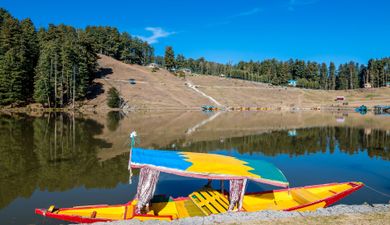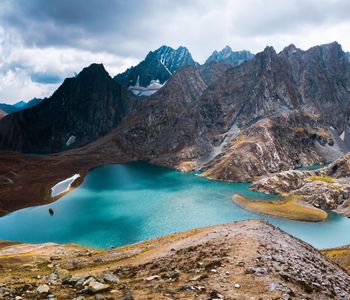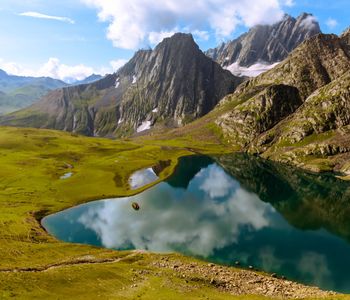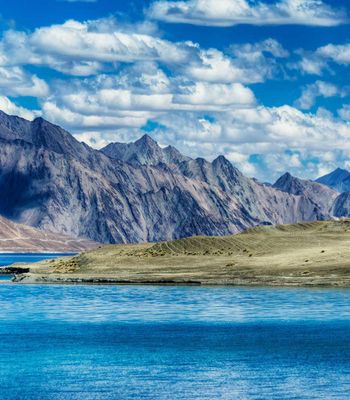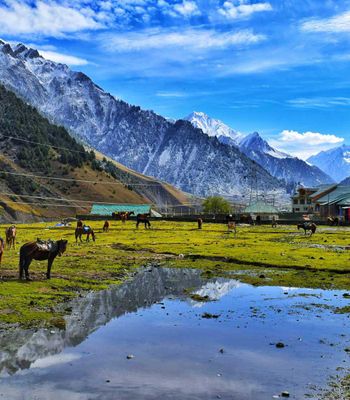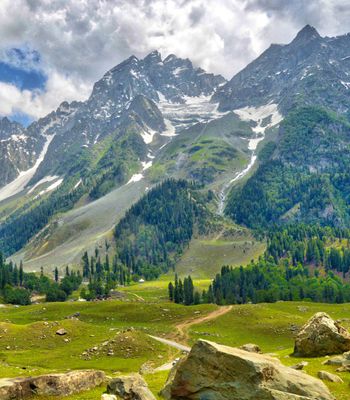
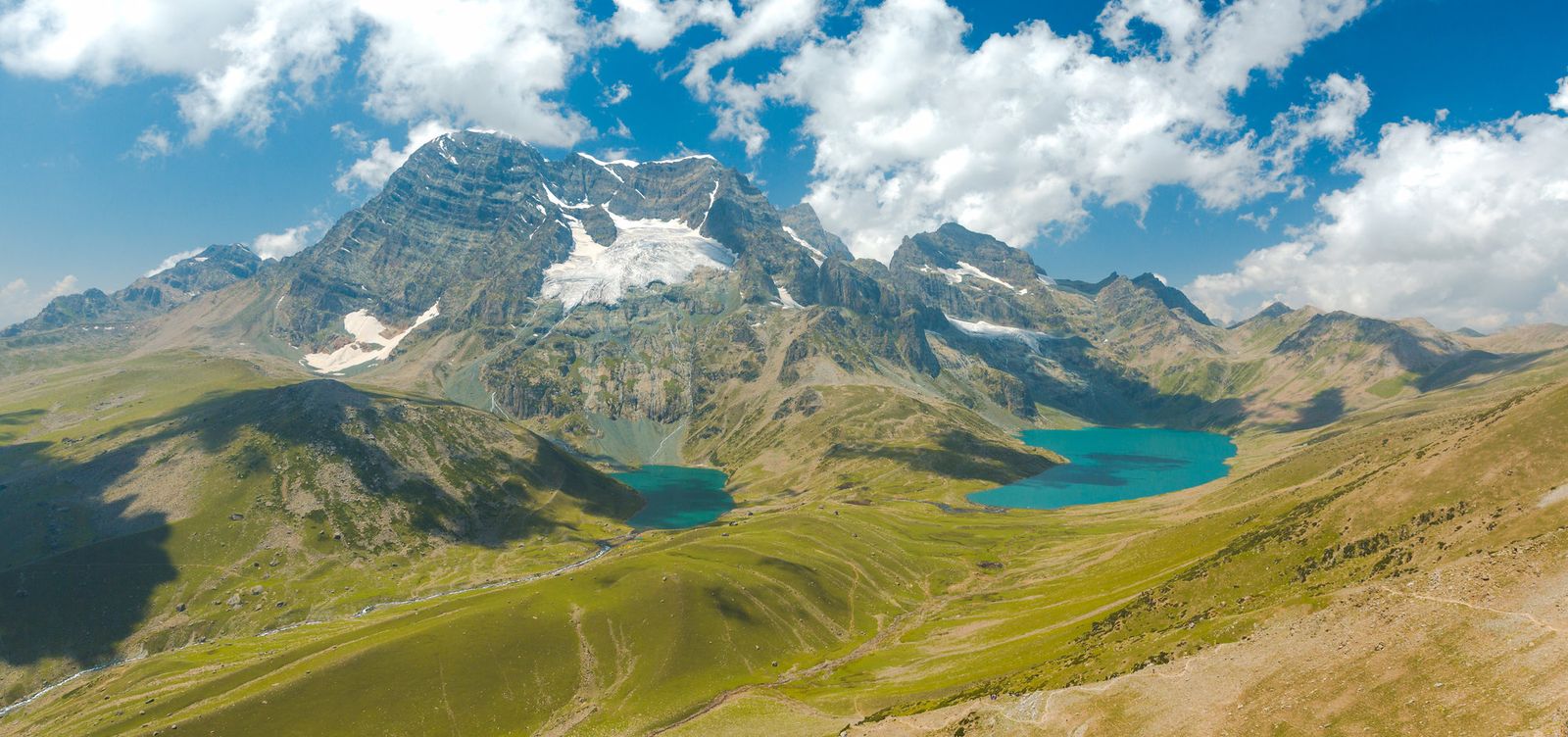
At roughly 11,500 feet above sea level, Gangabal Lake occupies a granite amphitheatre beneath the shoulders of Mount Harmukh, Kashmir's sacred peak. The water is so cold it aches against your skin, even in July. Fed entirely by glacial melt and snowfields that never fully retreat, the lake holds a particular shade of blue that photography consistently fails to render — somewhere between steel and sapphire, shifting with each cloud shadow and each brief interval of sun. This isn't a lake you stumble upon. Reaching it demands a trek of at least two days from Sonamarg, and that deliberate inaccessibility is precisely what keeps Gangabal honest. No vendors. No ticket counters. No guardrails. Just a high-altitude alpine lake doing what it's done for millennia — reflecting the indifference of the Himalayas back at anyone stubborn enough to show up.
A Trek That Earns Its Reward
The most popular route to Gangabal begins at Naranag, about 80 kilometers from Srinagar, and crosses the Nichnai Pass before descending toward the twin lakes of Gangabal and Nundkol. The trek covers roughly 35 kilometers over two to three days, depending on your legs and your willingness to push through afternoon weather that has its own agenda. The altitude gain is serious — you'll climb from about 7,500 feet at Naranag to the pass at over 13,000 feet before dropping to the lakeside.
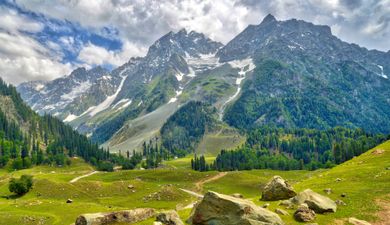
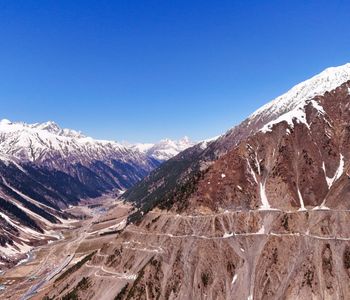
Don't underestimate the terrain. Lower stretches move through dense pine forest where the trail is soft and shaded, then the canopy vanishes and wide alpine meadows open up, scattered with wildflowers from June through August. Above the treeline, boulder fields replace grass. The path becomes less a trail and more a suggestion scratched across scree. A local guide isn't optional here — it's essential, not just for navigation but because weather at this altitude can pivot from clear sky to whiteout in under an hour.
Here's the counterintuitive thing about Gangabal: the difficulty of reaching it is actually its finest feature. By the time you crest the final ridge and see the lake spread below you, ringed by snow and grey rock, the exhaustion in your legs transforms. It becomes the price of admission — and you realize you'd pay it twice.
Sacred Water, Unspoken Rules
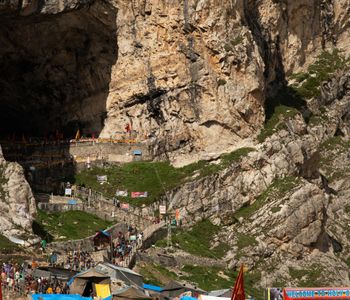
For Kashmiri Hindus, Gangabal holds deep spiritual weight. It's considered the final resting place for the souls of the departed — a belief rooted in centuries of tradition. Families have historically immersed the ashes of loved ones in its glacial waters, making it Kashmir's equivalent of the Ganges in spiritual function if not in scale. The annual Harmukh Ganga pilgrimage, smaller and less publicized than other Himalayan yatras, still draws devotees who trek to the shore to perform rituals where ice meets rock meets prayer.
This sacred dimension means you should approach the lake with a reverence that goes beyond normal trail etiquette. There are no signboards reminding you how to behave. The expectation is unspoken, which makes it more binding, not less. Leave nothing behind. Take nothing with you except the cold clarity of the water's edge still ringing in your memory.
Two Lakes, One Basin
What many first-time trekkers don't realize is that Gangabal isn't solitary. Its smaller twin, Nundkol Lake, sits just a short walk to the southwest, separated by a low rocky ridge. Nundkol is shallower and slightly warmer — "warmer" being a generous term at this elevation — and its emerald-green water contrasts sharply with Gangabal's deeper blue.
Walk The Ridge between them in the late afternoon. You'll witness something genuinely unusual: two bodies of water, fed by the same glacial source, holding completely different colours at the same moment. Geologists will tell you it's about depth and mineral content. What your eyes tell you feels closer to some quiet defiance of logic. Most trekkers camp near Nundkol, where the ground is flatter and slightly more sheltered from wind. Position your tent well and both lakes are visible — and at dawn, Gangabal's surface catches the first light a full ten minutes before Nundkol does, as if the larger lake were simply more impatient for morning.
When the Mountains Allow It
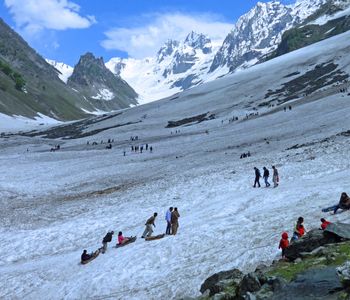
The trekking window for Gangabal runs from late June through mid-September, with July and August offering the most stable conditions. Stable, in Himalayan terms, means you'll probably get a few hours of clear sky each day before the clouds shoulder in. Early September brings crisper air and thinner crowds, but nighttime temperatures drop below freezing, and fresh snowfall on the passes can turn the route treacherous without crampons.
Avoid the monsoon's peak in early August if you can. Trails turn slick, river crossings swell to thigh-depth, and visibility shrinks to arm's length on bad days. Late July often provides the best balance — meadows at full bloom, snow on the passes retreated enough for safe crossing, and the lakes free of surface ice.
Regardless of when you go, pack for four seasons in a single day. Mornings start with frost on your tent. Midday sun at this altitude burns exposed skin in minutes. By 3 p.m., wind and cloud cover can drop the temperature twenty degrees. A good layering system matters more here than any single piece of gear.
Getting There and Getting Ready
Sonamarg, the gateway town, sits about 80 kilometers northeast of Srinagar along the Srinagar-Leh Highway. From there, most trekkers arrange transport to the trailhead at Naranag. Local outfitters in both Srinagar and Sonamarg organize guided treks that include ponies for gear, a cook, and tents. Budget between 2,500 and 4,000 rupees per day for a fully supported trek, depending on group size and season.
Going independent? Hire a guide through the Jammu and Kashmir tourism office or a reputable local agency. Ponies can be arranged at Naranag village, though availability fluctuates during peak season. Bring your own sleeping bag rated to at least minus ten degrees Celsius — rental gear in Srinagar exists, but quality varies wildly. No permits are currently required for the trek, though this could change. Check locally before setting out.
Acclimatization matters more than fitness here. Spend at least one night in Sonamarg or Naranag before starting the trek. Altitude sickness doesn't care how many marathons you've run, and Gangabal's elevation punishes overconfidence far more reliably than it rewards ambition.
The Lake That Stays With You
Gangabal isn't convenient. It doesn't offer comfort, easy access, or the reassurance of a well-worn tourist circuit. What it offers instead is rarer — an alpine lake that still belongs entirely to itself, framed by a peak considered holy, holding water cold enough to shock you into absolute presence. You'll carry sore muscles home. You'll carry the silence longer. Of all the lakes in Kashmir — and there are many worth your time — Gangabal is the one that asks the most of you and, precisely because of that, gives the most back.