Before the palaces came, before the white marble and the fairy-tale silhouettes that define Udaipur's skyline, there was just a man building a dam. In the late fourteenth century, a Banjara tribesman named Pichhu constructed an earthen dam across a natural depression to water his grain-carrying oxen. That modest act of irrigation became Lake Pichola — and when Maharana Udai Singh II arrived two centuries later and saw sunlight fracturing across its surface, he decided to build his entire capital around it. The lake didn't just precede Udaipur. It justified it.
Today, Lake Pichola stretches nearly four kilometers in length and three in width during a good monsoon year, its waters holding the reflections of some of Rajasthan's most recognizable architecture. But the lake itself, not the buildings along its banks, remains the real protagonist. Spend a morning on its water and you'll understand why a nomad's reservoir became a king's obsession.
A Lake That Never Looks the Same Twice
Lake Pichola is artificial, but it carries itself like something ancient and inevitable. The Aravalli Hills press in along its eastern and western edges, lending the whole thing a geological authority no engineer could fake. After the monsoon months — typically July through September — the lake fills to its maximum depth of roughly nine meters, and the water takes on a deep slate-green weight. By late spring, it can shrink dramatically. In severe drought years, sections have dried to cracked earth, the lakebed surrendered to goats and motorcycles.
This variability is part of its character. The lake you visit in October, swollen and generous, is an entirely different body of water from the one you'd encounter in May. Neither version is wrong. One shimmers. The other reveals.
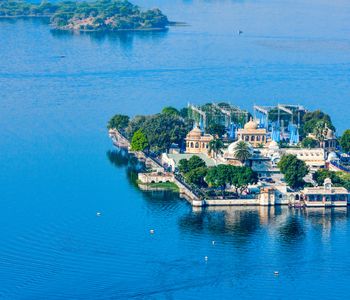
Four islands punctuate the surface, though only two matter to most travelers. Jag Niwas, now the Lake Palace Hotel, sits low and white on the water like a ship that forgot how to sail. Jag Mandir, its southern counterpart, rises with more muscular architecture — stone elephants flanking its entrance, their trunks raised in permanent greeting. Maharana Karan Singh sheltered the young Mughal prince Shah Jahan here during a rebellion, a detail that gains weight when you stand on the island's marble courtyard and realize how far the mainland feels.
What the Ghats Tell You
The lake's edges are defined by a series of ghats — stepped stone embankments that serve as laundry stations, bathing spots, and gathering places depending on the hour. Gangaur Ghat, on the eastern shore, is perhaps the most photogenic: pale stone steps descending into the water beneath the looming mass of The City Palace. During the Gangaur Festival in March or April, women in vivid saris carry decorated clay idols down these steps and release them into the lake. The rest of the year, the ghat belongs to local men slapping wet fabric against stone in a percussive rhythm that echoes off the palace walls above.
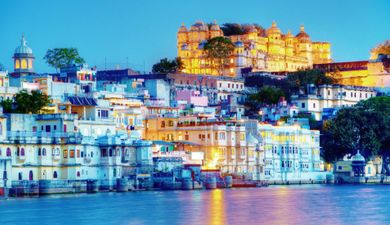
Ambrai Ghat, on the western bank, offers the superior vantage point. From here, you face the City Palace, the Lake Palace, and Jag Mandir simultaneously — all three reflected in the water if the wind cooperates. Sunset from Ambrai is genuinely spectacular, though you won't be alone in thinking so. The adjacent restaurant fills quickly, and tripods appear along the ghat's edge a full hour before the light turns gold.
On the Water, Not Just Beside It
A boat ride on Lake Pichola isn't optional — it's the experience itself. The municipal boat service operates from Rameshwar Ghat, near the City Palace, and the standard route takes you past both islands with a stop at Jag Mandir. Tickets run around 400 rupees for adults, though prices shift seasonally. The ride lasts roughly an hour.
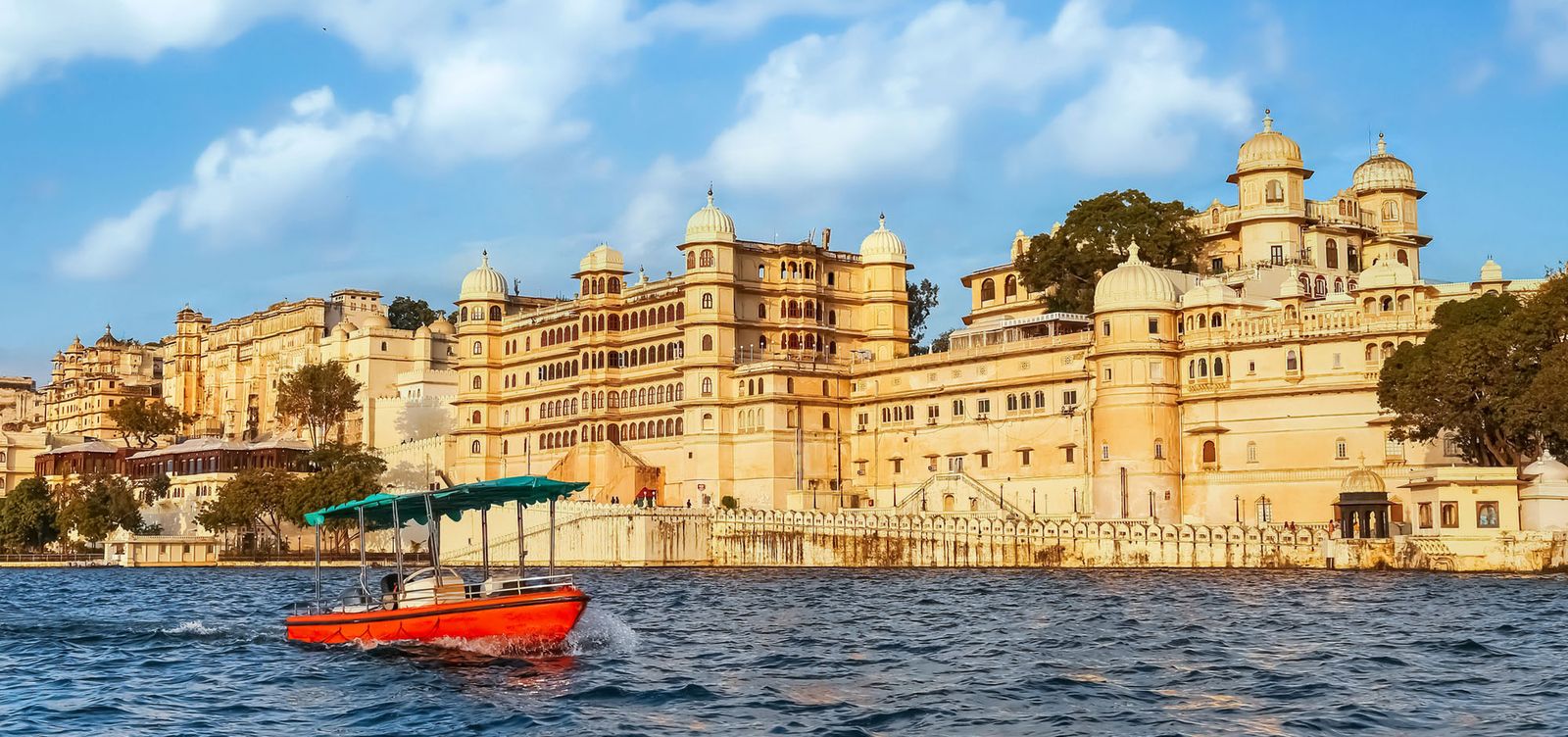
Morning departures, particularly around eight o'clock, give you the cleanest light and the fewest passengers. Afternoon boats tend to be crowded, and the sunset cruise, while popular, can feel rushed as operators hustle to finish before dark. Here's the counterintuitive truth: the best time on Lake Pichola is actually mid-morning, when the haze has burned off but the harsh midday glare hasn't arrived. The palace facades look three-dimensional in that light — sculptural, weighted — rather than flat.
Private boats are available at a higher cost, and they let you linger. Drifting near the Lake Palace Hotel, you'll notice details invisible from shore — the carved marble screens along its lower level, the service boats ferrying linens and groceries to its kitchens. The hotel doesn't allow non-guests to disembark, which somehow makes it more alluring.
The Palace That Leans Toward Its Own Reflection
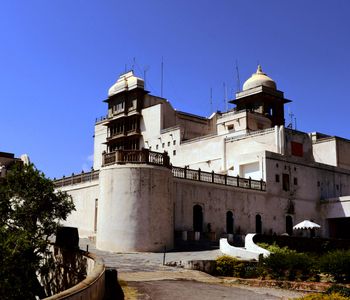
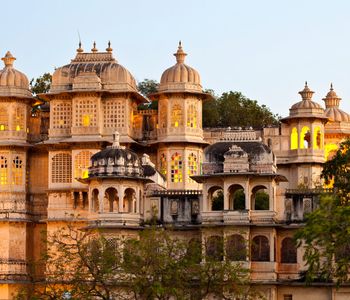
You can't talk about Lake Pichola without addressing the City Palace complex that dominates its eastern bank. Built over nearly four centuries by successive Maharanas, it rises directly from the water's edge in a wall of balconies, towers, and ornamental windows. From the lake, it reads as a single massive structure. It isn't. The complex is a dense accumulation of palaces, courtyards, and corridors that evolved organically, each ruler adding a wing or a terrace according to his taste and budget.
A combined ticket for the City Palace Museum costs around 300 rupees for foreign visitors, and the rooftop sections provide direct views down to the lake. Standing at those upper parapets, you begin to grasp the relationship between water and architecture that defines this city. The Maharanas didn't just build beside the lake. They built toward it, as if the entire palace were leaning in to see its own reflection.
When to Show Up, and How to Get There
The ideal months for Lake Pichola fall between September and March. Post-monsoon, the lake is full and the surrounding hills are still faintly green — a rare sight in arid Rajasthan. October and November offer the best combination of water levels and comfortable temperatures, usually hovering between 20 and 30 degrees Celsius. By April, the heat becomes punishing, and the lake begins its annual retreat.
Udaipur's Maharana Pratap Airport connects to Delhi, Mumbai, and Jaipur with daily flights. From the airport, the lake is about 25 kilometers east — a drive of roughly 45 minutes depending on traffic. Within the city, auto rickshaws remain the most practical transport. Agree on a fare before climbing in. Meters exist in theory but rarely in practice.
There's no entry fee to walk along the ghats or sit on the lake's banks. Boat rides and palace visits carry separate charges. Budget a full day for the lake and its immediate surroundings; trying to rush Lake Pichola defeats its purpose entirely.
The Reservoir That Became a Mirror
What makes Lake Pichola stay with you isn't the architecture it reflects or the boat rides it enables. It's the strange fact that a tribal herdsman's practical solution — a dam for thirsty animals — became the foundation for one of India's most romantic cities. The lake doesn't try to be beautiful. It simply holds still, and everything around it arranges itself accordingly. Walk along Ambrai Ghat at dusk, when the palaces turn amber and the water goes dark, and you'll feel the pull that kept the Maharanas building for four hundred years.