Luxury Rajasthan Heritage Tour – Premium Couples Package

7 Nights / 8 Days
Jaipur (2N)Jodhpur (2N)Udaipur (3N)
Starting from ₹1,20,000
Compare quotes from top 3 travel agents

Rajasthan doesn't ease you in. Jaipur hits first — terracotta walls radiating heat, the geometry of Jantar Mantar standing like some astronomer's fever dream against a flat white sky, peacocks screaming from palace ramparts at dawn. Then Jodhpur, where the blue-washed old city presses tight against the vertical cliff face of Mehrangarh, a fortress so commanding it makes everything below it feel temporary. And finally Udaipur, where the light softens, the lakes multiply, and the whole city seems to exhale. These three are not interchangeable postcards. Each has its own weight, its own particular silence at midday, its own way of waking you up in the morning. The distance between them — both geographic and atmospheric — is the whole point.

This eight-day itinerary moves at a pace designed for two people who want to be present, not exhausted. You'll begin amid Jaipur's sandstone architecture and observatory gardens, where Mughal precision meets Rajput swagger. The drive west to Jodhpur crosses the Aravalli foothills and the Thar's advancing edge — the landscape dries, hardens, opens up. Two nights inside a restored haveli let you explore Mehrangarh without rushing, and to find the rooftop restaurants where the blue city glows violet after sunset. The final three nights in Udaipur give you room to breathe: morning boat rides on Lake Pichola, long afternoons in courtyard gardens, evenings where the only agenda is watching the City Palace turn gold from across the water. The arc is deliberate — intensity first, then grandeur, then stillness. By the last morning, you'll understand why people come back to this particular corner of India more than any other.
Itinerary

Day 1Jaipur Arrival and the Pink City After Dark

Morning

Your flight lands and the heat is immediate — dry, mineral, not unpleasant if you're prepared for it. The drive from the airport to the heritage property takes forty minutes through a city that doesn't believe in gradual introductions: autorickshaws, camels pulling carts of marble, women in tangerine saris against terracotta walls. Check in, let the AC do its work, and take your time. The room will likely have carved jharokha windows and enough marble underfoot to cool the soles of your feet. Don't rush out.

Afternoon

Start with Jantar Mantar, because it requires no cultural briefing and rewards pure curiosity. Maharaja Jai Singh II built these enormous stone instruments in 1734 to track stars and predict eclipses — the sundial alone is twenty-seven metres tall and accurate to two seconds. Walk slowly. The geometry is disorienting in the best way. From there, the Hawa Mahal is a five-minute walk, and its honeycomb facade is better appreciated from the chaiwalla stalls across the street than from inside.

Evening

Dinner tonight at 1135 AD inside the Amer Road corridor — the thali here is precise, not theatrical, and the mutton laal maas has a slow chilli burn that stays with you. Afterward, the drive back to the hotel takes you past the Jal Mahal floating in Man Sagar Lake, lit amber against black water. It's not a sight you need to stop for. Seeing it from the car window, without commentary, is better.

Day 2Amber Fort at Dawn, Jaipur's Inner City by Afternoon

Morning

Leave early — 7:30am at the latest. Amber Fort before the tour buses arrive is a different place entirely. The Sheesh Mahal (Mirror Palace) is the reason: a single candle flame reflected into infinity across its mirrored ceiling, which you'll only appreciate in relative quiet. The fort climbs a ridgeline above Maota Lake, and the approach on foot through the Suraj Pol gate lets you feel the defensive logic of the place — every turn designed to slow an invading army. The light inside the Ganesh Pol gateway, filtered through latticed stone, throws patterns across the floor that shift as the sun moves.

Afternoon

Return to the city for the City Palace complex, which is still a functioning royal residence — the Maharaja's family occupies one section while you walk through another. The Peacock Courtyard is the standout: four carved doorways representing the four seasons, each one a different colour, each one genuinely difficult to turn away from. Afterward, walk into Johari Bazaar. This is where Jaipur's gem traders have operated for three centuries. You're not here to buy — you're here to watch the light hit loose sapphires on black velvet trays, and to understand why this city controls a significant portion of the world's coloured gemstone trade.

Evening

Tonight, eat on the rooftop of your heritage hotel if it's offered, or head to Suvarna Mahal at the Rambagh Palace for something more composed. The Rambagh's dining room is gilt-ceilinged and absurdly grand — and the food actually holds up, which is rare when the architecture is doing that much work. A digestive walk through the Rambagh's Mughal gardens afterward, jasmine heavy in the night air, sets the tone for sleep.

Day 3The Road West — Jaipur to Jodhpur Through the Thar's Edge

Morning

Check out after breakfast and settle into the car for the five-to-six-hour drive west. The first two hours follow the NH48 through agricultural flatlands — mustard fields if you're here between October and February, otherwise parched scrubland dotted with neem trees. Your driver will know where to stop for chai. Accept the offer. The roadside stalls between Beawar and Pali serve kachori stuffed with spiced lentils, fried to order in iron kadais black with years of use. Eat standing up. It's better that way.

Afternoon

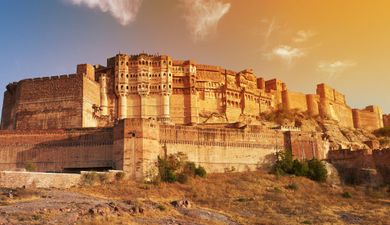
The landscape shifts as you approach Jodhpur. The Aravallis flatten, the soil turns sandy, and the sky seems to widen by a full third. Jodhpur announces itself with Mehrangarh — you see the fortress a full twenty minutes before you reach the city, sitting on its volcanic outcrop like something geological rather than man-made. Check into the haveli, which will be smaller and more intimate than Jaipur's grand heritage hotel. The courtyards here are tighter, the stonework more personal. Unpack slowly. Let the quiet settle.

Evening

Walk to the clock tower market area. Sardar Market at dusk is loud, bright, and fragrant with roasting spices — the mirchi vada stalls along the main lane sell deep-fried chilli fritters that are addictive and slightly dangerous. Find a rooftop cafe facing Mehrangarh — there are several along Nai Sarak — and order lassi while the fortress above you turns from sandstone gold to deep violet as the floodlights take over from the sun.

Day 4Mehrangarh and the Blue City on Foot

Morning

Mehrangarh deserves a full morning, and it will take one. This is not a decorative palace — it's a military fortress that happens to contain some of the most refined interiors in India. The audio guide, narrated by members of the royal family, is worth using. The Phool Mahal (Flower Palace) has a ceiling covered in gold leaf that still holds its lustre after three centuries. But the real moment comes on the ramparts: stand at the cannon-scarred walls and look down at the blue city spreading below, a compressed labyrinth of indigo and cobalt that Brahmin families painted to keep their homes cool, or to mark caste, or simply because the colour stuck — historians still argue about the reason.

Afternoon

Descend into the blue city itself. Hire a local guide for the walking tour through the Navchokiya and Singhoria neighbourhoods — the lanes are narrow enough that your shoulders nearly touch both walls, and the blue intensifies as you go deeper. You'll pass households where women make mirchi ka achaar on their doorsteps, the smell of mustard oil and dried red chillies sharp enough to make your eyes water. Jaswant Thada, the royal cenotaph, sits a short walk from the fort. It's carved from sheets of marble so thin they're translucent — step inside at 3pm when the light comes through at its most diffuse.

Evening

Dinner at Darikhana inside the Mehrangarh museum complex, if your dates align with its operation. The setting is a restored royal dining hall, and the menu draws from recipes found in the palace archives — safed maas, a white mutton curry finished with yoghurt and cashew, is the one to order. If Darikhana isn't available, the rooftop at Indique is an honest backup: solid Rajasthani thalis, cold beer, and a fortress view you won't forget in a hurry.

Day 5Jodhpur to Udaipur — Through Ranakpur and the Aravalli Spine

Morning

The drive to Udaipur takes roughly five hours, but you're breaking it at Ranakpur, which alone justifies the route. Leave by 8am. The road climbs into the Aravallis almost immediately — hairpin turns through teak and banyan forest, the occasional langur watching from a low branch. Ranakpur's Jain temple appears in a valley clearing after about three hours, and nothing prepares you for it. The interior contains 1,444 marble columns, no two carved alike, and the light filters through them in a way that makes the whole space feel like it's breathing. Remove your shoes, leave your leather belt in the car, and walk slowly. Silence here isn't enforced — it just happens.

Afternoon

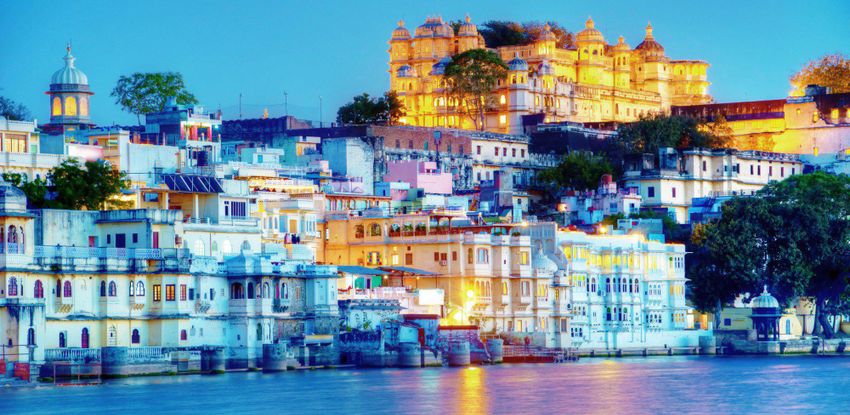
Continue south toward Udaipur. The Aravallis soften into green valleys fed by small rivers and seasonal lakes — if you're traveling between August and November, the hillsides are startlingly verdant, a colour you might not have expected after the Thar's bleached expanse. Arrive in Udaipur by late afternoon. The lake palace resort sits on or beside Lake Pichola, and your first view of the water — ringed by white ghats, the City Palace climbing the eastern shore, the Aravallis closing in from three sides — will reframe everything you've seen so far. This is a gentler Rajasthan. Check in and do nothing. You've earned the stillness.

Evening

Eat lightly tonight. The hotel's lakeside restaurant will serve well enough, and the real event is the view: the City Palace illuminated across the water, its reflection broken by the occasional ripple from a passing boat. The temperature drops by the lake after dark — have a shawl ready. Order a glass of something cold, sit close together, and let the city introduce itself at its own pace.

Day 6Udaipur's Palaces and the Craft Quarter

Morning

The City Palace is Udaipur's anchor, and it sprawls. Built over four centuries by successive Mewar rulers, it's less a single building than a maze of courtyards, towers, balconies, and gardens stacked against the hillside. Start at the Tripolia Gate and work upward. The Mor Chowk — its glass mosaic peacocks set into alcoves — catches the morning light perfectly between 9 and 10am. Higher up, the Amar Vilas garden hangs above the lake with a symmetry that feels almost Japanese. Take your time moving through the rooms; each one opens into something unexpected. The collection of miniature paintings in the Zenana Mahal is quietly extraordinary — some no larger than a playing card, with brushwork so fine the artists must have held their breath while painting.

Afternoon

Cross into the old city's craft quarter along Jagdish Temple Road. The temple itself — a seventeenth-century Vishnu shrine with an elaborate carved facade — is worth ten minutes, but the real draw is the surrounding lanes. Udaipur's miniature painting tradition is alive here, not as a museum piece but as a working practice. Several studios along Gangaur Ghat Road welcome visitors to watch artists apply natural pigments — ground lapis, crushed beetle shell, gold leaf — with brushes made from a single squirrel hair. Buy something if it moves you; the quality is genuine and the prices are reasonable because the middlemen haven't fully colonized this neighbourhood yet.

Evening

Take the sunset boat ride on Lake Pichola. The municipal boats are fine; the private shikara option is better for two. The boat circles Jag Mandir island, where Shah Jahan once sheltered during a palace rebellion — the carved elephants lining its waterfront are eroded but dignified. As the sun drops behind the Aravallis, the City Palace turns from white to amber to deep copper. Back on shore, walk to Ambrai restaurant on the western bank. The dal bati churma here is definitive — the bati cracked open and drenched in ghee, the churma sweet and gritty with crushed wheat. Sit outside. The palace reflection shimmers on the water between you and the floodlit walls.

Day 7The Lakes Beyond the Palace, and a Slow Udaipur Afternoon

Morning

Most visitors never leave the City Palace orbit, which means Fateh Sagar Lake — ten minutes north by car — is yours. Rent a pedal boat or simply walk the promenade along the eastern bank. Nehru Garden sits on an island in the lake's centre, modest but pleasant, and the Maharana Pratap memorial on the hilltop above offers a panorama that puts Udaipur's geography into focus: three interlocking lakes, the Aravallis pressing in from the west, the city draped across the ridges between them. The air is cleaner here, the noise almost absent. On the walk back toward the car, the Saheliyon ki Bari garden is a short detour — built for the queen's attendants, its fountains still work and the lotus pools are thick with blooms from July through October.

Afternoon

This afternoon is deliberately unscheduled. Udaipur rewards the couple who wanders without a map. Walk the ghats — Gangaur Ghat in particular, where women wash clothes on the stone steps and the water is still enough to mirror the buildings above. Or return to the hotel and use the spa; you've covered serious ground this week, and your feet know it. If you want a project, the Vintage and Classic Car Collection near Gulab Bagh houses an improbable fleet — Rolls-Royces, a 1934 Cadillac, a Mercedes once used for duck shooting — maintained by the royal trust. It takes forty minutes and is oddly satisfying.

Evening

Your last full evening in Rajasthan. The hotel may offer a private candlelit dinner on a terrace or by the lake — take it if it's offered, because the setting does what no restaurant can replicate. Otherwise, Raas Leela at the Leela Palace or the rooftop at Udai Kothi both deliver beautifully. Order the laal maas one final time. The Udaipur version tends to be slightly less ferocious than Jodhpur's, tempered by the lake air perhaps, or just a different hand at the stove. Linger. You don't have to be anywhere, and that's the whole point of these three nights.

Day 8Udaipur Departure — Morning Light on the Lake

Morning

Set an alarm earlier than feels reasonable and walk to the lake before breakfast. Pichola at 6:30am is a different body of water — mist sits on the surface, the washerwomen are already at the ghats, and the City Palace is a grey silhouette that sharpens as the sun clears the ridge. This is the image you'll carry home: not the floodlit postcard version, but the quiet one, half-dissolved in haze. Return to the hotel for a proper breakfast — poha if it's on the menu, or aloo paratha with fresh curd and green chutney, the kind of meal that makes you wonder why breakfast anywhere else bothers.

Afternoon

Check-out and transfer to Maharana Pratap Airport. The drive takes about forty-five minutes through Udaipur's southern outskirts, past agricultural land and the last of the Aravalli foothills. If your flight is later in the day, the hotel may offer a late checkout or a day room — worth arranging in advance. Use any spare time at the Shilpgram crafts village on the airport road, a living museum of Rajasthani rural architecture where artisans demonstrate block printing, pottery, and weaving. It's a twenty-minute stop, unhurried, and a good final encounter with the hands that built everything you've spent the week admiring.

Evening

If your flight departs in the evening, Udaipur's airport is small and efficient — arrive an hour before domestic departures and you'll have time to spare. The terminal has little to offer beyond functional seating and a single cafe, so eat before you leave the city. As the plane lifts off and banks south or east, look out the window. The Aravallis stretch below, the lakes catch the last light, and Rajasthan — which announced itself with so much noise in Jaipur — says goodbye in near silence.

  • 2 nights' accommodation at a 5-star heritage property in Jaipur with daily breakfast for two
  • 2 nights' accommodation at a restored heritage haveli in Jodhpur with daily breakfast for two
  • 3 nights' accommodation at a lake palace resort in Udaipur with daily breakfast for two
  • One welcome dinner for two on the evening of arrival in Jaipur
  • One private candlelit dinner for two at the Udaipur lakeside resort on Day 7
  • Private air-conditioned car with experienced English-speaking driver for all transfers and intercity journeys (Jaipur to Jodhpur, Jodhpur to Udaipur via Ranakpur)
  • Airport pickup in Jaipur and airport drop-off in Udaipur
  • Guided tour of Amber Fort, Jaipur City Palace, and Jantar Mantar with certified heritage guide
  • Guided tour of Mehrangarh Fort and blue city walking tour in Jodhpur
  • Guided tour of Udaipur City Palace and craft quarter with local art specialist
  • Entry tickets to Ranakpur Jain Temple, including donation fee
  • Sunset boat ride on Lake Pichola for two (private shikara)
  • All monument and museum entry fees as specified in the itinerary

Related Packages