Rajasthan Wildlife & Heritage Family Package – Ranthambore & Jaipur

6 Nights / 7 Days
Ranthambore (3N)Pushkar (1N)Jaipur (2N)
Starting from ₹55,000
Compare quotes from top 3 travel agents

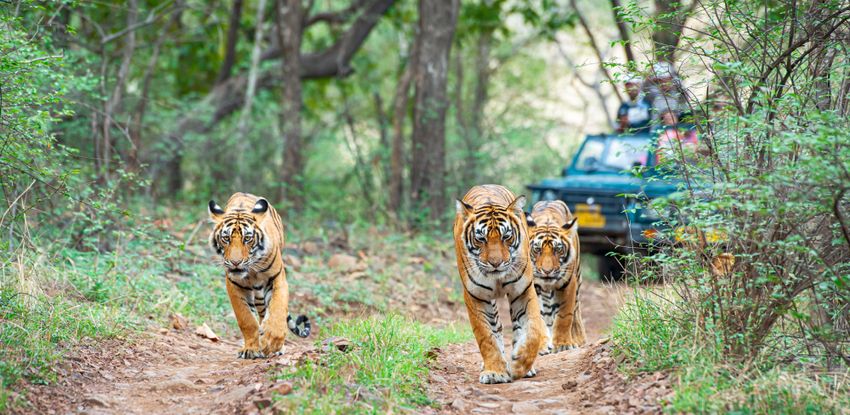
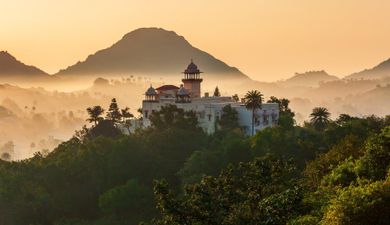
Ranthambore is not a polite national park. It's a dry, cracked fortress of thorn scrub and banyan where tigers walk through the ruins of tenth-century temples as if they built them. The landscape is theatrical — sheer sandstone ridges, lakes that shrink by the week, and a silence broken only by the alarm call of sambar deer, which sounds less like a warning and more like a question nobody wants answered. Pushkar, an hour's detour west of the highway, sits around a small sacred lake ringed by fifty-two ghats and an atmosphere so unhurried it borders on defiant. Jaipur, by contrast, announces itself with noise and terracotta-pink walls and a geometry that only an astronomer-king could have planned — because one did.

This seven-day arc moves your family from the wild interior of eastern Rajasthan to the ritual calm of Pushkar, then into the courtly density of Jaipur. The first three mornings begin before dawn in open-top canters and safari jeeps, scanning tree lines for movement that turns your stomach. The afternoons in Ranthambore belong to the fort above the park, to crocodile-still lakes, and to the particular exhaustion that comes from sitting very still in heat. The single night in Pushkar serves as a decompression chamber — the town is small enough to walk end to end before dinner. Then Jaipur arrives with its observatories and bazaars and painted elephants, a city that rewards curiosity in children and patience in adults. The pace shifts deliberately: wild mornings give way to slower afternoons, and by the final days your family will have covered desert, forest, water, and stone without ever feeling rushed.
Itinerary

Day 1Arrival in Ranthambore — Sawai Madhopur Station and the First Quiet Evening

Morning

Your train or car pulls into Sawai Madhopur sometime before noon, and the first thing you notice is the dust — fine, pale, and already on your clothes before you reach the car. The drive to your lodge takes twenty minutes along a road that narrows past mustard fields and the occasional langur perched on a wall like a disapproving landlord. Check in, drink the welcome lime soda, and resist the urge to do anything at all.

Afternoon

After lunch at the lodge, take the family to the Ranthambore School of Art, a small community workshop on the road toward the park gate where local artists paint miniatures of tigers, peacocks, and fort scenes onto handmade paper. Children can try their hand at the brushwork — the results are always better than expected. It's an easy, low-key introduction to the region that doesn't require sunscreen or stamina.

Evening

Dinner at the lodge, early. Your first safari leaves at 6am, and the wake-up call comes at 5:15. The night sounds here are different from home — jackals, mostly, and the occasional peacock screeching as if it just remembered something terrible. Let the kids fall asleep to it. You'll need them alert tomorrow.

Day 2Ranthambore — Morning Safari in Zone 3 and an Afternoon at the Fort

Morning

The 6am jeep safari into Zone 3 takes you past Padam Talao, the largest lake in the park, where lotus pads spread across still water and marsh crocodiles float like driftwood with intentions. Your naturalist guide reads the forest like a newspaper — broken branches, pug marks in soft mud, the pitch of a langur's bark. A tiger sighting is never guaranteed, but Zone 3 is where the resident female, Noor's lineage, has been seen most consistently. Even without a tiger, the spotted deer herds moving through ruined chhatris are worth the early alarm.

Afternoon

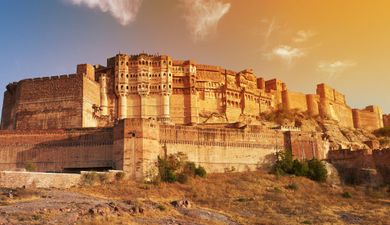
After breakfast back at the lodge and a rest through the worst of the midday heat, drive up to Ranthambore Fort. The road climbs steeply through the park's buffer zone, and the fort itself — a thousand years old, barely restored, fully atmospheric — sprawls across a hilltop with Jain temples, a Ganesh shrine where locals still worship, and views across the park canopy that make the scale of the landscape suddenly real. Children will gravitate to the ramparts and the resident troops of langurs. Bring water; there's nowhere to buy it inside.

Evening

Return to the lodge for a poolside wind-down if the property has one, or settle into the garden with cold drinks while the light turns amber. Most lodges in Ranthambore offer a bonfire after dinner — the dry-season nights cool quickly, and the warmth is welcome. Tomorrow's safari is in a different zone, so the anticipation resets cleanly.

Day 3Ranthambore — Dawn Safari in Zone 6 and the Slow Hours Between

Morning

Zone 6 is drier and more open than yesterday's route, with long sightlines across ravines where sloth bears sometimes appear in the cooler months. The canter — a larger open vehicle shared with other families — bumps along rutted tracks through dhok forest, the dominant tree here, whose pale trunks glow almost white in early light. Listen for the sharp, stuttering call of the Indian pitta if you're here between October and March. Your guide will stop at waterholes where sambar and nilgai come to drink, and the patience required is itself part of the lesson for younger travelers.

Afternoon

This afternoon is deliberately unstructured. Ranthambore's lodges are designed for exactly this kind of downtime — most have nature libraries, board games, and garden walks that identify local birds without requiring you to leave the property. If the family is restless, the Dastkar craft market near Sawai Madhopur town sells block-printed textiles and leather juttis made by local women's cooperatives. It's small and genuine, not a tourist trap.

Evening

Your final evening in Ranthambore deserves a proper dinner. If your lodge offers outdoor dining, take it — the sky here, far from any city light, is absurdly full of stars. Talk about what you saw, what you didn't, and what you'd go back for. Pack tonight; the road to Pushkar leaves after breakfast.

Day 4Ranthambore to Pushkar — Across the Aravalli Foothills to the Lake

Morning

Check out after an early breakfast and begin the drive west toward Pushkar — roughly five hours by road, depending on the state of NH48 and whether you stop. You should stop. The town of Tonk, about ninety minutes in, has the Sunehri Kothi, a small palace whose interior is covered in gold leaf and mirrored glass that most travelers drive straight past. It takes twenty minutes to see, and children are usually mesmerized by the ceiling work. The road after Tonk climbs gently through the southern Aravalli range, the landscape shifting from thorn scrub to rocky hills scattered with goats and the occasional Rabari herder in white.

Afternoon

You arrive in Pushkar by early afternoon. The town is tiny — four main streets around a lake — and the pace drops immediately. After settling into your hotel, walk down to the ghats. Pushkar Lake is sacred, and the atmosphere at the waterfront steps is calm and unperformative. Priests may offer to perform a small puja; you're free to participate or simply sit. The late-afternoon light on the whitewashed temples across the water is the quietest thing you'll see all week.

Evening

Pushkar's main bazaar runs along the lake's eastern edge, a narrow lane selling rose-petal garlands, silver jewelry, and an improbable quantity of embroidered camels. Dinner at one of the rooftop cafes overlooking the lake — try the dal baati churma, the Rajasthani staple that tastes best when someone else makes it. The town goes quiet early. Let it.

Day 5Pushkar to Jaipur — The Brahma Temple, the Dunes, and the Road East

Morning

Before leaving Pushkar, visit the Brahma Temple — one of very few temples in India dedicated to the creator god, and the reason Pushkar exists as a pilgrimage site at all. The temple is modest, almost domestic in scale, with a red spire and a marble floor worn smooth by centuries of bare feet. Go early, before eight, when the temple is calm and the flower sellers at the entrance are still arranging their marigolds. If time allows, drive ten minutes to the edge of the Thar, where the sand dunes begin in earnest — not the towering dunes of Jaisalmer, but low, wind-ribbed ridges where children can run and nobody is trying to sell them a camel ride.

Afternoon

The drive from Pushkar to Jaipur takes roughly three hours on the Ajmer-Jaipur highway, one of Rajasthan's better roads. The terrain flattens out as you approach Jaipur, and the first sign of the city is the color — the terracotta wash on every building inside the old walled quarter, mandated in 1876 for a royal visit and maintained ever since out of habit and municipal pride. Check into your hotel in the early afternoon. If you're staying near the old city, the noise will be immediate and total. This is correct.

Evening

Your first evening in Jaipur belongs to the old city at dusk. Walk along Johari Bazaar, where the jewelers work under fluorescent tubes and the smell of fresh jalebis from the corner stalls is almost aggressive. Don't eat a full dinner yet — graze. Try the pyaaz kachori from Rawat Mishthan Bhandar on Station Road, which has the best flaky-crust version in the city. Return to the hotel with powdered sugar on your fingers and a growing suspicion that Jaipur is going to be the trip's loudest, most colorful chapter.

Day 6Jaipur — Amber Fort by Morning, Jantar Mantar by Afternoon

Morning

Leave for Amber Fort by 8:30am — not because it opens then, but because by 10 the heat and the crowds arrive in equal measure. The fort sits eleven kilometers north of the city on a ridge above Maota Lake, and the approach from below reveals the full defensive intelligence of its design: walls running up the hillside like vertebrae, watchtowers placed at every angle change. Inside, the Sheesh Mahal — a small chamber lined with convex mirror fragments — is the single room your children will remember longest. Bring a phone flashlight; a single beam in that room becomes a galaxy. The Ganesh Pol gateway, painted in fine miniature detail, rewards anyone willing to stand still and look up for sixty seconds.

Afternoon

Back in the city center, walk through the Jantar Mantar, the open-air astronomical observatory built by Maharaja Sawai Jai Singh II in 1734. These are not decorative sculptures — they are functioning instruments, and the largest sundial on earth is here, accurate to within two seconds. A local guide is essential; without one, you're just looking at concrete ramps. With one, you're watching your child understand how a shadow measures time. Afterward, cross the road to the City Palace complex, where the textile gallery holds a robe once worn by Sawai Madho Singh I, a man who stood seven feet tall and weighed over two hundred kilograms. The garment is the size of a small tent. Children find this deeply satisfying.

Evening

Tonight, eat properly. Jaipur's best Rajasthani thali — the full ceremonial spread of dal, gatte ki sabzi, ker sangri, and three kinds of bread — is served at 1135 AD inside Amber Fort if you're willing to return, or at Suvarna Mahal inside the Rambagh Palace if you want the chandelier-and-peacock version. Either way, the meal is long, layered, and worth treating as the trip's celebratory dinner. Walk it off in the hotel garden afterward, or let the younger travelers fall asleep mid-sentence in the car.

Day 7Jaipur — Hawa Mahal at Sunrise and Departure

Morning

Get up once more before the city does. The Hawa Mahal — the five-story latticed facade on Badi Chaupar — is best seen from the street at sunrise, when the pink sandstone catches the first angled light and the honeycomb windows glow from inside. The building is smaller than photographs suggest, which somehow makes it better. If you go inside, the narrow stairways are steep and the top-floor view down into the bazaar below is vertiginous enough to make adults grip the railing. This is your last morning in Rajasthan; spend it at the window where queens once watched processions without being seen.

Afternoon

Depending on your departure time, the late morning is for one final errand — the block-printing workshops in Sanganer, twenty minutes south of the city, where fabric is still printed by hand using carved teak blocks dipped in natural dyes. Watching the printers work is hypnotic: four colors, four passes, perfect registration every time, done entirely by eye. Pick up a tablecloth or a set of napkins. They're lighter than jewelry and you'll use them every week. Head to Jaipur airport or railway station with time to spare; Rajasthan has taught you by now that schedules here are aspirational.

Evening

If your flight is late, the departures lounge at Jaipur airport is functional and air-conditioned, which after a week in Rajasthan feels like luxury. If you're on an evening train, the platform chai — thin, sweet, served in a clay cup that you drop on the tracks when you're done — is the last taste of this place. You leave with dust in your luggage, tiger stories that will improve with retelling, and the knowledge that your children now understand something about patience, heat, and looking carefully that no classroom could have taught them.

  • Six nights' accommodation in heritage or wildlife-lodge category properties: three nights in Ranthambore, one night in Pushkar, two nights in Jaipur
  • Daily breakfast at all properties, plus dinner on nights one, two, and three at your Ranthambore lodge
  • Two morning jeep safaris in Ranthambore National Park (Zones 3 and 6), including park entry fees and naturalist guide
  • Private air-conditioned vehicle with experienced driver for all intercity transfers: Sawai Madhopur to Pushkar, Pushkar to Jaipur
  • Airport or railway station pickup in Sawai Madhopur on Day 1 and drop-off in Jaipur on Day 7
  • Guided tour of Ranthambore Fort with local historian
  • Guided tour of Amber Fort, Jantar Mantar, and City Palace in Jaipur, including all monument entry tickets for the family
  • Visit to the Brahma Temple in Pushkar with local guide
  • Block-printing workshop visit in Sanganer on the final morning
  • All applicable state taxes and service charges on included components

Related Packages