Complete Rajasthan Family Grand Tour

9 Nights / 10 Days
Jaipur (2N)Pushkar (1N)Jodhpur (2N)Jaisalmer (2N)Udaipur (2N)
Starting from ₹72,000
Compare quotes from top 3 travel agents

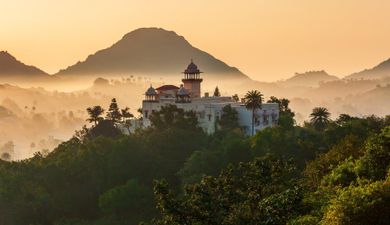
Rajasthan doesn't ease you in. It announces itself — in the pink sandstone walls that catch the morning sun in Jaipur, in the desert silence that presses against your ears outside Jaisalmer, in the lake light of Udaipur that turns everything slightly unreal by late afternoon. This is a state built on contradiction: fortresses designed for war now house pigeons and tourists, palaces that once held courtly intrigue now hold government offices and museum tickets, and a desert that should feel inhospitable instead feels like the most generous landscape you've ever crossed. The five stops on this route — Jaipur, Pushkar, Jodhpur, Jaisalmer, Udaipur — are not interchangeable postcard towns. Each one has its own gravity, its own colour temperature, its own particular way of slowing you down or speeding you up. The terrain shifts under your feet every few hundred kilometres, from the Aravalli scrubland to the Thar dunes to the lakeside marble of Mewar. It is not a gentle place. It is a deeply specific one.

This ten-day route traces a wide arc through western Rajasthan, beginning in the mercantile chaos of Jaipur and ending at the composed waterfront of Udaipur, with the desert towns of Pushkar, Jodhpur, and Jaisalmer strung between them like knots on a thread. The first days are dense — forts, markets, the constant press of humanity. Then Pushkar arrives like a single held breath. The middle passage through Jodhpur and Jaisalmer strips things back further: blue-washed lanes, golden stone, the Thar opening up around you until the horizon goes flat in every direction. By the time you reach Udaipur, you'll have recalibrated. The pace softens. The lake does something to time. Families will find that each city gives children — and adults — a different way in: climbing ramparts, feeding temple fish, riding camels, watching puppet shows, eating dal bati churma with their hands. The arc is deliberate. You arrive in Rajasthan as a visitor. Somewhere around day six, you stop being one.
Itinerary

Day 1Jaipur Arrival and the Pink City After Dark

Morning

Your flight lands and Jaipur greets you with hot air and the smell of diesel mixed with jasmine garlands. The drive from the airport to the old city takes about forty minutes, and the landscape shifts from scrubland to low-rise sprawl to suddenly, unmistakably, pink — the salmon-terracotta wash on every building inside the city walls. Check into your hotel and let the ceiling fan do its work for an hour. You've earned the stillness.

Afternoon

Don't try to conquer the city today. Instead, walk through Johari Bazaar while the afternoon heat keeps the crowds thin. The gem dealers sit cross-legged in tiny stalls no wider than a doorframe, polishing stones under single bulbs. Stop for lassi at Lassiwala on MI Road — the original one, with the steel tumblers and the yoghurt crust on top. Let the children try the sweet version first; the salted one is an acquired pleasure.

Evening

Dinner at a rooftop restaurant in the old city, where the Hawa Mahal is lit amber against the night sky. The breeze picks up after sunset, carrying the sound of traffic horns and temple bells in equal measure. Order laal maas if anyone in the family can handle heat; otherwise, the gatte ki sabzi is forgiving and good. This is your first night. Let Jaipur set its own terms.

Day 2Amber Fort, the Observatory, and Jaipur's Geometric Obsessions

Morning

Leave early for Amber Fort — by 8:30am if you can manage it, before the elephant rides start and the courtyards fill with tour groups waving selfie sticks. The Sheesh Mahal alone is worth the early alarm: a single candle lit inside the mirrored chamber turns the walls into a galaxy. Children will press their faces against the glass and refuse to leave. Let them. Walk the ramparts slowly. The view down into Maota Lake, with its geometric garden laid out on the water, is one of those images that stays fixed in memory long after the trip ends.

Afternoon

After lunch, head to Jantar Mantar, Maharaja Sawai Jai Singh's eighteenth-century astronomical observatory. This is not a museum under glass — these are enormous stone instruments, sundials the size of buildings, that still tell accurate time. A good guide makes this place sing; without one, it's just odd-shaped masonry. Hire one at the gate. The Samrat Yantra, the world's largest stone sundial, casts a shadow that moves visibly if you watch for two minutes. Children who think science is boring will reconsider here.

Evening

Visit the City Palace complex before it closes, concentrating on the textile gallery and the armoury — the latter holds swords so ornate they look ceremonial until you notice the nicks in the blades. Return to the hotel and let the pool sort out the heat and the dust. Tomorrow you leave the city behind, and Jaipur's noise will feel like something you almost miss.

Day 3The Road to Pushkar Through the Aravalli Hills

Morning

Check out after breakfast and drive northwest toward Pushkar. The road takes roughly three hours if you avoid the Ajmer bypass at peak time — ask your driver to route through the quieter hill roads where the Aravallis rise in low, scrubby ridges dotted with Hanuman shrines and roadside chai stalls. Stop at one. The tea is boiled with cardamom and too much sugar, served in a clay cup that you throw on the ground when you're finished. It tastes better than anything brewed in porcelain.

Afternoon

Arrive in Pushkar and feel the shift immediately. The town sits in a bowl of sand-coloured hills around a small sacred lake. There are no car horns here, or at least far fewer. Check in and walk to the lake ghats, where temple priests tie red threads on your wrist and ask for a donation with the gentle persistence of people who have been doing this for centuries. The water is green and still. Cows wander the steps. The scale of the place, after Jaipur, is almost intimate.

Evening

Pushkar's main bazaar is a narrow lane of silver jewellery shops, incense sellers, and cafes playing Bob Marley at a volume the Buddha might object to. Eat at one of the rooftop restaurants overlooking the lake — the town is strictly vegetarian, so don't bother asking for meat. The paneer dishes are excellent; the sunset over the ghats, viewed from a plastic chair with a lime soda in hand, is unreasonably beautiful.

Day 4Pushkar to Jodhpur and the First Sight of Mehrangarh

Morning

Rise early for the Brahma Temple, one of the very few in India dedicated to the creator god. It's small, unpretentious, and busy with pilgrims by 7am. The marble floor is cool under bare feet. Afterward, take a slow walk around the lake — the full circuit takes about forty minutes and passes through quiet residential lanes where women draw water and children chase goats. This is the Pushkar that exists beneath the traveller cafes and yoga retreats.

Afternoon

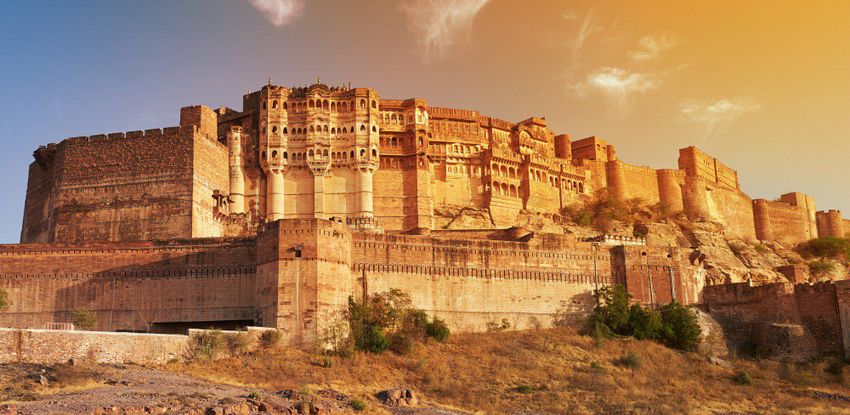
Drive to Jodhpur. The journey is roughly five hours, and the landscape transforms gradually: the Aravallis flatten, the soil turns sandy, the vegetation thins to thorny kejri trees and the occasional camel pulling a cart loaded with firewood. About an hour outside Jodhpur, you'll see it — Mehrangarh Fort, sitting on a cliff edge like something dropped from the sky. It doesn't get less impressive as you approach. Check into your hotel, splash water on your face, and resist the urge to nap. There's work to do.

Evening

Walk into the blue city lanes beneath the fort as the light softens. The houses here are washed in shades of indigo and cobalt — the colour was originally used to indicate Brahmin homes, though now everyone paints blue just because it looks right. Find a rooftop cafe near the clock tower and order mirchi vada — deep-fried chilli fritters that will clear your sinuses and make the children's eyes water. The fort glows ochre above you, lit from below. It is absurdly dramatic, and it doesn't care whether you're watching.

Day 5Inside Mehrangarh and the Blue City Below

Morning

Give Mehrangarh the full morning — three hours minimum, and you still won't see everything. The audio guide, narrated in part by the current maharaja, is genuinely excellent and worth every rupee. Pay attention in the Phool Mahal, the flower palace, where gold filigree covers every surface and the ceiling looks like it was painted by someone on the edge of madness. The palanquin gallery holds royal howdahs so heavy with silver that you wonder how the elephants survived. Children will gravitate toward the cannon collection on the ramparts, which offers a view over the blue city that makes the whole climb worthwhile.

Afternoon

Descend into the old city and lose yourself in the Sardar Market near the clock tower. The spice shops here sell whole dried red chillies by the kilogram and the air burns your nostrils if you stand too close. Buy some mathania chilli powder if you cook at home — it's earthy, fragrant, and nothing like supermarket chilli. Lunch at a thali place where the steel plates arrive loaded with six or seven dishes you didn't order but all of which are correct.

Evening

Visit Jaswant Thada, the white marble cenotaph, in the last hour of daylight. The marble is so thin in places it glows translucent when the sun sits low. It's quiet here — most visitors have left by 5pm — and the grounds overlook a small lake where herons stand motionless. Return to the hotel for an early night. Tomorrow's drive is long, and the desert is waiting.

Day 6Jodhpur to Jaisalmer Across the Thar

Morning

Depart after breakfast for Jaisalmer. The drive is roughly five hours, and once you clear Jodhpur's outskirts, the world empties. The road runs straight through the Thar Desert — flat scrubland giving way to sand, wind turbines spinning slowly on the horizon, the occasional village of mud-walled houses where women in red and orange carry water on their heads. Stop at Pokhran if the timing works; the old fort there is crumbling and nearly deserted, which is exactly why it's worth twenty minutes of your time.

Afternoon

Jaisalmer appears like a mirage — a golden sandstone fort rising from flat desert with no geographic logic whatsoever. The fort is a living citadel: people still live inside it, run shops in it, hang laundry from its battlements. Check in to your hotel and then walk into the fort through the main gate, past the Jain temples, where the stone carving is so fine it looks like lacework. The yellow sandstone absorbs the afternoon light and radiates it back, turning everything warm.

Evening

Eat at a rooftop inside the fort walls, where the view extends across the desert to the horizon. The wind picks up at night and carries sand in fine sheets that settle on your table, your food, your hair. Order ker sangri — a desert bean and berry dish cooked with dried chillies — and dal bati churma, the quintessential Rajasthani meal of baked wheat balls crushed into ghee and lentils. The children will eat it with their hands. So will you.

Day 7The Desert and the Dunes of Sam

Morning

Spend the morning inside the fort. The Maharaja's Palace Museum is compact but absorbing — the silver throne room, the stamp collection, the photographs of moustachioed rulers posing with increasingly improbable hunting trophies. Walk through the Patwon ki Haveli afterward, a row of five merchant mansions whose facades are carved in sandstone so elaborately that each balcony tells a different story. Run your fingers along the stone. It's softer than you'd expect, worn smooth by wind and hands.

Afternoon

Drive forty minutes to the Sam Sand Dunes for a camel ride into the Thar. The camels are tall, grumpy, and surprisingly comfortable once you stop fighting the rhythm. The dunes here are genuine Saharan-scale — golden, wind-rippled, steep enough that sliding down them is a legitimate activity for children and adults who have briefly forgotten their dignity. The camel handlers know every ridge and hollow, and they'll take you to a high point where no other group is visible in any direction.

Evening

Stay for sunset over the dunes. The sand turns from gold to copper to deep rust in about twenty minutes, and the silence — real silence, no engines, no voices, no birds — presses against your ears like a physical thing. A folk music performance follows, with Manganiar musicians playing the kamaycha and singing in voices that seem engineered to carry across open desert. Drive back to Jaisalmer under a sky so crowded with stars it looks exaggerated. It isn't.

Day 8Jaisalmer to Udaipur and the Shift to Water

Morning

This is the longest drive of the trip — roughly six to seven hours, depending on road conditions and stops. Leave early. The route passes through Barmer and into the southern Aravallis, and the landscape undergoes a slow, visible transformation: sand gives way to rock, rock to scrub, scrub to green. By the time you're two hours from Udaipur, trees have returned and the air smells different — loamy, damp, alive. Stop for chai and samosas at a roadside dhaba where truck drivers eat. The samosas will be unreasonably good.

Afternoon

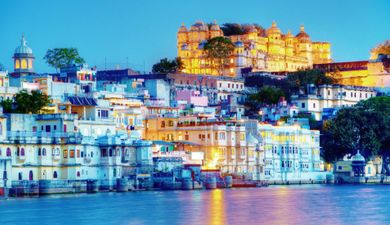
Arrive in Udaipur and feel the temperature drop, both literal and psychological. After five days in the desert, the sight of water — Lake Pichola, pale and wide, reflecting white palaces and green hills — recalibrates something in your nervous system. Check in and do absolutely nothing for an hour. You've earned it. The balcony view alone, if your hotel faces the lake, is enough activity for the afternoon.

Evening

Take a boat ride on Lake Pichola as the sun sets. The Lake Palace Hotel sits on its island like a floating marble hallucination. The Aravalli hills turn purple behind the City Palace. The boatman will point things out in three languages and tell you a story about a princess that may or may not be true but sounds right regardless. Dinner at Ambrai, on the waterfront — sit outside, order the smoked mutton if they have it, and watch the City Palace light up reflection-first in the lake.

Day 9Udaipur's Palaces, Lanes, and the Art of Doing Less

Morning

The City Palace is enormous — the largest in Rajasthan, a warren of courtyards, balconies, mirror rooms, and peacock mosaics that took twenty-two maharanas roughly four hundred years to build. Start early and hire a guide; without one, you'll miss the details that make the place more than architecture. The Mor Chowk, with its glass-inlay peacocks in three seasonal poses, is the room children will remember ten years from now. The views from the upper terraces across the lake are worth the entire trip.

Afternoon

After lunch, walk through the old city lanes on the east side of the lake. This is not a museum district — this is where people live, and the lanes are narrow enough that two motorcycles can barely pass. Stop at the Bagore ki Haveli, a restored nobleman's mansion with over a hundred rooms and a miniature painting collection that repays slow looking. The puppet workshop near Gangaur Ghat sells handmade kathputli — the wooden string puppets of Rajasthan — and the artisan will demonstrate how they work while the children sit cross-legged on the floor, transfixed.

Evening

Attend the evening folk dance performance at Bagore ki Haveli — it's touristy, yes, but the Bhavai dancer who balances seven clay pots on her head while dancing on broken glass is the real thing, and you will hold your breath whether you want to or not. Afterward, walk along the ghats. The lake is black and still, the palaces are white against the dark hills, and the only sound is water lapping against stone steps. This is your last full night. Let it settle.

Day 10Departure from Udaipur

Morning

If your flight allows, visit the Saheliyon ki Bari — the Garden of the Maidens — before the tour buses arrive. It opens at 9am, and for the first half hour you might have the lotus pools and marble elephants almost to yourself. The fountains were built without pumps, fed by a natural pressure system that still works, and the sound of running water in the morning quiet is the last Rajasthani memory you'll take from this trip. Walk slowly. Notice the carved birds on the archways. Take nothing but a photograph and the smell of wet stone.

Afternoon

Return to the hotel, finish packing, and check out. The drive to Udaipur's Maharana Pratap Airport takes about forty minutes through a landscape of low hills and white-walled farmhouses. The airport is small, unhurried, and blissfully simple. You'll clear security in minutes. Sit with a cup of airport chai — it won't be as good as the roadside version, but it'll still taste like Rajasthan.

Evening

By evening, you'll be airborne or wherever your onward journey takes you. The desert will already feel distant — the heat, the colour, the particular quality of light through carved sandstone. But the details will return in odd moments: the steel lassi tumbler in Jaipur, the blue lanes under Mehrangarh, the silence of the Sam dunes, the lake at Udaipur turning gold. Rajasthan doesn't ask to be remembered. It simply is, long after you've left.

  • 9 nights accommodation in heritage or premium-category hotels: 2 nights in Jaipur, 1 night in Pushkar, 2 nights in Jodhpur, 2 nights in Jaisalmer, 2 nights in Udaipur
  • Daily breakfast at all hotels for the entire family
  • Dinner on Day 1 (Jaipur), Day 3 (Pushkar), Day 6 (Jaisalmer), Day 7 (Jaisalmer desert camp dinner), and Day 8 (Udaipur)
  • Private air-conditioned vehicle with experienced driver for all intercity transfers and local sightseeing across all ten days
  • Airport pickup in Jaipur on Day 1 and airport drop-off in Udaipur on Day 10
  • Guided tours with licensed English-speaking guides at Amber Fort, Mehrangarh Fort, Jaisalmer Fort and Patwon ki Haveli, and Udaipur City Palace
  • Entry tickets to all scheduled monuments: Amber Fort, Jantar Mantar, Jaipur City Palace, Jaswant Thada, Mehrangarh Fort, Jaisalmer Fort, Patwon ki Haveli, Udaipur City Palace, Bagore ki Haveli, and Saheliyon ki Bari
  • Camel safari at Sam Sand Dunes with folk music performance on Day 7
  • Boat ride on Lake Pichola on Day 8 evening
  • Evening folk dance performance entry at Bagore ki Haveli, Udaipur
  • All road tolls, fuel surcharges, parking fees, and driver accommodation throughout the trip
  • One complimentary bottle of mineral water per person per day in the vehicle

Related Packages