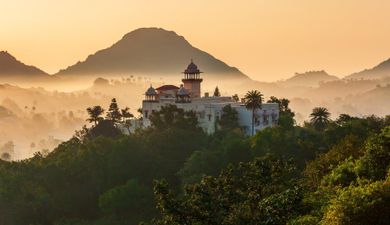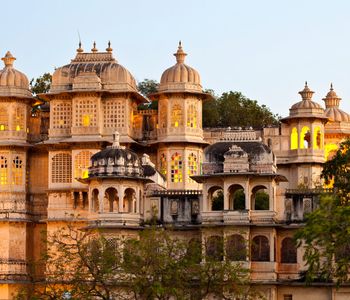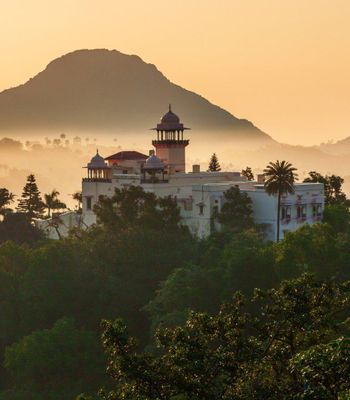
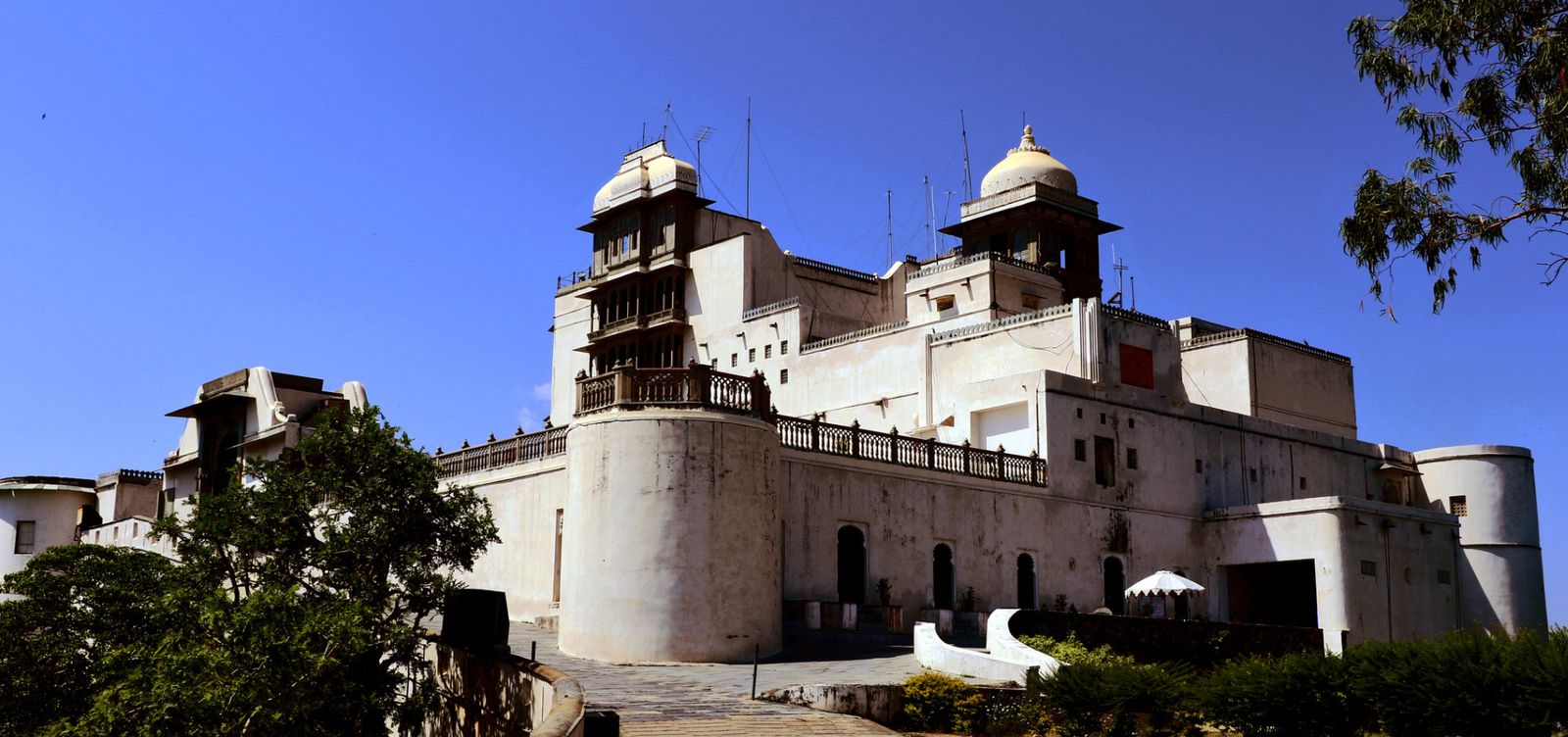
Perched on the Bansdara peak of the Aravalli Hills, roughly 944 feet above Udaipur, Sajjangarh Palace was never meant to be lived in. Maharana Sajjan Singh commissioned it in 1884 with a singular, almost quixotic ambition — to build an astronomical observatory high enough to watch the monsoon clouds roll in over the lakes below. He died a year later, at twenty-five, and the palace was never completed. What remains is a shell of golden-yellow sandstone, three stories tall, standing on the highest point for miles with nothing above it but sky. The building itself is modest by Rajasthani palace standards. But climb to its terrace at dusk, and you'll understand why Sajjan Singh chose this spot. The entirety of Udaipur unfolds beneath you — its white havelis, its glassy lakes, its distant palaces — and for a few minutes, the unfinished dream makes perfect sense.
A King's Dream, Abandoned at Twenty-Five
Sajjan Singh wasn't simply building a monsoon retreat. He envisioned a nine-story tower capable of serious celestial observation, a structure that would rival the astronomical instruments at Jaipur's Jantar Mantar in scholarly purpose if not in form. The plans were grand. The execution never had the chance to match them.
After the young Maharana's death in 1884, his successor Maharana Fateh Singh continued some construction but gradually bent the building's purpose toward a monsoon palace and hunting lodge. The observatory died as a concept. What stands today is a fraction of the original vision — three floors of sandstone walls, arched corridors, and empty rooms that send your footsteps echoing back at you.
This incompleteness is, paradoxically, what gives Sajjangarh its character. Unlike the polished grandeur of Udaipur's City Palace, there's no gilt mirror work here, no ornate murals, no museum displays behind glass. The palace feels skeletal. Honest. You're looking at ambition frozen in mid-sentence.
Weathered Stone, Empty Rooms, and the Point of It All
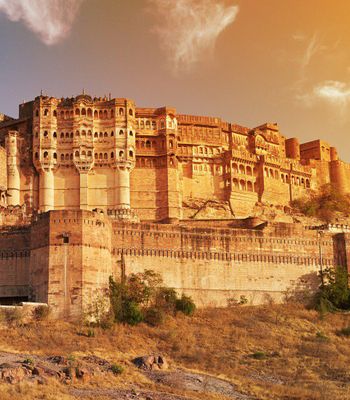
Don't arrive expecting Rajput opulence. The architecture is handsome but restrained — sandstone facades with pointed arches, jharokha-style windows, and modest turrets at each corner. The stonework shows its age in the best way, weathered to a warm ochre that deepens to amber when the late afternoon light hits it sideways.
Inside, the rooms are largely bare. A few faded photographs and informational plaques line the walls, placed there by the forest department that now manages the site. The central courtyard feels spacious but austere, more garrison than pleasure palace. Some visitors find the emptiness disappointing. They're missing the point.
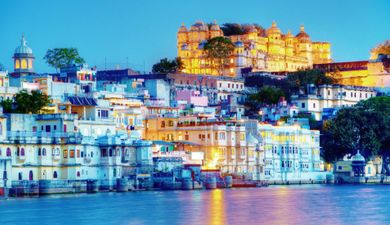
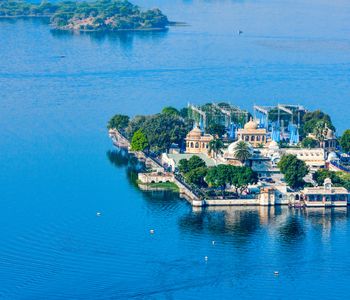
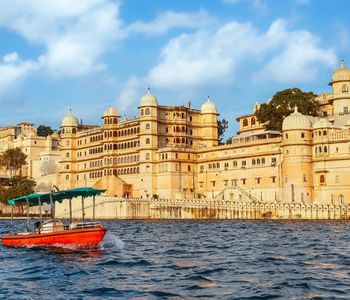
Step onto the rooftop terrace, and the palace finally declares its reason for existing. Lake Pichola and Fateh Sagar Lake sit like polished mirrors in the valley below. The City Palace appears miniature, its white walls catching sunlight on the lakeshore. On clear days, the Aravalli range stretches to the horizon in layered ridges of dusty green and purple. During monsoon season, clouds gather at eye level — you stand among them rather than beneath them, which is precisely the sensation Sajjan Singh was chasing.
The Forest That Surrounds the Ruin
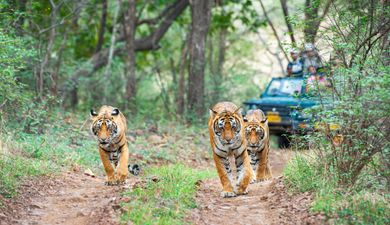
Here's the detail most guides skip entirely. Sajjangarh sits within the Sajjangarh Wildlife Sanctuary, a 5.19-square-kilometer reserve that wraps around the hilltop. The drive up winds through dry deciduous forest thick with bamboo, teak, and flame-of-the-forest trees. Nilgai antelope graze near the road with startling casualness — they barely lift their heads as your vehicle passes. Peacocks strut along the stone walls of the palace compound itself, their calls sharp enough to cut through the wind.
The sanctuary also shelters jackals, wild boar, and a healthy population of langur monkeys who treat the palace terraces as personal territory. They're not aggressive, but they are bold. Keep your water bottles zipped inside a bag, or you'll be negotiating.
This combination — a ruined palace surrounded by genuine forest — makes Sajjangarh feel removed from Udaipur in a way that the actual distance of five kilometers doesn't suggest. The city hums below. Up here, the dominant sounds are birdsong and wind scraping through dry leaves.
The Road Up (And How to Handle It)
Private vehicles aren't permitted to drive all the way to the palace. You reach the base of the hill by auto-rickshaw, taxi, or your own car, then transfer to a government-operated vehicle for the winding ascent. This shuttle service costs a nominal fee and runs regularly throughout the day.
The road climbs steeply through the sanctuary, with sharp switchbacks that make the journey feel longer than its actual three-kilometer distance. If you're prone to motion sickness, claim the front seat. The drive takes about fifteen minutes, and the forest canopy closes in on both sides, blocking any preview of what waits at the top — a deliberate tease, whether intended or not.
There's also a hiking trail from the base to the summit. Forty-five minutes at a moderate pace, with glimpses of the city through gaps in the tree cover. Carry water. The climb is steeper than it looks, and shade disappears entirely on the final stretch, leaving you exposed to whatever the sun has in store.
When to Go, What to Pay, and Why Late Afternoon Wins
The palace grounds open at 8 a.m. and close at 5:30 p.m. daily. Entry fees are modest — Indian nationals pay around 10 rupees, while international visitors pay 80 rupees. The wildlife sanctuary charges a separate vehicle fee.
Mornings are quieter, but the light is better in the late afternoon. Arrive by 4 p.m. to explore the interior without rushing, then claim a spot on the terrace before sunset. As the sun drops behind the Aravallis, the lakes below turn copper, then pink, then silver — the whole shift takes maybe twenty minutes, and it's worth every one. Photographers set up tripods along the western parapet for good reason: this is one of the few elevated vantage points in Udaipur where you can capture the entire lake system in a single frame.
Avoid weekends and public holidays if you can. The terrace gets packed, and the shuttle queue at the base can stretch to thirty minutes. A Tuesday or Wednesday visit in the shoulder season — September or early March — gives you the palace practically to yourself.
The Practical Stuff That Matters
There are no restaurants or cafes at the palace. A small stall near the entrance sells water and packaged snacks, but that's the extent of it. Eat before you arrive, or bring something light. Restroom facilities exist but are basic.
Wear sturdy footwear. The palace floors are uneven stone, and the rooftop terrace has low walls that won't reassure anyone with a genuine fear of heights. Wind at the summit can be surprisingly fierce, particularly during pre-monsoon months when it funnels up the hillside with real force. A light scarf or jacket earns its place in your daypack.
The Palace That Tells the Truth
Sajjangarh doesn't pretend to be something it never became. It stands unfinished, unadorned, and unapologetic on its hilltop, offering exactly one thing with absolute conviction — a view that makes you understand why a young king wanted to build toward the sky. The City Palace below has the grandeur. The lake palaces have the romance. Sajjangarh has the perspective, in every sense of the word.
Give it an afternoon. Let the emptiness speak. Sometimes the places that were never completed are the ones that refuse to leave you.