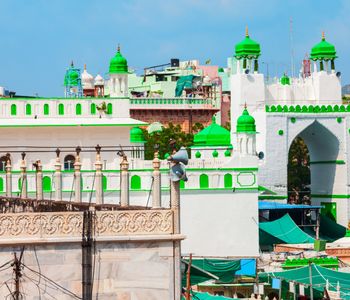
The first thing that hits you in Ajmer isn't the heat, though it will find you soon enough. It's the sound — a low, continuous hum of devotion rising from the Dargah Sharif, the shrine of Sufi saint Moinuddin Chishti. Pilgrims shuffle through narrow lanes, carrying baskets of rose petals and silk chadars, their whispered prayers dissolving into something larger than any single voice. Hindu, Muslim, Sikh, Christian — they all come here. That fact alone makes Ajmer one of the most quietly radical places in India.
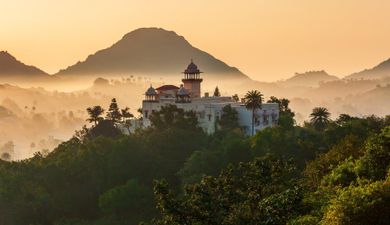
Pressed against the Aravalli Hills in central Rajasthan, Ajmer doesn't try to seduce you the way Jaipur or Udaipur do. No palatial lake reflections, no candy-colored facades jockeying for your camera. The city earns your attention slowly, through a kind of spiritual gravity that draws everyone toward its center — the Dargah.
A Shrine That Feeds Thousands
The Dargah Sharif complex operates on a scale that's hard to grasp until you're standing inside it. Two enormous iron cauldrons — degs — sit in the courtyard. The larger one holds nearly 4,800 kilograms of food. Devotees fund the cooking of rice, ghee, dry fruits, and sugar that fills these vessels, and the resulting offering, called langar, is distributed to anyone who comes. The air around the degs hangs sweet and heavy, saturated with rosewater and clarified butter. You don't visit this place. You're swallowed by it.
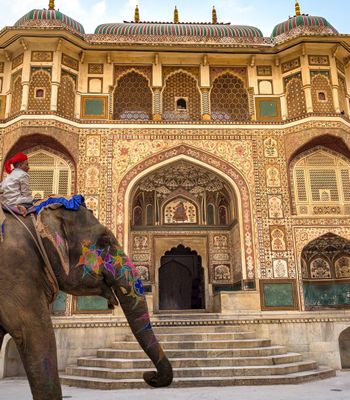
Each gateway into the Dargah was raised by a different Mughal emperor, so walking through them means passing through centuries of devotion compressed into stone. The Buland Darwaza, the Nizam Gate, the Shahjahani Gate — each one a ruler's gesture of reverence. The inner sanctum, draped in green and gold, stays packed from dawn until well past midnight. Qawwali singers perform in the evenings, their voices ricocheting off marble walls with an intimacy and force no concert hall could approximate.
Beyond the Dargah Walls
Most travelers treat Ajmer as a pitstop on the way to Pushkar, just fourteen kilometers over the Snake Mountain pass. That's a mistake. The city has a grain and texture that rewards anyone willing to wander for a few hours.
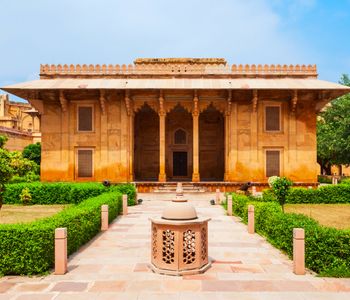
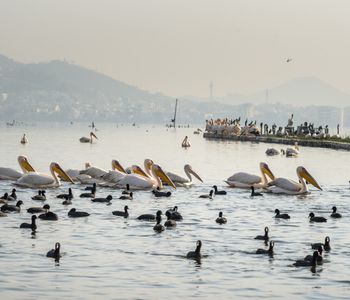
Ana Sagar Lake, constructed in the twelfth century by Anaji Chauhan, stretches along the city's northern edge. Mughal Emperor Jahangir later added marble pavilions — Baradari — along its banks. In the early morning, before the heat closes in, the lake holds the Aravallis in muted greens and grays. It's the one spot in Ajmer where silence actually feels possible.
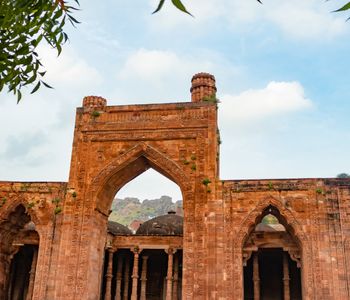
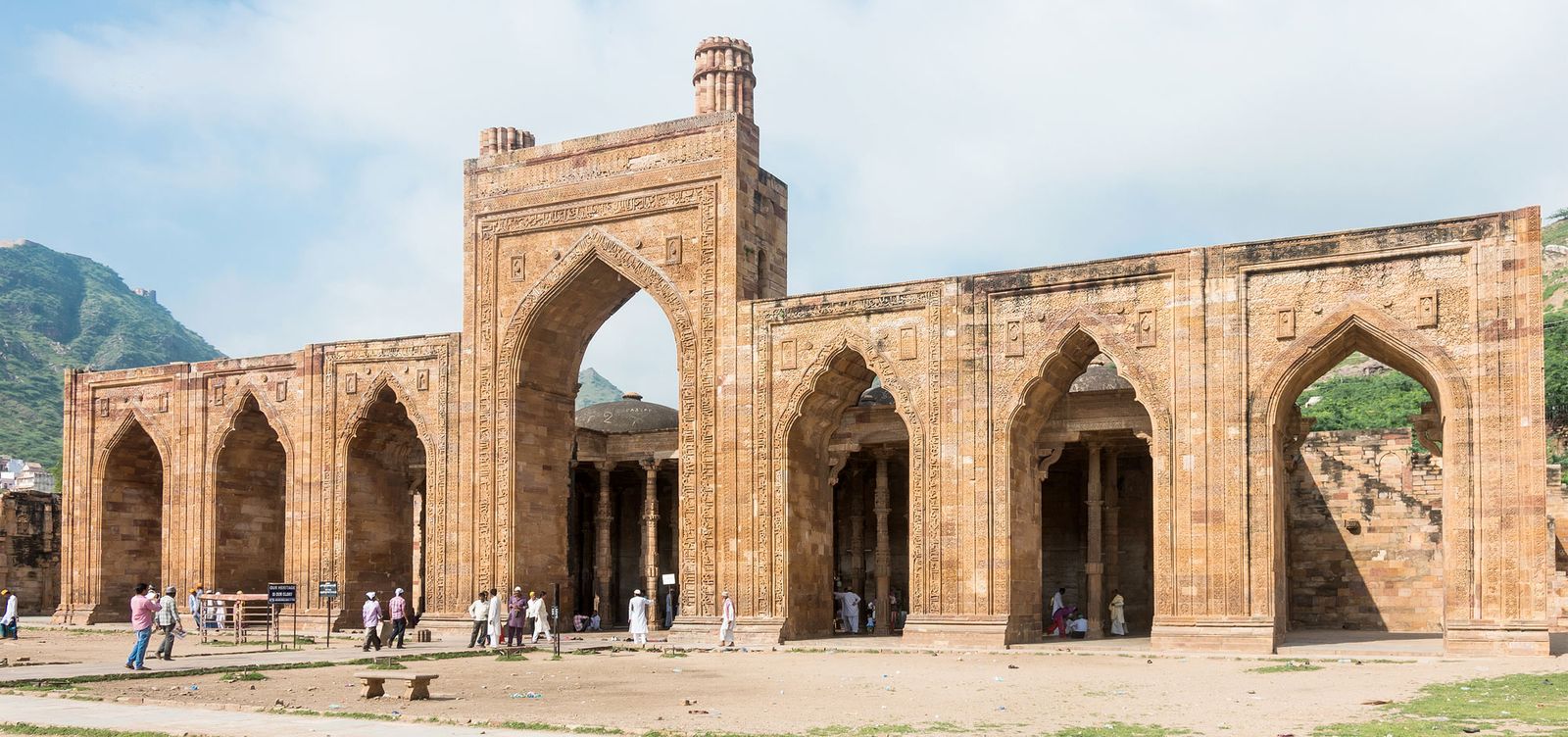
Adhai Din Ka Jhonpra, a mosque dating to 1199, stands as one of the most architecturally layered structures in Rajasthan. Its name translates roughly to "shed of two-and-a-half days" — a reference to the speed of its construction, or perhaps to a fair that once lasted that long, depending on who you ask. The pillared prayer hall, originally part of a Sanskrit college, still carries carved Hindu and Jain motifs beneath its Islamic arches. The collision of styles isn't jarring. It's eloquent.
The Heat, the Dust, and What You Eat
Let's be honest about the climate. From April through June, Ajmer bakes. Temperatures push past forty-five degrees Celsius, and whatever wind the Aravallis generate offers little mercy. The window you want falls between October and March, when the air cools enough for walking the old city lanes without feeling stalked by the sun.
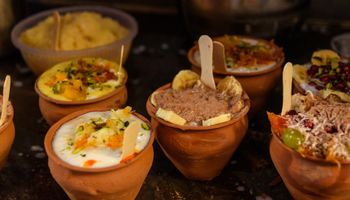
Rajasthani food here leans toward the hearty and the unsubtle. Sohan halwa — dense, ghee-soaked, built on cornflour and saffron — is Ajmer's signature indulgence: sticky, golden, and impossible to stop at one piece. The shops around the Dargah sell it in ornate boxes, and the better ones have been refining their recipes across generations. For something savory, the kachoris at small stalls near Naya Bazaar arrive puffed and blistering, crammed with a spiced lentil paste that carries genuine heat.
Naya Bazaar and the Madar Gate area form the commercial spine of the city. Fabric shops spill over with bandhani prints and mirrorwork textiles. Silver jewelry, much of it crafted locally, fills glass cases in shops barely wider than a doorway. Bargaining is expected. Silence is a negotiating tool.
A City That Doesn't Perform
Here's what's counterintuitive about Ajmer: its complete absence of tourist polish is exactly what makes it worth your time. There's no light-and-sound show, no curated heritage walk with laminated maps. The city operates on its own terms, oriented around faith and commerce rather than visitor satisfaction. You'll navigate uneven streets, dodge auto-rickshaws that honk on principle, and discover that some historical sites have almost no signage at all.
But step into the Dargah courtyard at dusk, when the qawwals begin and the crowd presses close, and you'll understand why people have been traveling to this spot for over eight hundred years. Ajmer doesn't ask to be admired. It asks to be felt.