

The first thing that hits you in Delhi isn't the heat or the noise — it's the smell of diesel exhaust braided with marigold garlands and frying cumin, all arriving at once like a declaration. Welcome. Pay attention. This country will not wait for you to be ready.
India's Golden Triangle — the 720-kilometer circuit connecting Delhi, Agra, and Jaipur — is the most traveled route in a country of 1.4 billion people, and for good reason. It compresses three radically different cities into a single journey that rearranges how you think about time, beauty, and organized chaos. Mughal tombs that make European cathedrals feel modest. A pink-walled city that operates as both living museum and modern metropolis. And yes, that marble mausoleum you've seen in a thousand photographs, which still manages to stop you cold when you're standing before it.
This guide breaks down the route day by day — how long you actually need, when to go, what to skip, and the details no one mentions until you're already standing in the wrong queue at Agra Fort.
Three Cities, One Truth: India Doesn't Ease You In
The Golden Triangle isn't a marketing invention — it's a geographic fact. Delhi, Agra, and Jaipur form a rough triangle across northern India, each side roughly 250 kilometers long, connected by highways that range from surprisingly smooth to deeply philosophical tests of patience. Five hundred years of Mughal and Rajput history compressed into a loop you can drive in a week — that's the draw, and it's real.
But here's what nobody mentions at the booking stage: the Triangle isn't about ticking off monuments. It's about the spaces between them. The chai stall at a highway dhaba where tea arrives in a clay cup you'll smash on the ground when you're done. The sound of a thousand horns creating a kind of symphonic aggression that somehow, impossibly, works. The moment you realize that Indian traffic operates under its own physics — Newtonian laws don't apply, but nobody dies.
Distances are short on paper. Delhi to Agra is about four hours by car; Agra to Jaipur, five or six. The Yamuna Expressway has made the first leg almost boring. The second leg, cutting through small Rajasthani towns where camels share the road with Maruti Suzukis, is anything but. A hired car with a driver is the smartest move — not because you can't take trains, but because flexibility matters more than speed when a 12th-century stepwell appears twenty minutes off-route.
Budget travelers can manage the Triangle for under $30 a day. Those who want air-conditioned heritage hotels and guided walks should plan for $100–150. Either way, the route rewards those who leave room for detours and don't try to see everything. You won't. India doesn't work that way.
The Great Debate: Three Days, Five Days, or Don't Even Bother Counting
Here's the honest answer: you can do the Golden Triangle in three days. You can also read War and Peace in a weekend. Neither experience will be particularly enjoyable. The standard three-day sprint — Delhi, Agra, Jaipur, one night each — leaves you with a blur of highway toll booths and a phone full of rushed photographs taken through bus windows.
Five days is the sweet spot. Two nights in Delhi, one in Agra, two in Jaipur gives you time to actually sit down for a meal without checking your watch, to get lost in a lane you didn't plan to enter, to let a city reveal itself on its own schedule rather than yours. The distances between these three cities are deceptive — Delhi to Agra is roughly 230 kilometers, Agra to Jaipur about 240 — but Indian highways have their own relationship with time. A four-hour drive can become six without warning, thanks to a stray water buffalo or an overturned truck that nobody seems particularly alarmed about.
Seven days is luxurious but not excessive. It lets you add a stop in Abhaneri to see the extraordinary Chand Baori stepwell between Agra and Jaipur, or spend a morning at Fatehpur Sikri without feeling like you're robbing hours from somewhere else. The extra breathing room transforms the trip from a checklist into something you actually inhabit.
One thing worth knowing: the triangle works in either direction, but Delhi-Agra-Jaipur-Delhi flows better logistically. You hit Agra early, see the Taj at sunrise before the crowds thicken into a wall of selfie sticks, then drift west into Rajasthan. Reverse it if you prefer, but the sunrise argument is hard to beat.
Delhi: A City That Doesn't Ask Permission
The first thing Delhi gives you is noise. Not the ambient hum of a European capital — a full-throated, unrelenting wall of sound. Auto-rickshaws honking in overlapping rhythms, temple bells cutting through the diesel haze, a muezzin's call drifting over the rooftops of Old Delhi's impossibly narrow lanes. You either surrender to it or spend your whole trip fighting a battle you cannot win.
Surrender is better.
Old Delhi operates on logic that predates urban planning. In Chandni Chowk, the lanes compress until your shoulders nearly brush both walls, and overhead wiring hangs in tangles that seem to defy electrical engineering. Down one alley, a man pulls fresh jalebis from a vat of saffron-tinted oil, each spiral crackling and impossibly sweet. Around the corner, the Jama Masjid — one of India's largest mosques — opens into a courtyard so vast it feels like stepping from a closet into a cathedral.
New Delhi is a different city entirely, and that's not a figure of speech. Edwin Lutyens designed the colonial capital with broad, tree-lined avenues meant to project imperial order. Humayun's Tomb stands here in its red sandstone symmetry, a 16th-century precursor to the Taj Mahal that honestly rewards close attention more than its famous descendant — you can actually study the inlay work without a crowd pressing against your back.
The contrast between the two Delhis is the point. Qutub Minar's 73-metre iron pillar has resisted rust for over 1,600 years, and nobody can fully explain why. Delhi is like that — it doesn't explain itself. It just persists, layering one civilization on top of another, daring you to keep up. Most cities reveal themselves slowly. Delhi throws everything at you in the first hour and lets you sort it out.
Agra: The City That Built a Tomb and Forgot to Leave
Everyone arrives for the Taj Mahal. Almost nobody expects the city around it. Agra is loud, unapologetic, and coated in a fine layer of exhaust and ambition — a place that peaked under Mughal emperors and has been arguing with its own legacy ever since. But that tension is exactly what makes it worth more than a two-hour photo stop.
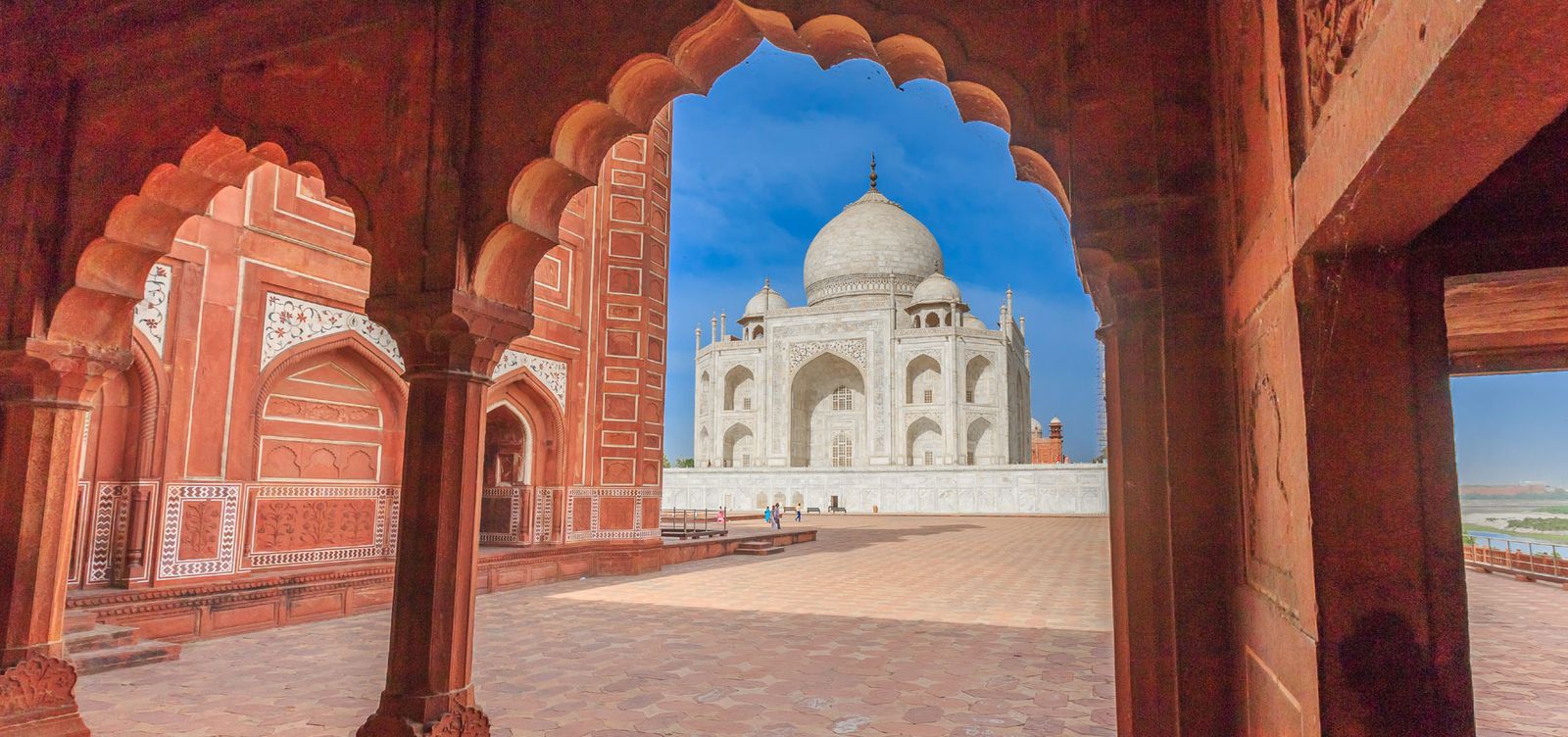
The Taj itself earns its reputation, but only if you time it right. Go at sunrise, when the marble shifts from grey to pale gold and the crowds haven't yet thickened into an immovable mass. Stand on the raised marble platform, not at the reflecting pool where every other photograph is taken, and watch the minarets catch light before the main dome does. That sequence — slow, almost theatrical — is the thing no photograph has ever captured.
Agra Fort, fifteen minutes away, tells the harder story. Shah Jahan spent his final years imprisoned here by his own son, gazing across the Yamuna at the mausoleum he'd built for his wife. The octagonal tower where he was confined, the Musamman Burj, still frames a distant view of the Taj. It's the most melancholy window in India.
Then there's Mehtab Bagh on the river's opposite bank — a ruined Mughal garden that offers the Taj without the selfie sticks. Late afternoon light here is extraordinary, and you'll share it with a fraction of the crowd. Itimad-ud-Daulah, often called the "Baby Taj," deserves an hour. Its inlaid pietra dura stonework is arguably more intricate than its famous cousin's, and you can actually stand close enough to trace the details with your eyes.
Skip the marble souvenir shops along the main drag. They exist to intercept tourists running on a schedule. Agra rewards anyone willing to slow down and look past the obvious.
Jaipur — Where the Dust Runs Pink and the Forts Don't Apologize
The first thing you notice isn't the color. It's the sound — a low, constant percussion of horns, temple bells, and haggling voices that hits the moment your car crawls through the old city gates. Then the terracotta-pink wash on every building starts to register, not as a postcard cliché but as something stranger: an entire city dressed in the same fading blush, like a shared hallucination baked into sandstone.
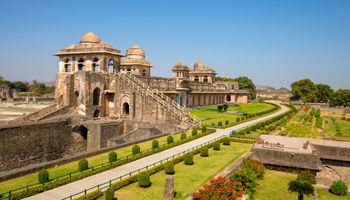
Amber Fort earns every minute of the uphill approach. The mirrored Sheesh Mahal ceiling catches a single candle flame and fractures it into a thousand points of light — a parlor trick that still works after four centuries. What surprises most people is how the fort feels less like a museum and more like a small city unto itself, with its own temples, gardens, and labyrinthine corridors designed to confuse invaders.
Back in the city, Hawa Mahal's honeycomb facade looks almost absurdly delicate from the street. It was built so royal women could watch processions without being seen — which tells you everything about the contradictions Jaipur wears openly. The Jantar Mantar observatory nearby features instruments so massive they seem sculptural; the sundial alone stands 27 meters tall and reads time accurate to two seconds.
Skip the gem shops that every rickshaw driver steers you toward. Instead, find your way to Johari Bazaar in the late afternoon, when jewelers spill trays of uncut emeralds onto velvet cloths under fluorescent light. The lac bangles here cost almost nothing and crack if you squeeze too hard — a perfect souvenir precisely because they're fragile.
Order the laal maas at any dhaba worth its reputation. The mutton falls apart after hours in a clay pot, and the chili heat builds slowly, almost politely, before it owns you entirely.
Five Days, Three Cities: Your Day-by-Day Blueprint
Day 1: Delhi — The Mughal Side. Start at Jama Masjid in the morning, when the courtyard pigeons outnumber the tourists. Walk through the lanes of Old Delhi to the Red Fort, then spend the afternoon at Humayun's Tomb, where the symmetry alone will hold you still for twenty minutes. Eat chaat at a street stall in Chandni Chowk before dark — the aloo tikki, specifically, crisp and smashed and drowning in tamarind.
Day 2: Delhi — The Imperial Side, Then South. Qutub Minar first thing. India Gate and Rashtrapati Bhavan for the scale of Lutyens' vision. By afternoon, lose yourself in the galleries of the National Museum or wander Lodhi Garden, where joggers circle 15th-century tombs without a second glance. Drive to Agra in the evening — roughly four hours if the highway cooperates, which it sometimes doesn't.
Day 3: Agra — Dawn at the Taj, Afternoon at the Fort. Be at the Taj Mahal gate before sunrise. No negotiation on this. The marble shifts from grey to pale gold to white in about forty minutes, and you want all of it. After lunch, cross to Agra Fort and find the octagonal tower where Shah Jahan spent his final years gazing at his wife's tomb across the river. Itimad-ud-Daulah in the late afternoon light is worth the detour.
Day 4: Fatehpur Sikri and the Road to Jaipur. Stop at Fatehpur Sikri on the way out — Akbar's abandoned sandstone capital, eerily intact. Then six hours to Jaipur. Arrive, eat dal baati churma, collapse.
Day 5: Jaipur — Amber Fort to Hawa Mahal. Morning at Amber Fort, where the mirror work in Sheesh Mahal catches whatever light finds it. Descend into the city for The City Palace and Jantar Mantar's absurdly precise stone instruments. End at Hawa Mahal as the pink sandstone goes copper in the fading sun. That's the image you'll keep.
When the Heat Won't Kill You (and When It Might)
October through March. That's the window. Everything outside it is a negotiation with your own endurance, and the heat usually wins.
The sweet spot lands between mid-October and mid-March, when temperatures across Delhi, Agra, and Jaipur hover between 15°C and 25°C during the day. December and January mornings bring genuine cold — fog wraps the Taj Mahal at dawn, and you'll see locals bundled in wool shawls while you fumble with your camera in numb fingers. But by midday, the sun softens everything into something close to perfect. February is arguably the finest month: clear skies, comfortable warmth, and the tail end of the tourist rush starting to thin.
April through June is brutal. Temperatures in Jaipur and Agra routinely crack 45°C, and the air in Delhi feels like standing behind a bus exhaust. Monuments become endurance tests rather than experiences. The marble walkway at the Taj Mahal will scorch your bare feet — they require you to remove shoes — and the pleasure of being there evaporates along with your will to continue. Locals themselves retreat indoors by noon.
The monsoon, July through September, brings relief from the heat but introduces its own complications. Humidity is suffocating, roads flood unpredictably, and Agra's riverside gardens turn to mud. That said, the Taj after a rain shower — clouds breaking behind the dome, the gardens washed a violent emerald — is a sight few travelers ever witness. It's a gamble, but the payoff can be extraordinary.
November remains the most popular month, which means crowds at every major site. If you can manage early March — still cool, far fewer tourists, jacaranda starting to bloom across Jaipur — you'll have the smarter trip.
Three Cities, One Truth You Won't Shake
The Golden Triangle doesn't seduce you gently. It grabs you by the collar in a Delhi traffic jam, holds you still before the Taj at sunrise, and dresses you in pink light as Jaipur's sandstone walls catch the late afternoon. There's no easing in. India doesn't believe in easing in.
What makes this route endure isn't convenience, though the tight geography helps. It's the compression. In less than a week, you move through Mughal grandeur, colonial architecture, Rajput defiance, and the roaring present tense of a country that refuses to sit still. Few routes anywhere on Earth deliver that kind of density.
And here's the thing nobody mentions: the Golden Triangle is better on a second visit than a first. The first time, you're overwhelmed — processing the scale of Jama Masjid, the symmetry of the Taj, the controlled chaos of Jaipur's bazaars. The second time, you notice the chai wallah who's been working the same corner outside Agra Fort for thirty years, or the way light moves differently through a jali screen depending on the season. The circuit rewards attention more than novelty.
It also ruins you, slightly, for other travel. After navigating Old Delhi's lanes, European pedestrian zones feel almost too orderly, too quiet. After the Taj Mahal, other monuments carry a faint asterisk. Jaipur's Hawa Mahal makes you suspicious of buildings that only show one face.
The Golden Triangle doesn't promise comfort or simplicity. It promises something harder to find and impossible to manufacture — the feeling of being genuinely, completely, electrically alive in a place. That's worth every bead of sweat, every honking horn, every moment of bewildered wonder.
Delhi will overwhelm you with its contradictions. Agra will silence you at dawn. Jaipur will seduce you with its stubborn, pink-walled pride. Together, these three cities don't just show you India — they argue about what India is, loudly and without consensus. That's the point.
Don't wait for the "right time." Book the trains, hire the driver, lace up shoes you don't mind losing to monsoon puddles or marble temple floors. Eat the street food. Say yes to the chai offered by a shopkeeper who has no intention of selling you anything.
This triangle has sharp edges. They'll cut through every assumption you carried in — and that's exactly what good travel does.