A dome inspired by an ancient Buddhist stupa rises above the Delhi skyline, crowning a 330-acre estate that has witnessed India's transformation from colonial subject to sovereign democracy. Rashtrapati Bhavan — the official residence of the President of India — isn't just one of the largest heads-of-state residences on the planet. It's a living monument where imperial architecture meets Indian soul, where 700 million bricks tell the story of a nation reborn.
Whether you're drawn by the sweep of history, the genius of its design, or the intoxicating bloom of its legendary gardens, stepping onto these grounds feels like walking into the very heartbeat of Indian governance and heritage.
From Viceroy's Mansion to the People's Palace
It all started with a royal announcement. In 1911, at the glittering Delhi Durbar, King George V declared that India's capital would shift from Calcutta to Delhi. Almost overnight, plans for a grand new city took shape — and at its center, an imposing residence for the Viceroy, Britain's highest-ranking official on Indian soil.
Renowned British architect Sir Edwin Lutyens took the reins in 1912, with Herbert Baker shaping the broader bones of New Delhi around him. What followed was an astonishing 17-year labor of ambition and craftsmanship. Thousands of workers hauled stone and brick from across the subcontinent, and by 1929, the Viceroy's House stood complete — an unapologetic statement of imperial power.
Then came independence. In 1947, the building shed its colonial name and became Rashtrapati Bhavan — Hindi for "Presidential Residence." Dr. Rajendra Prasad moved in as India's first President in 1950, and every President since has called this extraordinary estate home. What was once a symbol of foreign rule now embodies the world's largest democracy.
An Architectural Love Letter to Two Worlds
Rashtrapati Bhavan doesn't belong to any single tradition — and that's what makes it extraordinary. Lutyens wove together Mughal palace grandeur, the serene geometry of Buddhist stupas, and the stately proportions of European classical design into something entirely its own.
That Unforgettable Dome
You'll spot it long before you reach the gates. The central dome — unmistakably inspired by the Great Stupa at Sanchi — anchors the entire structure like a compass point on the skyline. Arrive during golden hour, when early morning or late afternoon light washes the sandstone in amber, and the silhouette is absolutely breathtaking.
A Scale That Stops You in Your Tracks
Numbers barely do it justice, but here they are: 340 rooms inside the main building. Corridors stretching 2.5 kilometers. Gardens covering 190 acres. Construction consumed 700 million bricks and 3.5 million cubic feet of stone. Most visitors pause at the gates, just trying to absorb the sheer enormity of what stands before them, before taking a single step inside.
Where India Whispers in Every Detail
Run your eyes along the roofline and you'll find carved elephants standing guard. Delicate jaali screens filter sunlight into lace-like patterns across stone walls. Lotus-shaped fountains murmur in courtyards below. Inside, the Durbar Hall takes your breath with its towering marble columns and richly painted ceiling — originally built for viceregal pomp, now the stage where India's Presidents are sworn into office. The weight of ceremony hangs in the air like incense.
Amrit Udyan: When the Gardens Explode into Color
Every year between February and March, something magical happens behind the main building. The gates of Amrit Udyan — historically known as the Mughal Gardens — swing open to the public, and the result is nothing short of sensory overload.
Fifteen acres of terraced garden unfold in precise Mughal symmetry, laced with flowing water channels that catch the sunlight like ribbons of silver. Hundreds of rose varieties perfume the air — deep crimson, butter yellow, blushing pink — while tulips and seasonal blooms paint the terraced beds in every conceivable shade. Wander through the Long Garden, linger in the Circular Garden, and let the fragrance of herbs and flowering shrubs drift over you as fountains provide a soft, hypnotic soundtrack.
Fair warning: thousands of visitors pour in daily during the open season. Arrive early in the morning, when the light is soft and the crowds are thin. For anyone who loves gardens, this brief annual window is one of Delhi's most extraordinary outdoor experiences — miss it and you'll wait another year.
More Than a Residence: A Symbol That Still Pulses with Power
State dinners unfold beneath crystal chandeliers here. Diplomats exchange handshakes in its halls. Guard-of-honor ceremonies for visiting foreign leaders play out against its sandstone façade. Rashtrapati Bhavan isn't a museum piece — it's an active nerve center of Indian democracy.
That said, the Rashtrapati Bhavan Museum Complex, inaugurated in 2014, does offer a fascinating deep dive for the historically curious. Spread across multiple galleries, it houses vintage presidential carriages, personal belongings of former heads of state, rare photographs, and interactive exhibits that trace India's political evolution from independence to today. Each artifact feels like a chapter in a story still being written.
How to Make It Happen: Your Visit, Sorted
Access is through guided tours, typically offered on Fridays, Saturdays, and Sundays (national holidays excluded). Here's the crucial part: book your tickets in advance through the official Rashtrapati Bhavan website. Walk-ins are almost never accommodated, and slots fill up fast.
Choose Your Circuit
Several tour routes await. The main building tour sweeps you through the Durbar Hall, the elegant Marble Hall, and other significant rooms. A separate garden circuit runs during the annual opening season. The museum complex keeps its own schedule. Tours generally operate from 9 a.m. to 4 p.m., with specific time slots assigned at booking. Budget one to two hours depending on your chosen route — you'll want every minute.
What to Know Before You Go
Entry fees are modest and vary by circuit; Indian citizens pay a lower rate than international visitors. Bring valid photo ID — security screening is thorough and non-negotiable. Photography restrictions apply in certain zones, so check the latest guidelines on the official site before heading out. Wear comfortable walking shoes; the distances between sections of the estate are no joke.
The Walk That Makes the Whole Experience
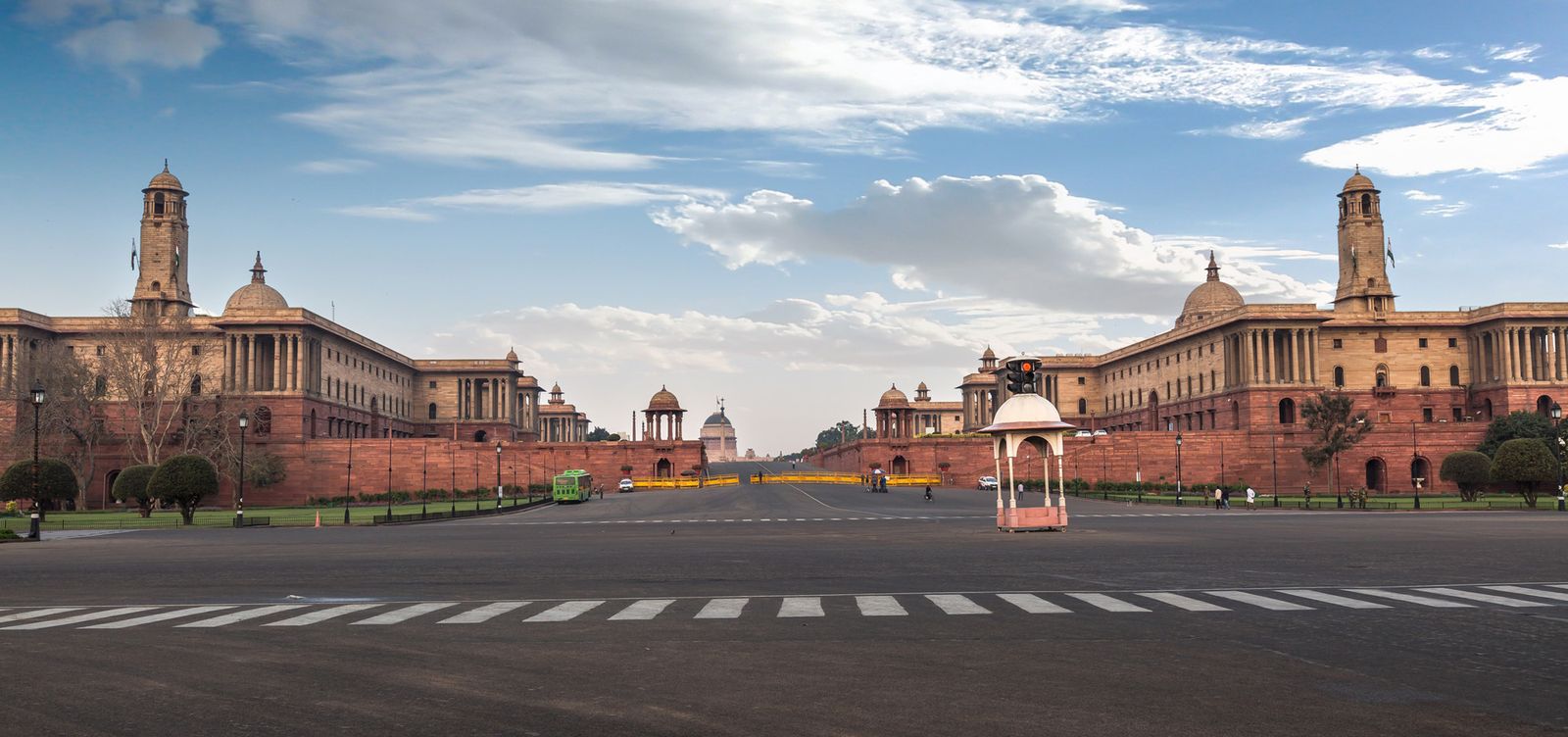
Rashtrapati Bhavan crowns Raisina Hill at the western end of Kartavya Path (formerly Rajpath). The nearest metro stop is Central Secretariat on the Yellow Line, just a short walk from the main entrance. Taxis and ride-shares can get you close, though vehicle access near the gates is restricted for security.
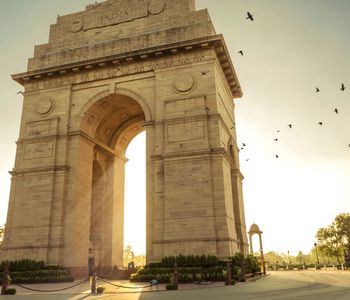
Do yourself a favor: start at India Gate and walk westward along Kartavya Path. The wide, tree-lined boulevard stretches before you, and with each step, Rashtrapati Bhavan rises a little higher above the horizon — its dome growing, its colonnades sharpening into focus. By the time you arrive, you'll understand exactly why Lutyens placed it here: to command, to inspire, to take your breath away.
Few landmarks in Delhi connect you so viscerally to India's story — from colonial ambition to hard-won independence to the living, breathing democracy that calls this extraordinary estate home. Reserve your tour early, lace up your walking shoes, and give Rashtrapati Bhavan the time it deserves. This isn't just a building. It's India, carved in stone.