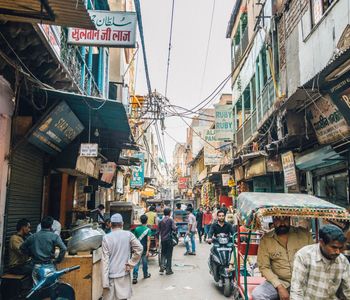
The first thing that strikes you about Central Delhi isn't a building or a monument — it's the sheer sense of *space*. After the glorious chaos of Old Delhi's narrow lanes just a few kilometers north, these broad, tree-lined avenues feel almost impossibly grand, stretching toward the horizon like corridors drawn with a ruler and a dream of permanence.
This is the political and symbolic heart of India, and every sandstone facade, every manicured lawn, every ceremonial boulevard was designed to say so. For travelers trying to understand what makes modern India tick, Central Delhi isn't just a stop on the itinerary — it's the foundation.
A Capital Built to Impress — and It Still Does
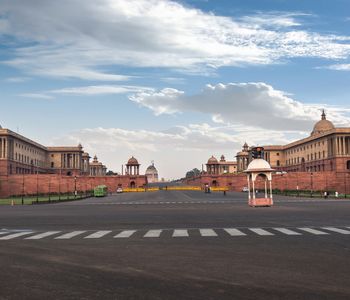
British architects Edwin Lutyens and Herbert Baker laid out these streets in the 1920s and 1930s, crafting an administrative capital meant to project imperial authority. That ambition is still palpable. Rashtrapati Bhavan, India's presidential residence, crowns Raisina Hill with a massive dome and sprawling Mughal-inspired gardens that seem to command the entire skyline.
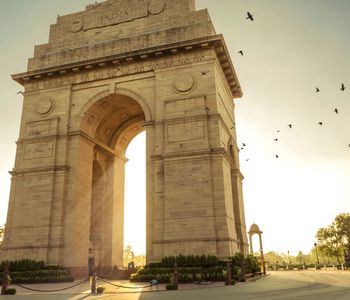
From there, the ceremonial boulevard of Kartavya Path (formerly Rajpath) unfurls eastward toward India Gate, a War Memorial arch that might just be the most photographed structure in the country. Visit at dusk. The honey-colored stone catches the last light before floodlights take over, and the illuminated arch against a bruised purple sky is the kind of image that lodges itself permanently in your memory.
Where Wide Avenues Bloom Into Color
Walking through Central Delhi feels unlike anywhere else in India. The roads are wide enough to let your thoughts wander. Expansive lawns stretch between government buildings clad in warm sandstone, and the pace — surprisingly, almost defiantly — stays unhurried for a national capital.
Overhead, mature neem, jamun, and gulmohar trees throw pools of welcome shade during the sweltering months. Come in spring, though, and those same trees ignite — corridors of blazing orange, deep purple, and bright white blossoms lining the avenues like nature decided to throw a parade.
Five Thousand Years Under One Roof
Central Delhi's cultural riches run far deeper than government architecture. The National Museum alone could swallow an entire day and leave you wanting more. Its collection spans five thousand years of Indian civilization — from haunting Harappan-era artifacts to exquisitely detailed Mughal miniature paintings — and it rewards the traveler who lingers rather than rushes.
Just nearby, the National Gallery of Modern Art occupies a stately building filled with works by some of India's most important contemporary artists. If you love art or history even a little, block out a full day for these two institutions. You'll need it.
Temples, Cathedrals, and Giant Stone Sundials
Quieter revelations wait around unexpected corners. The Cathedral Church of the Redemption and Sacred Heart Cathedral both showcase striking twentieth-century religious architecture in distinctly different styles — one Anglican restraint, the other Italian baroque warmth.
Then there's Jantar Mantar, and nothing quite prepares you for it. Built in the eighteenth century by Maharaja Jai Singh II — more than a hundred years before the British arrived — this astronomical observation site features massive geometric instruments angled toward the sky. Stand beside these towering stone sundials and triangular ramps and try to fathom the precision of pre-telescope science. It's humbling.
Tombs Among the Joggers
Green spaces define Central Delhi's character as much as its monuments do. Lodhi Gardens, bordering the district, is where morning joggers weave past fifteenth- and sixteenth-century tombs scattered across beautifully landscaped grounds. The combination — ancient domed mausoleums framed by bougainvillea, with the sound of sneakers on gravel — creates an unusual harmony between heritage and everyday life.
Around India Gate, the lawns transform into a communal living room every evening. Families spread out with snacks and kites, children chase each other across the grass, and the scent of roasted peanuts and freshly cut sugarcane drifts through the air. On weekends, the crowd swells into a cheerful sea of picnic blankets.
Connaught Place: Where the Energy Shifts
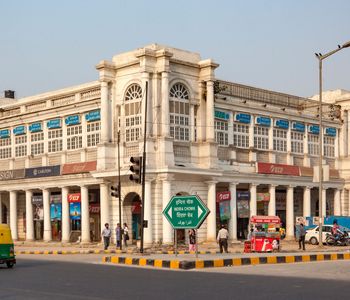
Step into Connaught Place and the atmosphere changes completely. This circular marketplace — white-columned Georgian-style buildings arranged in elegant concentric rings — pulses with a different kind of Delhi energy, buzzing from morning until well past dark.
Here, you can lose yourself in:
- Restaurants dishing up cuisines from every corner of India and beyond
- Beloved bookshops and branded retail stores tucked under the colonnades
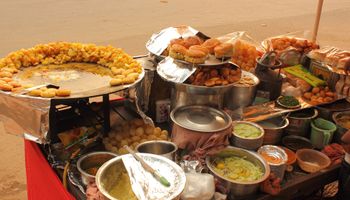
- Street food vendors whose chaat, golgappas, and creamy kulfi are worth every calorie
- The underground Palika Bazaar, a labyrinth of bargain shopping
The tangy hit of tamarind chutney, the crunch of fried dough, vendors calling out their specialties — Connaught Place is a sensory experience as much as a shopping one. It makes a perfect anchor point for exploring the wider district.
Getting Around Without the Headache
Navigating Central Delhi is refreshingly simple. The Delhi Metro connects the key landmarks efficiently — hop off at Rajiv Chowk for Connaught Place, Udyog Bhawan for Kartavya Path, or Central Secretariat for the government quarter. Auto-rickshaws and ride-hailing apps handle shorter hops with ease.
Because most attractions cluster within a few kilometers of each other, dedicated walkers can cover impressive ground on foot. Time your visit between October and March, when the air is cool and crisp, and the city practically begs you to explore on two feet rather than four wheels.
More Than Monuments — A Living Landscape
What makes Central Delhi unforgettable isn't any single landmark. It's the way history, governance, and everyday life layer onto each other in the same landscape. These monuments aren't relics sealed behind velvet ropes — they remain active symbols of the world's largest democracy, surrounded by the people they were built to serve.
Whether you spend a single golden afternoon photographing India Gate or dedicate an entire week to every museum, garden, and hidden corner, this district offers something rare: a visceral understanding of India's identity that few other places on earth can match.