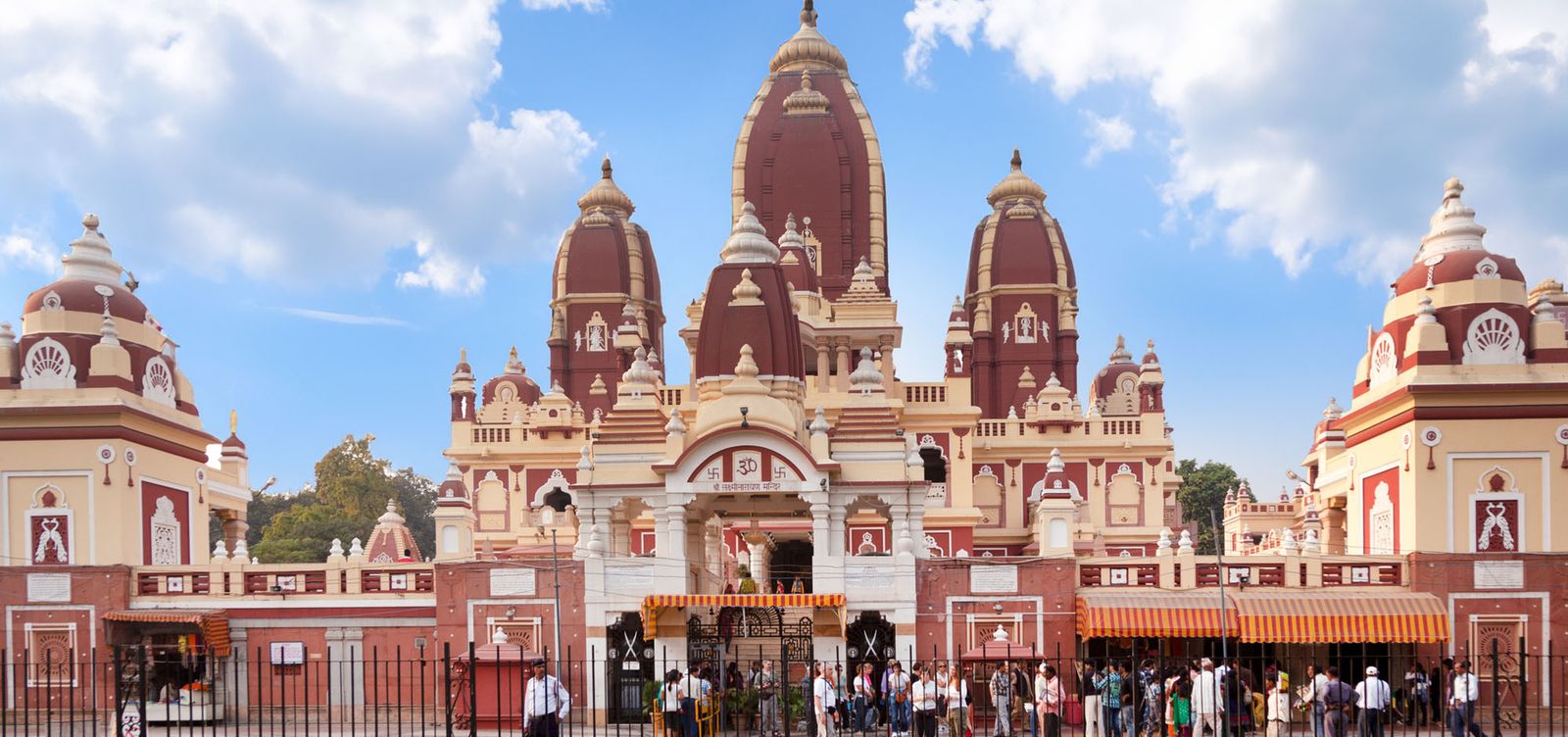
The clang of brass bells fills the air, mingling with the low hum of chanting voices and the sweet drift of incense smoke. Before you even step through the gates, Birla Mandir has already begun pulling you in. Officially known as Laxminarayan Temple, this radiant red sandstone and marble masterpiece has stood at the heart of Delhi since 1939—when Mahatma Gandhi himself inaugurated it with one revolutionary condition: every person, regardless of caste or creed, must be free to walk through its doors. Perched on Mandir Marg in Central Delhi, it honors Lord Vishnu and Goddess Laxmi while offering something rare in one of the world's most chaotic capitals—genuine stillness. If you're weaving through Delhi's monuments and madness, this is where you come to breathe.
A Temple Born from Revolution
Not many places of worship can claim they changed the social fabric of an entire nation. But Birla Mandir comes close. Funded by Baldeo Das Birla and his son Jugal Kishore Birla—scions of one of India's most powerful industrial dynasties—construction began in 1933 and wrapped up six years later.
Here's where the story gets extraordinary. Gandhi agreed to cut the ribbon, but only if the temple would never turn anyone away. In an era when lower-caste communities were routinely barred from Hindu sacred sites, that single stipulation sent shockwaves across the country.
Decades later, that promise still holds. Hindus, Muslims, Sikhs, Christians, curious backpackers from Buenos Aires—everyone walks in through the same entrance, no questions asked. The Birla family's legacy of philanthropy echoes through every open gate, and millions of visitors each year are proof that Gandhi's vision took root.
Sandstone, Marble, and Sky-Piercing Spires
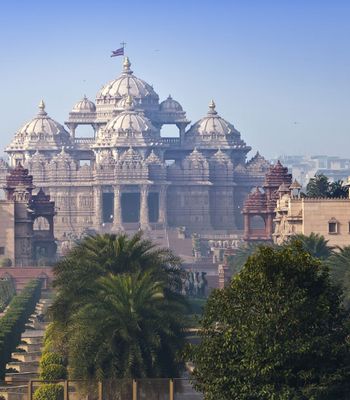
Your first glimpse of the temple stops you mid-step. Three towering Nagara-style spires surge upward, the tallest soaring roughly 160 feet—so high your neck aches craning to see the tip. Red sandstone and white marble, quarried in Rajasthan, wrap the entire structure in a warm, shifting palette that glows amber at sunrise and deepens to rose gold as the afternoon fades.
Run your eyes across the walls and you'll discover carvings layered over every available inch—lotus blossoms unfurling beside the faces of Hindu deities, mythological battle scenes frozen in stone. Architect Sris Chandra Chatterjee, a passionate champion of reviving classical Indian temple design, poured his convictions into every proportion and curve. The result feels ancient and timeless, even though it's barely a century old.
Where Light Paints the Floors
Step inside the main shrine and the temperature seems to drop a degree or two. Beautifully sculpted idols of Lord Narayan (Vishnu) and Goddess Laxmi preside over the central sanctum, their forms gleaming under soft light. Adjacent chambers honor Lord Shiva and Goddess Durga, while another shelters Lord Krishna.
Tilt your head upward—this is the detail most visitors miss. Painted ceilings swirl with color, and stained glass panels catch the sun, scattering jewel-toned light across polished marble floors. Even if Hindu iconography is entirely new to you, the visual storytelling here needs no translation. Each shrine reads like a chapter in an illuminated manuscript you can walk through.
Seven Acres of Hidden Calm
Most travelers beeline for the main temple and call it done. Don't make that mistake. The grounds sprawl across approximately 7.5 acres, and the landscaped gardens alone are worth lingering in. Shaded pathways wind between flowering beds, and the gentle splash of fountains layers a meditative soundtrack over everything.
Tucked behind the main building, an artificial cave waits for the curious. Inside, vivid murals blaze across the walls—scenes ripped straight from the Mahabharata and the Ramayana rendered in saturated reds, blues, and golds. It feels like stepping into a storybook. Nearby, the large Geeta Bhawan hosts religious discourses, cultural performances, and community events year-round, humming with life even on ordinary weekdays.
When the Temple Comes Ablaze
Visiting on a regular Tuesday is lovely. Visiting during a festival is unforgettable. During Janmashtami—Lord Krishna's birthday, celebrated each August or September—the complex swells with devotees singing, dancing, and carrying offerings through flower-strewn corridors. The energy is electric.
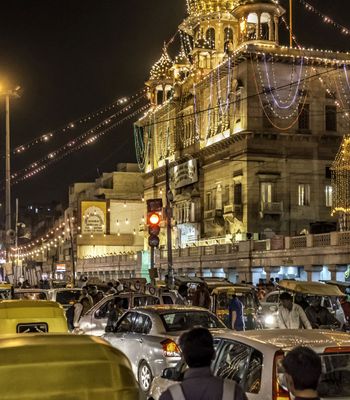
Come Diwali, thousands of oil lamps and strings of decorative lights transform the entire site into something that glitters like a jewel box. Even on ordinary evenings, the daily aarti ceremony delivers a powerful sensory experience—priests chanting in unison, brass bells ringing in cascading waves, the warm flicker of flame reflected in dozens of upturned faces. If you attend only one Hindu worship ritual during your time in India, let it be this one.
Everything You Need Before You Go
Birla Mandir opens its doors daily from 4:30 a.m. to 1:30 p.m., then again from 2:30 p.m. to 9:00 p.m. Entry is completely free—always has been, always will be. Cameras aren't allowed inside the temple itself, so soak up the exterior and gardens with your lens, and let your eyes do the work once you cross the threshold. Budget one to two hours to explore both the interiors and the grounds without rushing.
When to Time Your Visit
October through March is the sweet spot. Delhi's winter air is crisp, skies are clear, and you won't be wilting under the punishing summer heat that regularly rockets past 110°F. An early morning arrival rewards you with cool temperatures and blissfully thin crowds. Prefer a more atmospheric experience? Show up in the evening, when golden artificial light bathes the spires and the aarti ceremony fills the air with sound and fire.
Finding Your Way There
Sitting on Mandir Marg near the famous Connaught Place, the temple is almost impossible to miss on a Delhi sightseeing route. Hop off at RK Ashram Marg metro station on the Blue Line and you're a ten-minute walk from the entrance. Auto rickshaws cluster nearby, and any Delhi taxi driver worth their salt knows exactly where to take you. Ride-sharing apps work seamlessly here too—just type "Birla Mandir" and you'll be dropped right at the gate.
Insider Tips to Make It Seamless
Shoes come off before you enter. A free storage area near the entrance keeps them safe, so don't stress about leaving your sneakers behind. Wear clothing that covers your shoulders and knees—it's a simple sign of respect that goes a long way. During major festivals, queues can stretch dramatically, so arrive early or prepare to be patient. Mobile phones are welcome inside, but switch to silent mode; the atmosphere deserves it.
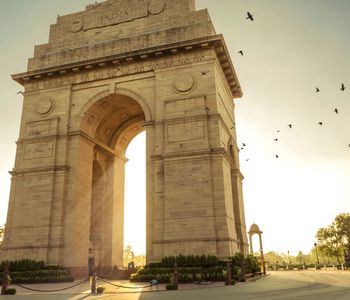
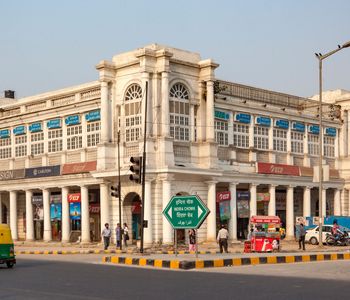
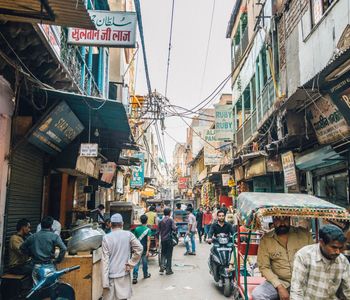
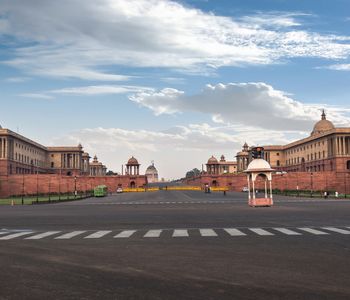
Once you emerge, hunger will likely hit. Street vendors crowd the roads just outside the temple, and the smell of tangy chaat, crispy golden samosas, and freshly squeezed fruit juice is almost impossible to resist. For a sit-down meal or some retail therapy, Connaught Place is a short stroll away. From there, India Gate, Rashtrapati Bhavan, and the quirky astronomical instruments of Jantar Mantar are all within easy striking distance—making Birla Mandir the perfect launchpad for a full day in Delhi's historic core.
For more than eight decades, this temple has kept its original promise: every door open, every visitor equal. The architecture dazzles, the gardens quiet your mind, and the evening aarti stays with you long after the bells stop ringing. In a city that never seems to slow down, Birla Mandir is proof that some places still know how to hold space for everyone.