Designed during the British colonial era, Connaught Place is one of the largest financial, commercial and business centers in India. With its distinctive circular layout and gleaming white colonnaded buildings, this marketplace has served as the heart of New Delhi for nearly a century. Whether you're shopping for international brands, sampling street food or simply soaking in the architectural grandeur, Connaught Place delivers a sensory experience unlike any other market in the country. Locals affectionately refer to it as "CP," and it remains a gathering point for residents and tourists alike. From underground markets to open-air plazas, this iconic destination blends colonial history with modern commerce in a way that feels both timeless and vibrant. If Central Delhi is on your itinerary, Connaught Place deserves a generous block of your time.
Tracing the History of Connaught Place
Construction of Connaught Place began in 1929 under the direction of British architect Robert Tor Russell. As the chief architect of the Public Works Department, Russell envisioned a grand commercial district befitting the new imperial capital. The marketplace was named after Prince Arthur, the first Duke of Connaught, who was the third son of Queen Victoria. By 1933, the core structure was largely complete, and businesses quickly moved into the columned arcades.
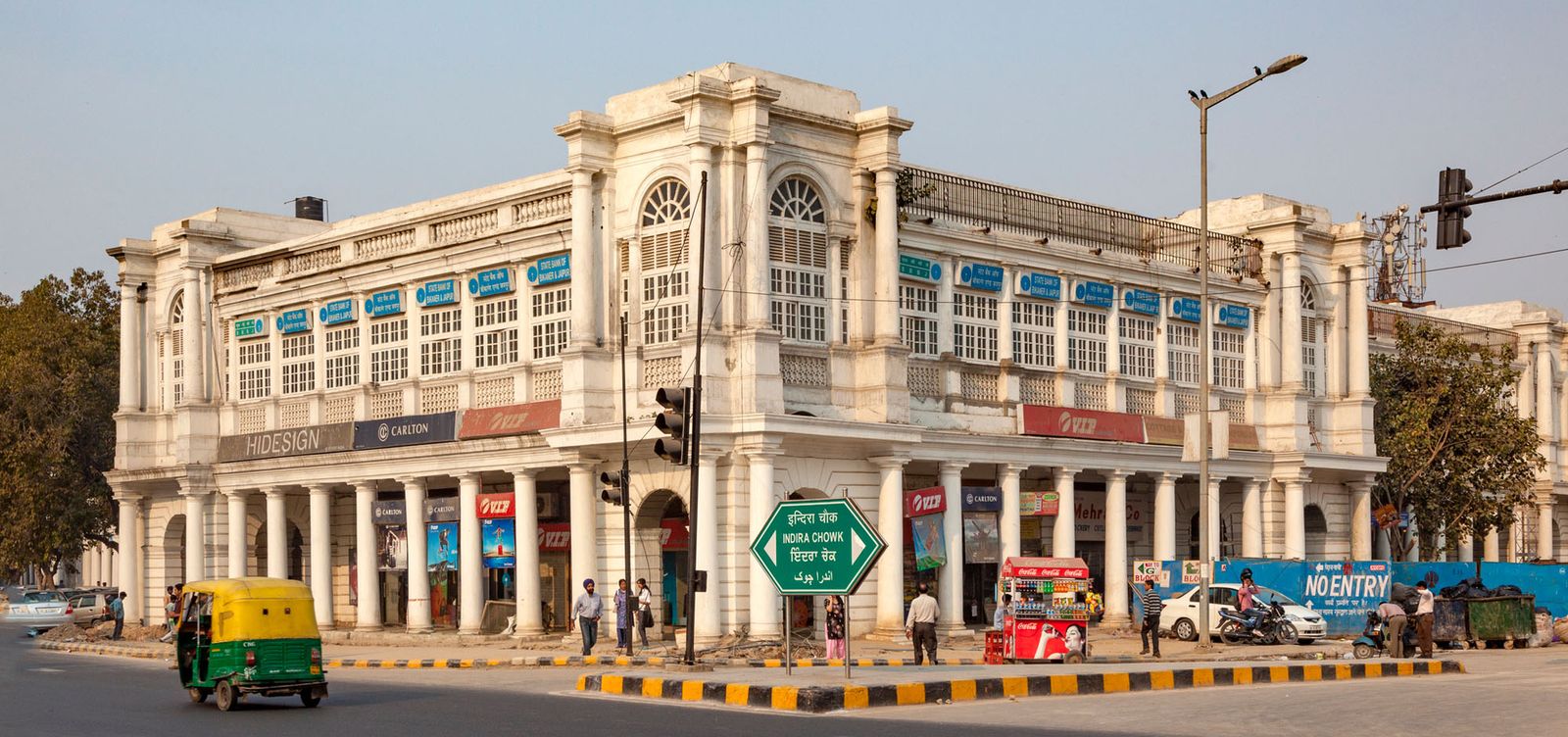
Following India's independence in 1947, Connaught Place evolved from a colonial shopping district into a symbol of the young nation's commercial ambitions. Over the decades, the Indian government renamed the inner circle Rajiv Chowk and the outer circle Indira Chowk in honor of the former prime ministers. However, most Delhiites and visitors still use the name Connaught Place in everyday conversation. Today, the marketplace stands as a protected heritage zone, ensuring that its original architectural character endures even as the city modernizes around it.
Understanding the Unique Architecture
Immediately upon arrival, the circular design of Connaught Place sets it apart from virtually every other market in India. The layout consists of two concentric circles — an inner circle and an outer circle — connected by radial roads. White Georgian-style columns line the covered walkways, creating a uniform and elegant facade that stretches across hundreds of shops and offices. Remarkably, this uniformity was intentional, designed so that no single establishment would visually dominate the streetscape.
Each block within the circle is identified by a letter, from A through N, which helps visitors navigate the sprawling marketplace. The covered colonnades provide shade from Delhi's intense summer heat and shelter during monsoon rains, making the market accessible in nearly every season. At the center of the inner circle sits a large open plaza known as Central Park. Here, a towering Indian flag and a fountain create a gathering space where families, couples and street performers converge throughout the day. For architecture enthusiasts, simply walking the arcades and observing the colonial-era detailing is a rewarding experience on its own.
Exploring the Shopping Experience
Connaught Place caters to every kind of shopper. From global fashion brands to locally owned bookstores, the variety within this market is staggering. Along the outer circle, you'll find flagship outlets of major Indian and international retailers. Meanwhile, the inner circle houses a mix of restaurants, electronics shops and boutique stores that have operated here for generations.
Palika Bazaar
Beneath the surface of Connaught Place lies Palika Bazaar, one of India's most famous underground markets. Built in the 1970s, this subterranean shopping center offers everything from clothing and accessories to electronics and souvenirs. Bargaining is expected here, so visitors should be prepared to negotiate confidently. Although the market can feel crowded, the prices are often significantly lower than those at street-level shops.
Janpath Market
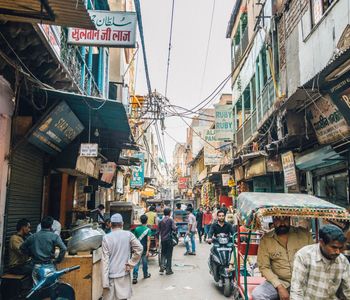
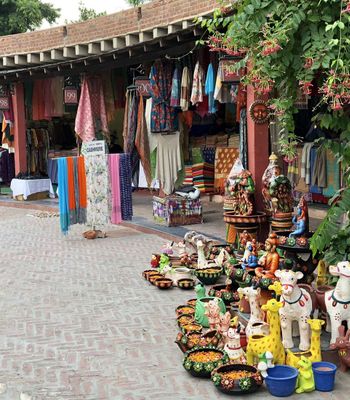
A short walk from the main circle leads to Janpath Market, where vendors line the sidewalks with colorful textiles, jewelry, handicrafts and leather goods. Travelers looking for authentic Indian souvenirs often find Janpath to be one of the best spots in Delhi. Like Palika Bazaar, haggling is part of the shopping culture here, and starting at half the quoted price is a common strategy among experienced buyers.
Savoring the Food Scene
Beyond shopping, Connaught Place is arguably one of Delhi's finest dining destinations. The market hosts an impressive range of eateries, from legendary establishments to modern cafes. For a taste of history, visit Wenger's, a bakery that has been serving pastries and cakes since 1926. Similarly, the United Coffee House has welcomed guests since 1942 with its ornate interiors and a menu spanning Indian and continental dishes.
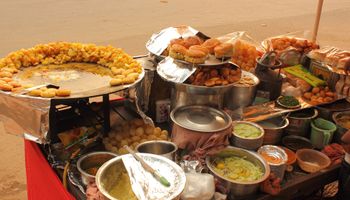
Street food thrives in and around the circle as well. Try the crispy golgappas from a nearby vendor or enjoy a plate of chole bhature from one of the many casual eateries. For those seeking international flavors, Japanese, Italian and American restaurants have established popular outposts throughout the market. Essentially, whether your budget is modest or generous, Connaught Place has a meal waiting for you.
Getting to Connaught Place
Because of its central location, reaching Connaught Place is straightforward from nearly any part of Delhi. The Rajiv Chowk Metro Station sits directly beneath the marketplace and serves as an interchange for the Yellow and Blue lines of the Delhi Metro. As one of the busiest metro stations in the city, Rajiv Chowk connects travelers from areas as far as Gurgaon, Noida and the airport corridor.
Alternatively, taxis and ride-sharing services drop passengers at various entry points along the circle. Auto rickshaws are another affordable and adventurous option, particularly for those traveling from nearby areas like Karol Bagh or Paharganj. If you're arriving from Indira Gandhi International Airport, the Airport Express Line connects to the New Delhi Railway Station, which is just a short ride from Connaught Place.
Timing Your Visit
Most shops in Connaught Place open around 10 a.m. and close by 9 p.m., though restaurants often stay open later. Sundays can be quieter for shopping, as some stores observe a weekly closure. For a comfortable visit, plan to arrive during the cooler months between October and March. Delhi's summer temperatures regularly exceed 100 degrees Fahrenheit, which can make outdoor walking exhausting.
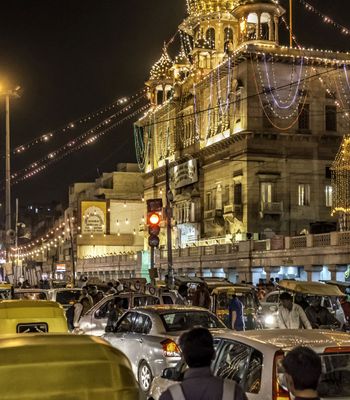
Evening visits offer a particularly pleasant atmosphere. As the sun sets, the white facades glow under warm lighting, and the Central Park fountain becomes a popular spot for photographs. Additionally, the colonnaded walkways come alive with buskers and street artists, adding a layer of entertainment to your stroll. On weekday mornings, the crowds are thinner, allowing visitors to explore the market at a leisurely pace.
Cultural Significance and Modern Role
Connaught Place is more than a commercial hub — it functions as a cultural landmark for Delhi. Major national celebrations, book fairs and art exhibitions frequently use the Central Park area as a venue. During Republic Day and Independence Day, the vicinity buzzes with patriotic energy as flags and decorations adorn the white columns.
Economically, Connaught Place consistently ranks among the most expensive commercial real estate in the world. Major corporate offices, banks and airline headquarters occupy the upper floors of many buildings, ensuring that the area remains active well beyond shopping hours. For visitors, this blend of commerce, culture and colonial heritage makes Connaught Place an essential stop on any Delhi itinerary. By setting aside a half day or more, travelers can truly appreciate the market's depth, from its underground bazaars to its rooftop restaurants and everything in between.