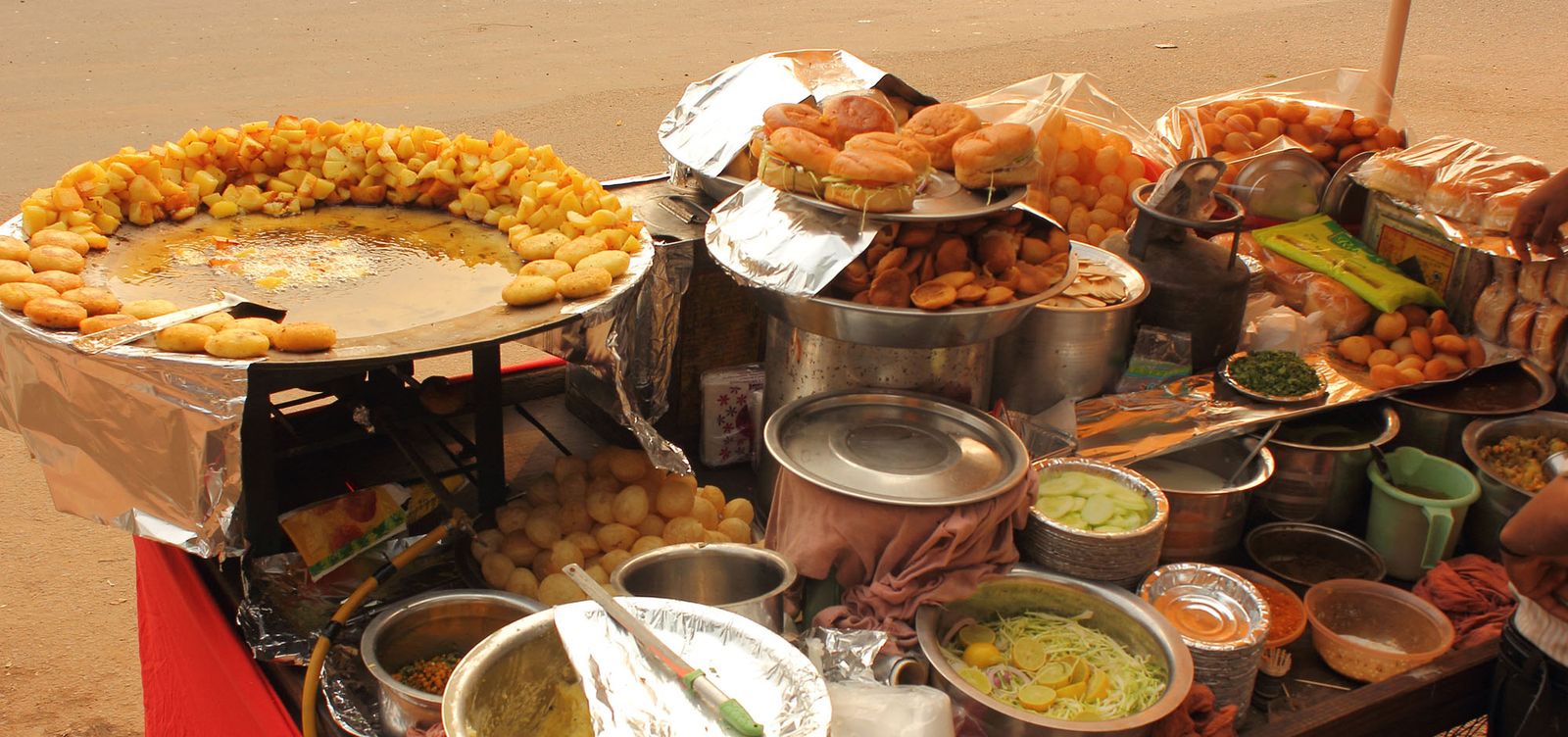


The sizzle of a tawa hitting oil at six in the morning. The fragrant cloud of spices rising from a bubbling pot of chole that's been simmering since dawn. A vendor's hands moving in a blur, assembling a plate of chaat so fast you'd swear it was choreographed. This is Delhi — a city where eating on the street isn't just a meal, it's a full-body experience.
Delhi's street food scene ranks among the most vibrant and complex in the world, shaped by centuries of migration, invasion, trade, and cultural fusion. Every lane, every crossing, every crumbling archway in this sprawling capital hides a food stall with a story — some stretching back generations, others reinventing tradition with every serving.
Whether you're biting into a crisp golgappa that explodes with tangy water on your tongue or pulling apart a buttery paratha dripping with ghee, Delhi feeds you with an intensity that borders on spiritual. This guide walks you through the city's rich culinary history, the ten street foods you absolutely must eat, and the legendary neighborhoods where the best bites await. Bring your appetite — you're going to need it.
A Culinary Legacy Centuries in the Making
Delhi's street food didn't appear overnight. It evolved over nearly a thousand years, layered with influences from the Mughal emperors, Punjabi refugees of Partition, and migrant communities from every corner of the subcontinent. Each era left its imprint on the city's palate, and you can still taste that history in every bite.
During the Mughal period, royal kitchens perfected the art of slow-cooked meats, aromatic biryanis, and rich kebabs. When these techniques eventually spilled out of palace walls and into the narrow lanes of Old Delhi, street food as we know it was born. Vendors adapted royal recipes for the common people, making them portable, affordable, and devastatingly delicious.
The Partition of 1947 brought another seismic shift. Millions of Punjabi families arrived in Delhi carrying little more than their recipes. They set up stalls, dhabas, and roadside kitchens, introducing chole bhature, rajma chawal, and butter-drenched parathas to a city that embraced these dishes as its own almost overnight.
South Indian migrants added dosas and idlis to the mix, while communities from Uttar Pradesh brought their legendary chaat traditions. Today, walking through Delhi's food streets feels like flipping through the pages of India's culinary encyclopedia — every chapter alive, every recipe still being written.
What makes Delhi's street food culture truly extraordinary isn't just the diversity. It's the permanence. Many stalls have operated from the same spot for 50, 70, even 100 years, with recipes passed down like sacred family heirlooms. The vendors don't just cook — they perform, they remember, they carry forward a tradition that refuses to fade.
10 Street Foods That Will Ruin You for Anything Else
1. Chole Bhature
A plate of chole bhature in Delhi hits different than anywhere else on the planet. The bhature — deep-fried, pillowy, golden — arrive so hot they nearly burn your fingers. Alongside them sits a bowl of spicy, tangy chickpea curry studded with whole spices, often accompanied by a sliver of pickle and raw onion. Breakfast in Delhi starts here, and honestly, it peaks here too.
2. Golgappa (Pani Puri)
You stand at the stall, and the vendor hands you a crisp, hollow puri filled with spiced potato, chickpeas, and a rush of cold, tangy mint water. It shatters in your mouth — sour, spicy, sweet, all at once. Each piece disappears in a single bite, and before you've finished chewing, the next one is already in your hand. Delhi's golgappa vendors have elevated this snack to an art form, with each stall offering its own signature pani flavors.
3. Paranthas
Stuffed with everything from spiced potatoes to paneer to seasonal vegetables, Delhi's paranthas arrive glistening with ghee on a steel plate. The outer layer crackles, giving way to a soft, flavorful filling inside. Paired with tangy pickle, cool yogurt, and a dollop of white butter, a single parantha can anchor your entire afternoon.
4. Aloo Tikki
Crispy on the outside, meltingly soft within, aloo tikki is Delhi's answer to the humble potato cake — except there's nothing humble about it. Vendors press spiced potato patties onto a searing flat griddle, flipping them until a dark, crunchy crust forms. Topped with chutneys, yogurt, and a shower of sev, each tikki delivers a symphony of textures.
5. Kebabs
The smoky perfume of charcoal-grilled seekh kebabs drifts through Old Delhi's lanes like a siren call. Minced meat seasoned with green chilies, ginger, and a secret blend of spices cooks over open flames until charred and juicy. Wrapped in a roomali roti so thin you can nearly see through it, these kebabs remind you why Delhi's Mughlai food traditions remain unmatched.
6. Dahi Bhalle
Soft, spongy lentil dumplings soaked in creamy whipped yogurt and drizzled with tamarind and green chutney — dahi bhalle is Delhi's cooling antidote to a scorching summer day. The contrast between the sweet-sour chutneys and the mild, pillowy bhalle creates a flavor balance so precise it borders on addictive.
7. Ram Ladoo
These tiny, golden fritters made from moong dal batter are a quintessentially Delhi experience. Street vendors fry them fresh in massive kadhai pans, serving them on a leaf plate topped with shredded radish and a fiery green chutney. Crunchy, earthy, and satisfying, ram ladoo is the city's favorite no-fuss snack.
8. Jalebi
Watch a jalebi maker at work, and you'll understand why this isn't just food — it's theater. Batter spirals from a cloth into hot oil, turning into golden, pretzel-like coils within seconds. Straight from the fryer, they plunge into a vat of sugar syrup. When you bite in, the exterior cracks and warm, fragrant sweetness floods your mouth. Delhi's best jalebis are served piping hot, often with a side of creamy rabri.
9. Momos
Delhi adopted momos from its Tibetan and Northeastern communities and made them entirely its own. Steamed or fried, stuffed with chicken or vegetables, these dumplings come with a fiery red chutney that could clear your sinuses from across the room. Every market, every college campus, every metro station exit seems to have a momo stall — and for good reason.
10. Kulfi Falooda
Forget everything you know about ice cream. Kulfi is denser, creamier, and more intensely flavored — slow-frozen rather than churned, with notes of cardamom, pistachio, or saffron. Served with falooda (thin vermicelli noodles), rose syrup, and basil seeds, a glass of kulfi falooda on a humid Delhi evening is pure, unapologetic indulgence.
Where the Streets Taste Best: Delhi's Legendary Food Neighborhoods
Chandni Chowk — The Undisputed Champion
No conversation about Delhi street food begins — or ends — without Chandni Chowk. This 17th-century market in Old Delhi packs more food history into a single kilometer than most cities hold in their entirety. The iconic Paranthe Wali Gali has served stuffed paranthas since the 1870s, while nearby stalls dish out legendary jalebis, chole bhature, and dahi bhalle. Navigating its impossibly narrow lanes, dodging cycle rickshaws and fellow food hunters, you'll find yourself eating almost involuntarily — the aromas simply won't let you pass without stopping.
Karim's Lane, Jama Masjid
Steps from the grand Jama Masjid, Karim's Lane is a pilgrimage site for meat lovers. Established in 1913, the original Karim's restaurant traces its culinary lineage directly to Mughal court cooks. The surrounding lanes overflow with kebab stalls, nihari vendors, and shops selling impossibly tender mutton dishes. Smoke hangs thick in the air here, and the sound of sizzling meat never stops.
Connaught Place and Its Inner Circle
Delhi's colonial-era commercial heart offers a different flavor of street food. Here, established vendors and small eateries serve refined versions of city classics — from the famous golgappas at Bengali Market nearby to the beloved kulfi at Keventer's. The wide corridors and shaded colonnades make this an accessible starting point for travelers still finding their feet in Delhi's food maze.
Lajpat Nagar and CR Park
Head south, and the street food landscape shifts dramatically. Lajpat Nagar's central market buzzes with chaat stalls, momos vendors, and kulfi carts, while CR Park — Delhi's Bengali enclave — serves some of the city's best jhalmuri, kathi rolls, and fish fries. These neighborhoods prove that Delhi's street food story keeps evolving, with every community adding its own chapter.
Majnu Ka Tilla
This small Tibetan colony along the Yamuna River banks transports you to a different world entirely. Thukpa, tingmo, and laphing join momos on menus scrawled in Tibetan and English. The flavors here run milder and earthier — a welcome counterpoint to the spice-heavy chaos of the rest of the city.
Delhi's street food scene doesn't ask for reservations, dress codes, or Michelin stars. It asks only that you show up hungry, stay curious, and trust the vendor who's been perfecting the same recipe since before you were born. From the Mughal-era lanes of Old Delhi to the bustling markets of South Delhi, every bite carries weight — historical, cultural, emotional. So when you finally arrive, skip the fancy restaurant. Step up to a stall, accept that paper plate, and let Delhi feed you the way only Delhi can.