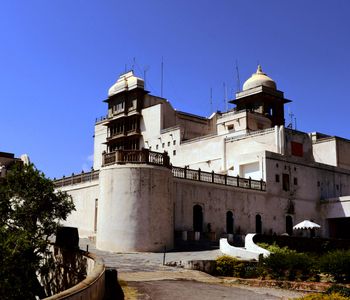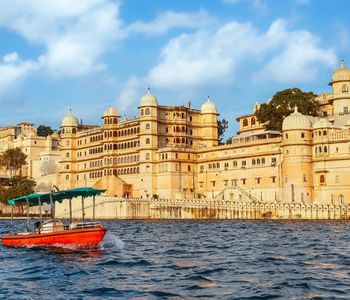
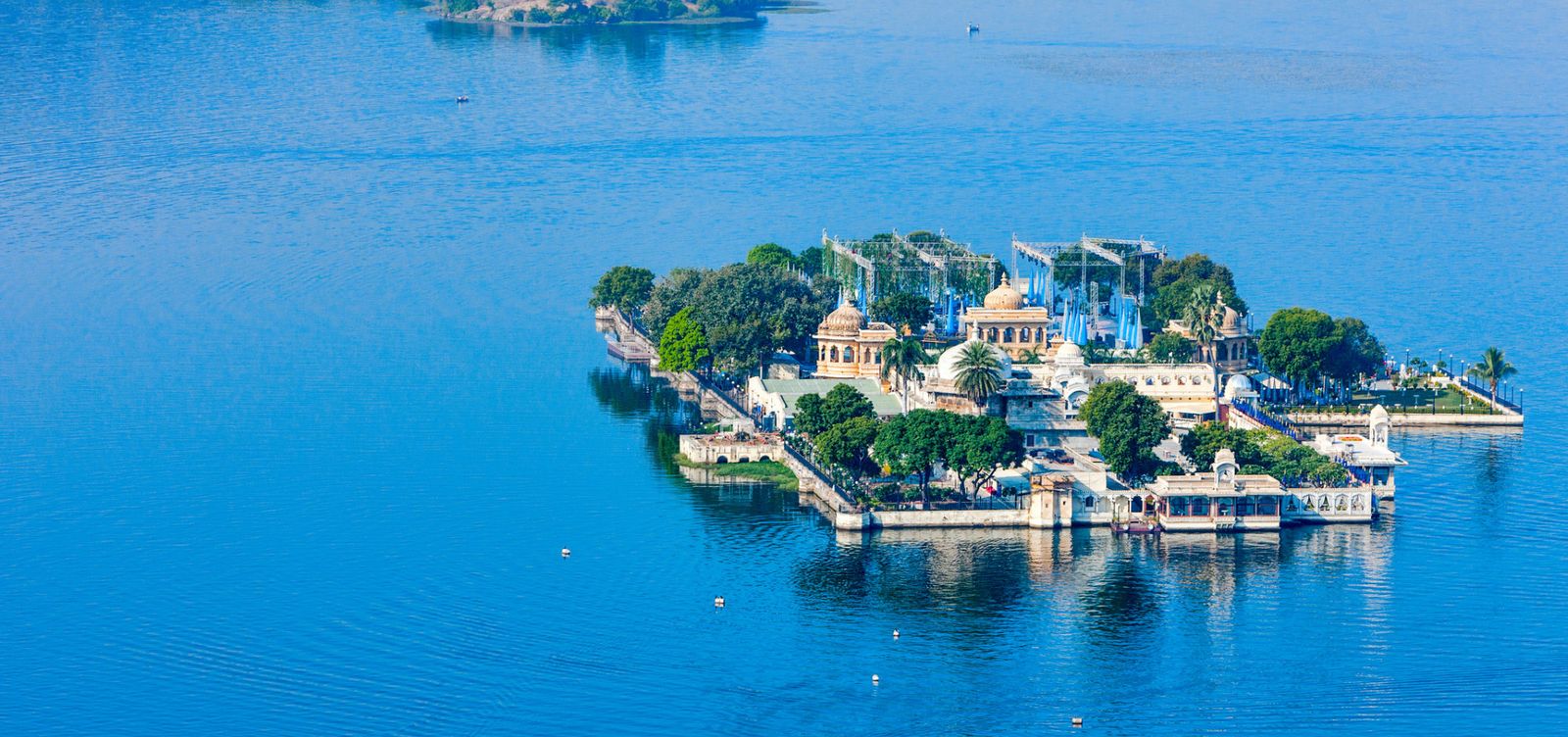
Lake Pichola catches the light differently at midday — the water turns from deep green to a blinding silver, and Jagmandir Palace appears to hover above it like a mirage that refuses to dissolve. Built on an island of roughly 24,000 square feet, this seventeenth-century palace wasn't designed for show alone. It was built as a refuge, a place where a Mughal prince hid from his father's wrath. That origin story — part political intrigue, part family betrayal — gives Jagmandir a weight that most lakeside palaces simply can't match. You arrive by boat, and by the time the hull bumps against the stone jetty, you've already crossed into a different century.
Where a Prince Became a Legend
In 1623, Prince Khurram — who would later become the Mughal Emperor Shah Jahan — sought sanctuary here while rebelling against his father, Emperor Jahangir. Maharana Karan Singh II of Mewar offered the island as a hideout, a decision that carried enormous political risk. Khurram stayed for some time, and his experience on this island reportedly reshaped his understanding of what architecture could do to a person.
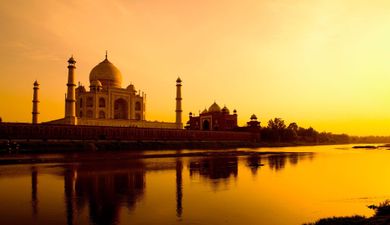
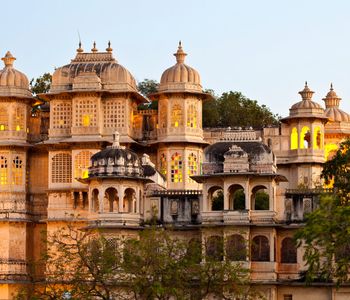
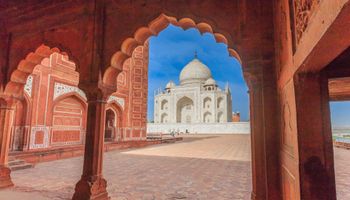
Some historians argue that the marble inlay work and garden layouts at Jagmandir planted the early seeds for what would eventually become the Taj Mahal. That claim is impossible to verify. But standing before the yellow sandstone facade with its rows of elephants carved in stone guarding the entrance, you understand why the connection persists. There's an ambition in the design that feels personal, as though whoever commissioned it wanted beauty not as decoration but as a statement of defiance.
Stone Elephants and the Gul Mahal
The first thing that arrests you isn't the palace itself — it's the row of elephants flanking the entrance steps. Carved from stone, each one stands about life-size, trunks slightly raised. They've weathered centuries of monsoons, and their surfaces carry a gentle erosion that somehow makes them more alive, more expressive than they'd be if freshly chiseled. Time has done what the sculptors couldn't quite finish.
Beyond them stands the Gul Mahal, the central structure of the palace complex. Its dome rises in a distinctly Islamic style, crowned with a large lotus flower carved in marble. Inside, the walls carry pietra dura work — semi-precious stones inlaid into marble in floral patterns. Carnelian, jasper, and lapis lazuli form petals and stems that catch whatever light filters through the windows. You don't need a guide to appreciate the craftsmanship, but you do need to stand still and let your eyes adjust to what's actually there.
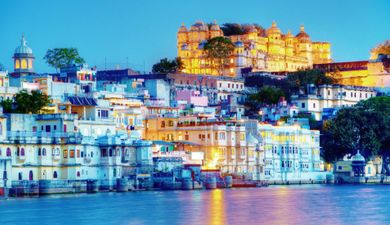
Around the Gul Mahal, the palace spreads into a series of courtyards and smaller pavilions. The Kunwar Pada ka Mahal, built for the royal heir, sits nearby with its own courtyard garden. Darikhana, a colonnaded hall facing the lake, offers what might be the finest vantage point in all of Udaipur — The City Palace stretches across the eastern shore, its white walls doubled in water that's been mirroring the same scene for four hundred years.
Gardens That Refuse to Be Background
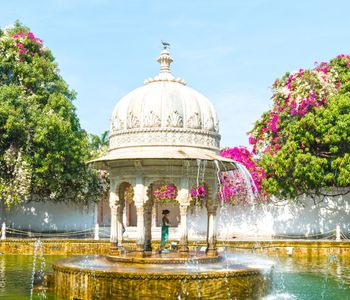
Most palace gardens exist as pleasant afterthoughts. Jagmandir's feel intentional to the point of stubbornness. The courtyard garden follows a modified Mughal layout with pathways converging on a central fountain, but what strikes you is the sheer density of the planting. Bougainvillea in violent pinks drapes over stone walls. Mango trees throw shade so thick the temperature drops noticeably beneath them.
Here's the thing nobody tells you: this island palace, surrounded entirely by water, required an elaborate system just to maintain fresh water for its gardens. Pichola is a man-made lake, and its levels fluctuate wildly with the monsoon. The palace's builders had to engineer water management into the island's very foundations to keep anything alive during dry months. Every flower you see is the result of engineering as deliberate as the stonework above it. Nature gets no credit here.
The Approach Is Half the Experience
You can only reach Jagmandir by boat, and the journey earns its own place in your memory. Ferries depart from the Bansi Ghat jetty near the City Palace. The ride takes roughly fifteen minutes, and it gives you a slow reveal — first the dome, then the elephant stairway, then the full sandstone facade unfolding as the boat draws closer. Government-operated boats run regularly throughout the day, with the last departures from the island typically by early evening.
Private boats cost more but buy you flexibility. If you're visiting during the golden hour before sunset, the premium is worth paying without hesitation. Western light paints the sandstone in shades of amber, and the lake surface turns into a sheet of hammered copper. Your camera will work overtime, but the naked eye does it better.
What It Costs and When the Light Is Right
Boat tickets include the entry fee to the island, and prices vary depending on whether you opt for a shared or private vessel. Expect to pay between 400 and 800 rupees per person for the standard return trip. The palace grounds are open daily, generally from late morning through sunset, though timings shift slightly by season. Check at the City Palace ticket counter on the day of your visit for the latest schedule.
Timing matters here more than at most Udaipur attractions. The monsoon months from July through September raise the lake to its highest levels, and the island sits lower against the water — dramatic but occasionally inaccessible during heavy rains. October through March offers the most comfortable weather, with December and January bringing cool mornings that make the boat ride genuinely pleasant rather than something you endure under a white-hot sky.
Weekday mornings draw the thinnest crowds. By afternoon, especially on weekends, the island fills and the intimate quality of the place dissolves. Arrive early and you may have the Darikhana hall to yourself for a few unbroken minutes — long enough to hear water lapping against the stone foundation and nothing else. That silence is the whole point.
The Modern Compromise
Part of Jagmandir now operates as a luxury venue for private events and dining, which means certain sections may be cordoned off during your visit. Commercial use funds conservation, but it occasionally limits access. Don't let it put you off. The publicly accessible portions — the gardens, the Gul Mahal, the elephant stairway, the lakefront pavilions — contain more than enough to justify the crossing.
A small restaurant on the island serves Indian dishes and cold drinks, which makes lingering not just possible but tempting. Order a fresh lime soda, sit under the colonnade, and watch boats scratch white lines across the lake. The pace here is deliberately slow. Jagmandir doesn't demand your attention the way larger palaces do. It earns it, quietly, through detail and restraint.
A Place Worth the Crossing
Jagmandir Palace doesn't compete with Udaipur's City Palace for scale, and it doesn't try to. Its power comes from isolation — the water surrounding it acts as a boundary between the noise of the city and the silence of a place built for sanctuary. A Mughal prince understood that four centuries ago. The stone elephants still stand guard. The lotus still crowns the dome. Some places hold their meaning not because they've been meticulously preserved, but because the thing they were built for — refuge, beauty, a moment of absolute stillness — never goes out of demand.