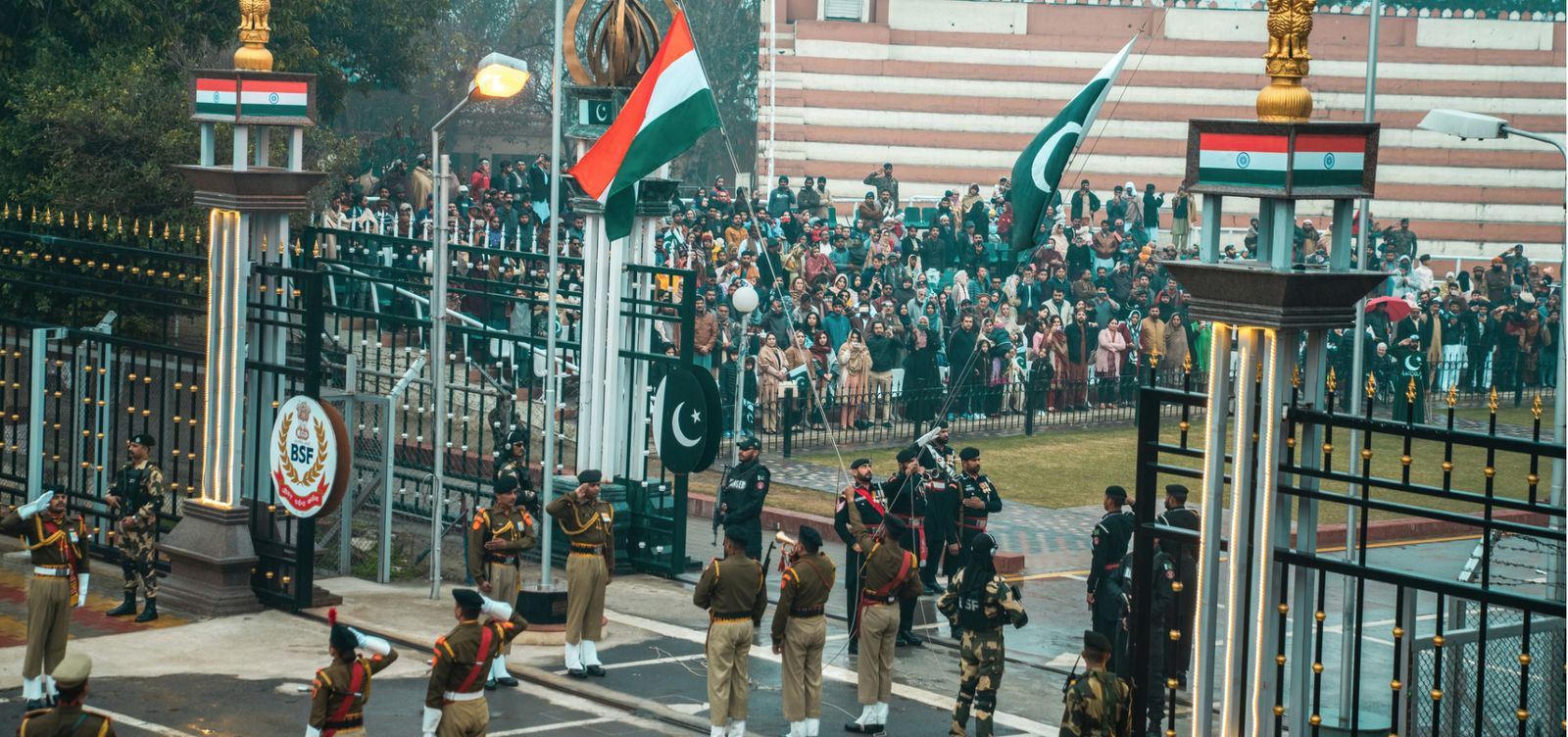
The roar hits you before you've even found your seat. Thousands of voices, fists punching the air, patriotic chants bouncing off concrete bleachers — and the ceremony hasn't even started yet. This is the Wagah Border, roughly 28 kilometers from the golden heart of Amritsar, where every single evening the India-Pakistan frontier transforms into the most electrifying open-air theater you'll ever witness. Since 1959, the Beating Retreat Ceremony has drawn travelers, patriots, and the simply curious to watch soldiers from India's Border Security Force and Pakistan Rangers perform an elaborately choreographed showdown of high kicks, thundering boots, and fierce stares. Skip this, and you leave Amritsar with a hole in your story.
A Village Torn in Two
Before the stroke of a pen redrew the map in 1947, Wagah was just a village — one community, one life. Then came Partition. The Radcliffe Line sliced right through it, splitting families overnight, turning neighbors into citizens of different nations. What had been a quiet settlement became one of the most significant border crossings in all of South Asia.
Today, the Wagah-Attari post remains the only road link between India and Pakistan — a single artery for trade, travel, and diplomacy. The Beating Retreat Ceremony began in 1959 as a straightforward military protocol: lower both flags at sunset, close the gates, done. But decade after decade, the ritual grew bolder, louder, more theatrical — until it became a global spectacle.
Here's what astonishes most visitors: this ceremony happens every single day of the year. Wars, diplomatic crises, cross-border tensions — none of it has ever interrupted the tradition. Not once. That unbroken continuity says something powerful about protocol, pride, and perhaps a stubborn shared humanity.
When the Boots Hit the Ground
You'll hear the patriotic Bollywood anthems blaring from loudspeakers before you've even climbed the amphitheater steps. A booming emcee whips the crowd into a frenzy — "Bharat Mata Ki Jai!" echoes off the concrete, and strangers around you are suddenly on their feet, dancing, waving tricolors, grinning like children. The energy is so infectious that even the most reserved traveler ends up shouting along.
Then the soldiers appear, and the atmosphere snaps from carnival to riveting. BSF jawans in their iconic tall, red fan-shaped headgear march toward the iron gates with exaggerated, gravity-defying high kicks — boots rising to shoulder height, each step a controlled explosion of muscle and discipline. On the Pakistani side, Rangers mirror the choreography stride for stride. Foot-stomping shakes the ground. Dramatic hand gestures slice the air. Eyes lock across the border with a fierceness that makes your skin prickle.
The climax is almost cinematic: both nations' flags descend in perfect unison as the sky bleeds orange behind them. The gates swing open for a fleeting moment. Soldiers from each side clasp hands — a handshake that lasts barely two seconds yet carries the weight of decades. Then the gates close, the border seals for the night, and you exhale. The whole ceremony runs about 45 minutes, but it stays lodged in your chest far longer.
Everything You Need to Know Before You Go
When to Show Up (and How Early)
Because the ceremony is timed to sunset, the schedule shifts with the seasons. Summer months push the start to around 5:30 p.m.; winter pulls it closer to 4:30 p.m. Entry is completely free — no tickets, no bookings, no fees. Seating is first-come, first-served, so seasoned visitors will tell you the same thing: arrive at least two hours early. It sounds excessive until you see the crowds.
Security is tight. Leave large bags, DSLR cameras with detachable lenses, and most electronics back at your hotel or locked in your vehicle — only mobile phones make the cut. Expect multiple checkpoints that can eat into your time, so budget accordingly. A valid government-issued photo ID is mandatory; foreign nationals should carry their passports.
Getting There from Amritsar
The drive from central Amritsar takes roughly 45 minutes to an hour, depending on how congested the roads get near the border. Hiring a taxi or auto rickshaw is the easiest option — local drivers know every shortcut and handle the chaotic traffic with practiced calm. For a more budget-friendly ride, hop on one of the Punjab Tourism Department buses that depart from Amritsar during ceremony hours.
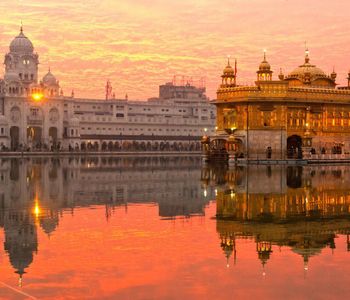
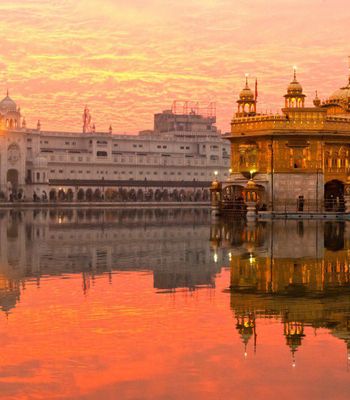
Smart itinerary move: pair a morning visit to the Golden Temple with the evening ceremony at Wagah. Many tour operators bundle both into a single day package, and the rhythm of the day — spiritual calm followed by patriotic thunder — feels perfectly balanced.
How to Make the Most of Every Minute
Summer sun at the Wagah amphitheater is no joke — temperatures can soar past 105°F, and there's little shade to hide under. Slather on sunscreen, bring a water bottle, and wear a hat if you have one. Winter evenings swing the other way, dipping below 50°F by the time the flags come down, so toss a light jacket in your bag.
Between the parking area and the seating gallery, you'll walk about a kilometer. Comfortable shoes aren't optional — they're essential, especially since you'll be standing and shuffling for much of the pre-ceremony buzz. Along the walkway, vendors hawk Indian flags, cold drinks, and crispy snacks at honest prices. Grab a small flag; waving it during the chants feels like a rite of passage.
Mobile phone cameras work surprisingly well here, particularly from the front rows. Stake out an early seat near the gate for unobstructed views of the soldiers and that dramatic handshake. Just resist the urge to stand during the ceremony — fellow spectators won't be shy about letting you know you're blocking their view.
After the Last Salute: What's Nearby
A small museum sits adjacent to the ceremony grounds, filled with photographs, artifacts, and informational panels tracing the military history of this border. Twenty to thirty minutes inside adds real depth to what you've just experienced — suddenly, those high kicks and fierce stares carry even more weight.
Then there's the food. A row of stalls near the parking lot serves up Punjabi street food that smells impossibly good after an hour of adrenaline. Bite into piping-hot chole bhature, crunch through golden samosas, and wrap your hands around a clay cup of freshly brewed chai — sweet, milky, spiced with cardamom. The drive back to Amritsar takes close to an hour, so fueling up here just makes sense. Many travelers call this casual roadside meal the perfect closing chapter to the evening.
More Than a Show — A Pulse You Feel
What catches most visitors off guard isn't the pageantry — it's the raw emotion radiating from the crowd. Military families, retired soldiers, first-generation immigrants returning to their homeland — for many, this isn't tourism. It's pilgrimage. You can see it in the tears streaming down a veteran's weathered face, in the way a grandmother clutches her flag with both hands.
And here's the twist that makes Wagah truly singular: the cheering on the Pakistani side is just as loud, just as passionate. Two nations, mirror images of each other, turning a military protocol into an unscripted, spirited contest of pride. The parallel roar from across the gate creates a strange, exhilarating tension — rivalry and respect, tangled together in the fading light.
Adding the Wagah Border to your Amritsar itinerary gives you something no monument or museum can: a living, breathing ritual that distills decades of history, heartbreak, and stubborn hope into 45 unforgettable minutes. Walk away from those iron gates, and you carry a piece of the subcontinent's most complex story with you — felt in your bones, not just read in a book.