The boulders come first. Before the temples, before the rice paddies, before the bazaars that once dealt in diamonds by the basket — there are the boulders. They sit on the plains around Hampi like they were dropped there by a careless god, some balanced impossibly on top of others, their surfaces burnt orange in the afternoon sun. You've seen landscapes before. You haven't seen this one.
This is the old Vijayanagara Empire, or what's left of it. In the 1500s, Hampi was one of the largest cities in the world — wealthier, by some accounts, than Lisbon or Rome. Persian travelers wrote home about it in astonished tones. Then in 1565, a confederation of sultanates arrived, sacked the city over six months, and walked away. The jungle took the rest. What you're walking through now is a ruin of empire spread across 26 square kilometers, and nobody has quite figured out how to explain it to first-time visitors. You just have to go.
A City Dismantled, Still Standing
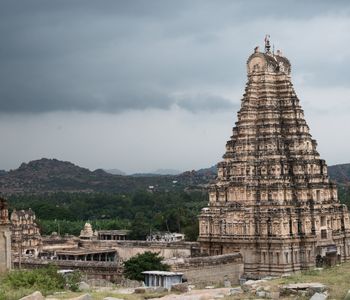
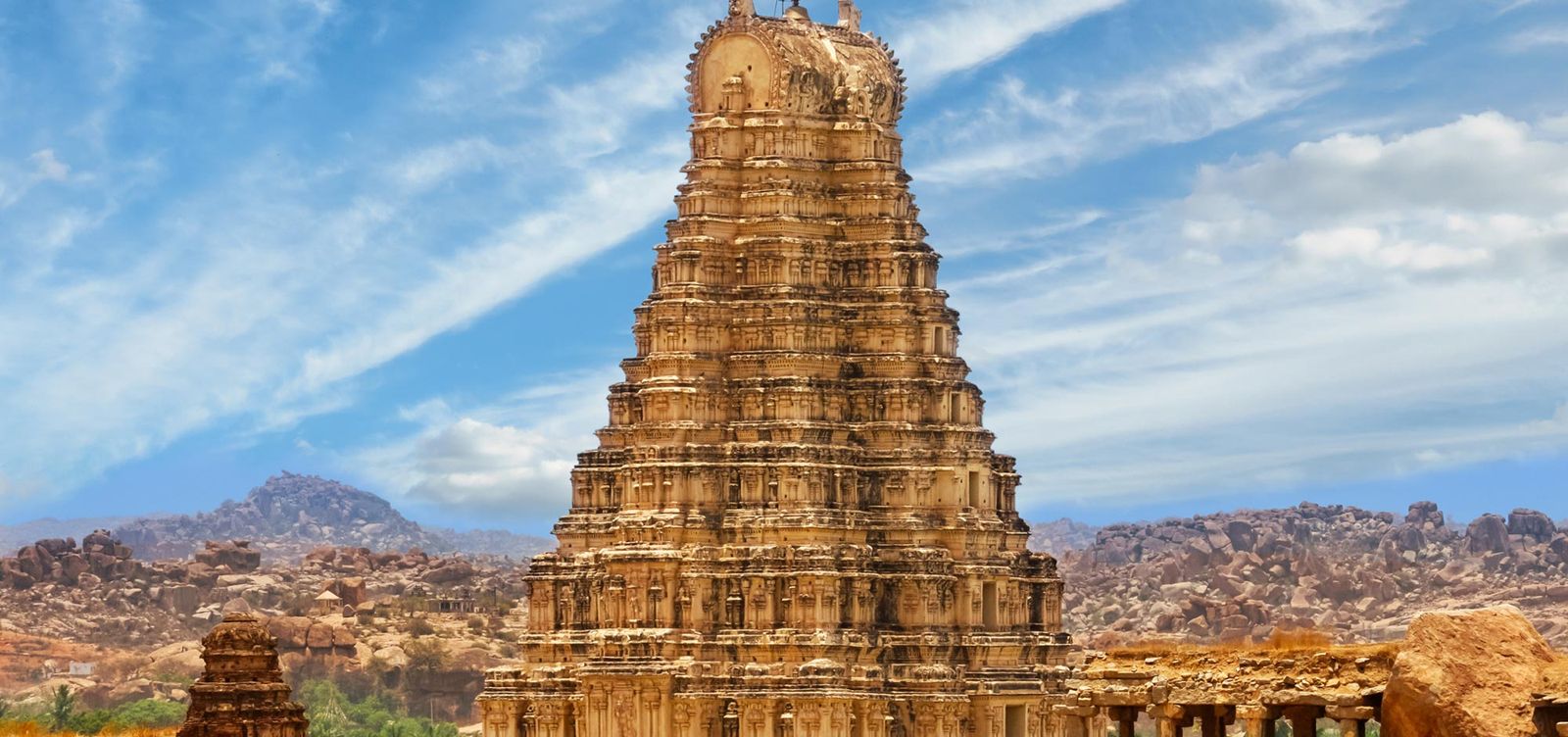
Start at the Virupaksha Temple, because everyone does, and because it's still in use — the only part of Hampi that never stopped functioning. The gopuram rises above the bazaar, elephants occasionally wander through the courtyard, and inside, priests perform the same rituals they've performed here for over 700 years. It's the rare ancient monument where somebody is still minding the shop.
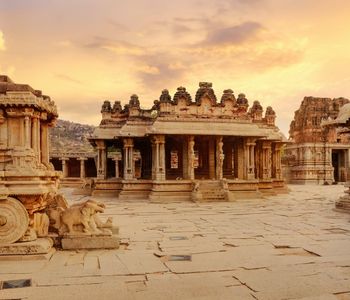
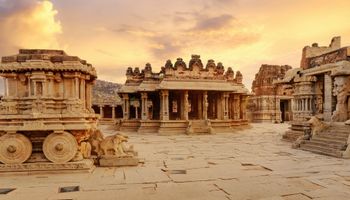
From there the ruins fan out in every direction. The Vittala Temple complex sits a few kilometers east, and this is where Hampi breaks your understanding of what stone can do. The famous stone chariot is there, yes, and it's magnificent — but walk into the ranga mantapa and you'll find the musical pillars, thin shafts of granite that, when tapped, produce different musical notes. Archaeologists still argue about how the Vijayanagara sculptors managed it. The British, being British, cut open two of the pillars to see if there was something hidden inside. There wasn't. Just stone, and the patience of people who knew what they were doing.
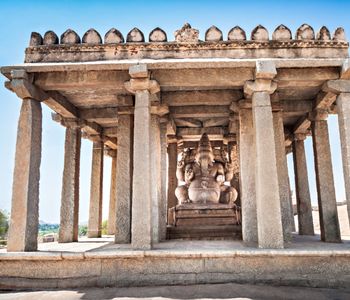
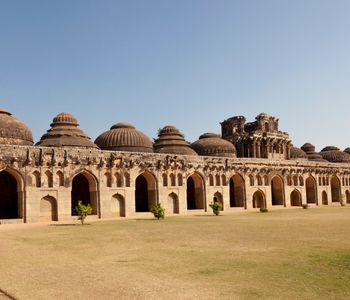
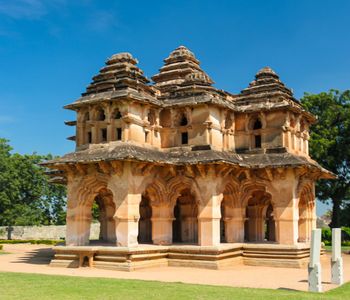
The Royal Enclosure, the Lotus Mahal, the Elephant Stables, the underground Shiva temple where you wade through ankle-deep water to see the lingam — each of these deserves an afternoon. Most travelers give Hampi two days. Most travelers are wrong about this.
The River That Splits the Place in Two
The Tungabhadra runs through Hampi and divides it into two experiences that don't entirely get along. On the south bank, you have Hampi Bazaar, the temple side, where the serious archaeology happens and where local guesthouses keep the lights low and the lungi dress code relaxed. This is the dry side. No alcohol, no meat, out of respect for the temple.
Cross the river by coracle — a round, shallow boat woven from bamboo and waterproofed with tar, unchanged in design for centuries — and you arrive in Virupapur Gaddi, known to backpackers as the "hippie island." Here the rules relax, the banana pancakes appear, Israeli travelers congregate in their clusters, and reggae plays from some guesthouse until midnight. It's a strange arrangement: on one bank, a sacred landscape; on the other, a slightly faded version of Goa that somehow drifted inland. You'll probably end up on both sides, and you should.
The coracle ride itself is worth the small fare. The boatman spins the little vessel gently as you cross, the boulders reflect off the water, and for a few minutes you understand why people keep coming back to this place.
Climbing for the Sunset
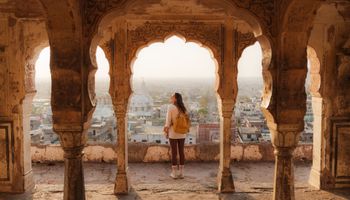
Everyone ends up on a hill at some point. Matanga Hill is the popular choice — a steep climb of worn stone steps, about 30 minutes if you don't stop, and the view from the top takes in the whole central ruins, the river, the palm groves, and the impossible boulder fields stretching to the horizon. Go at sunrise if you can handle the early start. Go at sunset if you can't. Either way, bring water.
Hemakuta Hill is gentler and closer to the bazaar, and its clusters of small temples catch the evening light in a way that photographers lose their minds over. Anjaneya Hill, across the river, is said to be the birthplace of Hanuman. It's a 575-step climb, there are monkeys (of course there are monkeys), and the temple at the top is painted a fierce white that almost hurts to look at in full sun.
Scrambling Up the Boulders
A small detail most guidebooks underplay: Hampi has quietly become one of the best bouldering destinations in the world. Climbers from Europe and America now plan entire trips around it, hauling crash pads across the river and working routes on the granite formations around Virupapur Gaddi. You don't need to be a climber to appreciate this — but if you are, you'll find a community of regulars here each winter, and guides who can take you to the problems that matter.
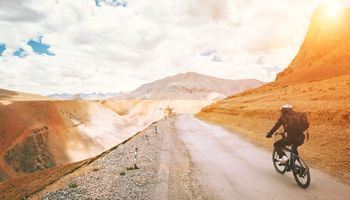
For everyone else, the walking itself is the thing. Rent a bicycle or a scooter in the bazaar and just ride. The paths wind through banana plantations, past small villages where women thresh rice on blue tarps, past shepherds who wave without quite smiling. You'll get lost. That's the point.
When to Go, What to Eat
Come between October and February, when the heat loosens its grip and the mornings turn almost cool. March onward, the stone radiates heat like a furnace, and by May the afternoons are unwalkable. The monsoon brings green to the brown landscape, but also closes some sites and swells the river past the coracle crossings.
Eat on the rooftops. The Mango Tree, the Laughing Buddha, the little places with no name where the menu runs to thirty items and the kitchen clearly specializes in about four of them. Order the South Indian thali served on a banana leaf — rice piled in the center, small mounds of sambar, rasam, curd, some vegetable preparation changing daily — and eat with your hands, because that's how it's meant to be eaten. The food here is simple. It doesn't need to be anything else.
Why It Stays With You
Hampi is not an easy place. The sun is unforgiving, the distances between ruins are longer than they look on the map, and the logistics of crossing the river twice a day can wear you down. But something about it lodges in the memory in a way other ruins don't. Maybe it's the scale of what was lost here. Maybe it's the landscape itself, geological and strange. Maybe it's that you keep turning corners and finding another small temple, another carved pillar, another thing that was made with care 500 years ago by someone whose name is gone.
Whatever it is, you'll find yourself thinking about it long after you leave. Most places fade. Hampi doesn't.