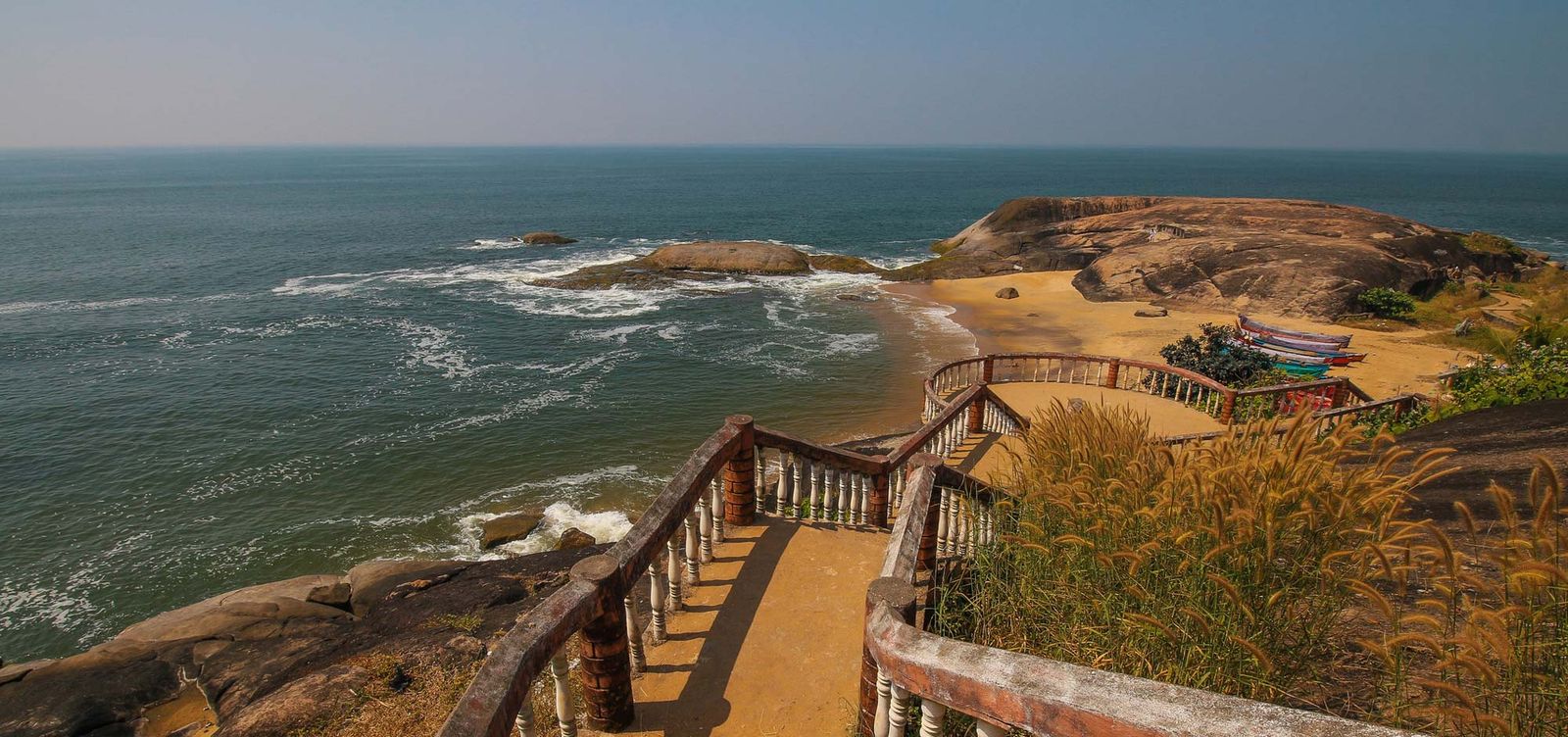
The first thing that hits you in Mangaluru isn't the sight of the Arabian Sea glinting under a tropical sun — it's the smell. Roasting coffee beans drifting from a corner shop, the sharp tang of tamarind from a nearby kitchen, and somewhere beneath it all, the briny kiss of salt air rolling in off the coast. This is a city where the Western Ghats tumble into the ocean, where centuries of trade have left their fingerprints on every temple dome and spice market stall, and where the pace of life invites you to slow down and actually *taste* the place.
A City That Breathes Between Two Rivers
Mangaluru doesn't hustle like Mumbai or dazzle like Goa. It does something rarer — it feels real. Two rivers, the Netravati and the Gurupura, weave through the city before merging near the coast and spilling into the Arabian Sea. That confluence of freshwater and salt shapes everything here.
Wake early enough and you'll catch wooden fishing boats bobbing out at dawn, their hulls painted in faded blues and greens. By mid-morning, the seafood markets are alive — fishermen hauling glistening mackerel and prawns onto wet concrete slabs while buyers haggle in rapid-fire Tulu. There's no performance for tourists here, just the rhythms of a city that's been doing this for centuries.
Where the Sand Meets the Story
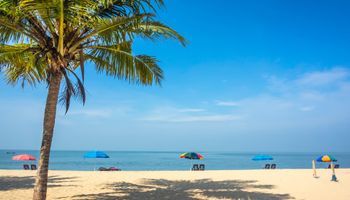
Panambur Beach is where Mangaluru locals come to unwind, and you should too. The shoreline is clean, the sand soft and copper-toned, and during festival weekends the sky fills with kites snapping in the wind while jet skis carve white lines through the surf. It's joyful and unpretentious.
Farther south, Tannirbhavi Beach offers a different mood entirely — quieter, more contemplative, the kind of place where you sit on warm sand and watch fishing boats drift across water so calm it barely wrinkles. A short ferry ride across the river connects the two beaches, and honestly, that little boat trip — river breeze in your hair, the city skyline sliding past — is half the fun.
Don't skip Surathkal Beach either. Its lighthouse rises like an exclamation point against the horizon, and from the top, the Arabian Sea stretches out in every direction, endless and deeply blue.
Temples, Chapels, and a Thousand Years of Faith
Mangaluru's spiritual landscape is as layered as its cuisine. The Kadri Manjunath Temple, believed to be over a thousand years old, sits on a hillside draped in green — manicured gardens, ancient bronze statues worn smooth by centuries of devotion, and a stillness that makes the city below feel miles away.
During the annual Dasara celebrations, the Kudroli Gokarnath Temple transforms into something extraordinary. Elaborate decorations spill across every surface, processions wind through the streets, and thousands of devotees pour in from across Karnataka, filling the air with drumbeats, chanting, and the heavy sweetness of jasmine garlands.
For a completely different kind of awe, step inside St. Aloysius Chapel. Nearly every inch of wall and ceiling is covered in painted murals — rich, luminous scenes that make you crane your neck and forget to breathe for a moment. The nearby Rosario Cathedral rounds out Mangaluru's Christian heritage with its own quiet grandeur.
A City You Eat Your Way Through
Here's the truth: Mangaluru's food alone justifies the plane ticket. The coastal cuisine here is unlike anything else in India — a fiery, fragrant dance of coconut, curry leaves, tamarind, and seafood so fresh it was swimming hours before it hit your plate.
Order a traditional Mangalorean fish curry at a local eatery and watch the rust-red gravy pool around a mound of steaming rice. Tear off a piece of Neer Dosa — impossibly thin, almost translucent rice crepes — and drag it through coconut chutney. The texture is like warm silk. Family-run restaurants and street food carts are equally revelatory, so wander freely and eat fearlessly.
Beyond the City: Day Trips Worth Every Kilometer
The countryside surrounding Mangaluru opens up a whole second adventure. Set aside time for at least one of these:
- Pilikula Nisargadhama — a sprawling eco-park with a tranquil lake, botanical garden, and heritage village that feels like stepping back in time
- Dharmasthala — a renowned pilgrimage town roughly 75 kilometers east, where spirituality and community converge in powerful ways
- Kudremukh and Chikkamagaluru — hill stations tucked into the Western Ghats, all misty peaks, coffee plantations, and trails through emerald forest
- St. Mary's Islands near Udupi — otherworldly hexagonal basalt rock formations rising from the sea, the kind of geological oddity that makes you grab your camera and not put it down
When to Go and How to Get There
Mangaluru's tropical climate keeps things warm year-round, but the sweet spot falls between October and February. The monsoon has retreated, temperatures hover in a comfortable range, and the landscape is impossibly lush — still glowing from months of rain.
Brave the monsoon season (June through September) and you'll witness a different kind of beauty: waterfalls erupting from hillsides, rivers swelling to dramatic widths, and rain hammering the red-tiled rooftops in sheets. Outdoor plans may get derailed, but the spectacle is worth it if you don't mind getting soaked.
Getting here is refreshingly simple. Mangaluru's international airport connects to major Indian cities and select Middle Eastern destinations. The rail network links to Bangalore, Mumbai, and Goa — and if you take the Konkan Railway route along the coast, block out a window seat. Tunnels punch through green mountains, bridges arc over river gorges, and the Arabian Sea appears and disappears between coconut palms. It's one of the most breathtaking train journeys in all of India.
The Kind of Place That Stays With You
Mangaluru isn't loud. It won't grab you by the collar. Instead, it unfolds — slowly, generously — through a perfect bite of fish curry, the golden light falling across a temple courtyard at dusk, a stranger's easy smile at a chai stall. This is a city that rewards curiosity and repays patience with moments you'll carry long after you've left Karnataka's coast behind.