The clatter of steel plates being passed hand to hand, the murmur of thousands seated in long rows, the fragrance of steaming sambar and freshly cooked rice filling a hall the size of an aircraft hangar — this is Dharmasthala's daily act of radical generosity, and it happens every single day without fail. Nestled where the Western Ghats tumble toward Karnataka's coast, this small town in the Belthangady taluk of Dakshina Kannada district isn't just another pilgrimage stop. It's a living testament to something rare in the world: a Jain family has administered a Hindu temple dedicated to Lord Shiva here for centuries, an unbroken tradition of interfaith harmony that still quietly defies expectation.
Step off the bus and the first thing you'll feel is the air — noticeably cooler than the sticky coastal heat of Mangaluru, just 75 kilometers to the west. The Nethravathi River curves along the town's edge, its banks fringed with wild grasses. Beyond that, the landscape unfolds in layers: emerald paddy fields, slender areca nut palms swaying overhead, and coconut groves that rustle with every passing breeze. It's the kind of setting that slows your breathing before you've even reached the temple gates.
A Temple That Feeds the Soul — and Tens of Thousands of Stomachs
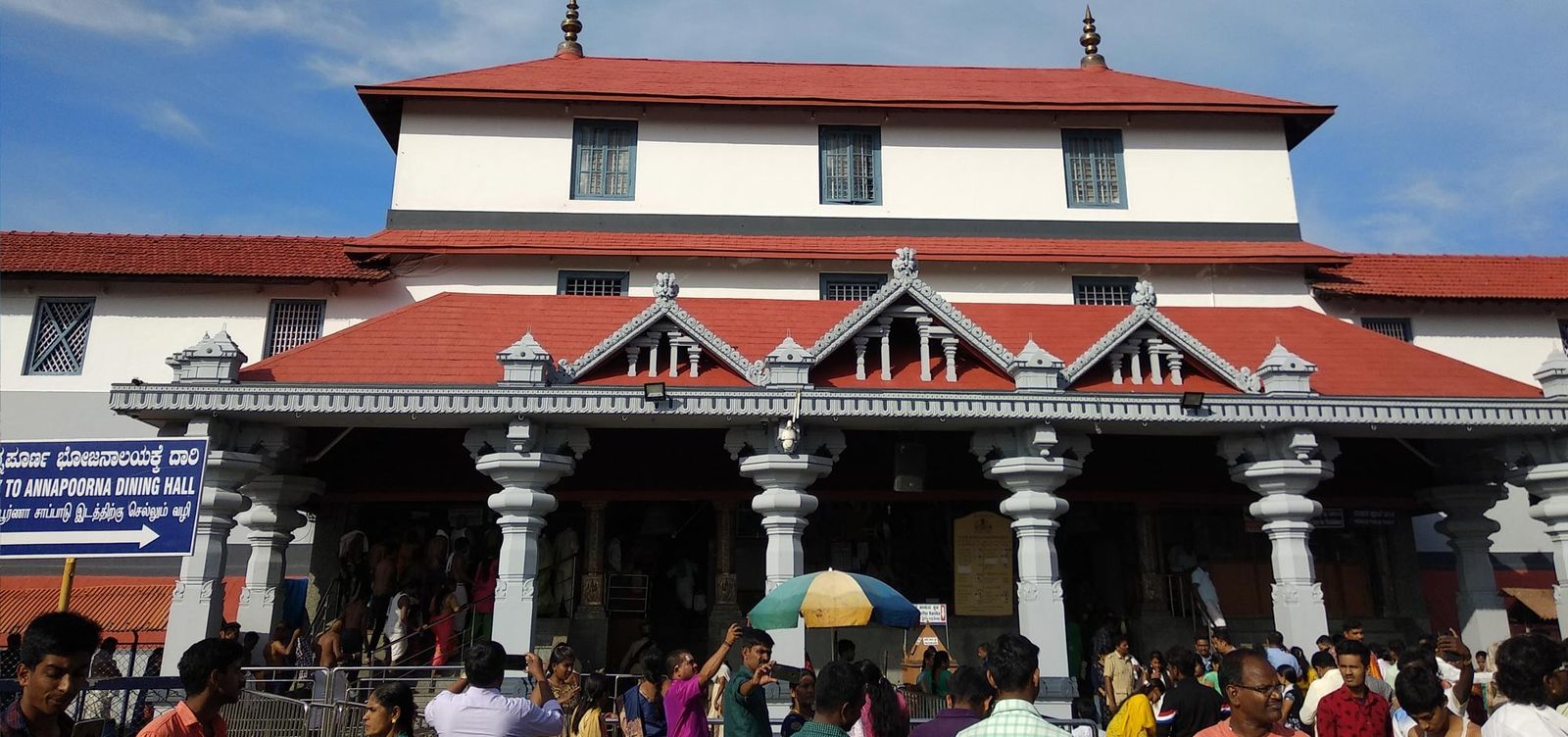
The Sri Manjunatha Swamy Temple sits at Dharmasthala's spiritual core, and what strikes you first isn't grandeur but order. The complex is expansive, meticulously maintained, and open to every visitor regardless of faith, caste, or background. There's a quietness here that feels almost startling if you've navigated India's more frenetic pilgrimage circuits — devotees move in calm, unhurried streams through the shrine.
But the tradition that truly stops you in your tracks is Annadaana, the free meal service. Every person who arrives in Dharmasthala — pilgrim, tourist, wanderer — is invited to sit and eat. On peak days, the temple's dining halls serve tens of thousands of people in organized, efficient waves. Volunteers pile hot rice onto banana leaves, ladle rasam and vegetables with practiced precision, and the sheer scale of it is staggering. You don't just witness it; you feel the warmth of a community that considers feeding strangers a sacred duty.
Where Jain Giants and Antique Cars Share the Same Zip Code
Tearing yourself away from the temple grounds, you'll find Dharmasthala has more layers than most visitors expect. The Manjusha Museum is a wonderfully eclectic surprise — room after room filled with antique cars, centuries-old paintings, intricate sculptures, and historical artifacts that trace the region's deep cultural roots. It's the kind of collection that rewards lingering, the sort of place where you round a corner and find a 200-year-old wooden chariot parked next to a vintage automobile.
A short walk away, the 39-foot monolithic granite statue of Lord Bahubali rises against the sky with a serenity that makes you instinctively lower your voice. Inaugurated in 1973, it stands among the tallest of its kind in India, its smooth stone surface catching the light in ways that shift throughout the day. This is Dharmasthala's Jain heritage made visible and magnificent — a contemplative pause that anchors the town's identity as a place where two great faiths coexist without friction.
Into the Green: Rivers, Ghats, and Plantation Trails
Don't confine yourself to the town center. The Nethravathi River turns especially beautiful during and just after the monsoon months, when swollen waters rush between mossy boulders and the surrounding hillsides drip with an almost impossible green. Even a few quiet minutes on its banks, watching kingfishers dart above the current, recalibrates something inside you.
Short drives lead to viewpoints overlooking the Western Ghats, where the forest canopy rolls toward the horizon like a green ocean frozen mid-wave. Lace up your shoes and wander the trails that wind through coffee plantations and wooded patches — the air smells of damp earth and wild cardamom, and you'll likely spot more species of butterflies in an hour than you could name in a lifetime. Coastal Karnataka's biodiversity reveals itself quietly here, one birdsong at a time.
A Town That Runs on Kindness
What lingers most about Dharmasthala isn't any single monument. It's the texture of daily life. Locals converse in Tulu and Kannada, switching easily to English or Hindi when visitors need directions. The Dharmasthala Dharmadhikari family, hereditary administrators of the temple for generations, has channeled the town's spiritual energy into a remarkable network of educational institutions, healthcare facilities, and charitable projects that serve the wider region.
You feel this spirit of service everywhere — in the volunteer who insists on carrying your bag, in the guesthouse keeper who brings you coffee before you've asked, in the quiet efficiency with which a town this small manages millions of annual visitors. Travelers consistently describe Dharmasthala with the same handful of words: warm, welcoming, and remarkably well-organized for its size.
When to Go and How to Get There
October through February delivers the most comfortable weather — pleasant temperatures, clear skies, and golden late-afternoon light that makes every photograph effortless. Monsoon season, June through September, transforms the landscape into a drenched, vivid paradise of emerald and jade, though some roads can become challenging. Summer months run warm but stay manageable thanks to the cooling influence of the nearby Ghats.
Buses and private taxis connect Dharmasthala to Mangaluru with ease. Accommodation ranges from temple-run guesthouses — clean, affordable, and perfectly functional — to private hotels in the vicinity. Dining leans traditional South Indian vegetarian, heavy on fragrant rice dishes and coconut-laced curries. Many visitors skip the restaurants entirely, choosing instead to experience the temple's legendary community meal at least once. Honestly? It might be the most meaningful thing you eat all year.
More Than a Destination — A Way of Being
Dharmasthala doesn't shout for your attention. It earns it, quietly and completely. Spirituality meets radical inclusivity here. Ancient traditions coexist with modern generosity on a breathtaking scale. The landscape itself — those mist-draped hills, that whispering river — seems designed to slow you down and open you up. Whether you arrive seeking devotion, history, or simply a few days of genuine peace, this Karnataka town meets you exactly where you are and sends you home a little changed.