The moment you step off the train in Chandigarh, something feels different — almost startlingly so. There's no honking chaos, no tangled web of alleys folding in on themselves. Instead, wide boulevards stretch ahead like open arms, flanked by bougainvillea spilling over walls and towering eucalyptus trees casting long, cool shadows on the pavement. Designed in the 1950s by legendary Swiss-French architect Le Corbusier, this planned city serves as the shared capital of both Punjab and Haryana — and it's unlike anywhere else in Northern India.
A City That Actually Makes Sense
Chandigarh is divided into numbered sectors, each one a self-contained neighborhood with its own markets, parks, and residential pockets. What could feel clinical on paper actually feels wonderfully freeing on foot. You won't burn half your day stuck in gridlock or squinting at a map.
Tree-lined avenues carry you effortlessly from one sector to the next. Mango trees drop dappled light across the sidewalks, and the air smells faintly of earth and blossoms — a welcome exhale after the sensory overload of Delhi or Amritsar.
Le Corbusier's Concrete Poetry
The Capitol Complex stops you mid-stride. A UNESCO World Heritage Site and the city's crowning architectural achievement, this government precinct houses the High Court, the Secretariat, and the iconic Open Hand Monument — Chandigarh's official emblem. That massive rotating metal sculpture, symbolizing peace and reconciliation, catches the light differently every hour, and standing beneath it stirs something unexpectedly emotional.
Architecture devotees travel from across the globe to study these bold concrete forms, yet the complex never feels exclusive or museum-stuffy. Stroll through at your own pace, crane your neck at the raw brutalist lines, and let the scale of Le Corbusier's vision settle over you.
A Wonderland Built from Broken Bangles
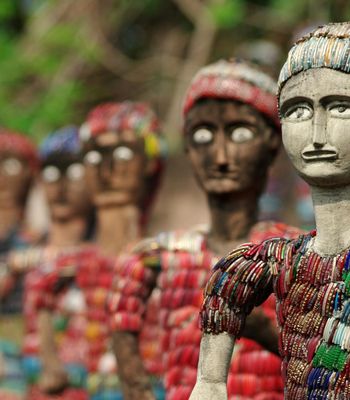
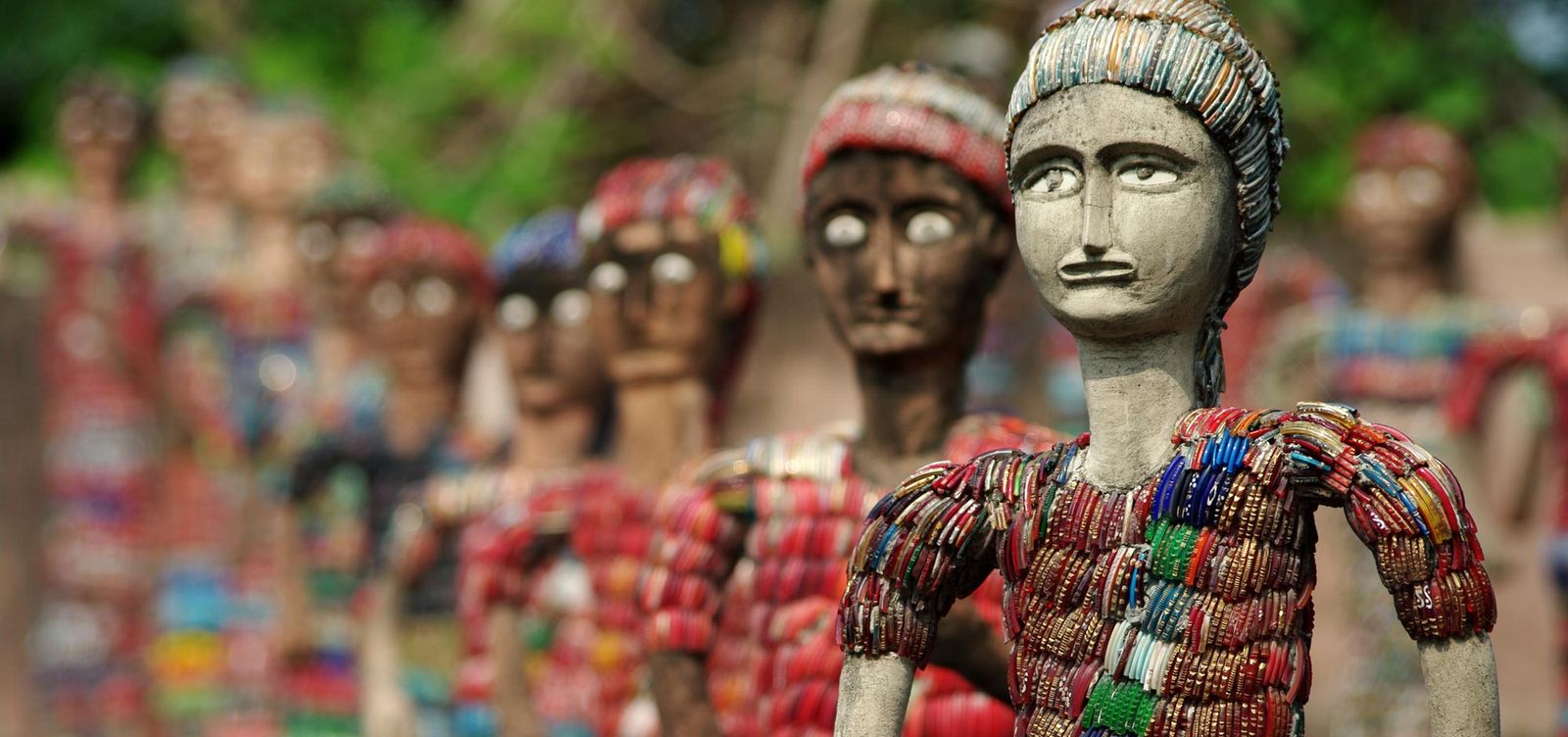
Here's a story that sounds too good to be true: for decades, a lone artist named Nek Chand secretly built an entire sculpture park from recycled junk — shattered bangles, discarded tiles, broken pottery, electrical waste. When authorities finally discovered it, the Rock Garden had grown into a sprawling labyrinth of thousands of mosaic figures, arched pathways, and tumbling waterfalls.
Winding through its corridors feels like slipping into someone else's fever dream — whimsical, strange, and utterly captivating. Children shriek with delight around every turn. Adults go quiet with wonder. No photograph fully captures the texture of the place — the rough edges of recycled ceramic under your fingertips, the sound of water echoing off sculpted walls. You simply have to walk it yourself.
Dawn at Sukhna Lake
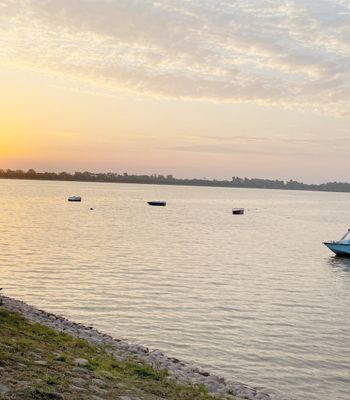
Set your alarm early for this one. Sukhna Lake, a man-made reservoir cradled at the foot of the Shivalik Hills, is at its most magical just after sunrise. Mist hovers over the glassy water. Joggers pad softly along the promenade. Rowing crews slice through the stillness in near-silence.
Grab a steaming cup of chai from a lakeside vendor, settle onto a bench, and watch the hills slowly blush gold with the first light. During cooler months, migratory birds descend on the lake — Siberian ducks, geese, storks — turning the shoreline into a birdwatcher's quiet paradise. Paddleboats are available if you want to get out on the water yourself.
Where Chole Bhature Is a Way of Life
Sector 17, the city's central commercial hub, hums with a distinctly Punjabi energy. Shoppers weave between clothing stores, bookshops, and electronics outlets, but the real draw is the street food. The air is thick with the sizzle of deep-fried bhature puffing up in hot oil, the tangy punch of tamarind from pani puri stalls, and the sweet, creamy coolness of freshly churned lassi served in tall steel glasses.
Don't leave without trying:
- Chole bhature — pillowy fried bread with spiced chickpeas, the city's unofficial breakfast of champions
- Amritsari kulcha — stuffed, crispy flatbread that shatters with each bite
- Pani puri — tiny crunchy shells bursting with tangy, spicy water
- Lassi and fresh fruit juices — thick, cold, and impossibly refreshing
Punjabi hospitality runs bone-deep here. Strike up a conversation with a shopkeeper or a fellow chai-drinker and you'll quickly understand why locals describe Chandigarh as one of India's most livable cities. That pride shows — in the spotless parks, the well-kept public gardens, and a pace of life that feels relaxed yet purposeful.
A Thousand Shades of Rose
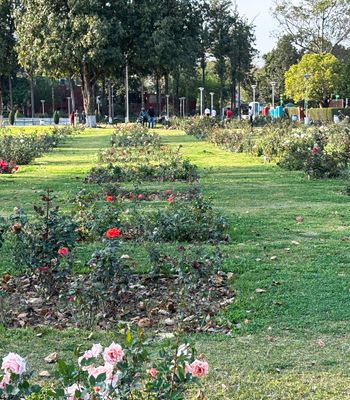
Over a thousand varieties of roses bloom across the sprawling, manicured grounds of the Rose Garden in Sector 16 — one of the largest of its kind in Asia. Visit in February or March and the fragrance alone is worth the trip: wave after wave of sweetness drifting across the paths as you wander past beds of crimson, peach, ivory, and deep magenta.
Just nearby, the Garden of Silence offers a different mood entirely. Open lawns stretch toward a giant Buddha statue sitting in serene contemplation against the sky. Bring a book, spread out on the grass, and let an entire afternoon dissolve. Many visitors drift between these two gardens without ever wanting to leave.
Your Launchpad to the Foothills
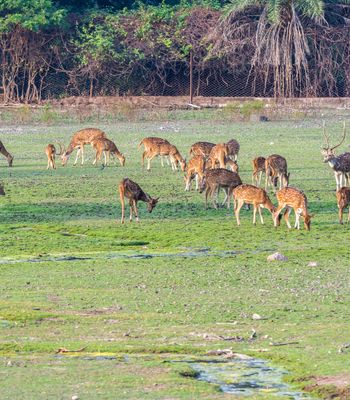
Chandigarh also doubles as an ideal base for exploring the surrounding countryside. The Shivalik foothills rise just a short drive away, laced with light trekking trails and nature walks that smell of pine and wild herbs. Day trips to the terraced Pinjore Gardens or the forested ridges of Morni Hills offer a taste of Haryana's scenic side without straying far from the city's comforts.
When to Go and What to Know
Autumn (October–November) and early spring (February–March) bring the most comfortable weather — mild days, cool evenings, and gardens bursting with color. Summer heat can be punishing, so plan accordingly if you're visiting between May and July.
Whether you come chasing modernist architecture, Punjabi comfort food, or simply a calmer rhythm of Indian city life, Chandigarh rewards you with all three — and a quiet conviction that thoughtful design and vibrant culture aren't just compatible. They make each other better.