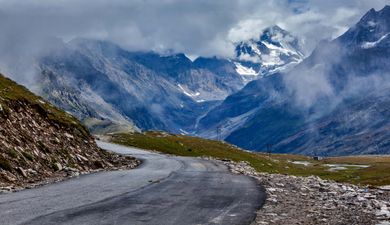
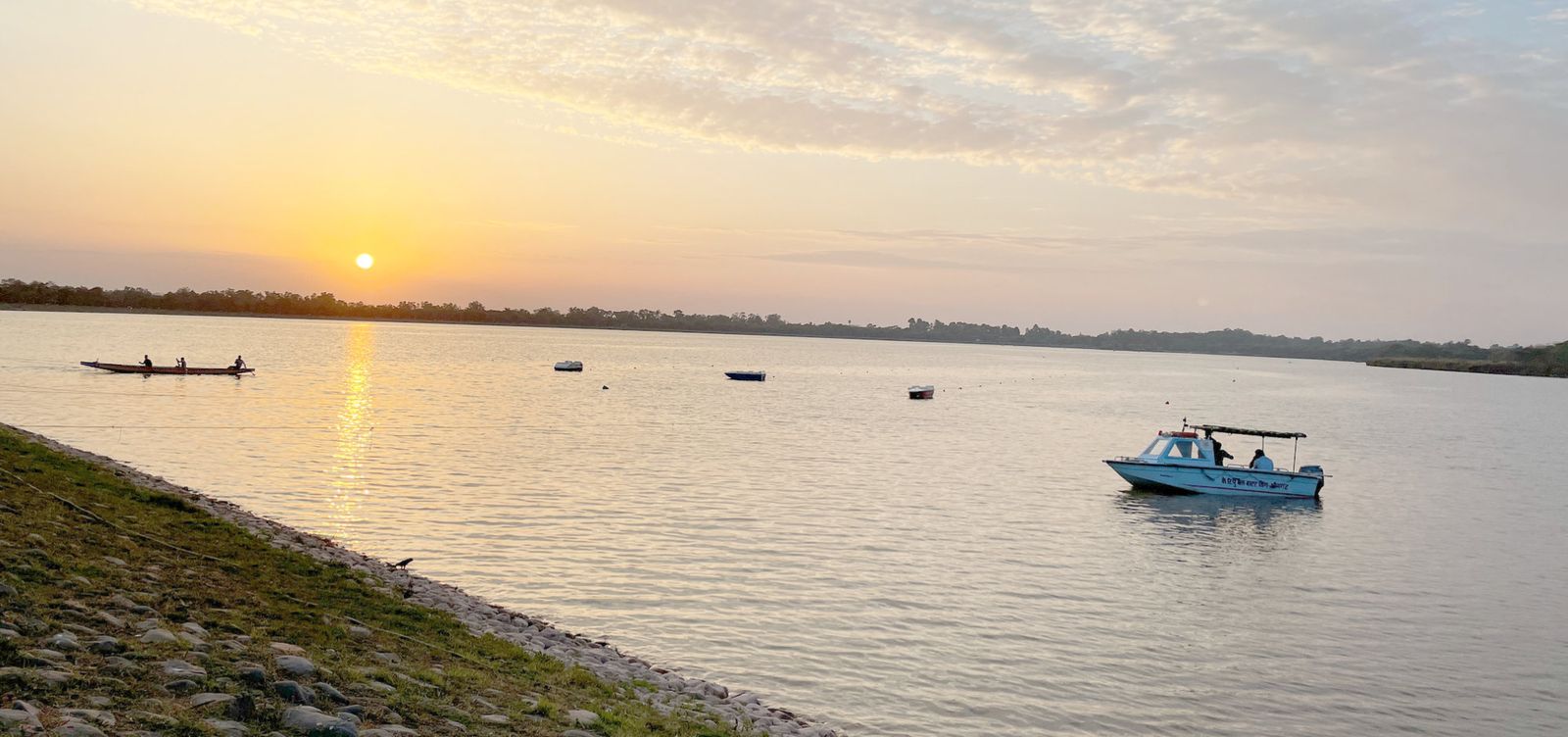
For a city engineered with the geometric precision of Le Corbusier's master plan, Chandigarh can feel relentlessly ordered — sector after numbered sector, roundabout after roundabout. Then you reach Sukhna Lake, and the grid dissolves. The air opens up. The Shivalik hills hover in a blue-grey haze along the northern edge, and the man-made reservoir stretches out with an almost implausible calm, as if someone carved a pause into the city's blueprint and filled it with water.
That's essentially what happened. Sukhna was created in 1958 by damming the Sukhna Choe, a seasonal stream descending from the Shivaliks. Le Corbusier reportedly insisted on it — a recreational lake to give his planned city a soul. Whether it succeeded in that lofty ambition depends on whom you ask. What's undeniable is that Sukhna became the emotional center of Chandigarh, the one place where residents shed their composure and simply exist.
A Lake That Belongs to Morning People
Arrive at dawn and you'll understand why Chandigarh consistently ranks among India's fittest cities. The concrete promenade along the southern shore fills with walkers, joggers, and elderly couples moving at the deliberate pace of people who've been doing this for forty years. Some stretch against the railing. Others sit motionless on benches, watching rowing boats cut clean lines across the surface. The light at this hour is particular — a pale gold filtered through haze that clings to the foothills, turning the water into something between silver and pewter.
By mid-morning, the character shifts entirely. Families arrive. Vendors wheel out carts selling roasted peanuts and paper cones of bhelpuri, the tamarind chutney sharp enough to make your eyes water. Paddle boats — those distinctly ungraceful swan-shaped ones — wobble away from the boat club. Children shriek. The stillness doesn't vanish so much as migrate to the quieter stretches of the embankment, near the garden of silence on the eastern side.
The Discipline of Stillness
Here's the counterintuitive thing about Sukhna: it's an artificial lake in a planned city, yet it feels more genuinely wild than many designated wilderness spots in the region. Part of this comes from a decision made decades ago to declare the surrounding catchment area a wildlife sanctuary. The Sukhna Wildlife Sanctuary covers the hills behind the lake, and because of its protected status, the water remains surprisingly clean for a body of water bordered by an Indian city of over a million people.
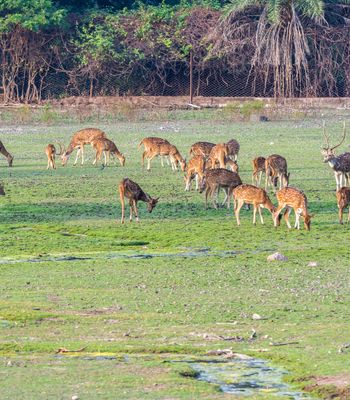
Sambar deer graze on the forested slopes above. Migratory birds — bar-headed geese, pochards, coots — settle on the lake during winter months, their presence a quiet validation that the ecosystem actually works.
Motor-powered boats have been banned here since the 1990s. That single regulation transformed Sukhna from a civic amenity into something closer to a sanctuary. The only sounds on the water are oars dipping, the occasional creak of a rowing shell, and wind. The Chandigarh Rowing Club operates from the lake's edge, and if you time your visit right, you can watch rowers training in the early light — their boats barely troubling the surface, the rhythm almost hypnotic.
Where the City Exhales
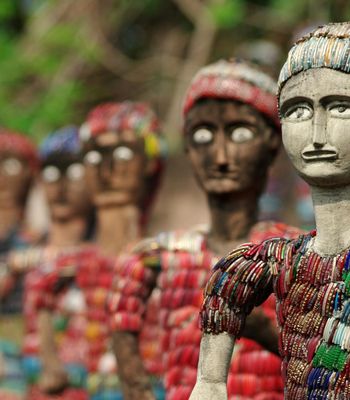
Walk the full length of the promenade and you'll cover roughly a kilometer and a half. Not a long walk, but a textured one. Near the western end, a small Rock Garden — not to be confused with Nek Chand's famous creation nearby — offers rough stone seats beneath frangipani trees. The scent in the evening is dense, almost narcotic. Closer to the dam, fishermen cast lines into water that catches the last orange of sunset. A few food stalls sell tea so over-sweetened it borders on syrup, served in small clay cups you toss into a bin afterward.
The lake's relationship with the city is unusually intimate. There are no entrance fees, no ticketed gates, no velvet ropes. You simply walk in. College students from Panjab University crowd the benches after classes. Retired bureaucrats read Hindi dailies on the same benches they've claimed for a decade. Couples sit at a careful distance from each other, performing the ancient Indian ritual of public courtship through strategic proximity.
What makes Sukhna worth your time isn't spectacle. There's no dramatic waterfall, no ancient ruin, no infinity edge calibrated for a camera lens. The lake's power is subtler. It's the rare urban space in India that rewards doing absolutely nothing. Sit on the embankment. Watch the light change over the Shivaliks. Let the city's famous orderliness recede until all that remains is water, sky, and the soft percussion of footsteps on concrete.
In a country that rarely stops moving, Sukhna Lake asks you — gently, without insistence — to be still. That alone is reason enough to go.