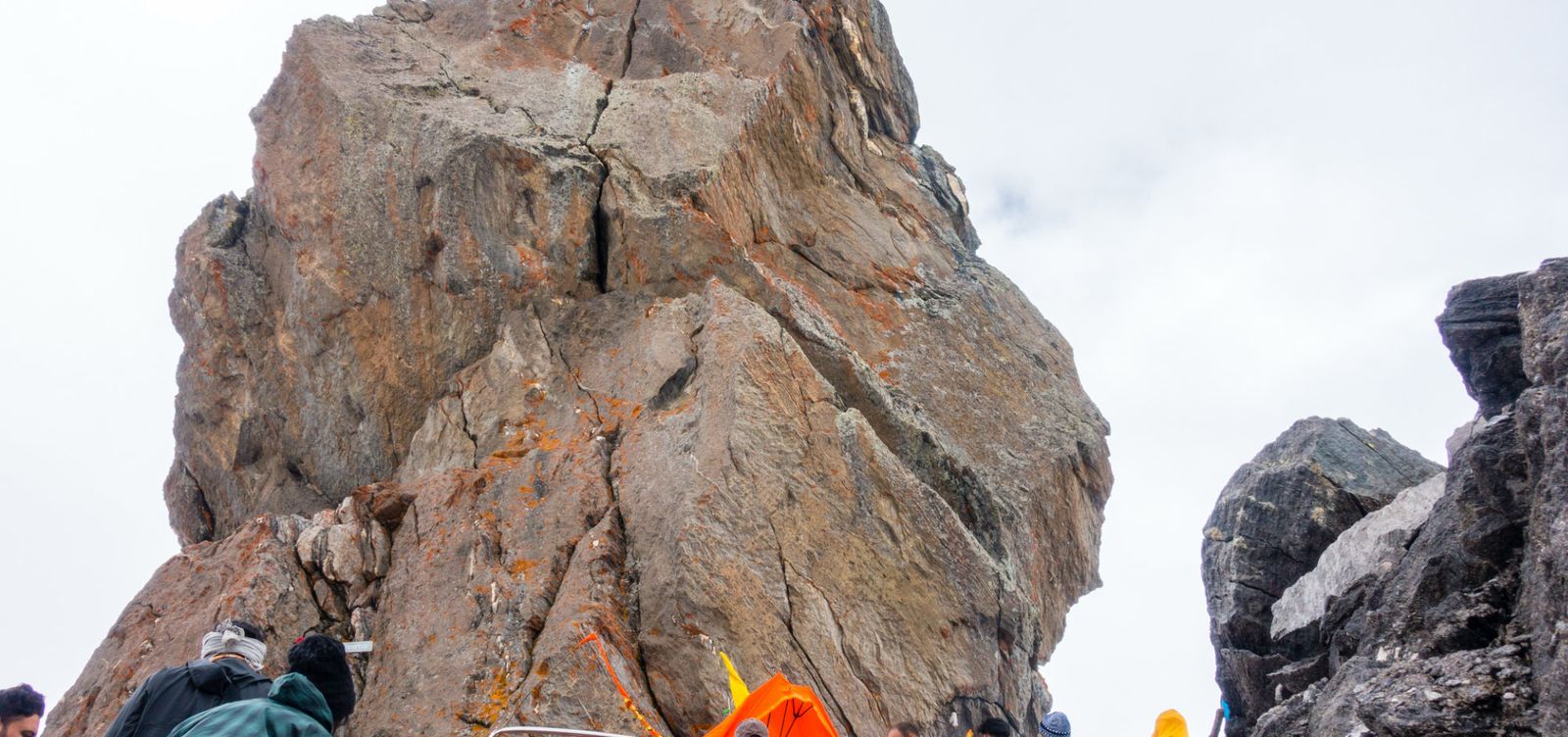


At 18,570 feet, a lone granite pillar rises from the snow — the sacred Shrikhand Mahadev, believed to be a manifestation of Lord Shiva himself. The air here bites your lungs, prayer flags snap in the relentless wind, and the Himalayan panorama stretches so wide it feels like standing on the edge of the world. This is not just a trek. It's a pilgrimage that tests your body and feeds your soul.
The Shrikhand Mahadev Trek ranks among the most challenging and spiritually significant journeys in the Indian Himalayas. Every summer, thousands of devotees and adventure seekers push through glacial moraines, boulder fields, and steep snow-covered ridges to reach that sacred peak in Himachal Pradesh. The reward? Views that no photograph can truly capture, and a sense of accomplishment that stays with you long after you descend.
Whether you're a first-time trekker drawn by faith or an experienced hiker looking for your next high-altitude challenge, this guide covers everything you need — from route breakdowns and timing to safety essentials. Lace up your boots and read on, because this trek demands preparation, and preparation starts right here.
A Pilgrimage That Meets the Sky
The Shrikhand Mahadev Trek is a high-altitude pilgrimage route in Himachal Pradesh that culminates at a towering rock formation revered as a natural Shiva Lingam. Standing at approximately 18,570 feet above sea level, this massive granite monolith has drawn Hindu devotees for centuries. According to local legend, this is where Lord Shiva meditated, and the 75-foot rock pillar is considered his sacred embodiment.
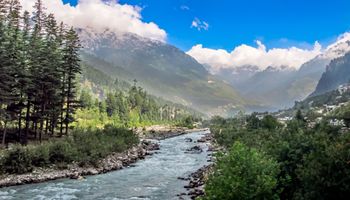
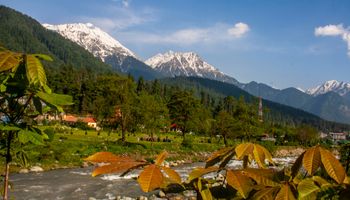
But calling it only a pilgrimage would be selling it short. The trail carves through some of the most dramatic terrain in the western Himalayas — dense forests of oak and rhododendron, high-altitude meadows carpeted in wildflowers, and desolate glacial landscapes where nothing grows except your sense of wonder.
The trek is classified as difficult to very difficult by most trekking organizations. Steep ascents, unpredictable weather, rocky terrain, and thin air make it a genuine test of endurance. You'll cross snow bridges in July, scramble over boulders the size of small houses, and navigate sections where the trail vanishes into loose scree.
What sets this trek apart from other Himalayan routes is the raw, unfiltered intensity of the experience. There are no luxury campsites or well-marked paths on the upper stretches. Langar (community kitchens) run by volunteers along the route serve hot meals and chai, creating a spirit of collective perseverance that feels rare in today's world. Strangers become companions. The mountain strips away pretense and leaves only grit, gratitude, and the shared goal of reaching the top.
Tracing the Map: Where This Sacred Peak Stands
Shrikhand Mahadev rises in the Kullu district of Himachal Pradesh, within the Great Himalayan National Park buffer zone. The peak sits along the Shrikhand Range, a spur of the mighty Pir Panjal, and overlooks the Banjar and Nirmand valleys below.
The traditional base for the trek is the village of Jaon (also spelled Jaon or Jawon), located in the Nirmand tehsil of Kullu district. To reach Jaon, you first travel to the town of Nirmand, which serves as the last significant settlement before the trail begins. Nirmand itself sits about 150 kilometers from Shimla and roughly 85 kilometers from Kullu town.
Getting to Nirmand is straightforward. From Delhi, most trekkers take an overnight bus to Shimla or Rampur Bushahr, then continue by local bus or hired vehicle along the Sutlej River valley before turning off toward Nirmand. The road winds through apple orchards and terraced fields, with the river roaring far below. From Nirmand, a narrow mountain road climbs another 8 kilometers to Jaon, where the motorable road ends and the trek begins.
The nearest airport is Bhuntar Airport near Kullu, though flights here can be unreliable due to weather. Shimla's Jubbarhatti Airport is another option. Most seasoned trekkers prefer the road approach — it allows for gradual altitude adjustment, and the drive itself offers stunning glimpses of Himachali village life. Wooden homes with slate roofs dot the hillsides, and the fragrance of pine resin fills the air as you climb higher into the mountains.
The Numbers That Matter: Distance, Altitude & Time on the Trail
Let's talk specifics, because this trek demands honest self-assessment. The Shrikhand Mahadev Trek covers a total distance of approximately 30 to 35 kilometers one way, from the village of Jaon to the Shrikhand Mahadev peak. The round trip, including the return along the same route, spans roughly 60 to 70 kilometers.
The summit stands at an imposing 18,570 feet (5,660 meters) above sea level, while Jaon sits at around 7,000 feet (2,130 meters). That's a vertical gain of more than 11,000 feet — a staggering number that explains why this trek pushes even fit trekkers to their limits.
Most trekkers complete the journey in 5 to 7 days, depending on their pace and acclimatization needs. A common itinerary breaks the trek into stages: Jaon to Singarh, Singarh to Thachru, Thachru to Bheem Dwar, Bheem Dwar to Parvati Bagh, and the final push to the summit and back. Some faster groups attempt it in 4 days, though that leaves almost no margin for weather delays or altitude sickness.
The daily distances range from 5 to 10 kilometers, but don't let those modest numbers fool you. The terrain changes drastically — from forested trails to boulder-strewn moraines to near-vertical snow scrambles. A single kilometer near the summit can take hours. Your knees will know the difference between flat-trail kilometers and Shrikhand kilometers. Pack your trekking poles. You'll thank yourself by day two.
When the Mountain Opens Its Gates
Timing is everything on this trek, and the window is narrow. The best time to attempt the Shrikhand Mahadev Trek falls between mid-July and mid-September, coinciding with the yatra (pilgrimage) season declared by the Himachal Pradesh government each year. Outside this period, the upper reaches remain buried under heavy snow, and the route becomes impassable and extremely dangerous.
Within this window, late July through August tends to see the highest foot traffic, as the annual Shrikhand Mahadev Yatra attracts thousands of devotees. During yatra season, the government sets up medical aid posts, volunteer-run langars, and basic shelters along the route. These support systems make a meaningful difference in safety and logistics.
The monsoon, however, is a double-edged companion. Rain hits the lower sections regularly, turning forest trails slippery and muddy. Leeches are a constant nuisance through the wooded stretches below Thachru. Higher up, the precipitation falls as snow, and whiteout conditions can descend without warning. Mornings typically offer clearer skies, so most trekkers start each day's hike before dawn.
If you prefer slightly less crowded trails, aim for the first or last week of the official yatra period. Early season means more snow on the upper route but fewer people. Late season brings receding snowfields and slightly more stable weather, though nothing above 15,000 feet is ever truly predictable. Check the official yatra dates each year before booking anything — they shift based on conditions and government announcements. A flexible itinerary with buffer days built in can save your trek from being derailed by a single bad-weather day.
Step by Step: The Route That Takes You to the Gods
Understanding the route in detail transforms anxiety into anticipation. Here's what each stage of the Shrikhand Mahadev Trek looks like, from trailhead to sacred summit.
Jaon to Singarh (6–7 km)
The trek begins on a gentle forest path that climbs through thick stands of oak, deodar cedar, and walnut trees. Birdsong fills the canopy — Himalayan monals flash their iridescent plumage if you're lucky. The trail gains moderate elevation, crossing small streams that trickle over mossy rocks. Singarh, your first camp, sits in a grassy clearing at around 9,500 feet. The evening air carries the sweet scent of pine smoke from nearby shelters.
Singarh to Thachru (5–6 km)
The forest thickens, and the gradient sharpens. Rhododendron trees line the path, their gnarled trunks draped in lichen. This stretch is notorious for leeches during monsoon — gaiters and salt are your best friends. The trail crosses a couple of wooden bridges over rushing streams before emerging at Thachru, a campsite at roughly 11,500 feet. Volunteers often run a langar here, serving steaming dal and rice that tastes extraordinary after a hard climb.
Thachru to Bheem Dwar (5–6 km)
Above Thachru, the treeline fades. Alpine meadows take over, dotted with blue and yellow wildflowers in season. The landscape opens dramatically — you can see snow-capped ridges stretching in every direction. The trail grows steeper and rockier as you approach Bheem Dwar at approximately 13,500 feet. A massive boulder here, said to have been placed by Bheem (of Mahabharata fame), marks the campsite. Cold winds whip through after sunset, so set up your tent early and layer up.
Bheem Dwar to Parvati Bagh (4–5 km)
This is where the trek turns serious. The path crosses snowfields and loose moraine, requiring careful foot placement with every step. Altitude effects become noticeable — your breath comes harder, and your pace slows. Parvati Bagh, at around 15,500 feet, is a small, stony plateau believed to be where Goddess Parvati rested during her journey to meet Shiva. Snow often surrounds the camp even in August. The cold is biting, and the silence at this altitude feels almost physical — broken only by wind and the crunch of ice underfoot.
Parvati Bagh to Shrikhand Mahadev Summit & Return (8–10 km round trip)
Summit day begins in darkness, often around 2 or 3 AM. The final push involves scrambling over massive boulders, crossing steep snowfields, and navigating exposed ridgelines where a misstep carries real consequences. Ropes are fixed on the most dangerous sections during yatra season, but you still need steady nerves and strong legs. As dawn breaks, the granite Shiva Lingam appears against a sky streaked with orange and gold. At the top, prayer flags flutter and devotees chant. The 360-degree view encompasses the Pir Panjal, the Great Himalayan Range, and valleys so deep they seem to have no bottom. Most trekkers descend to Bheem Dwar or Thachru the same day, riding the adrenaline of accomplishment.
Staying Alive and Well: Essential Tips for First-Timers
The Shrikhand Mahadev Trek is beautiful, but it's unforgiving toward the unprepared. These tips can make the difference between a triumphant summit and a dangerous retreat.
Physical Preparation Is Non-Negotiable
Start training at least two months before your trek date. Focus on cardiovascular endurance — running, stair climbing, and cycling build the stamina you'll need. Strengthen your legs and core with squats, lunges, and planks. Practice hiking with a loaded backpack on hilly terrain whenever possible. This trek will ask your body for everything it has; give it a head start.
Acclimatize or Suffer the Consequences
Altitude sickness is the biggest invisible threat on this route. Never rush the ascent. Spend an extra night at Thachru or Bheem Dwar if you feel headaches, nausea, or unusual fatigue. Drink at least 3 to 4 liters of water daily — dehydration accelerates altitude sickness. Learn to recognize the symptoms of HACE and HAPE, and carry Diamox after consulting your doctor. If symptoms worsen, descend immediately. No summit is worth your life.
Pack Smart, Pack Light
Carry a sturdy, waterproof backpack weighing no more than 10 to 12 kilograms. Essentials include a four-season sleeping bag, rain gear, thermal base layers, a good pair of waterproof trekking boots with ankle support, trekking poles, sunscreen (SPF 50+), UV-protective sunglasses, a headlamp with extra batteries, and a basic first-aid kit. Leave vanity items at home — every extra gram feels like a kilogram above 15,000 feet.
Respect the Mountain and Its People
Carry all your trash back out. The upper reaches of this route have suffered from growing litter, and keeping the trail clean is every trekker's responsibility. Follow instructions from local guides and yatra volunteers — they know the mountain's moods better than any app. Stay on marked trails to avoid disturbing fragile alpine ecosystems. Keep noise levels low near campsites, and treat fellow trekkers with kindness. The communal spirit of the yatra is one of its most powerful gifts; honor it.
One final, critical tip: never trek alone above Thachru. The upper terrain is unpredictable, weather shifts in minutes, and mobile phone signals are nonexistent. Travel in groups, inform someone at base about your itinerary, and always carry emergency supplies for an unplanned night out.
The Summit Is Calling
The Shrikhand Mahadev Trek is not a casual weekend outing — it's a journey that demands respect, preparation, and a willingness to push beyond your comfort zone. But the rewards match the effort. Standing at 18,570 feet beside that ancient granite pillar, with the Himalayas unfolding in every direction, you'll feel something that defies easy description — part exhaustion, part exhilaration, part reverence.
Start training now. Study the route. Check the yatra dates. Talk to trekkers who've done it, and listen to what the mountain taught them. When you finally lace up your boots at Jaon and take that first step into the forest, you'll carry their stories alongside your own. And when you return — mud-caked, sunburned, and grinning — you'll have a story that lasts a lifetime. The mountain is patient. It will be there when you're ready.