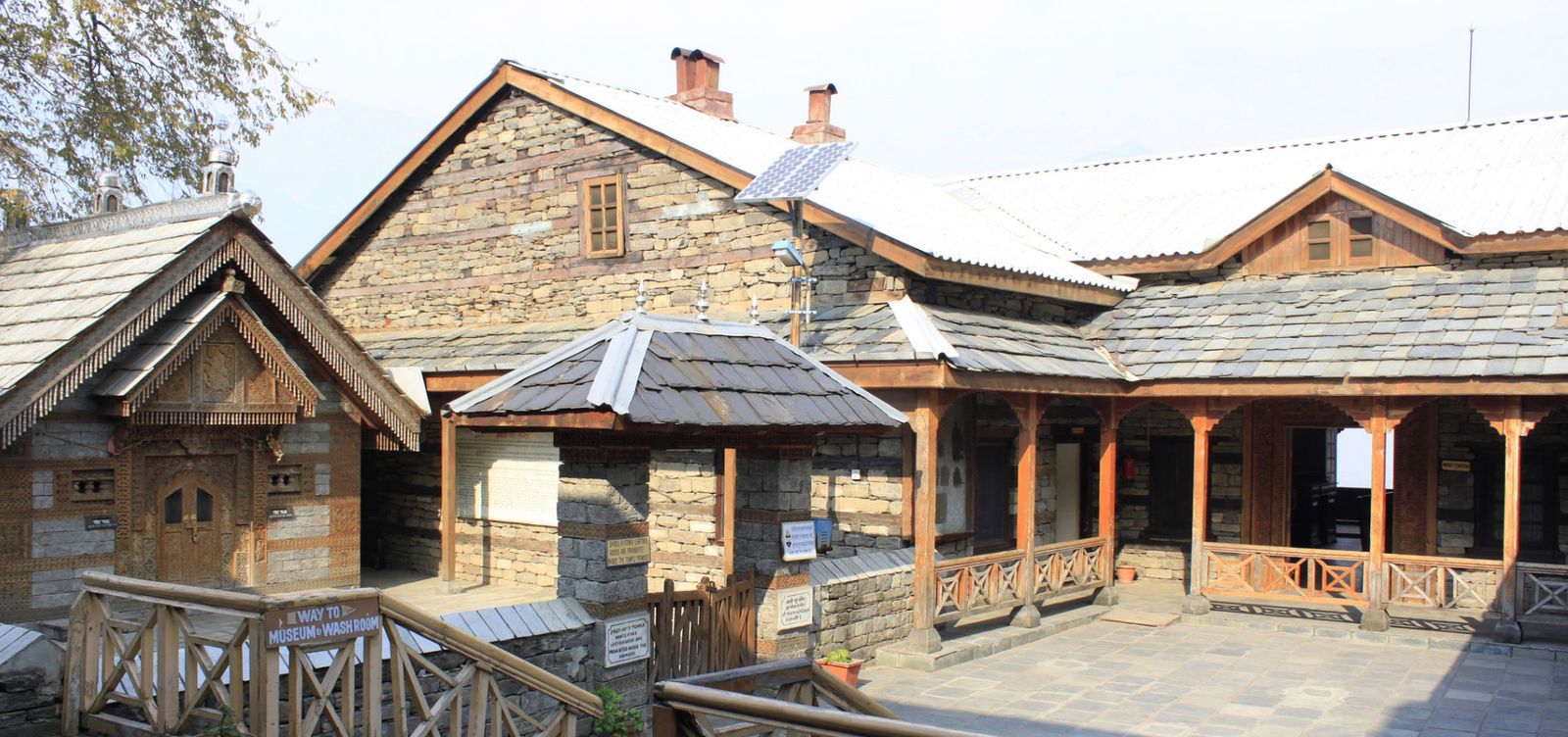
Naggar Castle sits on a ridge above the Beas River, built from stones and cedar beams that have shifted through earthquakes for more than five centuries. It isn't really a castle in the European sense. It's a fortified mountain residence, low-slung and weathered, built by Raja Sidh Singh of Kullu around 1460 in the local kath-kuni style — alternating layers of timber and stone that flex instead of shatter when the ground moves. That engineering detail is the reason you can still walk through it today. The Kullu Valley loses buildings to tremors with depressing regularity. Naggar stays put. You reach it after a steep climb from the bazaar below, and the first thing that strikes you isn't grandeur. It's the silence.
The Stones That Refused to Fall
Walk the perimeter and the kath-kuni construction reveals itself up close. Horizontal cedar logs slot between courses of rough grey stone, no mortar, held together by gravity and joinery. Builders across Himachal have used this method for centuries, and Naggar is one of its finest surviving examples.
The castle served as the royal headquarters of the Kullu kings until 1660, when the capital shifted to Sultanpur. After that, it became an administrative outpost, then a colonial rest house when the British bought it in 1846 for, by most accounts, a single rifle. That detail stays with you as you cross the courtyards.
A Shrine Made of Stone Tablet
Inside a small temple within the castle courtyard is the Jagti Patt — a slab of stone that, according to local belief, was carried here by bees in the form of the valley's gods. The tablet is modest. Unpolished, irregular, roughly the size of a coffee table. Pilgrims still come to leave small offerings.
You'll probably walk past it the first time without noticing. That's part of what makes the castle feel honest — nothing is staged for visitors. The sacred object sits in a dim corner, and the devotional life continues around it whether you're there or not.
The Russian Painter on the Hill
A short walk uphill from the castle brings you to the Roerich Art Gallery, the former home of Nicholas Roerich — the Russian painter, philosopher, and mystic who settled in Naggar in 1928 and spent the last two decades of his life painting the Himalayas from this hillside. His canvases are extraordinary: cobalt peaks, violet skies, a spiritual reading of the mountains that borders on hallucination.
His house is preserved as he left it. The old Studebaker he drove through the valley still sits in the yard, slowly returning to rust. There's something unexpectedly moving about the whole setup, and most visitors to the castle skip it, which is their loss.
The View That Does the Work
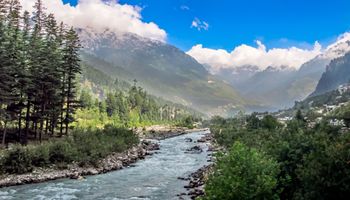
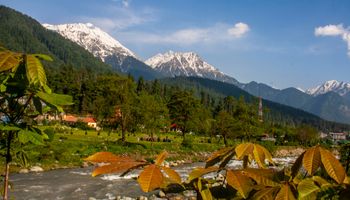
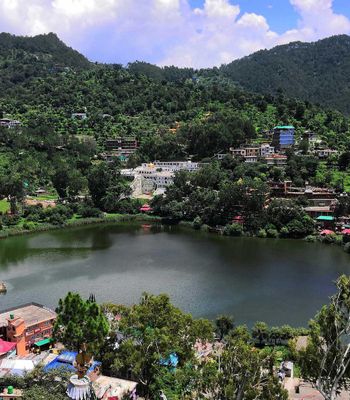
From the castle's wooden verandahs, the Kullu Valley opens up below — terraced fields, apple orchards, the Beas cutting through the floor of the valley, and the Pir Panjal range rising behind it all. This is the view the Kullu rajas chose, and it's easy to understand why.
In spring, the orchards below turn white with blossom. By autumn, the same trees hang heavy with fruit, and the air smells faintly of woodsmoke from the villages scattered down the slope. Stand on the verandah for ten minutes and you'll see why painters have kept returning to this ridge for a hundred years.
Sleeping in a Castle, Sort Of
Part of Naggar Castle operates as a heritage hotel run by Himachal Pradesh Tourism. The rooms are simple — wooden floors, thick stone walls, small windows cut into the old fortifications. There's no luxury here, and that's the appeal. You wake up inside a 15th-century building, creaking cedar beams and all.
Book directly through HPTDC if you want to stay. Rooms are limited and fill up quickly in peak season, particularly May and June. The on-site restaurant serves decent Himachali thalis, and breakfast on the verandah with the valley spread out below ranks among the more memorable meals you'll have in the region.
Practical Notes for the Climb
Naggar sits about 20 kilometres south of Manali, on the left bank of the Beas. The drive takes roughly an hour, longer in summer traffic. Shared taxis run regularly from Manali's Mall Road, or you can take a local bus to Naggar village and walk up from there — the final stretch is steep but short.
Entry to the castle grounds is inexpensive, though the Roerich Gallery charges a separate fee. Both are worth it. The castle opens early and stays accessible until dusk, and the light is best in the late afternoon when the valley begins to turn gold.
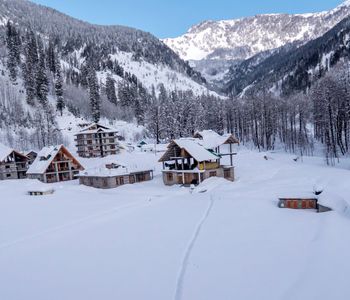
Wear shoes with grip. The stone floors inside the castle have been polished smooth by five centuries of foot traffic, and they can be treacherous when wet. Winter visits are quieter but colder — temperatures drop below freezing, and snow sometimes closes the approach road.
What to Pair It With
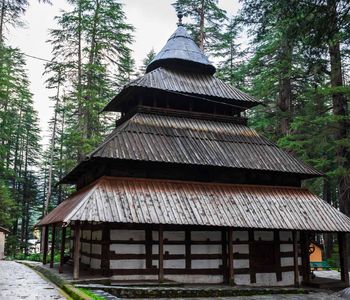
Give yourself at least half a day. An hour for the castle, another for the Roerich estate, and time left over for the small temples scattered through Naggar village — the Tripura Sundari Temple, with its pagoda roof, is a five-minute walk from the castle and worth the detour.
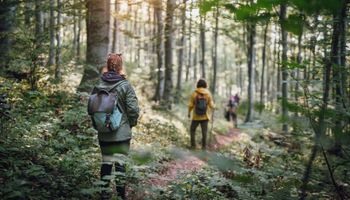
If you have the stamina, the walk down through the apple orchards to the main road is one of the better short hikes in the valley. Cider stalls appear in season. Ask, and someone will usually pour you a cup.
Why Naggar Stays With You
Most castles in India have been scrubbed, floodlit, and fenced off behind ticket counters and guided-tour scripts. Naggar hasn't. It's still a working building — part museum, part shrine, part hotel, part administrative office. You wander through it the way people have wandered through it for centuries, and nothing about the experience feels manufactured.
The mountains do most of the work. The castle simply gives you a place to stand and look at them. Come early, stay late, and let the valley do what it does. You won't forget the silence on that ridge.