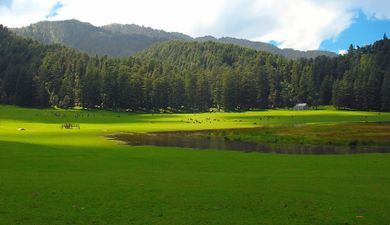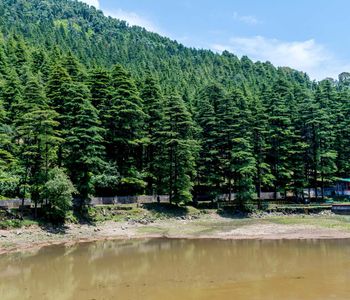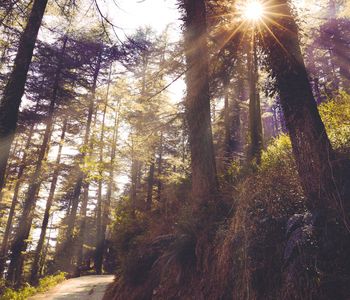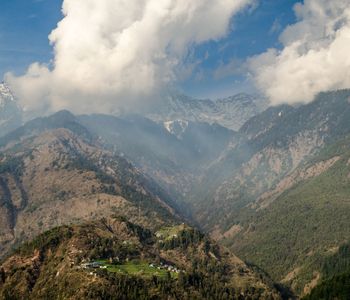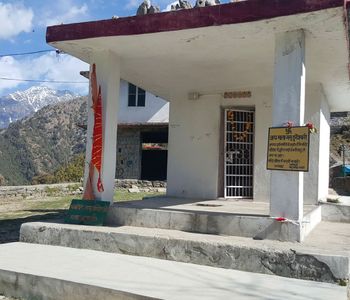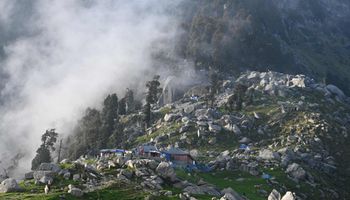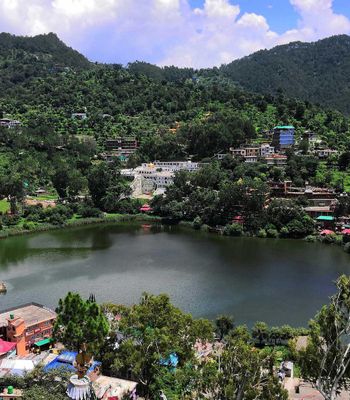
The climb to Indru Nag Temple begins where the road gives up. Above Mcleod Ganj, past the last chai stall and the final stretch of cracked asphalt, a narrow trail threads through deodar cedars so dense the sunlight arrives in fragments. You hear your own breathing. You hear birds you can't name. And then, at roughly 2,500 meters above sea level, a small stone temple appears on a ridge as if it had grown there naturally, like the moss covering the rocks around it.
Dedicated to Indru Nag — a serpent deity linked to Lord Indra, the Hindu god of rain and thunder — this temple draws a particular kind of visitor. Not the coach-tour crowd. Not the Instagram sprinters. The people who make this climb tend to be pilgrims from nearby villages, trekkers heading toward Triund, or travelers who've heard just enough to be curious. What they find is a place where Hindu and Tibetan Buddhist sensibilities overlap in ways that feel unforced, even accidental.
A Deity Born from the Storm
Nag worship runs deep in the hills of Himachal Pradesh. Long before organized religion sorted its categories neatly, the people of these mountains revered serpent spirits as guardians of water, weather, and the forces that could destroy a harvest or save one. Indru Nag belongs to that older reckoning. The deity governs rainfall and the capricious moods of the mountain sky — fitting for a temple perched where clouds roll in without announcement and turn a sunny afternoon into a grey, wind-lashed lesson in impermanence.
Local belief holds that prayers offered here can bend the rains. During droughts, villagers from the Kangra Valley have historically climbed to this ridge to petition Indru Nag directly. Whether the rains came or didn't, the ritual itself is remarkable — a community walking uphill together, carrying offerings of coconut and incense, trusting that a small stone structure on a high ridge connected them to something larger than the season's forecast.
The Temple That Doesn't Try to Impress
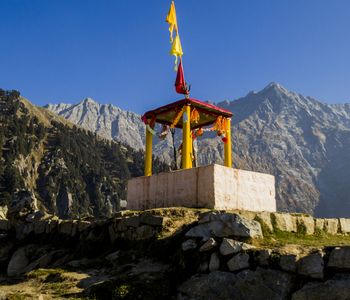
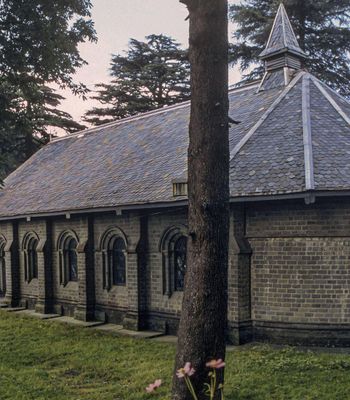
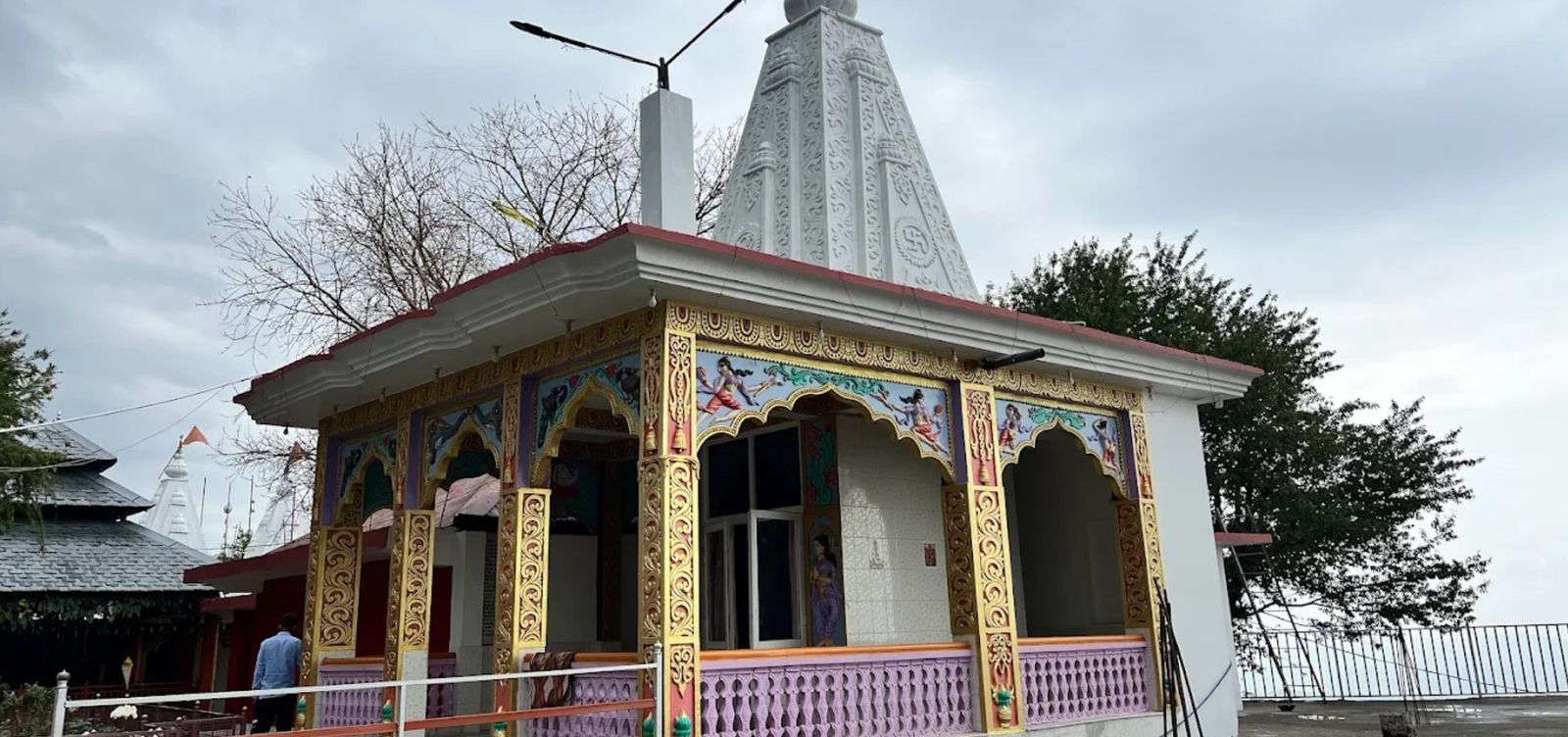
If you're expecting grandeur, recalibrate. Indru Nag Temple is modest in scale: a single-room shrine with a low stone entrance, prayer flags strung between nearby trees, and a scattering of brass bells left by devotees. No carved screens, no towering shikhara, no gold leaf. Just hand-placed stone walls and a tin roof that rattles when the wind picks up. The structure's simplicity is its honesty.
Step inside and the air changes. Cooler. Quieter. Thick with the residue of incense burned over years. A small idol of the Nag deity sits at the center, draped in cloth and marigold garlands. On some visits, you'll find a local priest tending the shrine. On others, the temple is empty, and the only company is the sound of wind pressing against the walls. That emptiness, oddly, makes the space feel more sacred — not less.
Here's what catches most people off guard: the prayer flags. They're unmistakably Tibetan Buddhist, fluttering alongside Hindu tridents and bells. McLeod Ganj sits at the intersection of two spiritual traditions, and Indru Nag reflects that overlap without explanation or apology. Nobody negotiated a cultural exchange program. The flags just appeared over time, tied by hands that saw no contradiction in the gesture.
The Walk That Earns the View
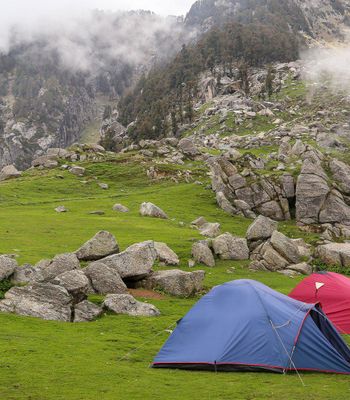
Most people reach Indru Nag Temple as part of the Triund trek, which starts from the Dharamkot area above McLeod Ganj. The temple sits roughly two kilometers into the trail, before the steeper climb toward Triund ridge begins. It's a natural landmark — a place to rest, fill your lungs, and decide whether you're continuing upward or turning back.
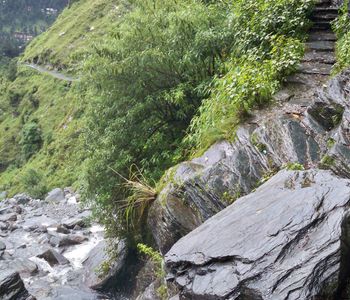
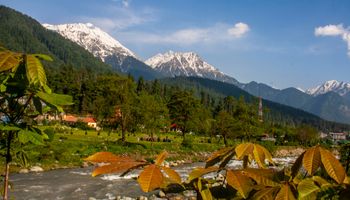
The trail is well-trodden but uneven, with exposed tree roots and loose stones demanding your eyes stay on the ground rather than the canopy. Wear proper hiking shoes, not sandals — the path punishes vanity quickly. The walk from Dharamkot takes about forty-five minutes at a comfortable pace. Along the way, rhododendron trees give way to oak and deodar forest, and the valley below McLeod Ganj opens up in stages — first a glimpse through branches, then a full panorama of the Kangra Valley stretching south toward the plains.
At the temple, you'll find a small clearing with enough flat ground to sit and eat whatever you've packed. A few seasonal tea stalls operate nearby during peak trekking months from March to June and again from September to November. Don't count on them. Carry water.
When to Go and What to Know
The temple is accessible year-round, though winter snow between December and February can make the trail slippery and The Ridge genuinely cold. Spring is arguably the finest time — rhododendrons bloom red and pink along the lower trail, and the air has a clarity that makes the Dhauladhar range look close enough to touch. Monsoon months from July through August bring heavy rain, which suits the deity's portfolio but makes the trail muddy and the leeches enthusiastic.
There's no entry fee. No ticket counter. No official hours. The temple exists outside the machinery of managed tourism, which is precisely why it still feels like a real place. If you're starting from McLeod Ganj's main square, reach Dharamkot by a short auto rickshaw ride or a twenty-minute uphill walk. From there, follow the Triund trail markers — they're painted on rocks in red and white arrows that are faded but still legible.
One practical note: the altitude is mild by Himalayan standards, but the climb is steady. If you've just arrived from the plains, give yourself a day in McLeod Ganj before attempting the hike. Your knees will thank you.
More Than a Waypoint
Most trekkers treat Indru Nag Temple as a brief pause before Triund steals the show. That's a mistake. Triund is spectacular, certainly, but it's also crowded, increasingly commercialized, and strewn with the evidence of visitors who packed chips but not the decency to carry the wrapper back down. Indru Nag, by contrast, still belongs to itself.
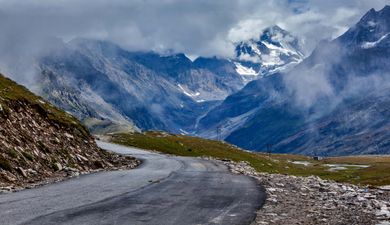
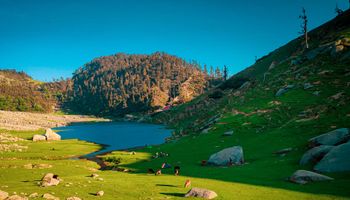
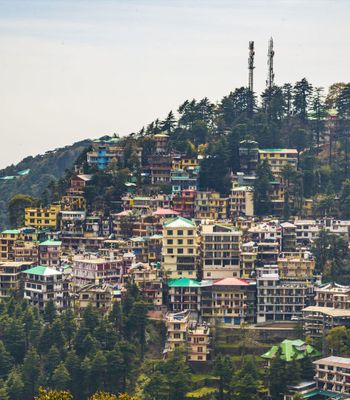
Sit on the ridge beside the temple for twenty minutes. Watch the clouds move through the valley below at a speed that makes you reconsider your relationship with hurry. Listen to the bells shift in the breeze. The Dhauladhar peaks rise to the north, snow-capped and entirely indifferent to your schedule. Down below, McLeod Ganj hums with its usual chaos of monks, backpackers, and honking taxis — but up here, none of that reaches you.
Indru Nag Temple won't appear on most travel itineraries. It doesn't photograph as dramatically as a palace or a waterfall. But it does something rarer: it gives you a reason to stop climbing for a moment and pay attention to where you already are. In the Himalayas, that's no small thing.