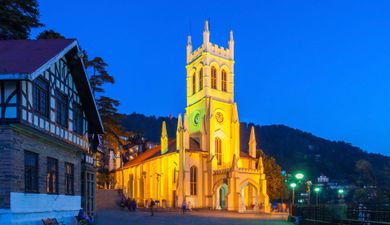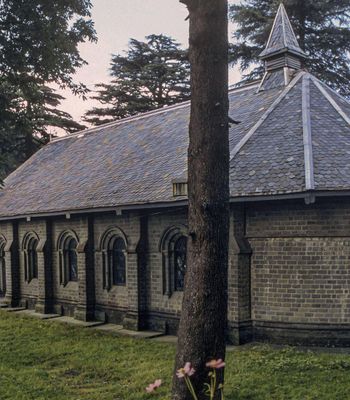
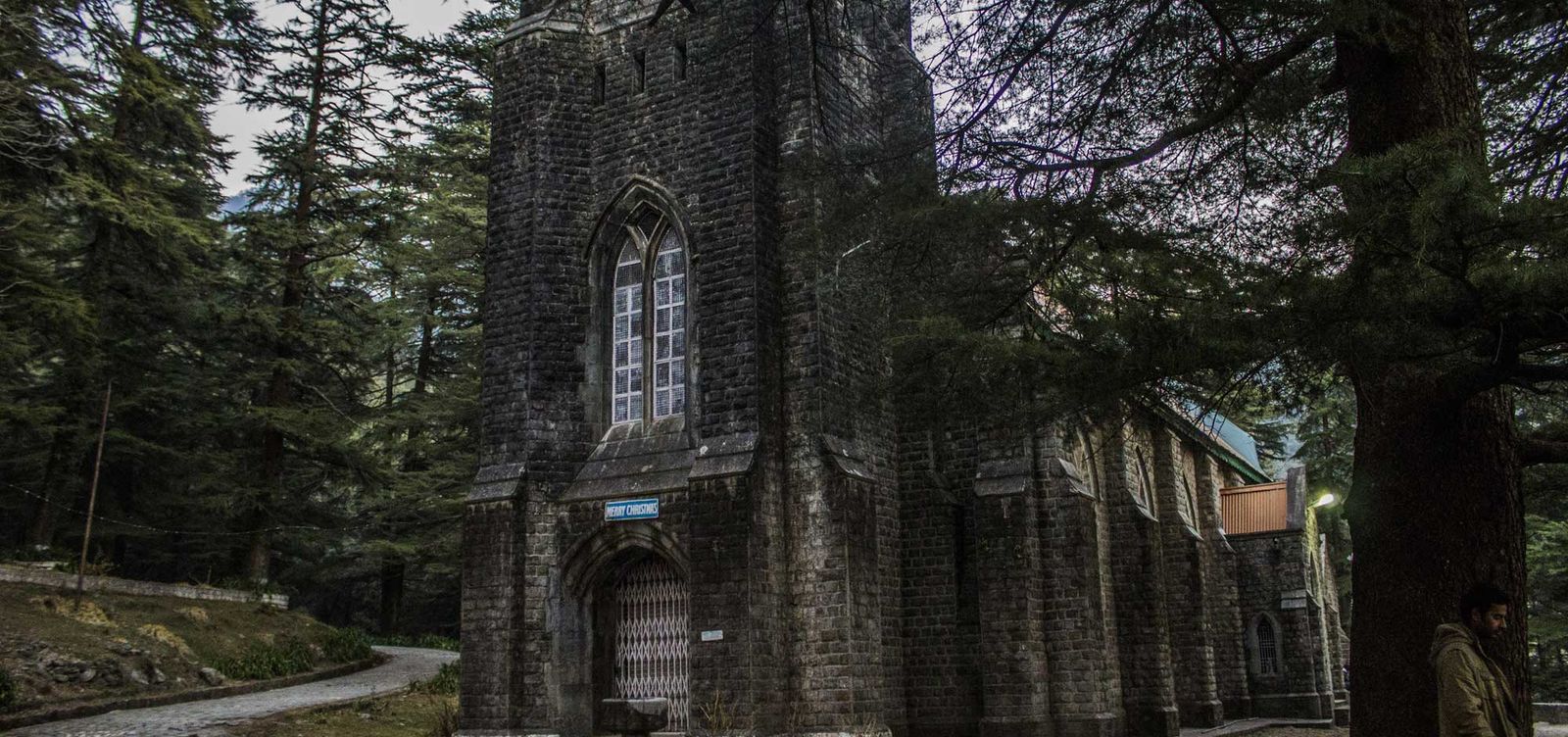
A narrow road winds uphill from Mcleod Ganj toward Dharamshala, and halfway along it, behind a moss-covered stone wall, sits St John in the Wilderness. The church doesn't announce itself. No spire punctures the sky, no grand facade demands attention. Instead, a squat bell tower rises just above the deodar cedars, as if the forest agreed to let it through only reluctantly. Built in 1852, this Anglican church is one of the few structures in the Kangra Valley that survived the catastrophic earthquake of 1905 — a fact that says more about its construction than any plaque ever could. The Belgian stained-glass windows still filter light into the nave, throwing colored patches across stone floors that have absorbed over 170 years of mountain weather. If you arrive early enough, the only sound is birdsong and the faint creak of old wood settling.
The Earthquake That Rewrote the Map
On April 4, 1905, a 7.8 magnitude earthquake flattened much of Kangra district and killed over 20,000 people. Dharamshala was devastated. The British colonial administration, which had used the area as a hill station retreat, lost nearly every significant building in the region. St John in the Wilderness held.
The church took damage — portions of the tower cracked, walls shifted — but its core stayed intact. Engineers later credited the survival to its low profile and thick walls, built from locally quarried slate rather than the brittle brick favored elsewhere in the district. Walk through the nave today and you can still trace where the repairs went in during the decades after the quake. The newer stones run slightly lighter in color, a subtle patchwork that tells the building's story more honestly than any restoration designed to erase the scars ever could.
Lord Elgin's Final Address
The most visited corner of the property isn't inside the church at all — it's in the graveyard. James Bruce, the 8th Earl of Elgin, served as Viceroy of India for barely a year before dying of heart failure in Dharamshala in 1863. He was 52. His tomb sits beneath the cedars in the churchyard, a large stone memorial that feels simultaneously grand and forgotten — exactly the kind of monument colonial power leaves behind when the empire packs up and goes home.
What catches you off guard is the contrast. Elgin's elaborate tomb presides over dozens of simpler headstones scattered around it — British soldiers, missionaries, tea planters, their children. Monsoon rains have softened many inscriptions into illegibility. Others record deaths at sixteen, twenty-two, twenty-four: the Himalayan foothills were exquisite country, but the colonial body didn't thrive in it. Spend fifteen minutes reading those stones and you'll learn more about the texture of British India than most museum exhibits manage to convey.
Light Through Belgian Glass
Step inside, and the stained-glass windows immediately take the room. They're not enormous — this isn't a cathedral — but their quality is remarkable for a church this remote. The central window behind the altar depicts Christ, while the surrounding panels burn in deep blues and ambers that intensify on clear mornings when direct sunlight strikes them full on.
The interior is modest by Anglican standards. Wooden pews line the narrow nave. Ceiling beams are exposed, lending the space a warmth that stone churches often refuse to give. There's no gilding, no excess. The austerity feels intentional, as though the architects grasped they were building not for London but for a mountain clearing where plainness carries more authority than ornament ever could. On Sundays, a small congregation still gathers for services — keeping a tradition alive that has persisted through the end of empire, a devastating earthquake, and the complete reinvention of the town around it.
Where the Churchyard Becomes a Forest
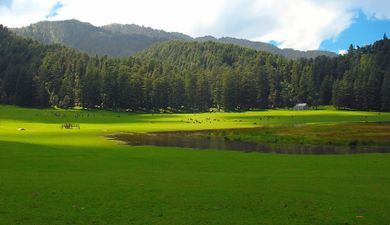
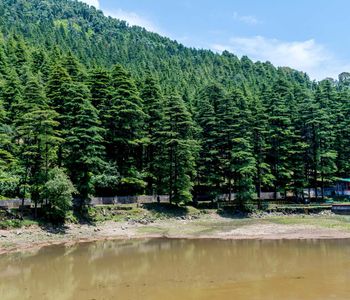
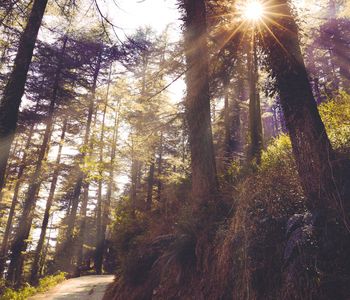
The grounds surrounding St John in the Wilderness deserve as much of your time as the building itself. Deodar cedars — some almost certainly older than the church — tower overhead, their trunks so thick two people couldn't lock arms around them. Rhododendrons bloom red in spring. The undergrowth stays damp and green even in the drier months. The churchyard dissolves, imperceptibly, into actual forest. Langur monkeys swing through the canopy above you. Woodpeckers drum at dead branches. The air carries pine resin and wet earth.
Here's the thing about this place that you don't expect: it feels more spiritual outside the church than in. The interior is handsome, well-preserved, entirely worthy — but the cemetery and its surrounding trees carry an atmosphere that the building's walls can only partially contain. Sit on one of the low stone walls for ten minutes. You'll understand why the British chose this exact hillside — not for any strategic advantage, but because the land itself commanded a kind of involuntary reverence.
Arriving Before the Silence Breaks
St John in the Wilderness sits along the road between McLeod Ganj and Dharamshala, roughly a kilometer downhill from McLeod Ganj's main square. You can walk it in about twenty minutes, and the downhill stroll through deodar forest makes the approach feel like a gradual decompression from the town's noise. Auto rickshaws cover the distance in five minutes if your legs disagree.
The church is open daily, with no entrance fee — a donation box near the door helps with upkeep. Morning visits, particularly on weekdays, give you the grounds almost entirely to yourself. By midday, tour groups arrive and the quiet fractures. If you're coming between October and March, the cooler air and low-angled light deepen the stained glass and lend the cemetery a sharper atmosphere. Wear layers; mornings at this elevation carry a real chill even when Dharamshala town below feels temperate.
Photography is permitted outside and generally tolerated inside, though during services you should put the camera away. The graveyard, with its uneven ground and partially concealed stones, rewards slow exploration — watch your footing among the tree roots that have quietly rearranged the older graves over the past century.
A Place That Earns Its Silence
McLeod Ganj is loud with purpose — Tibetan exile culture, backpacker energy, the Dalai Lama's monastery drawing visitors from every continent. St John in the Wilderness occupies a different register entirely. It belongs to an older, quieter chapter of this hillside's story, one written in slate and stained glass rather than prayer flags and momos. The church doesn't compete with its surroundings. It doesn't try to. That restraint — architectural, spiritual, historical — is precisely what makes it worth the walk downhill. Some places earn your attention by shouting. This one earns it by saying almost nothing at all.