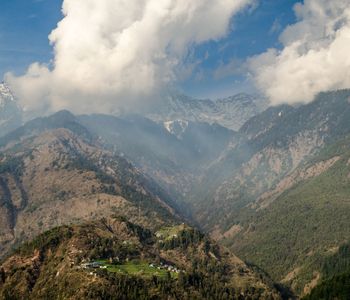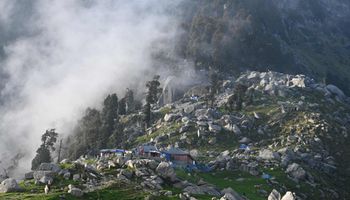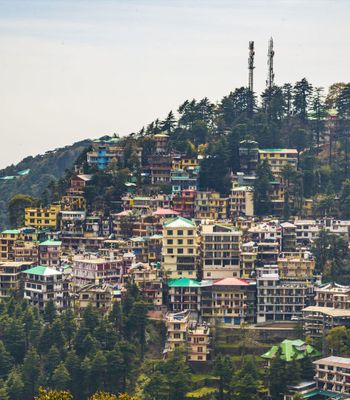
At roughly 1,800 metres above sea level, a narrow concrete road climbs away from McLeod Ganj's congested bazaar and keeps climbing until the restaurants thin out, the taxi horns fade, and the pine forest closes in around you. Dharamkot sits at the top of this road — a small settlement of guesthouses, yoga shalas, and Israeli bakeries arranged along a ridge with the Dhauladhar range filling the northern sky. It's technically a village. In practice, it's McLeod Ganj's decompression chamber, the place people end up when they realize the Dalai Lama's adopted hometown has grown louder than they bargained for. The walk up takes about forty minutes on foot. That forty minutes filters out most of the crowd.
Where the Mountain Begins
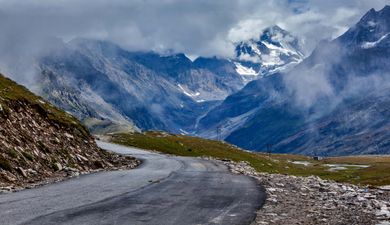
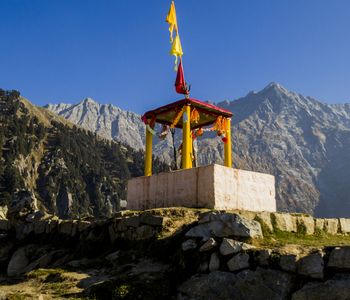
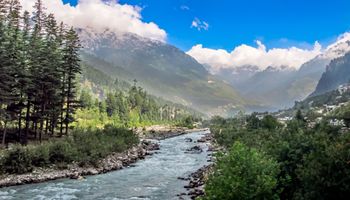
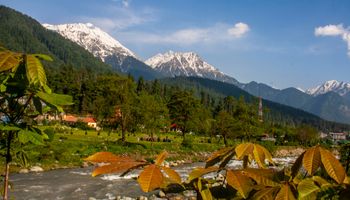
Dharamkot's position gives it something Mcleod Ganj simply cannot: an unobstructed relationship with the Dhauladhar peaks. From the village's upper trails, the ridgeline of Indrahar Pass looms close enough to make you reconsider your footwear. Snow clings to those peaks well into May, and on clear mornings the granite face catches a pink-gold light that lasts about twelve minutes before the sun climbs too high. You either wake up for it or you don't.
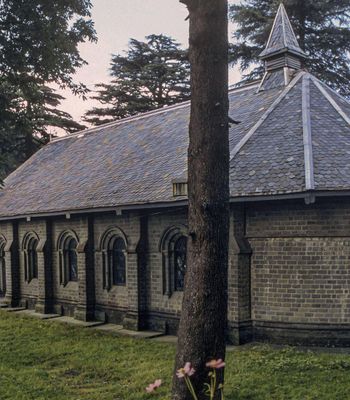
The village itself is compact. One main path threads through, passing cafes with hand-painted signs, a few general stores selling incense and SIM cards, and clusters of concrete guesthouses with names like Shalom and Om. The architecture is nothing — nobody comes here for buildings. They come because the forest starts at the village's edge and the Triund trek departs from its backyard.
A Colony of Seekers and Drifters
Dharamkot has a dual personality that takes a day or two to read. One side draws serious yoga and meditation practitioners. The Tushita Meditation Centre, a Tibetan Buddhist institution, occupies a forested compound just below the village and runs ten-day silent retreats that fill up months in advance. The Vipassana centre nearby keeps a similar schedule. These aren't casual drop-in experiences — they demand commitment, early registration, and a willingness to sit with your own mind for uncomfortably long stretches.
Then there's the other Dharamkot, the one that surfaces after dark. Cafes serve shakshuka and banana pancakes alongside dal, and conversations in Hebrew run nearly as frequent as those in Hindi. Trance music leaks from certain establishments once the sun goes down. The counterculture presence is genuine but aging — what was once spontaneous now follows a recognizable template of boho traveler infrastructure, the same dream replicated across a dozen mountain towns. What makes Dharamkot worth watching is how these two populations share a single ridge: the meditators heading to bed at nine while the cafe crowd is just ordering their second chai.
The Triund Gateway
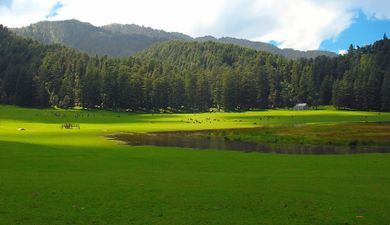
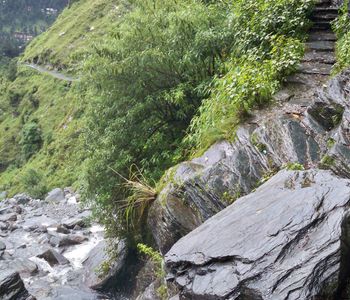
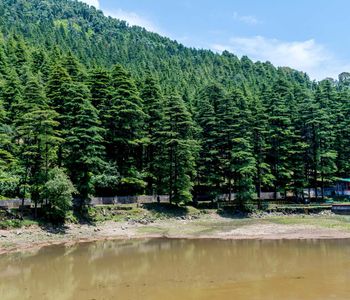
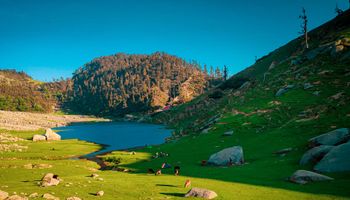
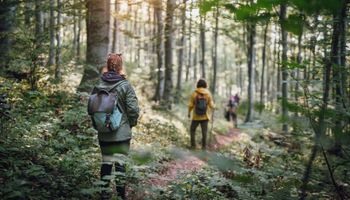
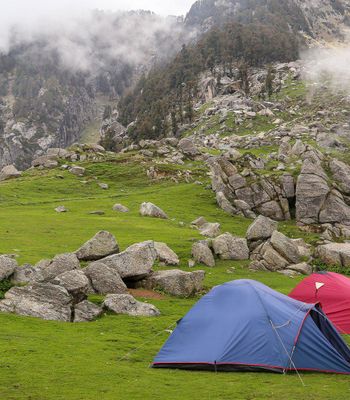
Most people who trek to Triund begin from Dharamkot, and with good reason. The trailhead sits at the village's upper end, marked by a forest checkpost where you sign your name in a register. From here, the nine-kilometre path ascends through oak and rhododendron forest before breaking above the treeline at around 2,800 metres. The trek is moderate — expect four to five hours up, three hours down — and it delivers you to a grassy meadow with the Dhauladhar wall rising directly behind it like a geological curtain.
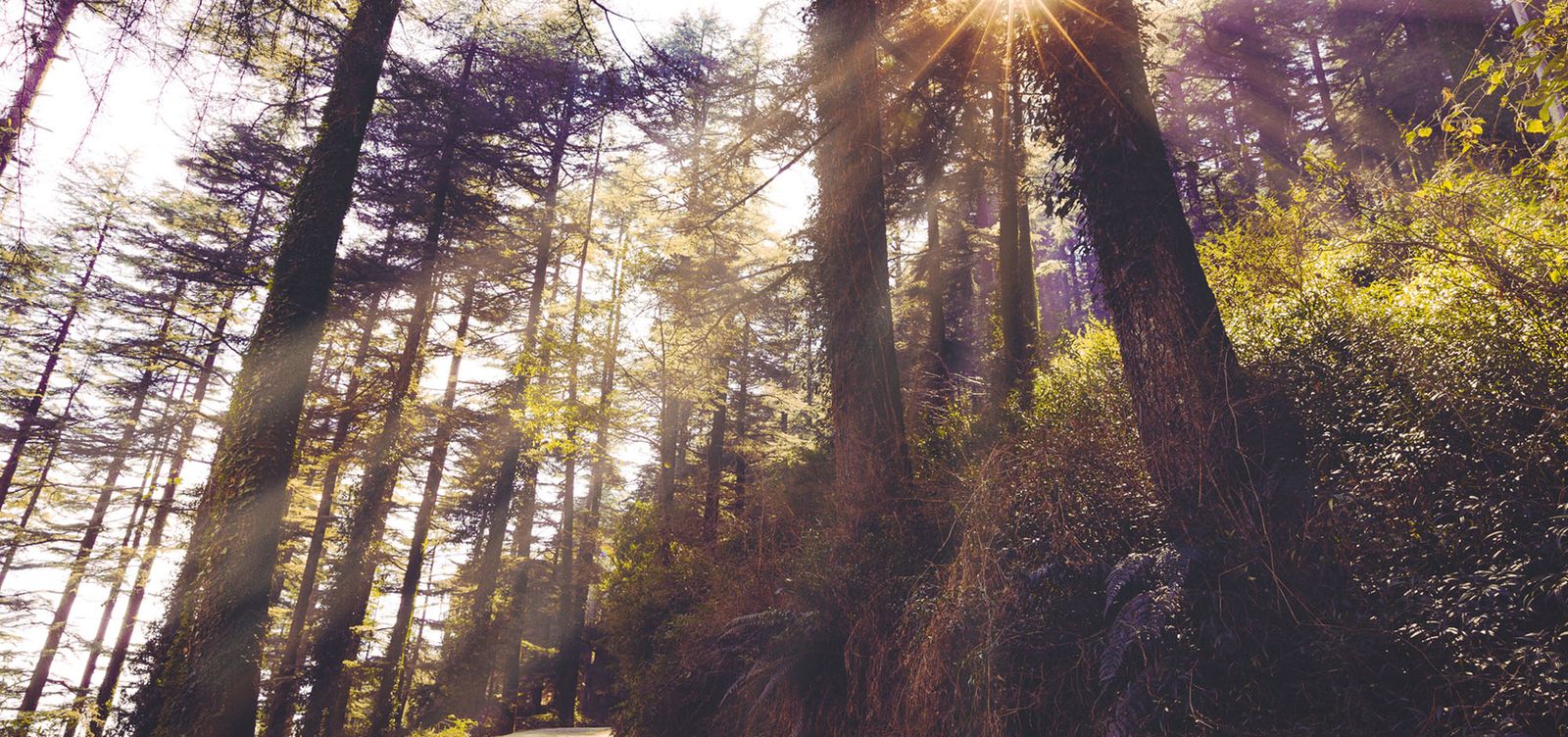
Triund's popularity has become its own problem. During peak season from March through June, the trail can feel like a queue. Starting before 7 a.m. from Dharamkot makes all the difference. The forest section in early morning belongs to a different world entirely: langur monkeys crashing through branches overhead, mist condensing on oak leaves, the trail almost silent except for birdsong and your own breathing. By noon, that same trail will be lined with snack wrappers and blaring Bluetooth speakers. Timing matters here more than fitness does.
Eating at the Top of the Hill
Dharamkot's food reflects its clientele. The cafes lean heavily toward Middle Eastern and Continental menus — a consequence of the long-standing Israeli backpacker presence in this part of Himachal Pradesh. You'll find credible hummus, decent pasta, and some of the better baked goods in the region. Sourdough bread, cinnamon rolls, and challah appear on chalkboard menus with surprising regularity. The bakeries here aren't performing a theme; they're feeding a genuine diaspora.
For Indian food, you're better off at the small dhabas along the road between Dharamkot and McLeod Ganj, where thali plates come with fresh roti and three or four vegetable preparations for a fraction of cafe prices. A meal in Dharamkot's traveler cafes runs between 250 and 500 rupees — reasonable by Western standards but steep for the region. The chai, though, is uniformly good and uniformly cheap: ten or fifteen rupees at any roadside stall, served in glass cups that burn your fingers before the first sip.
What the Weather Demands
Dharamkot's altitude makes it noticeably cooler than McLeod Ganj, which is already cooler than most visitors from the plains expect. From November through February, nights drop to near freezing, and many guesthouses rely on basic room heaters that lose their fight against thin walls by 2 a.m. Summer brings monsoon from July through September — trails turn to mud chutes, leeches emerge with startling enthusiasm, and the Dhauladhar peaks vanish behind weeks of unbroken cloud.
The sweet windows are October through mid-November and March through May, when skies clear, temperatures hover between 10 and 22 degrees Celsius, and the rhododendrons along the Triund trail bloom in violent reds. If you only have one chance at this place, aim for late October. The post-monsoon air has a clarity that borders on the surgical.
Getting There Without the Hassle
From McLeod Ganj's main square, walk uphill past the Tibetan settlements or hire a taxi for about 150 rupees. The road is paved but narrow, and during peak season taxis compete with pedestrians and the occasional wandering cow for the same strip of asphalt. An auto rickshaw can manage the trip, though the steep final stretch tests both engine and nerve. From Dharamsala proper, the distance is roughly ten kilometres by road.
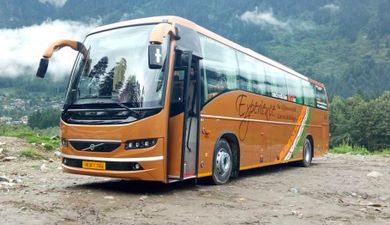
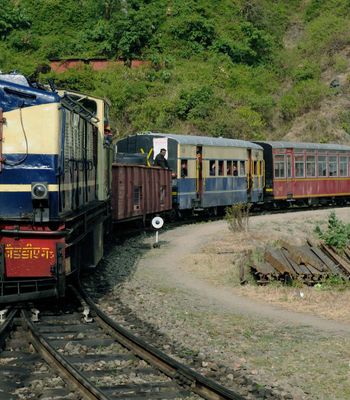
If you're coming from Delhi, overnight buses to Dharamsala are frequent and affordable — the Volvo sleeper services run between 800 and 1,500 rupees depending on the operator. The nearest airport at Gaggal sits about fifteen kilometres from McLeod Ganj, with flights connecting to Delhi, though schedules fluctuate seasonally. Once you're in McLeod Ganj, Dharamkot is close enough that you'll walk it more than once, probably without meaning to.
The Quiet at the Edge
Dharamkot isn't a destination that announces itself. There's no monument, no ticket counter, no architectural set piece to photograph and move on from. Its value is entirely positional — it sits at the precise elevation where the tourist infrastructure of McLeod Ganj gives way to actual mountain wilderness. Spend a night or two here, wake early enough to watch the Dhauladhar turn pink, walk the Triund trail before the crowds arrive, and you'll understand why people keep returning to this unremarkable ridge. The mountains don't care about your itinerary. Dharamkot, quietly, teaches you not to either.