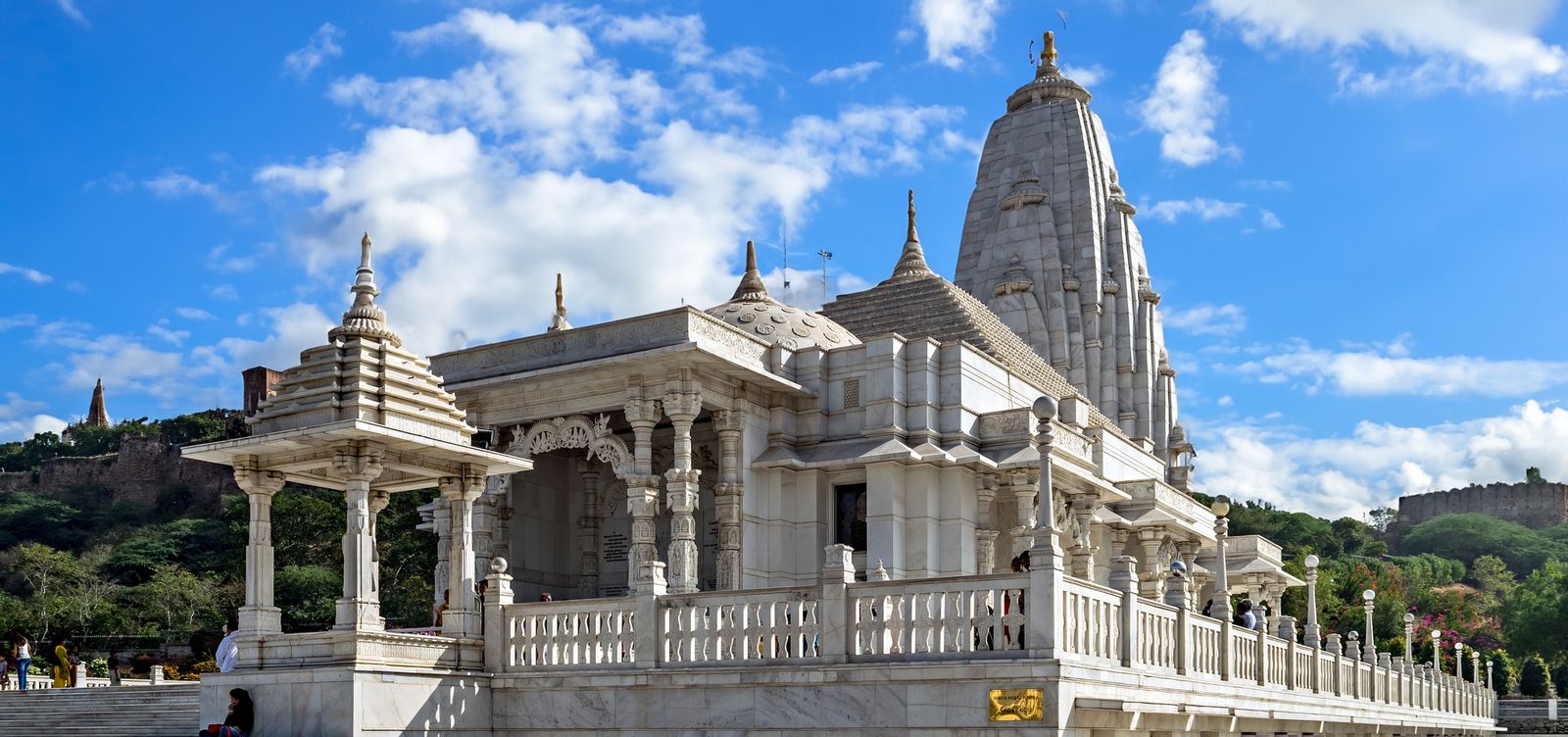
A temple carved entirely from luminous white marble glows like a pearl against the dusty rose landscape of Rajasthan's most famous city. As the last light of day fades behind Moti Dungri Hill, the Birla Temple in Jaipur transforms into something almost otherworldly — bathed in golden floodlights, its three domes shimmering against the ink-dark sky. It's the kind of sight that stops you mid-step and makes you reach for your camera before you even realize your hand has moved.
Dedicated to Lord Vishnu and Goddess Lakshmi, this striking landmark pulls in devoted pilgrims and wide-eyed travelers alike. Whether you come seeking blessings or simply stand in awe of its artistry, this temple has a way of quieting your mind and filling you with something unexpected — a sense of wonder you'll carry long after you leave the Pink City.
A Modern Temple with an Extraordinary Origin Story
Unlike the weathered, centuries-old shrines scattered across Rajasthan, the Birla Temple is strikingly young. Completed in 1988, it was commissioned by the Birla Foundation — one of India's most prominent industrial families, deeply known for their generous contributions to culture and faith across the country.
The backstory gets even better. Land beneath the temple was acquired from the Maharaja of Jaipur for a symbolic price of just one rupee — a single coin, a gesture that spoke volumes about the royal family's reverence for spiritual tradition and community. Despite its modern roots, this temple has woven itself deeply into Jaipur's sacred fabric, quickly becoming one of the city's most cherished spiritual destinations.
Marble, Light, and Stories Carved in Stone
Every inch is crafted from pure white Makrana marble — the very same stone that gives the Taj Mahal its legendary glow. Under the midday sun, the temple blazes with almost blinding brilliance. At night, it softens into something gentler — an ethereal, moon-like radiance that feels sacred in itself.
Walk closer, and the details start to reveal themselves. Run your eyes along the temple walls and you'll discover intricate carvings that tell stories from the Mahabharata and Ramayana — epic tales of devotion, battle, and divine love etched into marble with breathtaking precision. Each panel feels like a page pulled from ancient scripture and frozen in stone.
Step inside and prepare for a surprise. Stained glass windows cast ribbons of jewel-toned light across the cool interior, filling the chambers with a hushed, contemplative glow. Even more unexpected? Small sculptures depicting figures from Christianity, Islam, and other world religions sit alongside Hindu icons — a quiet, powerful statement of universal respect and harmony that resonates the moment you notice it.
The Heart of the Temple
In the main sanctum, the idols of Lord Vishnu and Goddess Lakshmi command your attention. The craftsmanship is extraordinary — every curve, every detail captures a sense of divine grace and quiet power. Linger here for a moment. Let the cool marble air settle around you.
Then explore the smaller shrines that surround the central chamber, each one dedicated to different Hindu deities. There's something new to discover around every corner — a hidden carving, a fresh offering of bright orange marigolds, a whispered prayer drifting through the stillness.
Where Spirituality Meets Celebration
As a Lakshmi Narayan temple, this is a place where devotees come to honor Lord Vishnu — the preserver of the universe — alongside Goddess Lakshmi, the deity of wealth, prosperity, and abundance. Together, they represent divine partnership, and worshippers arrive seeking blessings for health, financial well-being, and inner peace.
During festivals, the Birla Temple truly ignites. On Janmashtami, the air hums with devotional songs celebrating Lord Krishna's birth. Come Diwali, thousands of flickering lamps and cascading flower garlands transform the entire temple grounds into a scene that feels plucked from a dream.
The energy during these celebrations is electric — joyful crowds pressing forward, the fragrance of marigolds and incense swirling together, and the marble walls glowing beneath a canopy of warm golden light. If your timing aligns, don't miss it.
When to Go for the Best Experience
The Birla Temple welcomes visitors every day of the year, with two daily sessions:
- Morning session: 8:00 a.m. to 12:00 p.m.
- Evening session: 4:00 p.m. to 8:00 p.m.
For a truly serene visit, slip in early on a weekday morning. The crowds thin out, the marble feels cool beneath your bare feet, and there's a stillness in the air that makes everything feel more intimate — just you, the quiet chanting, and sunlight pouring through those gorgeous stained glass windows.
An evening visit, though, is pure magic. As darkness settles over Jaipur, the temple's white marble exterior catches carefully placed floodlights and seems to float against the night sky. Photographers — amateur and professional alike — consider this one of the most stunning shots in all of Jaipur after sunset. Bring a tripod if you have one.
Visiting during a major Hindu festival? Expect bigger crowds and a far more vibrant atmosphere. Arrive early to claim a good spot and soak in the full sensory spectacle — it's worth every moment.
Everything You Need to Know Before You Go
Entry and What to Wear
Here's the good news: entry to the Birla Temple is completely free — no tickets, no fees, open to everyone regardless of nationality or faith. Just keep these respectful guidelines in mind:
- Slip off your shoes before entering the temple premises — you'll walk on cool, smooth marble.
- Dress modestly, covering your shoulders and knees as a sign of respect for the sacred space.
- Photography inside the main shrine may be restricted — check with temple staff when you arrive.
- Switch your phone to silent mode once you step inside.
Finding Your Way There
Nestled near the base of Moti Dungri Hill, the Birla Temple is easy to reach from almost anywhere in Jaipur:
- Auto rickshaw: Flag one down almost anywhere in the city. It's affordable, quintessentially Jaipur, and weaving through the bustling streets is half the adventure.
- Taxi or ride-sharing app: Ola and Uber both operate in Jaipur for a comfortable, air-conditioned ride straight to the temple.
- Local bus: Several city routes pass nearby — a budget-friendly option if you enjoy traveling like a local.
From central landmarks like Hawa Mahal or City Palace, expect roughly a 15 to 20-minute drive. Parking is available near the site, so driving yourself is also a smooth option.
Turn It Into a Full Day of Discovery
Don't rush off after the temple — the surrounding area is rich with things to see. Moti Dungri Fort perches directly above on the hillside, and while public access to the fort itself is limited, the panoramic views of Jaipur's sprawling cityscape are worth the uphill glance.
From there, the Albert Hall Museum and the lush, leafy Ram Niwas Garden are both just a short ride away — perfect for rounding out a full, unhurried day exploring Jaipur's many layers.
The Kind of Place That Stays With You
Some places tick a box on your itinerary. The Birla Temple does something deeper. Whether you're a devoted pilgrim whispering a prayer in the cool marble chamber or a curious traveler tracing your fingertips along stories carved in stone, this temple has a way of reaching you.
Its gleaming architecture, its spirit of inclusivity, and its quiet, powerful energy make it more than a landmark — it's a moment of stillness in Rajasthan's beautiful, bustling chaos.
Arrive with an open heart, dress with respect, and give yourself time to simply be there. The Birla Temple doesn't shout for your attention. It glows — and that glow will follow you long after you've left Jaipur behind.