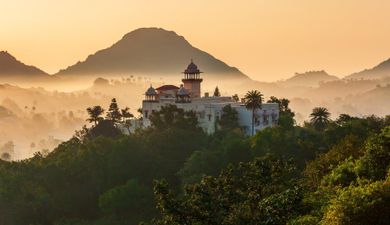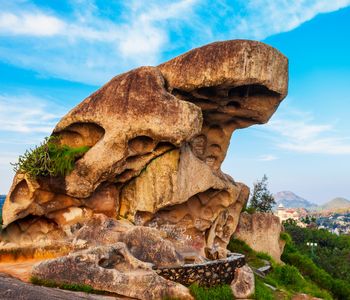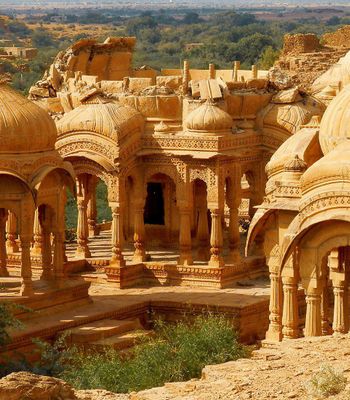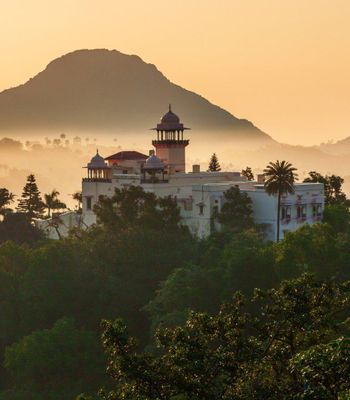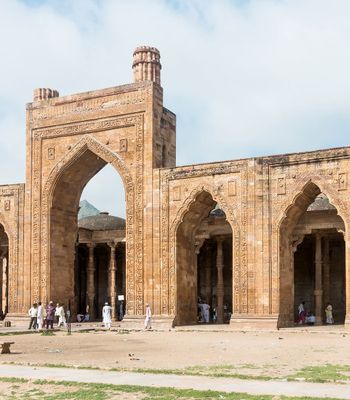
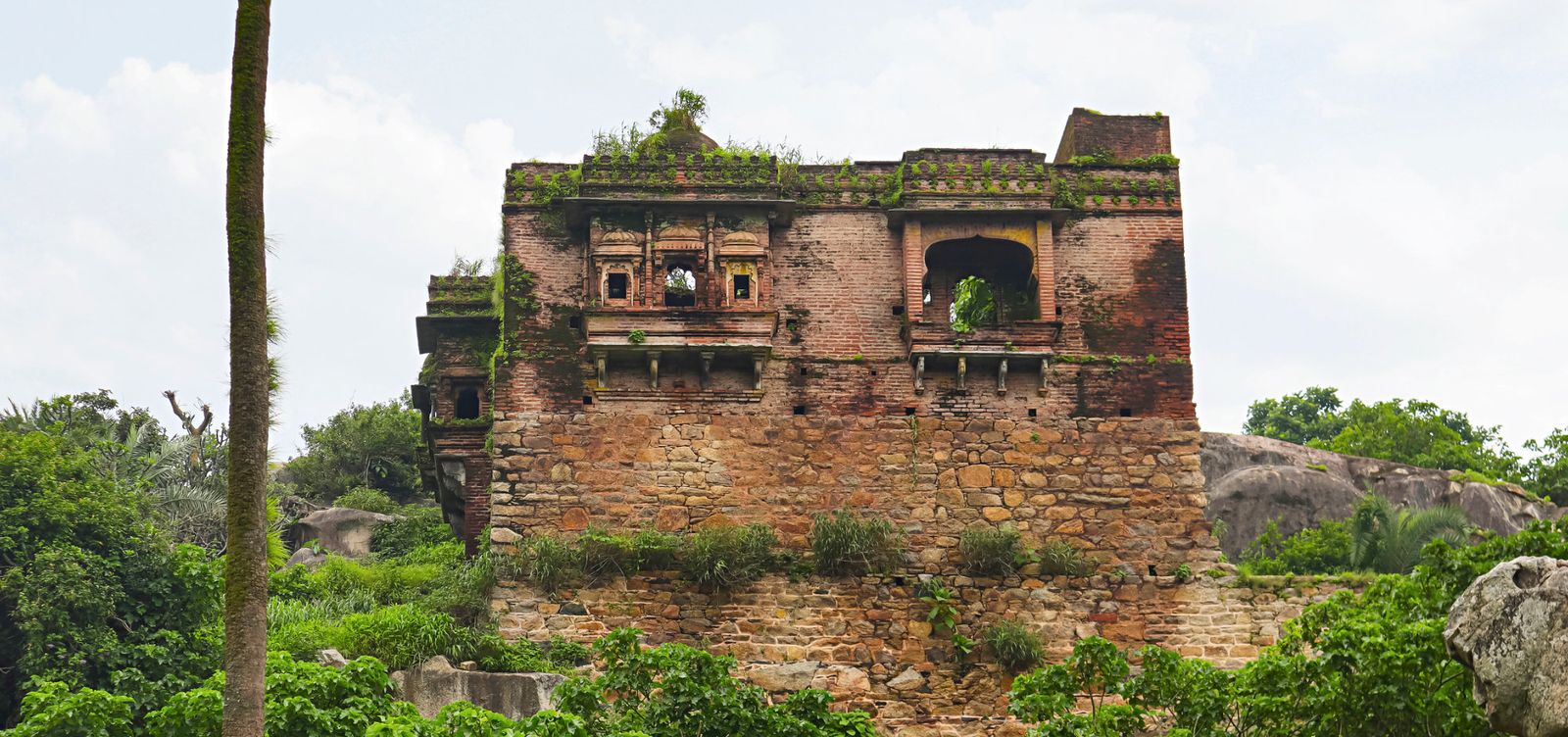
At roughly 5,650 feet above sea level, Achalgarh Fort commands the highest reaches of Mount Abu, Rajasthan's only hill station. Most travelers come here for the Dilwara Temples or the sunset point, then drive back down without ever climbing to the fort that predates nearly everything else on this mountain. Their loss. What remains of Achalgarh is fragmentary — walls interrupted by sky, gateways that open onto nothing but wind — yet these ruins tell a more honest story than any polished restoration could. The Paramara dynasty ruler Paramara Dharnavarah originally built the fort, and in the fourteenth century, Rana Kumbha of Mewar rebuilt it with such ambition that locals started calling it Achalgarh — "the immovable fort." Walk through what's left and you'll understand: even in ruin, it refuses to feel defeated.
Stones with Long Memories
Rana Kumbha was one of medieval Rajasthan's most prolific builders, the man behind dozens of forts across Mewar. Achalgarh was among his passion projects, reconstructed around 1452 CE. He didn't merely patch what the Paramaras left behind — he reimagined the fort as a statement of territorial authority over the Abu region, a high-altitude sentinel with sightlines in every direction.
The fort changed hands multiple times over the centuries, passing through Rajput dynasties and weathering Mughal-era pressures. Unlike Kumbhalgarh or Chittorgarh, Achalgarh never became a centerpiece of Rajasthani tourism. That neglect has been both its curse and its peculiar gift. No restoration committee has smoothed its edges or planted laminated signboards along its paths. You encounter the fort largely as time left it — which is to say, honestly.
What the Walls Still Hold
The road winds past the village, and the first thing that announces the fort is its series of massive gates. Hanumanpol, the outermost, still carries the weathered bulk of its original construction — stone darkened by five centuries of rain. Beyond it, Champapol and Bhairavpol mark your ascent, each narrower than the last, a classic Rajput defensive design meant to bottleneck invaders into killing corridors. The stonework here is rough, functional, more concerned with stopping cavalry than impressing courtiers.
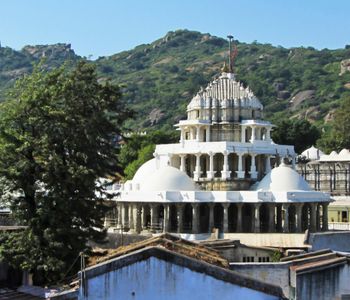
Inside the fort complex, two structures pull your attention immediately. The Achaleshwar Mahadev Temple sits at the heart of the ruins, dedicated to Lord Shiva. Here's the detail that stops most people mid-step: rather than a traditional Shiva lingam, the shrine features a pit or cavity in the ground said to represent the toe-print of Shiva himself. It's an unusual variation, and the temple priests will tell you it extends to the netherworld. Believe what you like. The depth of the pit remains genuinely difficult to determine — you lean over, peer in, and can't quite settle the question.
Outside the temple, a Nandi bull sculpture cast in panch dhatu — an alloy of five metals — sits in quiet attendance. The craftsmanship is finer than you'd expect at a fort this weathered, which tells you something about the devotional investment that poured into this particular site even as the military structures around it surrendered to gravity and rain.
The Buffalo and the Tank of Ghee
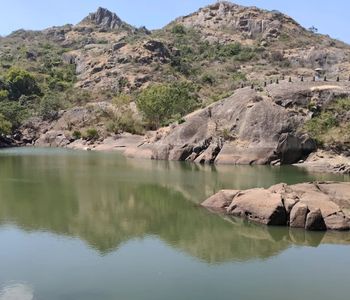
Adjacent to the temple, three large stone buffalo sculptures stand at the edge of a reservoir known as Mandakini Kund. Local legend holds that demons in the form of buffalo once drained the tank, which was said to be filled not with water but with clarified butter — ghee. The sculpted buffaloes and a warrior figure nearby commemorate the defeat of those demons.
The legend is almost certainly more interesting than any factual explanation, and that's fine. What matters is that these sculptures, worn smooth in places by centuries of monsoon, still carry an intensity of expression that catches you off guard. Their necks strain forward. Their bodies are taut. Whoever carved them understood movement and threat, even rendered in stone. The reservoir itself is modest, but it catches the mountain light in late afternoon with a stillness that makes the demon story feel almost plausible.
The View Nobody Mentions
Most Mount Abu guides describe the fort's surroundings in tourist-brochure generalities, but the panorama from Achalgarh's upper walls deserves closer attention. To the south, the Aravalli Range drops away in a long, irregular cascade of ridgelines — not the dramatic Himalayan kind, but the ancient, eroded kind that reminds you these are among the oldest mountains on the planet. On clear winter mornings, you can trace the plains of Gujarat dissolving into haze.
What surprises most people is the silence. Mount Abu's main town hums with tourist traffic, honking jeeps, and hotel generators. Achalgarh, sitting just a few kilometers away, receives a fraction of the foot traffic. Stand at the upper ramparts on a weekday morning and you might hear nothing but crows and wind through dry grass. That contrast alone — the whole noisy hill station reduced to nothing in ten minutes' drive — makes the climb worthwhile.
Getting There Without the Hassle
Achalgarh Fort sits approximately 11 kilometers north of Mount Abu town. A paved road leads directly to the site, and you can reach it by taxi, rented motorbike, or one of the shared jeeps that locals use for daily transport. The ride takes about twenty minutes and passes through forest where langur monkeys drape themselves across boundary walls with theatrical indifference.
There's no formal entry fee for the fort itself, though the temple may accept donations. Wear shoes with grip — the paths between structures are uneven, and during monsoon months the stone surfaces become treacherous. No food stalls or water vendors operate at the fort, so carry your own. Mount Abu's peak tourist season runs from November through February, when temperatures hover around a comfortable 12 to 20 degrees Celsius. July and August bring fog that can erase the views entirely, though the fort takes on an almost ghostly quality in the mist — stone figures emerging from white nothing.
Plan about ninety minutes for a thorough visit. Rushing through in thirty, as many tour groups do, means you'll see the temple and miss the walls, the reservoir, and the silence that gives this place its real character.
A Ruin Worth the Respect
Achalgarh Fort doesn't compete with Rajasthan's showpiece fortresses — the Amber Forts and Mehrangarhs that fill Instagram feeds and coffee-table books. It doesn't need to. What remains here is something those polished monuments can't offer: the unmediated presence of history still settling into the earth. The broken walls, the ancient temple with its impossible pit, the stone buffaloes frozen mid-charge beside a quiet tank — these fragments add up to something more honest than any complete picture. If you've made it all the way to Mount Abu, give Achalgarh the morning it deserves.