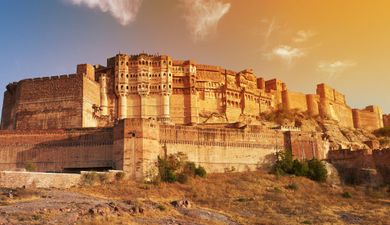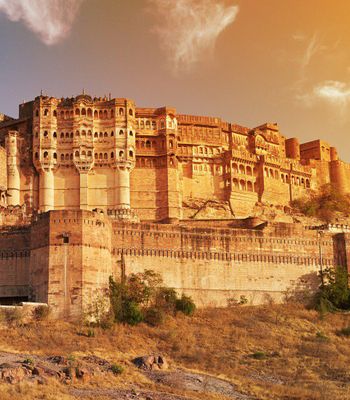
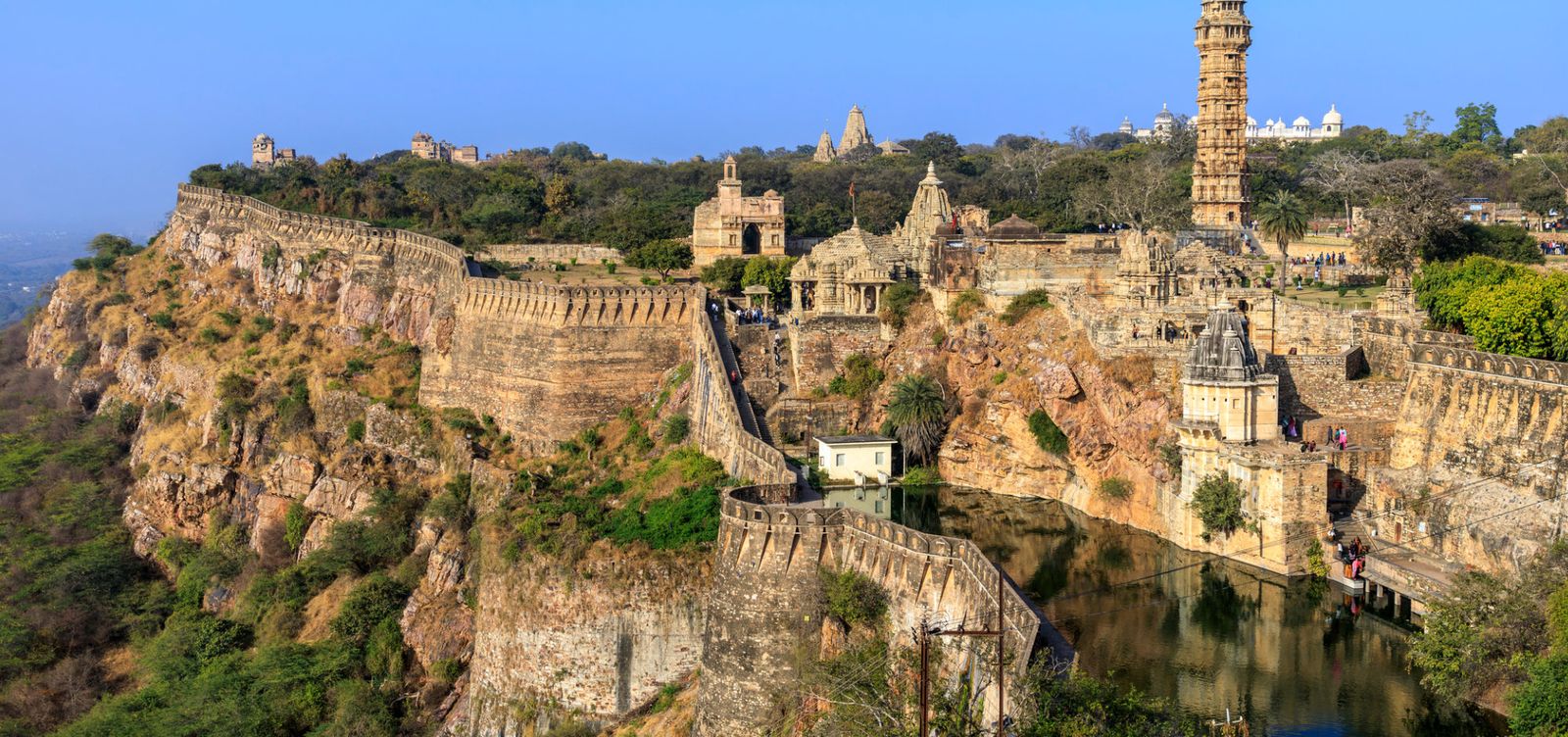
Chittorgarh doesn't welcome you so much as confront you. The fort — and make no mistake, this town exists because of its fort — rises from the Berach River plain like a stone warship run aground on the Rajasthani plateau. Seven hundred acres of ramparts, temples, towers, and palaces sit on a rocky mesa that climbs three hundred feet above the surrounding flatland. You see it from miles away, long before you see anything else. That's the point. It was built to be seen.
The town below is unremarkable in the way that many Rajasthani towns are unremarkable — dusty, loud, functional. Autorickshaws honk through narrow streets lined with hardware shops and mobile phone vendors. But the fort overhead changes the equation entirely. Chittorgarh Fort, the largest in India by area, doesn't just dominate the skyline. It dominates the conversation, the local economy, the civic identity. Everything here bends toward that hilltop.
Seven Gates and Three Sacks
You ascend through seven massive gates, each one a threshold designed to slow invaders and test resolve. The road winds upward in sharp switchbacks, the kind that make a car engine groan. On foot, the climb takes well over an hour. By the time you pass through the Ram Pol — the final gate — you've earned the view, and it's a long, dry sweep of Southern Rajasthan stretching in every direction.
What happened within these walls is what gives Chittorgarh its particular gravity. The fort was sacked three times: by Alauddin Khalji in 1303, by Bahadur Shah of Gujarat in 1535, and by the Mughal emperor Akbar in 1568. Each siege ended in catastrophic loss. Each time, the women of the fort are said to have committed jauhar — mass self-immolation — rather than face capture. The jauhar kund, a subterranean chamber near the southern edge of the fort, still draws people who stand in silence for a few moments, unsure what to say. There isn't much to say.
This history is not romanticized by locals so much as carried. Schoolchildren recite the names of Rani Padmini and Rana Kumbha the way American kids learn about the founding fathers. The ruins aren't museum pieces. They're civic scripture.
Stone That Speaks
Inside the fort, the scale bewilders. You could spend an entire day walking its perimeter and still miss things. The Vijay Stambh — a nine-story tower of victory raised by Rana Kumbha in the fifteenth century — stands like an exclamation mark against the pale sky. Hindu deities, scenes from the epics, ornamental motifs that shift in the changing light — its exterior carries all of it, carved deep and deliberate. Climb the internal staircase, narrow and steep, and you emerge on top with the wind in your face and the whole Mewar kingdom laid out below.
Nearby, the older Kirti Stambh stands shorter and far less visited, a Jain tower of fame from the twelfth century. Its carved surface is more austere, almost academic in its precision. The contrast between the two towers tells you something about the layered religious life of the fort — Hindu, Jain, and later Islamic influences all left marks here, sometimes on the same wall.
Rani Padmini's Palace sits at the southern edge, surrounded by a lotus-filled pond that manages, against all odds, to hold water even in the driest months. The story attached to it — that Alauddin Khalji glimpsed Padmini's reflection in a mirror and launched a war to possess her — carries the weight of legend. Whether it happened exactly that way matters less than the fact that everyone here believes it did.
Below the Ramparts
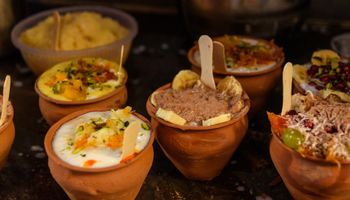
The town of Chittorgarh itself won't detain you long, and that's not an insult. It functions as a base. The food is honest Mewari fare — dal bati churma dominates almost every menu, the bati baked hard in open coals, the churma sweet and crumbly with ghee. Don't bother looking for elaborate dining. The roadside dhabas near the fort entrance serve thick chai and onion kachoris that hit harder than any plated restaurant meal.
Accommodation ranges from basic government guesthouses to a handful of mid-range hotels. Nobody comes to Chittorgarh for luxury stays. You come, you climb, you absorb, you leave slightly altered.
October through March is the window — the Rajasthani heat relents enough that walking the fort doesn't feel punitive. During summer, temperatures push past forty-five degrees Celsius, and the exposed stone becomes a radiator. The monsoon fort, however, is a different creature altogether. Green moss creeps across the ramparts, the reservoirs inside the walls actually fill, and the landscape turns almost lush — a version of Chittorgarh that contradicts everything you thought you knew about it.
Here's what surprises most people: how quiet it is up there. Despite its fame, Chittorgarh doesn't draw the tourist density of Jaipur or Udaipur. Entire stretches of the fort feel abandoned — just you and the stone and the dry wind. That solitude isn't emptiness. It's the sound of a place that has already said everything it needed to say.