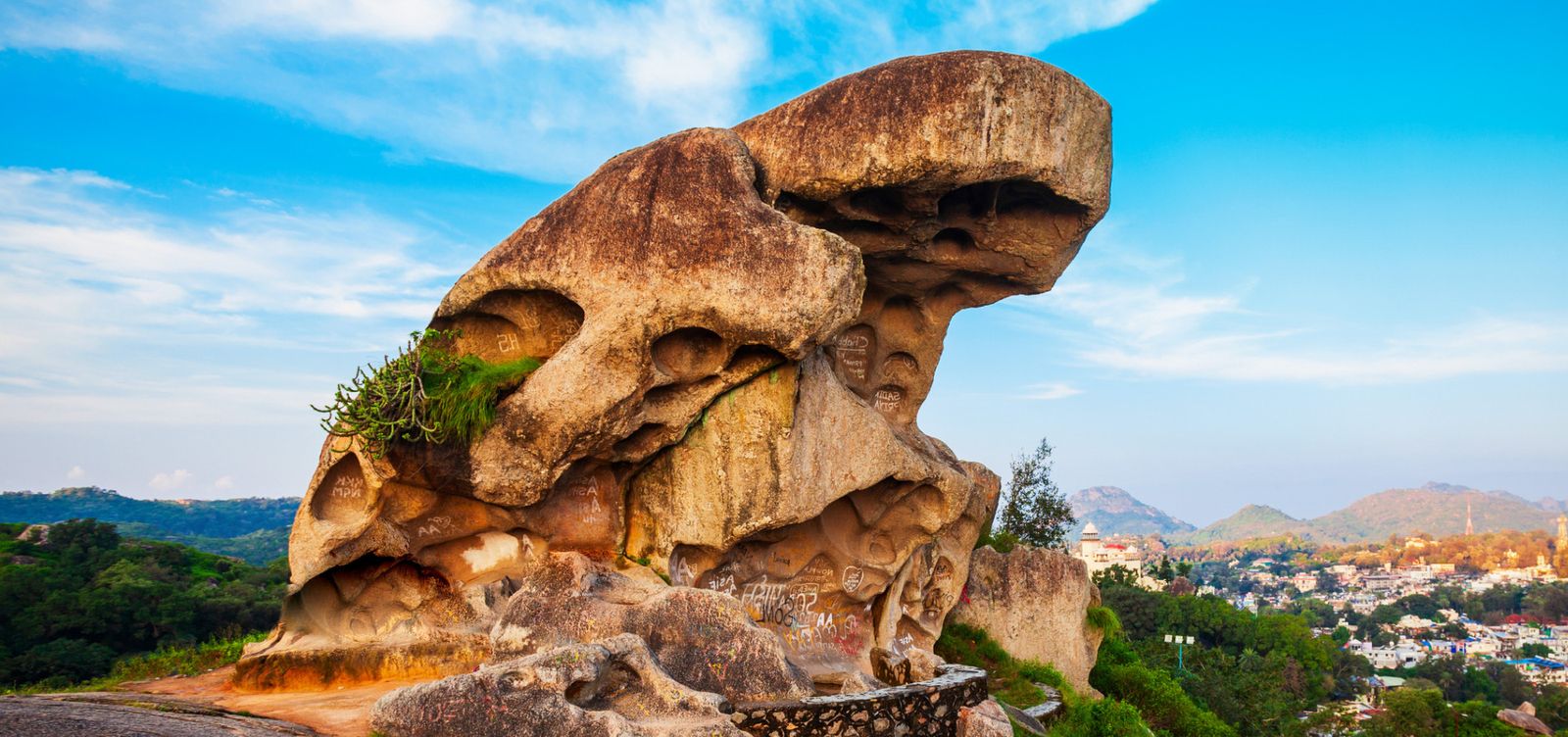
Halfway up the western shore of Nakki Lake, a massive slab of granite leans off the hillside at an angle that makes geologists shrug and everyone else reach for their phones. From the one vantage point that matters — and there really is only one — it looks precisely like a toad about to launch itself into the water. Not vaguely. Not with the charitable squinting most "animal-shaped" rocks demand. The resemblance is so committed it feels like a joke the Aravalli hills have been telling for several hundred million years.
Toad Rock sits in Rajasthan's sole hill station, a town perched at roughly 1,220 metres above the desert floor. The air runs cooler than anything else in this state, and the Aravallis — among the oldest mountain ranges on the planet — give the landscape a quality less of grandeur than of deep, patient endurance. Most travelers arrive in Mount Abu for the Dilwara Temples. They linger for places like this: strange, photogenic, and quietly absurd.
Granite, Gravity, and a Very Long Wait
The rock is igneous granite, shaped across millions of years by wind erosion and the slow chemical insistence of monsoon rains. The Aravalli hills are estimated at over 350 million years old, and the formations here carry that age in every crack and groove. Toad Rock isn't balanced on a knife's edge — it's firmly married to the slope — but the overhang sells a convincing illusion of something about to topple.
What sets it apart isn't just the silhouette. It's the skin. Granite weathers unevenly, and Toad Rock's surface is pitted and furrowed in a way that genuinely mimics amphibian hide. Two slightly raised sections near the top form credible eye sockets. The "mouth" is a shadow thrown by the rock's lower lip jutting forward. Stand at the viewpoint near Nakki Lake and the whole illusion snaps together with almost comic exactness.
Here's the thing that surprised me: it's more convincing in person than in any photograph. Most natural formations that supposedly resemble animals disappoint on arrival — the camera angle was generous, the likeness a stretch. Toad Rock reverses the equation. Photos flatten it. Standing below, with that shape silhouetted against open sky, the three-dimensionality becomes genuinely startling. The toad bulges outward. It has weight. You half-expect it to blink.
The Climb That Earns the View
Getting up there requires a short but uneven hike from the edge of Nakki Lake. The path winds through scrubby vegetation and exposed rock, and while it won't trouble anyone who's done real trekking, the stone steps turn treacherous after rain. Wear shoes with grip. Flip-flops are a terrible decision here, though you'll see plenty of people making it.
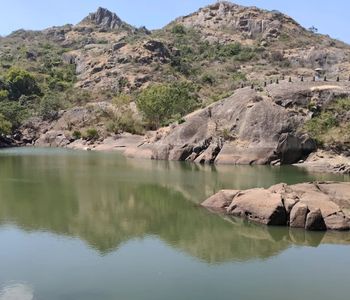
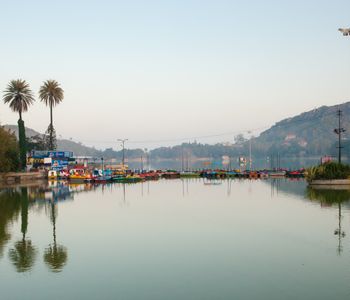
Fifteen minutes at a comfortable pace. Along the way the trail opens to reveal progressively wider views of Nakki Lake below — a small, contained body of water, perhaps 400 metres across, cupped by hills and the low rooflines of Mount Abu's town center. From the higher ground you can pick out boaters tracing slow arcs on the surface, their pedal boats vivid against dark water.
At the top, a broad rocky platform serves as the main viewing area. There's no railing. No formal barrier between you and the drop. This is India at its most unsanitized — exhilarating if you're steady with heights, distinctly uncomfortable if you're not. Keep children within arm's reach. The rock's surface is wide enough for a small group, but the edges slope away without courtesy.
When the Light Gets It Right
Timing matters here more than at most landmarks. Under the flat glare of midday, Toad Rock looks like what it technically is: a large grey boulder, indifferent and inert. Come back in late afternoon, though, and the low sun carves the contours into sharp relief. Shadows pool around the "eyes" and "mouth." The granite warms from cold grey to soft amber. Photographers should aim for the hour before sunset — that's when the toad wakes up.
Mornings work well too, particularly if you want solitude. By 10 a.m. on weekends and holidays, the trail fills with families and school groups. The noise doesn't ruin the place — Mount Abu has always been a sociable hill station, not a wilderness retreat — but whatever contemplative quality the spot holds dissolves under a thicket of selfie sticks.
During monsoon season, July through September, the surrounding hills turn an almost fluorescent green. Mist rolls through the Aravalli valleys and occasionally swallows Toad Rock whole, which carries its own moody appeal. The cost is obvious: wet stone underfoot, reduced visibility, and trails that become genuinely dangerous in heavy rain.
What Surrounds the Toad
Nakki Lake is the natural companion to any visit here, and it deserves more than a glance from above. Local legend holds that the gods carved the lake using only their nails — "nakh" in Hindi — to create a refuge from a demon. The resulting body of water, while modest, sits in a natural bowl of rock that gives it an almost ceremonial stillness. Boat rentals line the southern shore. Each evening the surrounding promenade fills with vendors selling roasted corn and spiced peanuts, the smoke drifting low across the water.
From Toad Rock you can also spot the Nun Rock formation on a neighboring hill — another of the Aravallis' accidental sculptures, this one supposedly resembling a nun in prayer. It requires considerably more imagination than its amphibian neighbor, frankly. Sunset Point, about a kilometre's walk west, offers wide views of the plains below as the light drains from the sky — a fine place to end the day if your legs have anything left.
Getting There and Getting In
Mount Abu sits about 28 kilometres from the nearest railhead at Abu Road. Taxis and shared jeeps make the climb up the winding mountain road in roughly 45 minutes. Coming from Udaipur, the drive takes approximately three hours on well-maintained highways.
Toad Rock charges a nominal entry fee — typically around 50 rupees for adults, less for children — though prices adjust periodically. There's no fixed closing time, but the absence of lighting makes evening visits impractical and unwise. Arrive no later than an hour before sunset if you want to linger without rushing.
No food or water vendors operate on the trail itself, so carry a bottle. The nearest restaurants and chai stalls cluster around Nakki Lake's shore, a five-minute walk downhill from the trailhead.
A Rock Worth the Detour
Toad Rock won't recalibrate your understanding of Indian history or rearrange your inner life. It's a rock that looks like a toad. But there's something honestly delightful about a natural formation that commits this fully to its resemblance, set against ancient hills and still water. In a country dense with monuments that demand your reverence, this odd granite amphibian asks for nothing — a few minutes, a photograph, maybe an involuntary laugh at the sheer improbability of the thing. Give it all three. The toad has been waiting long enough.