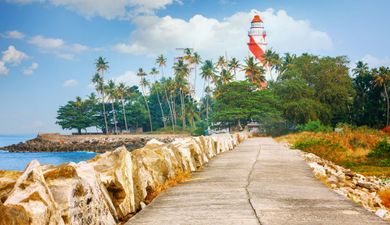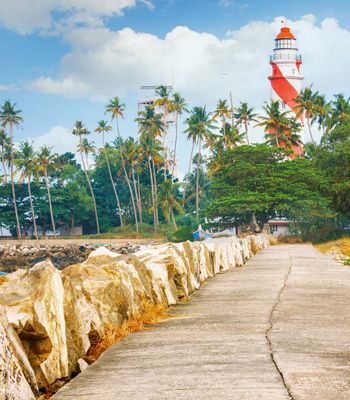
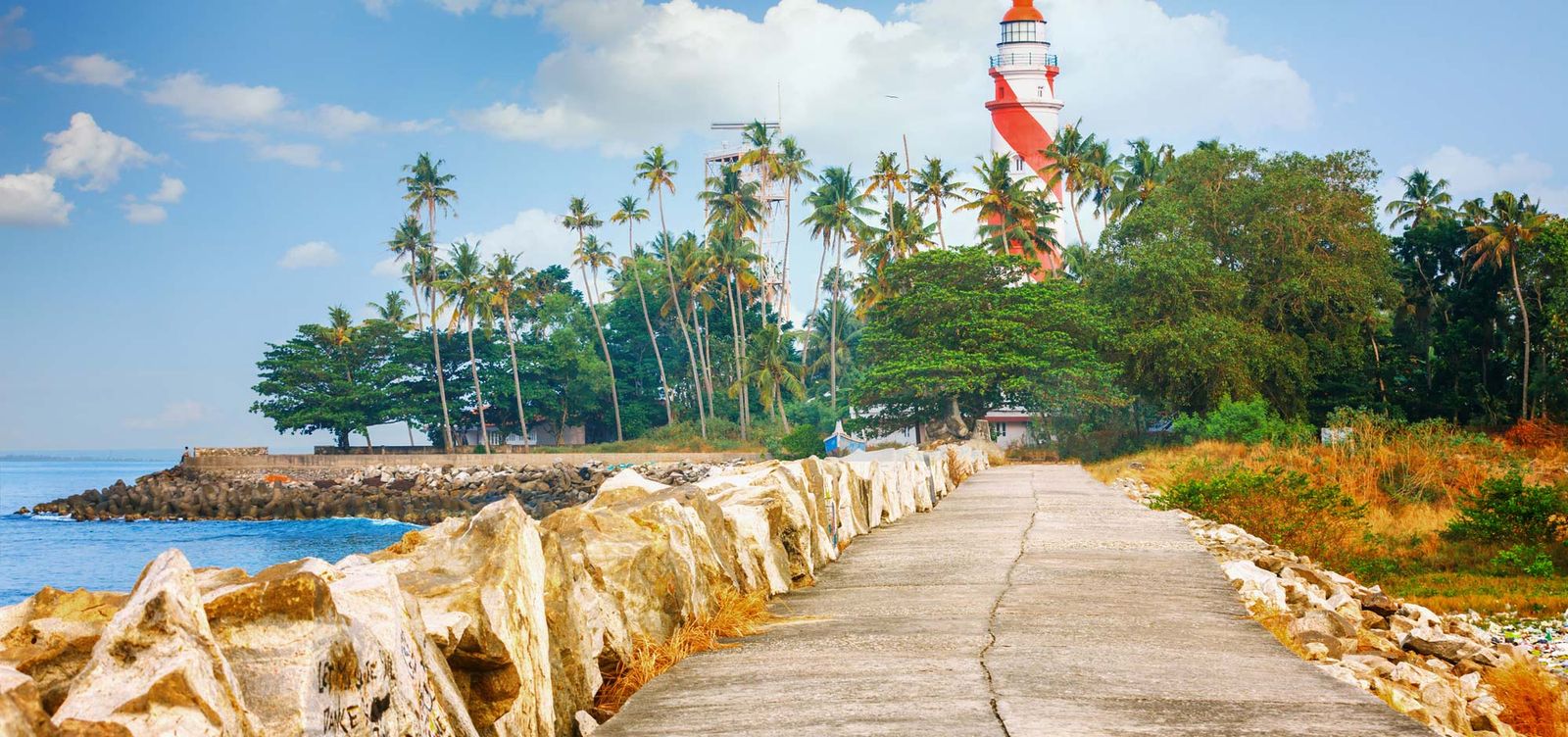
The climb is 144 steps, spiralling up through the belly of a red-and-white striped tower that has stood watch over the Arabian Sea since 1902. Halfway up, your thighs start to protest. By step 100, you're questioning your life choices. Then you step onto the gallery at the top, the wind hits you, and the entire Malabar Coast unspools beneath your feet — fishing boats scattered across the blue like dropped coins, coconut palms running in disorderly lines toward the horizon, and the ruins of a Portuguese fort crumbling quietly at the water's edge.
This is Thangassery Lighthouse in Kollam, on the southwestern coast of Kerala. It isn't polished. No gift shop, no audio guide, no velvet rope keeping you from brushing your hand against the 120-year-old iron staircase. You pay a small fee, sign the register, and climb. That's part of the appeal.
A Peninsula with a Complicated Passport
Three European powers wanted this scrap of land, and all three got it, briefly. The Portuguese arrived in the early 1500s and built a fort to guard their pepper trade. The Dutch took it from them in 1661. The British took it from the Dutch. You can still see the fragmented remains of St. Thomas Fort scattered around the lighthouse grounds — weathered laterite walls, sections of bastion crumbling into the sand, cannons rusting where they were left.
The lighthouse itself came much later. Commissioned by the British in 1902, it was built to guide ships past the rocky shoals that had wrecked countless vessels along this stretch of coast. At 144 feet, it remains one of the tallest lighthouses on the Kerala coast, and its beam still reaches out across the water every night, as it has for more than a century.
Up the Iron Spiral
The staircase is narrower than you expect. Iron, painted a practical grey, winding up the hollow core of the tower. Small windows punctuate the climb at intervals — just enough to give you a breather and a glimpse of the coast growing smaller.
Near the top, you pass the old mechanism room, where the original workings once rotated the lamp by clockwork. It's mostly empty now, with a few plaques and the kind of quiet that old working buildings develop over time.
Then comes the gallery. You push open a small metal door, and suddenly you're outside, standing on a narrow walkway that circles the lantern room. The wind is strong enough to make you grip the railing. Below, the sea crashes against black rocks. To one side, Kollam spreads inland. To the other, nothing but water, stretching toward Lakshadweep and the Maldives somewhere beyond the curve of the earth.
The Payoff at 144 Feet
From the gallery, you can trace the entire geography of Thangassery in a single slow turn. The fishing harbour to the north, where wooden boats with painted hulls bob against the jetty. The long curve of Thangassery Beach running south, its sand darker and coarser than the postcard beaches further down the state. The Anglo-Indian neighbourhood just behind the lighthouse, with its old Catholic churches and houses that still carry traces of Portuguese and Dutch design.
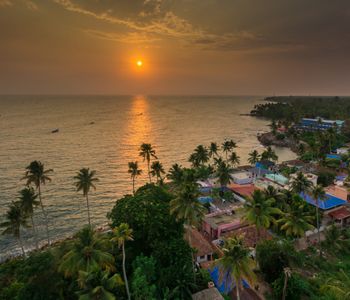
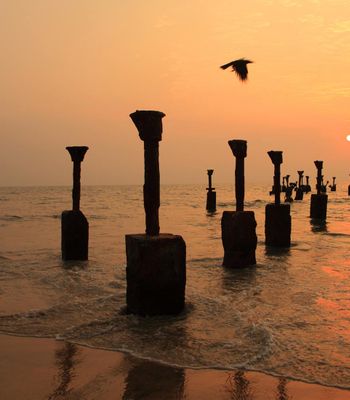
In the late afternoon, when the sun starts its slow descent into the Arabian Sea, the view becomes something else. The light turns gold, then copper, then red. Fishermen pull their boats in. Small groups of locals gather on the rocks below to watch the sun drop. There's no performance about it, no curated sunset experience. It just happens, the way it has every evening for centuries.
A Working Beach, Not a Postcard Beach
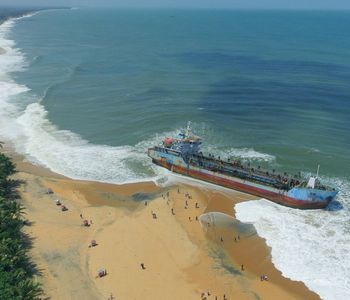
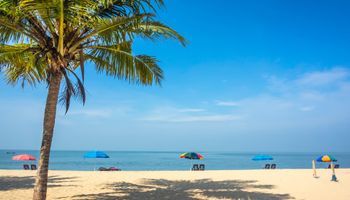
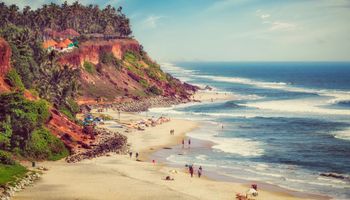
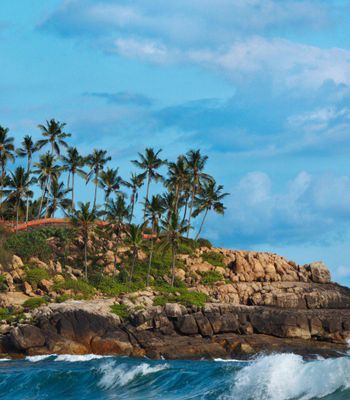
Thangassery Beach isn't the sort of beach you come to for swimming. The currents are strong, the rocks are jagged, and the sea here has a rougher temperament than its tourist-brochure cousins further south. But it tells you something real about the coast.
Walk along the shoreline and you'll pass sections of the old seawall, chunks of Portuguese fortification half-buried in sand, and small shrines where fishermen leave offerings before heading out. The fishing community here has worked these waters for generations, and the beach functions more as a workplace than a leisure space.
At dawn, boats return from the night's catch. The air smells of salt and diesel and fish. Women sort the catch on the sand while auctioneers shout prices in rapid Malayalam. It's loud, messy, and completely absorbing.
Getting There Without Overthinking It
Kollam is well connected by both rail and road. Kollam Junction railway station sits about 3 kilometres from the lighthouse, and any auto-rickshaw driver will know exactly where Thangassery Lighthouse is — just say "lighthouse" and they'll nod. From the town centre, the ride takes around ten minutes.
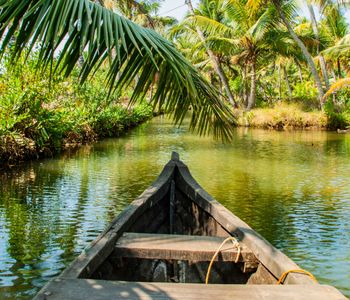
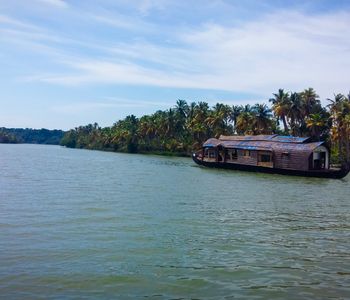
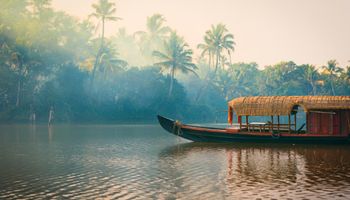
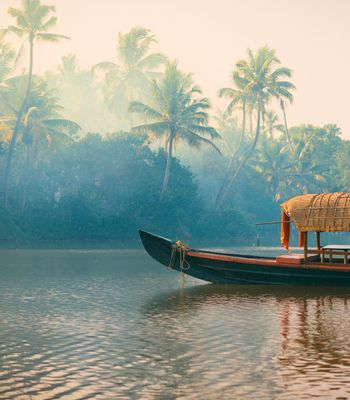
From Thiruvananthapuram, it's roughly a 70-kilometre drive north along the coastal highway. From Kochi, it's closer to 150 kilometres south. Kollam also sits at one end of the Kerala backwaters, so many travellers arrive here by the long, slow ferry from Alappuzha — an eight-hour journey that turns getting to the lighthouse into half the adventure.
The Practical Bits
The lighthouse opens to visitors in the afternoon, typically from around 3 pm to 5 pm, though these hours shift depending on the keeper's schedule and weather conditions. It's closed on Mondays. The entrance fee is modest — a small charge for Indian visitors, slightly higher for foreign travellers, with an additional fee if you want to bring a camera up the tower.
Wear shoes you can climb in. Bring water. If you're afraid of heights or tight spaces, know that the staircase is genuinely narrow, and the gallery at the top has only a waist-high railing between you and a long drop. It's safe. It's not sanitised.
Why It Lingers
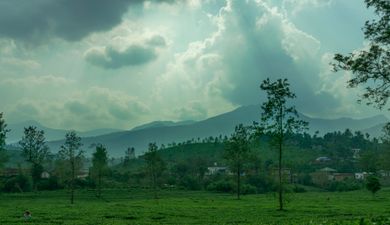
Kerala has flashier attractions. The backwaters get the cover photos, the tea plantations draw the honeymooners, and the beaches of Varkala and Kovalam pull the crowds. Thangassery Lighthouse doesn't compete with any of them, and doesn't try. It's a working lighthouse on a rough stretch of coast, attached to a fishing town with a complicated history and a view that rewards anyone willing to climb 144 steps to see it. Come for an afternoon, stay for the sunset, and leave with something most Kerala itineraries don't include — the salt-stung, wind-blown feeling of having seen the coast as it actually is.