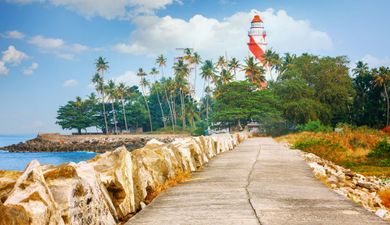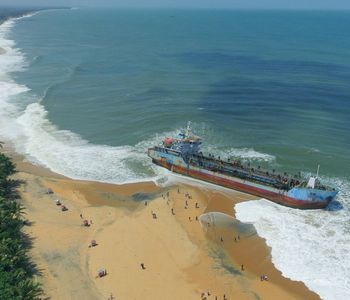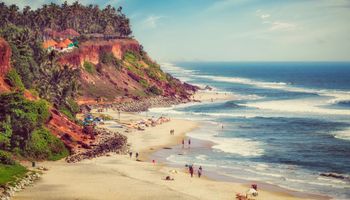
Kollam Beach doesn't try to impress you. It sits along the Arabian Sea on the southern Kerala coast, a long stretch of sand where the surf comes in hard and the fishermen still haul their boats up past the tideline each morning. No resorts crowd the shore. No vendors chase you down with inflatable toys. What you get instead is a working beach with a promenade, a lighthouse at one end, and the steady rhythm of a town that's been trading with the sea for centuries.
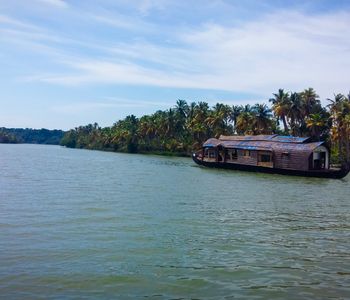
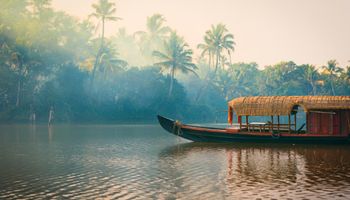
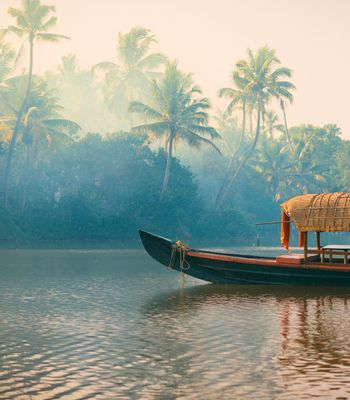
This is the gateway to the backwaters, the southern mouth of the Ashtamudi Lake system. Most travellers treat Kollam as a transit point between Varkala and Alleppey. That's a mistake. Stay a day. The beach rewards patience.
Where the Arabian Sea Does the Talking
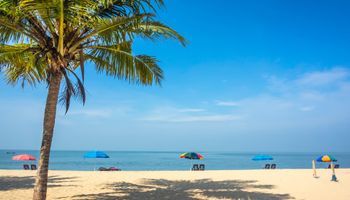
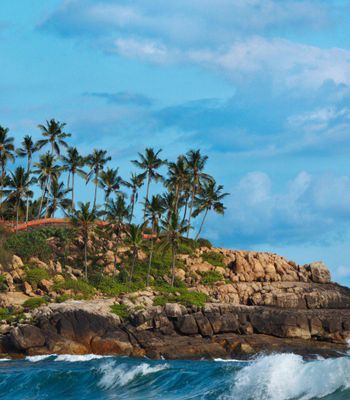
The waves here are bigger than you'd expect. The sea pushes in with force, and on blustery afternoons the spray carries clear across the promenade. Swimming isn't really the point — the currents can be strong, and most locals wade rather than plunge. What people do instead is walk. The sand runs for kilometres in a clean, uninterrupted line, and in the early evening the whole town seems to drift down for a stroll.
Grandmothers in cotton saris settle onto the low seawall. Boys play cricket with a tennis ball and a plank of driftwood. Couples buy roasted peanuts from a man with a charcoal brazier strapped to his bicycle. This is coastal Kerala at its most everyday, and that's precisely what makes it worth your time.
A Lighthouse That Still Earns Its Keep
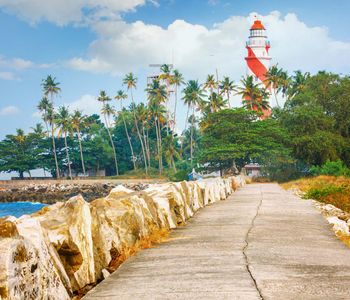
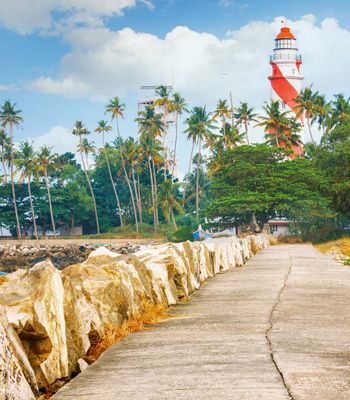
At the southern end of the beach stands the Thangaserry Lighthouse, painted in red and white bands and rising 144 feet above the shore. Built by the British in 1902, it remains operational — one of the tallest lighthouses on the Kerala coast. You can climb it during visiting hours, usually in the late afternoon, for a small fee.
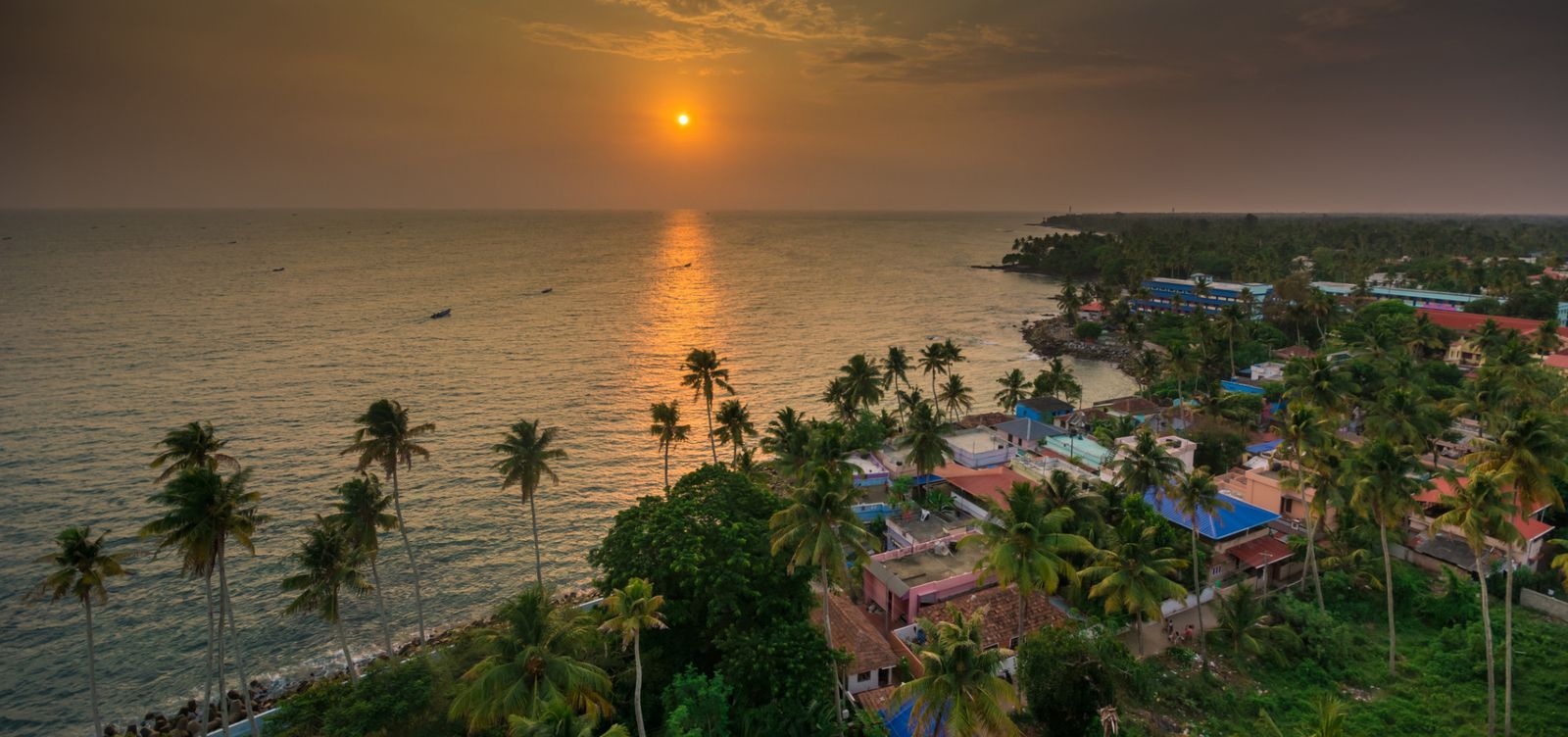
The climb is steep and the staircase narrows as you go. At the top, the view opens in every direction: the sea in one great silver plate, the town rolling inland in green and terracotta, and the ruins of an old Portuguese fort crumbling into the scrub below. The wind up there is serious. Hold your hat.
The Ruins Nobody Talks About
The Thangaserry neighbourhood surrounding the lighthouse is one of the most overlooked corners of coastal Kerala. The Portuguese arrived in the early 1500s, the Dutch took over in the 1600s, and the British finished the sequence. What's left are the bones of their presence: a weathered fort, a cemetery with Dutch inscriptions worn nearly smooth, and Catholic churches with tiled roofs that would look at home in Lisbon.
Walk the back lanes. You'll find crucifixes set into garden walls, fishermen mending nets in front of whitewashed chapels, and the occasional goat. It's a quiet kind of layered history — nothing curated, nothing explained. You have to notice it yourself.
What the Fishermen Bring In
Kollam is a working port, and the beach is where the small-boat catch comes ashore. Arrive early — before seven — and you'll see wooden boats dragged up on logs, nets spilling open, and the morning's haul sorted on the sand. Silver sardines. Mackerel. Sometimes a small shark, sometimes prawns the size of your thumb.
The auction is brisk and conducted in rapid Malayalam. You won't understand a word of it, and that's fine. Stand back, watch, and you'll see how a coastal economy actually works when it isn't being performed for visitors.
Eating Near the Sand
The food near Kollam Beach is better than the setting suggests. This is Kerala, after all, and the seafood comes straight from what you just watched being unloaded. A few small restaurants along the promenade serve karimeen pollichathu — pearl spot fish wrapped in banana leaf and pan-fried — and meen moilee, a fish curry cooked in coconut milk with green chillies and curry leaves.
For something quicker, look for the cart vendors selling kappa and meen curry: steamed tapioca with a fiery red fish gravy spooned over the top. Eat it with your hands, standing up, with the sea twenty metres away. It's the kind of meal that makes the beach feel earned.
The Timing Question
Kerala's coast runs on two seasons: the dry months from November through February, and everything else. Come in winter. Days are warm but not punishing, the humidity eases, and the sea is calmer than it will be in May when the pre-monsoon swell builds.
Monsoon season, from June to September, turns the beach into something dramatic and largely unusable. The waves run muddy, the sky stays low, and the air smells of wet earth and diesel. Photographers love it. Swimmers stay home.
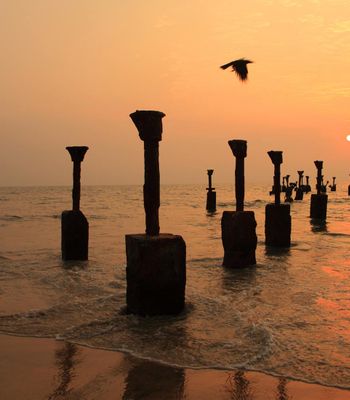
The best hour is the last one before sunset. The light on the Arabian Sea turns the water copper, the lighthouse catches the final glow, and the crowds are thickest but still unhurried. If you want solitude, come at dawn instead — the sand will be yours, and the fishermen will already be at work.
Getting There and Getting Around
Kollam sits on the main rail line between Thiruvananthapuram and Ernakulam, and the train is the sensible way in. The station is about three kilometres from the beach, close enough for a short auto-rickshaw ride. Fares are cheap. Agree on the price before you get in, or insist on the meter.
If you're arriving from the backwaters — and many people do, via the eight-hour ferry from Alleppey — the boat jetty is near the centre of town, a ten-minute rickshaw to the sand. Hiring a bicycle or scooter for the day is another option, and it gives you the freedom to explore Thangaserry without negotiating every short trip.
Where to Rest Your Head
Kollam has no shortage of hotels, but most of them sit inland near the lake rather than the sea. The Raviz Resort on Ashtamudi is the upscale choice, with lake views and a spa. Closer to the beach, you'll find simpler guesthouses and mid-range hotels where a clean room with a ceiling fan and a hot shower runs a fraction of what you'd pay in Varkala.
Book ahead during December and January, when Indian families descend for school holidays and rooms fill quickly. The rest of the year, walking in works fine.
Why This Beach Stays With You
Kollam Beach isn't the Kerala of glossy brochures. It's louder, rougher, more lived-in. The sand isn't pristine. The sea won't let you float on your back. But there's an honesty to the place — a sense that the town existed long before tourism arrived and will continue on its own terms regardless. You come for the lighthouse, the ruins, the fish curry, and the long evening walks. You leave knowing you saw something real. In an age of manicured destinations, that's worth the detour.