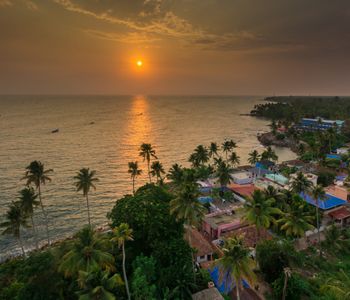
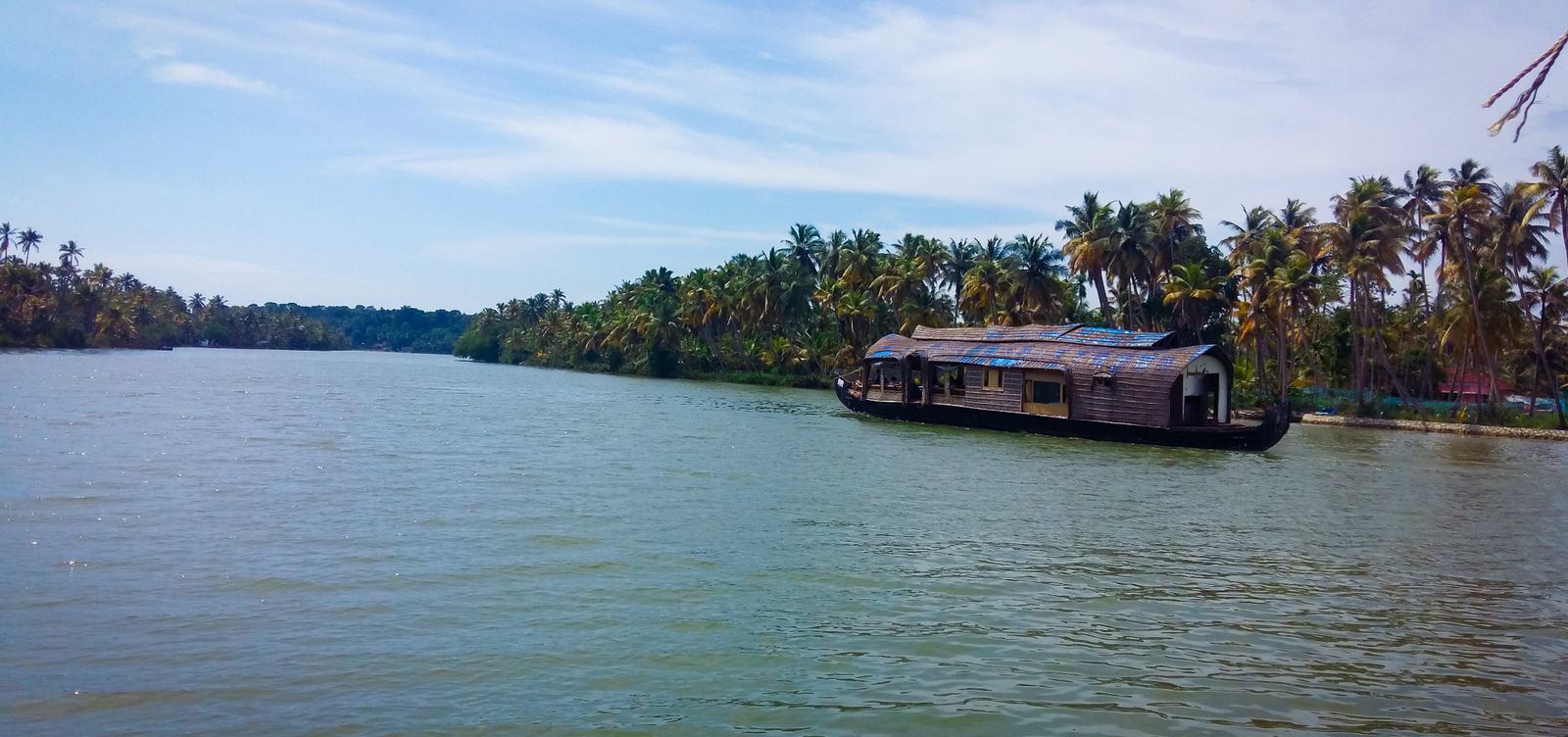
The backwaters of Kerala get all the postcards, but Ashtamudi is the one that actually rewards your time. Eight arms of brackish water fan out from a central basin — "Ashtamudi" means "eight-braided" in Malayalam — reaching into coconut groves, fishing villages, and the edges of Kollam town. It's the second-largest wetland ecosystem in Kerala, and unlike its more famous cousin in Alappuzha, it hasn't been turned into a houseboat traffic jam. You'll see working fishermen casting Chinese nets at dawn. You'll see clam diggers knee-deep in silt. You'll see kingfishers drop like thrown stones. This is backwater Kerala before the Instagram version arrived, and it's all the better for it.
The Lake With Eight Arms
The shape is what makes it. From above, Ashtamudi looks less like a lake and more like a hand pressed into the land — fingers of water threading inland for kilometres, each arm with its own character. One leads to the old port of Kollam. Another pushes north toward Munroe Island, where monsoon water rises high enough that front yards disappear. A third winds past temples and toddy shops most tourists never see.
The lake covers roughly 61 square kilometres and connects to the Arabian Sea through the Neendakara estuary. That saltwater exchange is the whole secret. It's what gives Ashtamudi its mangroves, its prawns, its clams, and the peculiar quality of light that hangs over the water in the late afternoon — somewhere between silver and green, depending on the tide.
When the Romans Came Shopping
Kollam was trading with the outside world long before most of the outside world knew Kerala existed. Roman coins have been pulled from the soil here. Arab merchants, Chinese fleets, and Portuguese ships all dropped anchor in these waters. The Chinese fishing nets still lining parts of the shore are a leftover from that era — counterweighted contraptions of wood and netting that dip into the lake on a timer older than most countries.
Marco Polo mentioned Kollam in his thirteenth-century travels, calling it Coilum and noting its cashew and pepper trade. The lake was the reason. Ashtamudi provided the sheltered anchorage that made the port viable, and for centuries, goods from the Kerala hinterland floated down these waters to be loaded onto ships bound for Basra, Venice, and Guangzhou. The trade has faded. The lake remains.
A Ramsar Site With Teeth
Ashtamudi was designated a Ramsar Wetland of International Importance in 2002, and it earns the title. The mangrove systems around Munroe Island support migratory birds that arrive each winter from as far as Siberia — herons, egrets, darters, whistling ducks, the occasional osprey. Come in December or January if birds are why you're here.
The lake is also famous for its clams. The short-necked clam fishery of Ashtamudi was the first in India to receive Marine Stewardship Council certification, and watching the clam divers work is its own quiet spectacle. They go under with nothing but a small basket, surface, dump, and go again. It's been done this way for generations, and the fishery has held up precisely because nobody tried to mechanise it into oblivion.
Getting on the Water
You can see Ashtamudi from the shore, but that's like looking at a coral reef from the beach. To understand the lake, you need a boat.
The Houseboat Option
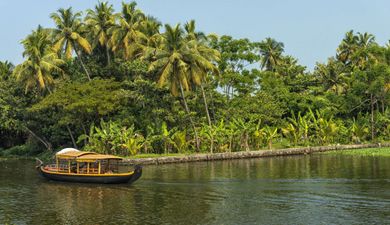
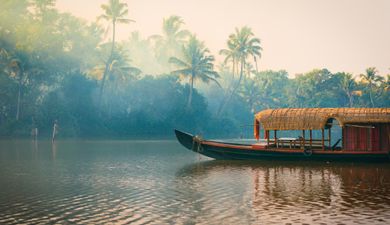
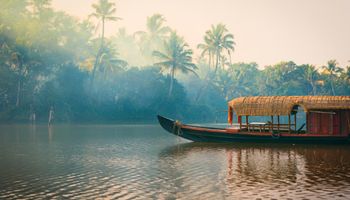
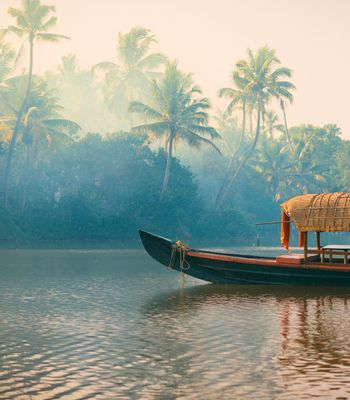
Houseboats operate out of Kollam's boat jetty, most offering overnight trips that drift through the lake's quieter arms. They're slower, quieter, and significantly cheaper than their Alappuzha counterparts, and the crews tend to be locals from lakeside villages rather than hospitality-school graduates reciting a script. Meals come off the kitchen at the back — usually karimeen fry, prawns, appam, sambar — and you eat on the deck as the sun drops behind the palms.
The Canoe Route
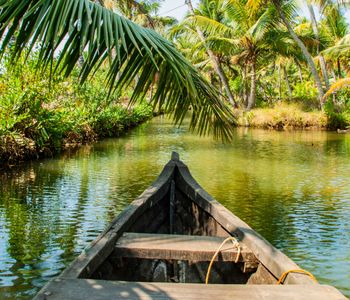
For something closer to the water, the canoe trips around Munroe Island are the better choice. Wooden canoes, no motors, narrow canals lined with coconut palms and the occasional house with laundry drying on the porch. The guides are usually village men who know every family along the route. You'll pass coir-making operations, fish traps, and toddy tappers climbing palms with the casual competence of people who have done it ten thousand times. Three hours, maybe four. Wear a hat.
The Ferry
The state-run ferry between Kollam and Alappuzha is eight hours of slow-moving backwater, and it remains one of the great cheap rides in India. Not everyone has the patience for it. If you do, bring water, a book you don't mind abandoning for the view, and the willingness to accept that eight hours on a boat is longer than eight hours on land.
The Town on the Shore
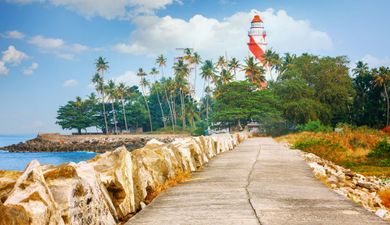
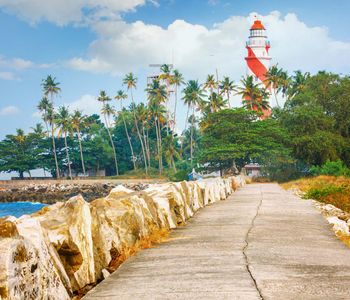
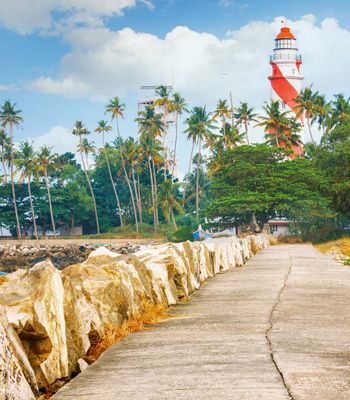
Kollam itself tends to get dismissed as a transit point, which is unfair. The old town is a working port with cashew factories, fish markets, and enough colonial-era buildings to give the streets a weathered, layered feel. The Thangassery Lighthouse, just south of town, still works and still admits visitors willing to climb the spiral stairs. The view from the top takes in the lake on one side and the Arabian Sea on the other — which is pretty much the entire point of Kollam in a single frame.
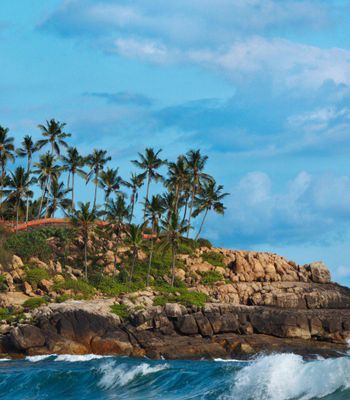
Ashtamudi Lake Palace and Kollam Beach sit close enough to walk between if you're feeling ambitious. The beach isn't Kerala's prettiest, but it's genuinely used by the people who live here, and there's something to be said for that.
When to Come, What to Know
October through March is the sensible window. The monsoon, from June to September, turns the lake moody and dramatic but also makes boat trips a gamble. April and May are hot in the way coastal Kerala does hot — sticky, unrelenting, unpleasant after noon.
Kollam is easy to reach. The railway station sits on the main line between Thiruvananthapuram and Ernakulam, and trains run frequently. Thiruvananthapuram airport is about 70 kilometres south. Buses from anywhere in southern Kerala drop into the KSRTC stand in the middle of town. Houseboat and canoe bookings can be made on arrival, though in peak season, a day's notice helps.
One thing worth knowing: Ashtamudi rewards stillness. Travellers who try to tick it off in a three-hour stopover leave underwhelmed. Give it a full day. Better, a night on a houseboat with the lake breathing around you and the fireflies coming on after dark.
Why It Stays With You
Ashtamudi doesn't try to impress you. There's no grand monument, no singular view that fits on a postcard. What it offers instead is a landscape that has been lived in, worked, fished, and prayed over for two thousand years, and is still all those things today. The clam divers still dive. The nets still swing. The ferries still cross. Come for a few days, let the pace of the water reset your own, and you'll understand why this lake has held people in its eight arms for as long as anyone has bothered to write it down.