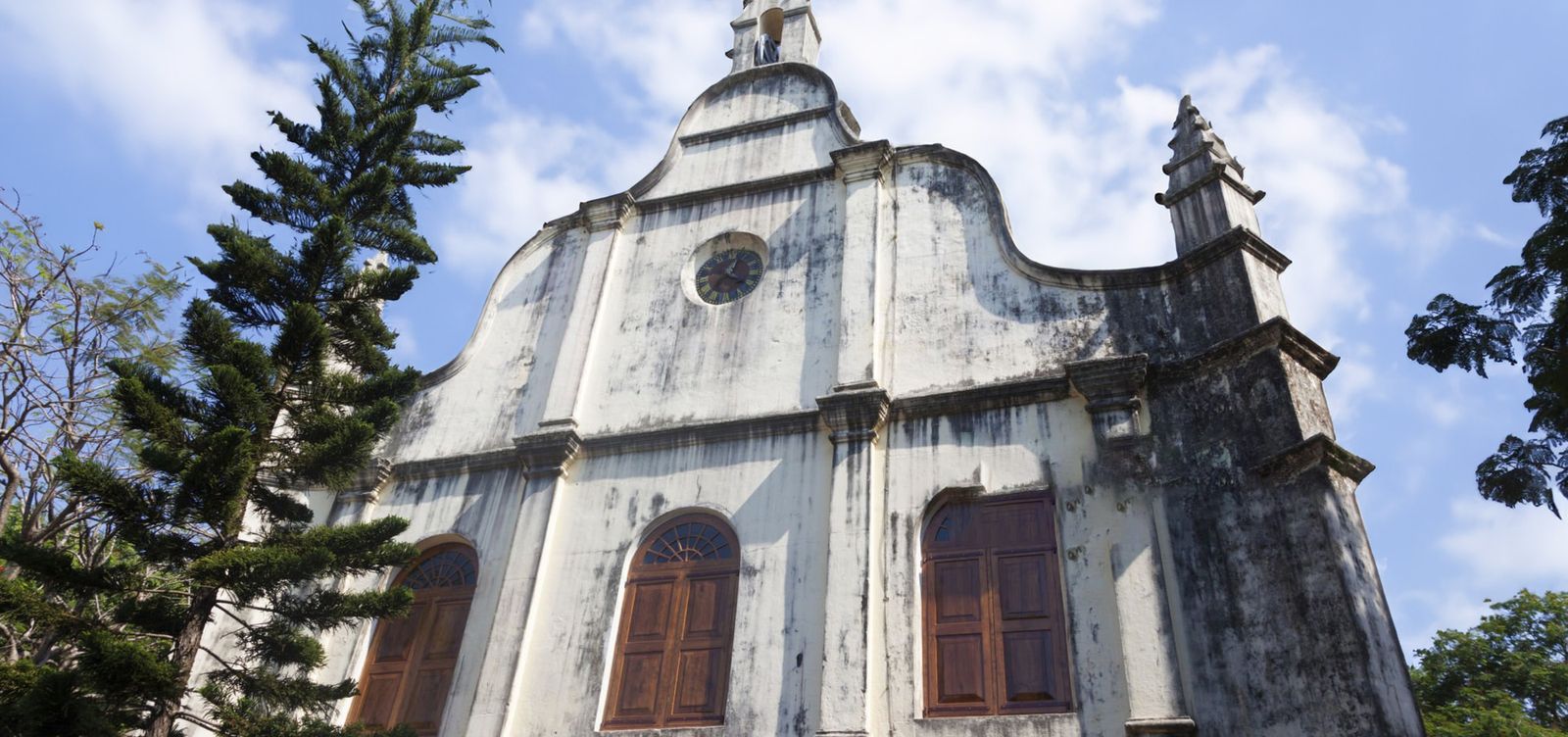
The stone floor is cool beneath your feet, the air still and reverent, carrying the faint scent of old wood and centuries of whispered prayers. St Francis Church in Fort Kochi doesn't announce itself with soaring spires or gilded facades — it draws you in with something far more powerful: the quiet gravity of being the oldest European church in India.
Built in 1503 by Portuguese settlers, this weathered, whitewashed structure has stood through the rise and fall of three colonial empires, sheltered the remains of one of history's most famous explorers, and survived to tell a story spanning more than five hundred years. Today, protected by the Archaeological Survey of India, it opens its doors to anyone willing to slow down and listen to what these walls have to say.
Five Centuries, Three Empires, One Church
When Portuguese ships first dropped anchor off the coast of Kochi in the early 1500s, they carried more than spices and ambition. Pedro Álvares Cabral set the first timbers of this church in place in 1503. A few years later, Afonso de Albuquerque rebuilt it in stone around 1516, giving it bones strong enough to outlast empires.
Originally dedicated to Santo António, the church became a spiritual home for the growing Portuguese community along the Malabar Coast. But Kochi was a prize, and colonial hands kept reaching for it.
The Dutch seized the region in 1663, converting the church to Protestant worship and stripping away its Catholic identity. Then came the British in 1795, who refashioned it as an Anglican house of prayer. Each ruler left fingerprints — subtle shifts in ritual, décor, even the church's name — creating a layered identity that reads like a timeline carved in stone and plaster. Since 1947, the Church of South India has been its steward, the latest chapter in an extraordinary story of reinvention.
Where Vasco da Gama Was Laid to Rest
A worn stone slab set into the floor — modest, unadorned, easy to miss if you weren't looking — marks the spot where one of history's greatest navigators once lay buried. Vasco da Gama, the man who cracked open the sea route from Europe to India, returned to Kochi on his third voyage in 1524. He never left alive.
On Christmas Eve of that year, illness claimed him. His remains were interred right here, inside St Francis Church, where they rested for fourteen years before being exhumed and shipped back to Lisbon in 1539.
Stand over that gravestone and the weight of the moment hits you — this is where the Age of Exploration literally came to rest, even if only temporarily. It's one of the most photographed spots in the church, and for good reason. Few places on earth let you plant your feet at the intersection of such monumental history.
Beauty in Restraint: The Architecture
Forget soaring Gothic arches and gold-leaf altarpieces. St Francis Church speaks in a quieter language — clean whitewashed walls, a simple rectangular plan, the practical elegance of early Portuguese colonial design. Against the sun-bleached streets of Fort Kochi, its unadorned exterior feels perfectly at home.
Step through the doorway and your eyes adjust to a different century. Massive wooden ceiling beams, darkened with age, stretch overhead. A central nave opens between side aisles, and hanging from the ceiling, large cloth punkahs — hand-operated fans once pulled by attendants during sweltering services — still dangle in place, frozen in time like museum pieces you can almost hear swishing.
Run your gaze along the walls and you'll find tombstones and memorial plaques belonging to Dutch and Portuguese settlers, each inscription a small elegy for someone who lived and died far from home. Stained glass panels filter the Kerala sunlight into soft amber and rose, casting gentle patterns across the stone floor. Nothing here screams for attention. Everything earns it.
A Living Archive of Kerala's Global Past
What makes this church extraordinary isn't just its age — it's the sheer number of identities it has worn. Portuguese Catholic, Dutch Protestant, British Anglican, and now Church of South India. Few structures anywhere in the country have passed through so many hands while holding on to their essential soul.
Each transition reshaped worship practices, altered the interior, and even changed the building's official name. The result is a living archive — not frozen behind glass, but breathing and evolving — that chronicles Kerala's centuries-long conversation with the world.
For the people of Kochi, the church is more than a monument. It's proof that their city once stood at the crossroads of global maritime trade, a port that pulled merchants, missionaries, and adventurers from across oceans. That legacy is worth protecting, and the Archaeological Survey of India agreed, granting the church the status it deserves.
Fort Kochi: Where Every Street Tells a Story
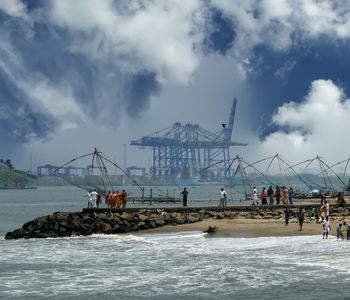
Wander just a few minutes from the church door and the iconic Chinese fishing nets greet you along the waterfront — massive cantilevered silhouettes that look almost sculptural against the fading orange of a Kerala sunset. They've been hauling in catches for centuries, and watching the fishermen work them at dusk is one of those moments that burns itself into memory.
Around the corner, Santa Cruz Cathedral Basilica offers a dramatic contrast — vibrant ceiling paintings, Gothic-style interiors, and an ornateness that makes St Francis Church feel like a whispered secret by comparison. Originally built by the Portuguese in 1505 and later rebuilt by the British, it's worth ducking inside even if just for a few minutes.
History buffs should also seek out the Indo-Portuguese Museum and Mattancherry Palace, both a short ride away and rich with stories of the region's multicultural tapestry. But honestly, some of the best moments in Fort Kochi happen unplanned — catching the sizzle and smoke of fresh fish being grilled at a street vendor's cart, sipping masala chai at a tiny café tucked between art galleries, or stumbling into a laneway mural you hadn't read about in any guidebook. The whole neighborhood is compact enough to explore on foot in a few unhurried hours.
How to Make the Most of Your Visit
St Francis Church welcomes visitors daily, generally from 8:30 a.m. to 5 p.m., with no entrance fee — a rarity for a site of this caliber. Sunday mornings bring worship services, so if you're after a contemplative solo experience, aim for a weekday. Photography restrictions sometimes apply inside, so a quick check with staff at the door saves any awkwardness.
Timing matters with Kerala's climate. Between October and February, the air is cooler and drier — ideal for wandering Fort Kochi's streets without wilting. June through September unleashes monsoon rains that can turn a leisurely stroll into a soggy sprint. Early mornings are your best bet for beating both crowds and heat, giving you space to linger over the tombstone inscriptions and soak in the silence.
Finding Your Way There
From Ernakulam, hop on the public ferry across the harbor — it's cheap, breezy, and the views of the waterfront alone are worth the fare. Auto rickshaws and taxis make the trip too, but nothing beats arriving by boat. Cochin International Airport sits roughly 45 kilometers away, about a 90-minute taxi ride depending on traffic. Once you're in Fort Kochi, leave the vehicles behind — everything worth seeing clusters within walking distance, so pack comfortable shoes and let your feet do the navigating.
St Francis Church doesn't try to dazzle you. It doesn't need to. Within its modest walls lives an authentic encounter with the forces that shaped modern India — Portuguese ambition, Dutch pragmatism, British authority, and the enduring resilience of a place that absorbed them all and remained standing. Add it to your Kochi itinerary, and you'll carry home something no grand cathedral could give you: the rare thrill of touching history exactly where it happened.