Goa's largest city by population isn't Panaji, with its pastel Portuguese houses and riverfront promenades. It's Vasco da Gama — a working port town at the tip of the Mormugao peninsula that most travelers blast through on their way to somewhere else. The train station deposits you here. The airport sits on its doorstep. And yet almost nobody stays. That, oddly enough, is precisely what makes Vasco worth a pause. While the rest of Goa has learned to perform for visitors — perfecting its beach-shack acoustics, calibrating its trance-to-chill ratio — Vasco remains stubbornly, unapologetically itself. A town built around iron ore and fishing boats, not cocktail menus and hammocks. If you want to understand Goa as a place where people actually live and work, come here first.
A Harbor Town With Calloused Hands
Vasco da Gama exists because of its harbor, and everything else follows from that single fact. The Mormugao Port, one of India's oldest and busiest natural harbors on the western coast, has shaped this town since the Portuguese developed it in the late nineteenth century. Iron ore from Karnataka and Goa's own mines moved through here for decades, and the town's economy grew around that trade like barnacles on a hull.
Walk the harbor road before seven in the morning. Trawlers unload the night's catch — silver mackerel heaped in plastic crates, the smell of brine so dense you taste it at the back of your throat. Truck drivers idle their engines nearby. Dock workers bellow over the grinding noise of machinery. Nobody arranged any of this for your benefit. The Mormugao Port Trust still handles millions of tonnes of cargo annually, making it one of India's significant iron ore export points, though the industry has weathered regulatory disruptions in recent years.
The town's layout reflects its utilitarian DNA. Streets follow a practical grid rather than a scenic meander. Buildings are functional — concrete and paint rather than laterite and tile. It's not beautiful in any postcard sense. But there's an honesty to the place that coastal Goa's tourist belt traded away long ago, and you feel it in the directness of the people, in the way a tea-stall owner looks at you with curiosity rather than calculation.
The Portuguese Aftertaste
Named after the explorer who first reached India by sea in 1498, Vasco da Gama carries its colonial name with a shrug rather than a flourish. The Portuguese imprint here is quieter than in Old Goa or Fontainhas — no grand basilicas, no museum-ready mansions. Instead, it surfaces in smaller registers: the occasional azulejo tile fragment on an older building facade, a church bell marking the hour with a clarity that cuts through traffic noise, the prevalence of pork vindaloo and beef chops on chalkboard menus at local eateries.
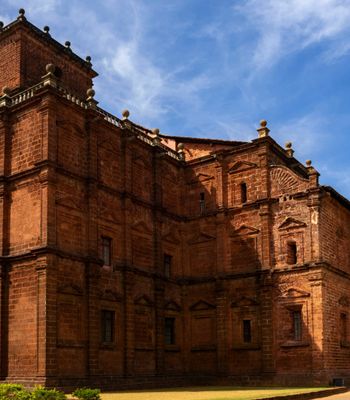
St. Andrew's Church, perched on a hill near the town center, dates to the seventeenth century. Its weathered stone walls and dim interior feel genuinely lived-in rather than preserved for display — there's a difference, and you sense it immediately. The congregation still fills the pews on Sundays. Step outside, and the hilltop vantage opens up a wide view of the harbor and the Arabian Sea beyond. Standing there, you understand in your body why the Portuguese chose this peninsula. The whole coastline spreads below you like a strategic argument.
Where the Fish Tells the Story
Forget the multi-cuisine restaurants catering to package tourists in Calangute. Vasco's food operates on a different frequency entirely. The town's proximity to the harbor means seafood here is absurdly fresh — the kind of fresh where the fish was swimming four hours before it hit your plate.
Small family-run restaurants along the main roads serve Goan fish curry rice, the state's defining meal, at prices that would make a North Goa beach shack owner wince. The curry is built on kokum and coconut — sour and rich simultaneously — spooned over parboiled rice. Order it with fried mackerel, the skin crisped and salted just right, and you've eaten better than most tourists manage in a week of trying. Goodyland and Annapurna are among the local spots that regulars swear by, though the names matter less than the principle: follow the lunch crowd of office workers and dock employees, and you'll eat well.
Vasco also has a surprising number of bakeries producing Goan pao — those crusty bread rolls descended from Portuguese baking traditions. Grab a few warm ones in the morning, tear them open, eat them with butter or stuffed with a spiced pork cutlet. The simplest breakfast in Goa. One of the best.
The Beach Nobody Mentions
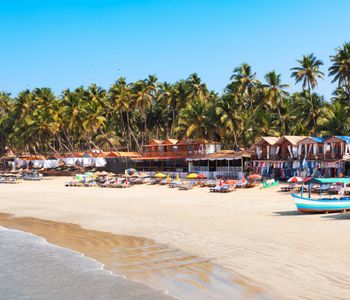
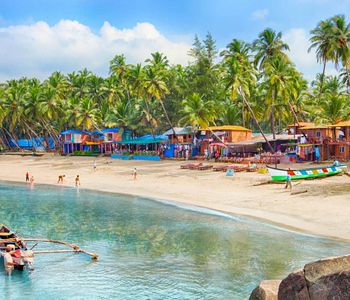
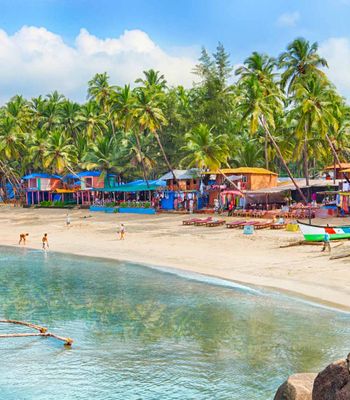
Here's the counterintuitive bit. Vasco da Gama, the town that tourists skip for Goa's famous beaches, actually has a rather good one. Bogmalo Beach sits just a few kilometers south of the town center — a short, curved stretch of sand backed by a green hillside, with relatively calm water and far fewer bodies per square meter than Baga or Anjuna. The fact that it stays this quiet, this close to an airport and a port town, is one of Goa's minor miracles.
On the road to Bogmalo, you'll pass the Naval Aviation Museum, one of only two such museums in Asia. Decommissioned aircraft from the Indian Navy's history line the outdoor exhibits — a Sea Harrier, various helicopters, each one baking in the sun like a metallic fossil. The indoor galleries cover naval aviation operations with models, weapons, and flight gear. It's compact; you'll finish in about an hour. But it's genuinely interesting, especially if you've never considered how a country with a 7,500-kilometer coastline projects power from the sea.
Getting Around Without the Chaos
Vasco's Dabolim Airport, technically within its municipal limits, is Goa's sole commercial airport. If you flew into the state, you were already in Vasco before you knew it. The Vasco da Gama railway station connects to Mumbai, Delhi, and several other major Indian cities via the Konkan Railway, which itself is an engineering marvel — 93 tunnels blasted through the Western Ghats.
Within town, auto rickshaws handle most short trips. Negotiate the fare before climbing in; meters here are decorative objects, not functional tools. Renting a scooter remains the most practical way to explore the peninsula at your own pace, and Vasco's relatively flat terrain makes riding less nerve-wracking than navigating the hairpin roads of North Goa's hinterland.
The town also makes a sensible base for South Goa's quieter beaches — Colva, Benaulim, and Palolem are all within an hour's drive. Staying in Vasco means lower accommodation costs and a more grounded daily rhythm than the tourist-facing stretches offer. You sleep better, too, without bass from a beach club rattling your windows at two in the morning.
When to Show Up
October through March delivers the most comfortable weather, with temperatures between 20 and 32 degrees Celsius and minimal rain. The monsoon months from June through September turn the town soggy and the harbor dramatic — waves crash against the breakwater, and the sky stays a moody grey for days on end. Some travelers prefer this. The crowds vanish entirely, and Vasco in the rain has a melancholic, filmic quality that suits its working-class character — think peeling walls and steaming chai, not sunshine and selfie sticks.
Avoid the weeks around Christmas and New Year if you dislike inflated prices across Goa generally, though Vasco itself remains more insulated from holiday surcharges than the beach towns.
A Town That Earns Its Keep
Vasco da Gama won't seduce you. It doesn't try. There are no sunset yoga sessions, no Instagram walls, no touts waving laminated menus in your face. What it offers instead is rarer — the unvarnished texture of a Goan town that functions for its residents first and everyone else a distant second. Eat the fish curry. Watch the harbor wake up. Climb the hill to St. Andrew's and look out over the water where cargo ships sit heavy on the horizon. Then decide for yourself whether the places that try hardest to impress you are really the ones worth remembering.