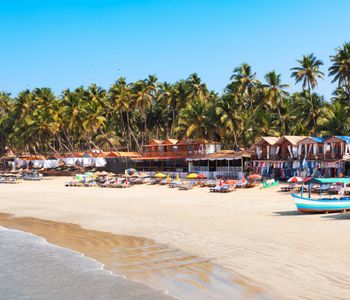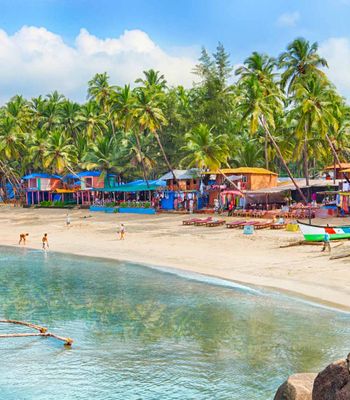
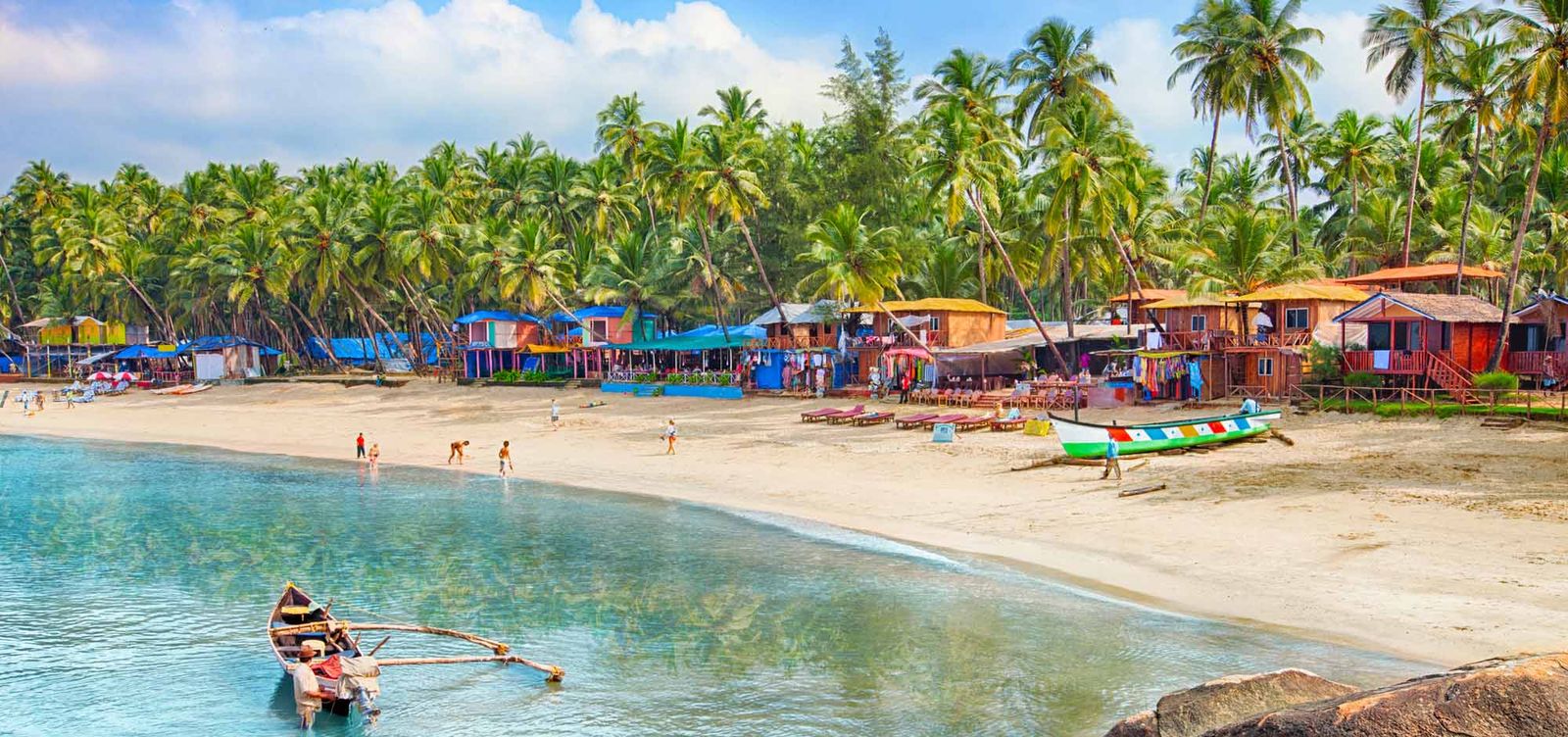
Palolem Beach curves like a parenthesis at the southern tip of Goa, a crescent of sand barely a mile long where the Arabian Sea arrives in gentle, almost apologetic waves. Two forested headlands bracket the bay so completely that the water inside stays calm even when the open ocean beyond churns and spits. It's this natural geometry — rock promontories working like bouncers at a velvet rope — that gives Palolem its defining quality: a tropical beach where you can actually swim without checking over your shoulder. South Goa's quieter reputation is well earned here, though "quiet" is relative. Palolem has long since been discovered. The difference is that it was discovered by people who preferred cheap beach huts to five-star lobbies, and that original character still clings to the salt air like woodsmoke.
A Beach That Erases Itself Every Monsoon
Here's the detail most Goa guides skip entirely: Palolem's beach shacks and huts are temporary. Every structure on the sand — the restaurants with their chalkboard menus, the bars strung with fairy lights, the guesthouses with hand-painted signs — gets pulled apart before the monsoon hits in June and rebuilt from scratch when the rains retreat in October. The state government mandates this seasonal demolition, which means the beach you visit in December is, in a structural sense, brand new.
This annual cycle of erasure and reconstruction gives Palolem something most beach towns can't claim: genuine impermanence. Nothing on the sand is built to last, and somehow that makes it more honest than places with poured foundations and twenty-year leases. The bamboo frames go up, palm-thatch roofs get lashed down, colorful fabrics drape over makeshift walls, and within weeks a functioning village materializes from nothing. By April, it looks like it's been there forever. Then the monsoon returns, and the whole illusion dissolves.
The Water and What Lives In It
That crescent shape creates a shallow, bathtub-warm lagoon that stretches surprisingly far from shore before deepening. You can wade out fifty meters and still be waist-deep in places — one of the few beaches in Goa where swimming feels genuinely easy rather than mildly reckless. Between November and March, the water hovers around 28 degrees Celsius, close enough to body temperature that you stop noticing where your skin ends and the sea begins.
Kayaks line the northern stretch for rent, and paddling around the headland to Butterfly Beach is one of the more worthwhile things you can do with an afternoon here. Butterfly Beach faces the open sea and lacks Palolem's sheltered calm, but its isolation — reachable only by water or a steep jungle path — rewards the effort. Dolphins surface in the bay with some regularity, particularly at first light. Local fishermen run dolphin-spotting trips at sunrise, though the dolphins, naturally, haven't signed a contract to show up.
After Dark, the Noise Finds Its Own Register
Goa's reputation for nightlife doesn't quite translate this far south. The thumping bass of Anjuna and Baga gives way to something lower and slower here — mostly. The southern end of the beach hosts silent discos, a concept that sounds absurd until you try it. You receive wireless headphones at the door, toggle between two or three DJ channels, and dance on the sand while the waves stay audible between tracks. From outside, a hundred people moving in near-silence looks like a strange collective hallucination. It is, in its way, the most Palolem thing possible: a party that refuses to overwhelm its setting.
Beach shack restaurants stay open late, turning out grilled kingfish and prawn curry alongside cold Kingfisher beers. Prices creep upward each season, but a full seafood dinner still costs a fraction of what you'd surrender at the resort restaurants in North Goa. The food is best where the fishing boats are closest. That's not a metaphor — it's a practical rule.
Where the Sand Runs Out
Walk south past the last shacks and you'll reach Canacona Island, a tidal island accessible on foot when the sea pulls back. The rocky crossing takes about ten minutes if you pick your footing carefully on the slippery stones — rush it and you'll understand why. On the far side, a small stretch of empty sand beneath a thick canopy of coconut palms offers genuine solitude, the kind that's becoming almost fictional along the Indian coastline.
The headland on the northern end rewards a short climb through laterite rock and scrubby vegetation with a view back over the full crescent. From up there, the scale of the bay snaps into focus: white sand, turquoise shallows deepening to navy, fishing canoes lined up like stitches along the shore. It's the kind of panorama that makes you put your phone down for a moment before inevitably picking it back up.
Getting There Without Losing Your Composure
Palolem sits in Canacona taluka, roughly 70 kilometers south of Dabolim Airport. The drive takes about ninety minutes by taxi, though the winding roads through South Goa's villages add unpredictability to any estimate. Pre-booking a taxi through your accommodation saves you from the airport scrum — a chaotic negotiation best avoided after a long flight. Madgaon railway station, the nearest major rail hub, lies 40 kilometers north, and an auto-rickshaw from there to Palolem costs considerably less than an airport taxi.
If you're already in North Goa, the journey south takes two hours or more depending on traffic through Margao. Local buses run the route and cost almost nothing, but they stop everywhere and the seats were designed for frames smaller than most Western tourists carry. Renting a scooter remains the most popular way to move around once you've arrived, and the roads in Canacona are noticeably less anarchic than their northern counterparts.
Timing Is Everything
November through February delivers the best of it — dry air, manageable heat, calm seas. December and January bring the densest crowds, particularly around Christmas and New Year, when prices spike and the crescent fills shoulder to shoulder. March remains warm but thins out considerably, and if you can tolerate the heat, it's the better window. April turns genuinely punishing, and by May the shack owners are already squinting at the horizon for monsoon clouds.
June through September transforms Palolem completely. The beach empties, the structures vanish, the sea turns rough and grey. A few permanent guesthouses stay open for the rare soul who wants to watch the rain hammer the coast, but there's little to do besides read, sleep, and wait for breaks in the weather. There's a stark honesty to monsoon Palolem — you see the place without its costume on.
A Crescent That Keeps Rebuilding Itself
Palolem doesn't pretend to be undiscovered, and it shouldn't. What it offers instead is a beach that still operates on human terms — small enough to walk end to end in twenty minutes, calm enough to swim without anxiety, and just rough enough around the edges to feel like a place rather than a product. The annual dismantling and rebuilding of its structures isn't just a bureaucratic requirement; it's the key to Palolem's unlikely resilience. Nothing here is permanent. And that's precisely why people keep returning — to see what gets built next on the same stretch of sand.