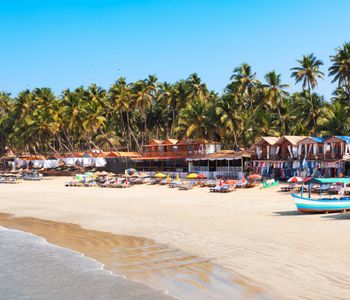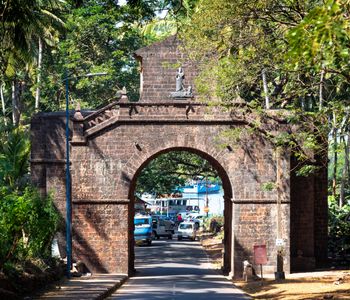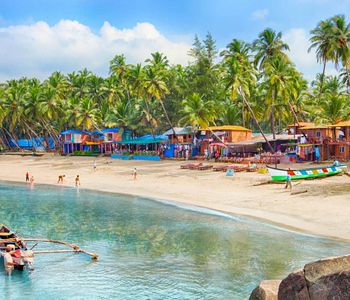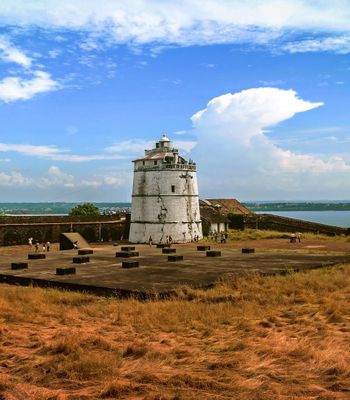
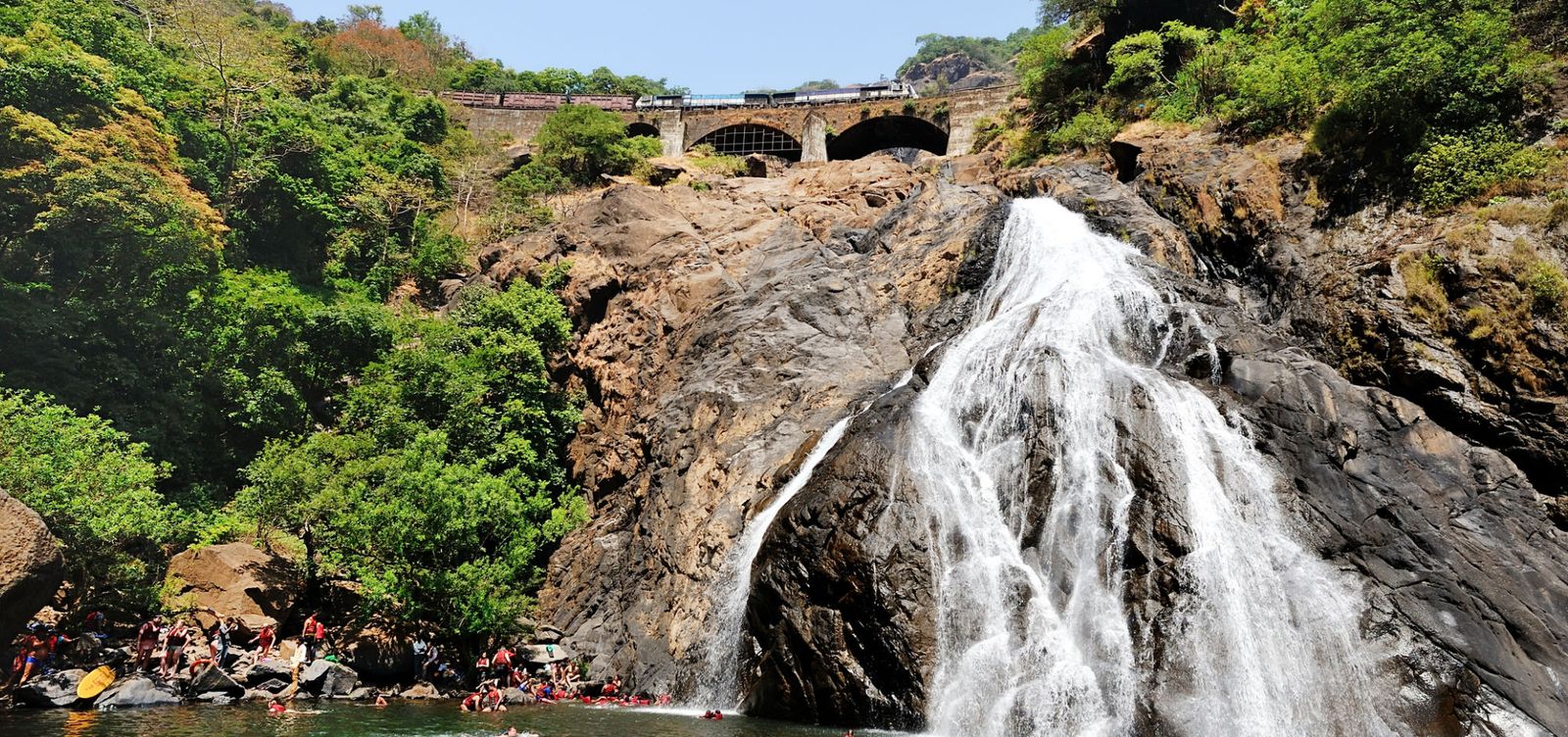
The first thing you notice isn't the waterfall itself. It's the sound — a deep, percussive roar that reaches you through the jungle canopy long before the cascade comes into view. Dudhsagar, which translates to "Sea of Milk," earns its name honestly. Four tiers of water crash down roughly 310 metres of near-vertical rock face on the Goa-Karnataka border, sending up a perpetual mist that coats everything within a hundred metres in a fine, cool sheen. This is not a waterfall you photograph and move on from. The sheer volume of water, especially during and just after the monsoon, holds you in place. It demands a longer look. Getting here requires genuine effort — a bone-rattling jeep ride through river crossings and forest tracks — and that effort is precisely what separates Dudhsagar from the beach-bar version of Goa most travelers know.
Where the Western Ghats Show Their Teeth
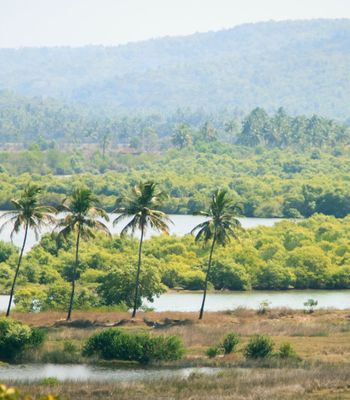
Dudhsagar sits inside the Bhagwan Mahavir Wildlife Sanctuary, itself part of Mollem National Park in East Goa. The surrounding landscape is dense, wet deciduous forest — the kind of terrain where trees compete brutally for light and every surface grows something green. Forget the coastal strip that defines Goa's international reputation. This interior is raw and largely untouched by resort development.
The waterfall forms on the Mandovi River, Goa's primary waterway, as it drops off a cliff face along the Western Ghats escarpment. During peak flow in August and September, the volume transforms the falls into a thundering white curtain that obscures the rock behind it entirely. In the drier months from November through February, the flow thins to reveal dark basalt underneath, streaked with mineral deposits that give the rock a layered, almost geological-textbook quality.
Here's what catches most first-time visitors off guard: a railway bridge cuts directly across the falls at an intermediate level. The South Western Railway line between Goa and Karnataka passes through this stretch, and trains occasionally cross while you're standing below. It's an absurd juxtaposition — Victorian-era rail engineering framing one of India's tallest waterfalls — and somehow the two belong together, each making the other stranger and more memorable.
The Road That Tests Your Commitment
Reaching Dudhsagar from the Goa side means hiring a jeep at the Mollem check post, roughly 60 kilometres southeast of Panaji. Private vehicles aren't permitted beyond that point. The jeep covers about 10 kilometres of unpaved forest road, and "unpaved" is generous — in several stretches, the jeep fords shallow river crossings with water sloshing against the doors. The journey takes around 45 minutes each way, though the driver's temperament and road conditions can stretch that considerably.
Jeep operators are regulated by a local association, and prices are fixed per vehicle rather than per person. Expect to share with other travelers unless you're willing to pay for every seat yourself. From the drop-off point, a short trek of roughly one kilometre through rocky terrain and shallow pools brings you to the base of the falls. Wear shoes you don't mind submerging. Flip-flops are a wager you'll lose on the slick rocks.
An alternative approach exists via the railway track from Castle Rock station on the Karnataka side — a roughly 14-kilometre hike along the tracks through tunnels and over bridges. Railway authorities have periodically restricted this route for safety reasons, so verify access before attempting it. When open, the trek is genuinely spectacular, but it demands real fitness, a full day, and the willingness to press yourself flat against a tunnel wall if a train approaches. That last detail isn't hypothetical.
When the Monsoon Decides Everything
Timing your visit to Dudhsagar is less about preference and more about physics. The waterfall is at its most ferocious between July and September, when monsoon rains swell the Mandovi to full capacity. During this period, however, the jeep trail is frequently closed — flooding renders the river crossings impassable. The forest department shuts access without much advance notice.
October and November represent the sweet spot. The monsoon has receded enough to reopen the road, but the water volume remains genuinely impressive. By February, the falls diminish noticeably. Come April or May, and you'll find a shadow of the monsoon spectacle, though the natural pool at the base remains swimmable and the surrounding forest stays green enough to justify the trip.
The sanctuary gate opens at around 8:30 in the morning, and the last jeeps return by late afternoon. Arriving early matters — not just for the light, which is best before noon when the sun sits high enough to illuminate the full cascade, but because the number of jeep permits issued daily is capped. On weekends and holidays, that cap gets hit fast.
The Residents Who Were Here First
Because the waterfall sits within a wildlife sanctuary, the forest around it isn't scenery — it's functional habitat. Bhagwan Mahavir hosts Bengal tigers, Indian bison, black panthers, and several species of deer, though sightings of the larger animals are uncommon along the tourist trail. What you will encounter are Malabar giant squirrels — improbably large, maroon-furred — and langurs watching from the canopy with the detached calm of tenured professors.
And then there are the macaques near the falls, who have learned that tourists carry food. Guard your belongings at the base pool. They're bold, coordinated, and entirely unimpressed by human authority. A bag left unattended for thirty seconds is a bag that belongs to them now. This is not a warning. It's a description of events that will occur.
The Details That Actually Matter
Entry to the Bhagwan Mahavir Wildlife Sanctuary carries a modest fee — around 50 rupees for Indian nationals and 400 rupees for foreign visitors, though these figures change periodically. Jeep hire runs separately. There are no food stalls at the waterfall itself, so carry water and snacks. A few small shops operate near the Mollem check post, selling basic provisions at marked-up prices.
The closest town with accommodation is Mollem, which offers a handful of guesthouses. Most travelers base themselves in Panaji, Margao, or the beach towns and make Dudhsagar a day trip — manageable if you start early. The nearest railway station is Kulem, about four kilometres from the check post, useful if you're arriving from elsewhere in Goa or Karnataka by train.
One thing the sanctuary lacks entirely: mobile phone signal. Once you pass the check post, you're off the grid. Plan accordingly, or don't — there's something clarifying about it.
Worth the Bruised Spine
Dudhsagar isn't convenient. The road punishes your lower back, the macaques test your resolve, and the timing window is narrow. But standing at the base pool, neck craned upward as hundreds of thousands of litres of water per second turn to white vapor against black rock, the inconvenience becomes irrelevant. This is Goa's other identity — not the one on the postcards, but the one that existed long before the first beach shack went up. Come for the waterfall. Stay because the forest, once it has you, doesn't give you back easily.