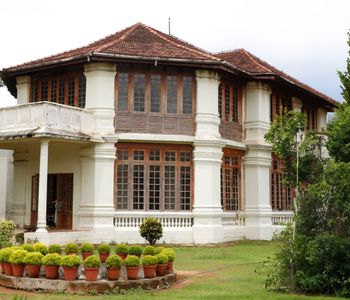
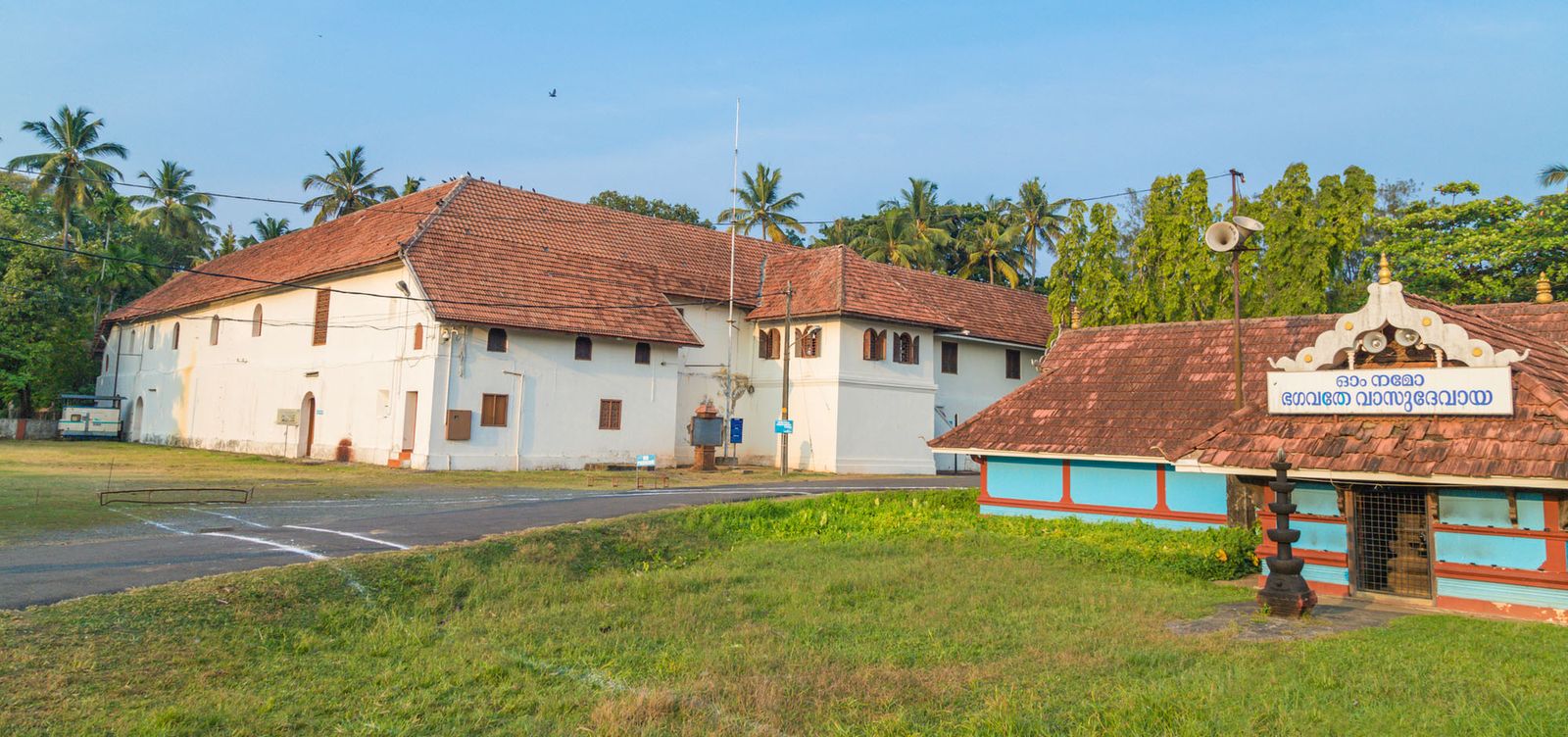
The Dutch get the credit, but the Portuguese built it. That's the first thing worth knowing about Mattancherry Palace, a modest two-storey structure on the backwater-laced edge of old Kochi that looks, from the outside, almost disappointing. No soaring domes. No marble. Just whitewashed walls and sloping tiled roofs that could belong to any old Kerala manor house. Step inside, though, and the walls begin to speak — covered floor to ceiling in some of the finest Hindu murals in India, scenes from the Ramayana painted in mineral pigments that have held their colour for over four centuries. The palace was a diplomatic gift, a bribe really, handed to the Raja of Kochi in 1555. It has been quietly outlasting empires ever since.
A Gift With Strings Attached
The Portuguese didn't build Mattancherry out of generosity. They built it to smooth over the damage they'd done — looting a nearby temple — and to keep the Raja of Kochi on their side as they jostled for control of the spice trade. It worked, for a while. By 1663, the Dutch had taken Kochi, renovated the palace, and inadvertently lent it the name it carries today: the Dutch Palace.
The irony is that almost nothing about the building is Dutch. The layout follows the traditional Kerala nalukettu style, with four wings arranged around a central courtyard that holds a small temple to Pazhayannur Bhagavati, the family deity of the Kochi royal line. The Dutch added a few touches, some carved ceilings and European flourishes, but the bones are entirely local.
The Walls That Stopped You Breathing
The murals are the reason to come. There's no other reason, really, and there doesn't need to be.
Spread across the palace's bedrooms and chambers, the paintings cover roughly 300 square metres of wall space. The largest cycle depicts scenes from the Ramayana, rendered in the distinctive Kerala mural style: figures with almond eyes and curved postures, crowded compositions that leave no space empty, colours made from plant dyes, minerals, and lamp black. Reds that glow. Greens that feel damp. Yellows that seem lit from within.
The subject matter shifts as you move from room to room. In one chamber, Krishna appears with eight arms, playing flute while simultaneously pleasuring his gopis — a composition so charged it still gives visitors pause. In another, scenes from the Puranas unfold in tight narrative bands, each panel doing the work of a paragraph.
Photography is banned inside. Enforce this rule yourself before the guards do. The darkness of the rooms, and the absence of your phone, will force you to actually look.
The Coronation Hall and Its Quiet Weight
The central hall, known as the Durbar Hall or coronation room, is where the Rajas of Kochi were crowned. The wooden floor, polished to a dull gleam by centuries of bare feet, still holds the impression of ceremony. Glass cases now line the walls, displaying royal palanquins, ceremonial umbrellas, weapons, coins, and the formal dress of the Kochi royal family.
The palanquins are worth lingering over. Carved from teak, fitted with glass panels and velvet linings, they carried queens and consorts who were not permitted to be seen by commoners. You can imagine the weight — four bearers, the slow sway through narrow lanes, the muffled world outside the curtains.
Portraits of the Kochi rajas line one wall, painted in a stiff colonial style that sits oddly against the fluid mural work elsewhere in the building. The contrast tells you everything about the two artistic worlds colliding in this place.
What You Won't Find
Don't come expecting grandeur. Mattancherry Palace is small. You can walk through the entire building in thirty minutes if you're moving briskly, an hour if you're paying attention, ninety minutes if you're the kind of traveller who reads every placard.
There are no fountains, no gardens of any consequence, no sweeping staircases. The ceilings are low. The rooms are dim. The windows, where they exist, let in filtered green light from the surrounding trees.
This is not a palace built to impress foreign dignitaries. It was built to function — as a residence, a ritual space, a seat of modest regional power. Its restraint is its character. A Mughal palace it is not, and thank god for that.
The Neighbourhood Is Half the Visit
Mattancherry itself rewards anyone willing to wander. Step out of the palace and turn left, and within five minutes you're in Jew Town, a narrow lane lined with spice warehouses, antique dealers, and the Paradesi Synagogue — built in 1568 and still holding services, though its congregation has shrunk to a handful.
The air here carries the scent of cardamom, pepper, and dried ginger from the wholesale spice godowns that still operate behind timber doors. You'll pass shops selling Kashmiri carpets, Tibetan thangkas, and brass oil lamps stacked from floor to ceiling. Bargain hard. Everyone expects it.
If you've come all the way to Mattancherry, give yourself half a day. The palace alone doesn't justify the trip. The neighbourhood does.
Getting There and Getting In
Mattancherry sits in the old Kochi peninsula, a short ferry ride or a longer road journey from Ernakulam, the modern mainland city where most travellers stay. The ferry is the better option — cheaper, faster, and it drops you within walking distance of the palace gates.
From Fort Kochi, it's a twenty-minute auto-rickshaw ride or a pleasant forty-minute walk along the waterfront if the weather cooperates. In Kerala, the weather often doesn't.
The palace opens from 10 am to 5 pm daily except Fridays, when it closes entirely. The entry fee is modest — a few rupees for Indian nationals, slightly more for foreign visitors. Pay at the small ticket counter near the entrance. There is no line to speak of, even on weekends.
When to Go
Come early. The palace is small, and tour groups can fill the mural rooms uncomfortably by mid-morning. Arriving at opening time gives you twenty minutes of near-silence with the paintings, which is the only way to properly absorb them.
October through February is the dry season, and the most comfortable time to explore Mattancherry on foot. The monsoon months of June to September turn the lanes into rivers and the humidity into a physical presence, but they also empty the palace of crowds. If you don't mind getting wet, the low season has its rewards.
Avoid Fridays. The palace is closed, and nothing you've read or planned can change that.
Why It Stays With You
Mattancherry Palace is not a monument that announces itself. It doesn't need to. What it offers — the murals, the quiet, the sense of a small kingdom that managed to survive three colonial empires with its rituals intact — is rare in India, where bigger and grander often win the guidebook space.
Go for the paintings. Stay for the strange pleasure of a palace that refuses to perform. Then walk out into Jew Town, buy something you didn't know you wanted, and let the rest of Kochi unfold from there. Few places in Kerala give you so much in so little space.