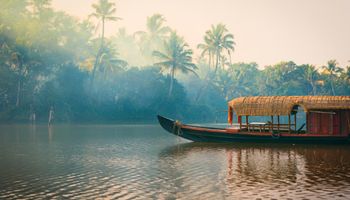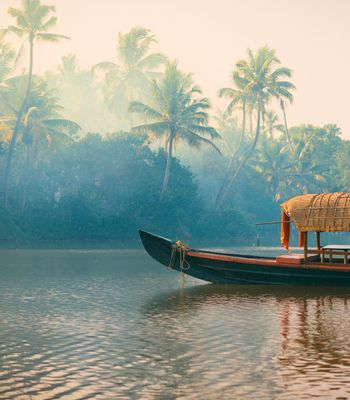
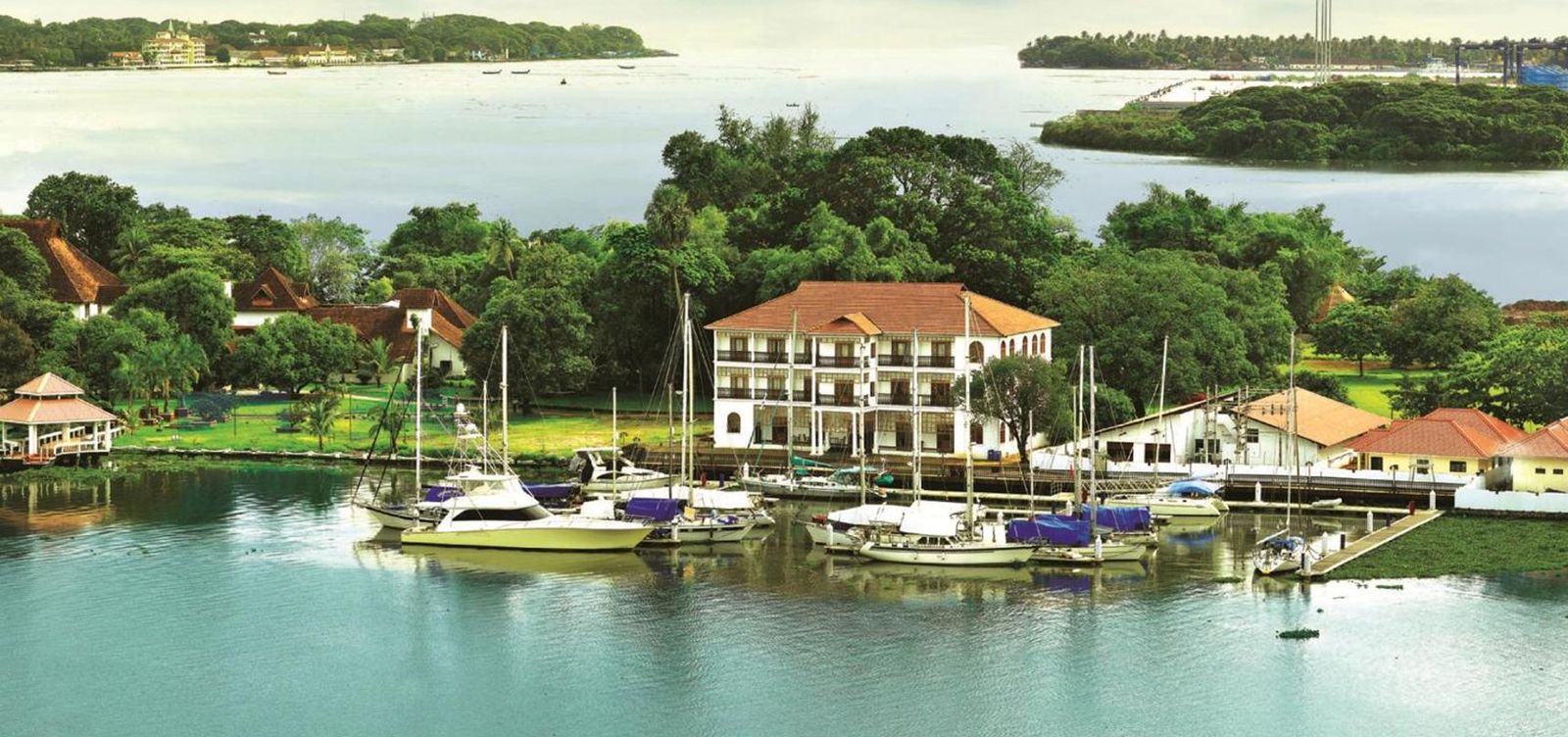
The ferry pulls away from Ernakulam's bustling jetty, and within minutes, the honking auto rickshaws and crowded sidewalks fade behind you. Ahead, a green sliver of land rises from the glassy backwaters — Bolgatty Island, home to one of the oldest surviving Dutch palaces outside the Netherlands. Built in 1744 by traders chasing fortunes in the spice trade, Bolgatty Palace has quietly watched empires rise and crumble from its perch on the Vembanad Lake. Today, operated by the Kerala Tourism Development Corporation (KTDC) as a heritage hotel, it invites you to sleep where governors once schemed, stroll gardens that have rustled in the coastal breeze for nearly three centuries, and witness Kochi's colonial past with your own eyes.
Three Centuries of Power, Spice, and Shifting Flags
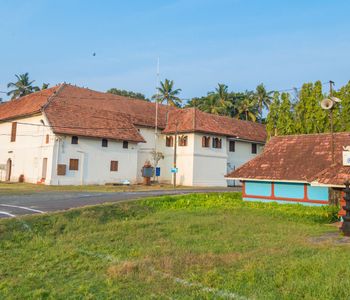
Dutch merchants erected this mansion in 1744, not merely as a home but as a statement. The Dutch East India Company dominated the Malabar Coast's pepper and cardamom trade, and Bolgatty Palace broadcast that influence in brick and mortar. Remarkably, the building predates many of India's best-known heritage landmarks, giving it a rare place in the country's architectural timeline.
When Dutch power faded along these shores, the British East India Company stepped in, claiming the property in 1909 and installing it as the residence of the British Governor. Its island seclusion and commanding harbor views made it the perfect colonial retreat — far enough from the mainland's heat and noise, close enough to keep watch over the port. Throughout those decades, the British reshaped interiors to suit their own tastes, layering English sensibility over Dutch bones.
After India's independence in 1947, the Kerala state government inherited the palace. KTDC eventually transformed it into a heritage hotel, carefully preserving its architectural DNA while throwing open the doors to curious travelers. Walk through its rooms today and you're stepping across nearly three centuries of layered history — each era whispering from the walls.
Where Dutch Restraint Meets Tropical Light
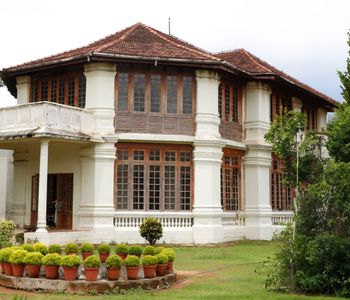
Forget the gilded excess of Rajasthani palaces. Bolgatty Palace speaks in a quieter architectural language — clean lines, whitewashed walls, symmetrical proportions that feel almost meditative. High ceilings soar overhead, wide corridors funnel the salt-tinged coastal breeze, and oversized windows frame squares of green and blue like living paintings.
Step inside, and the coolness of polished floors greets your feet. Wooden beams stretch across the ceilings, darkened with age. Some rooms still hold period furniture and antique fixtures — a carved desk here, a brass lamp there — each piece a tangible thread connecting you to the merchants and governors who once occupied these spaces. Climb to the upper verandas, and the reward is a sweeping panorama: glinting backwaters, distant church spires, cargo ships inching across the harbor.
Modern extensions — a conference center, additional guest wings — have grown around the original structure over the years, yet the Dutch-era palace remains painstakingly intact. That tension between European colonial simplicity and the riot of tropical greenery pressing in from every side is what makes this place so visually magnetic. Linger with it.
An Island Wrapped in Green Silence
Bolgatty Island spans roughly 15 acres, and the moment you step off the ferry, the volume of Kochi drops to a murmur. Coconut palms sway overhead, bougainvillea spills in magenta cascades, and manicured lawns stretch toward the water's edge. It feels less like a spot within a busy port city and more like a private retreat the city forgot to reclaim.
Garden Paths and an Unlikely Golf Course
Wander the shaded walkways and you'll stumble upon a nine-hole golf course — one of the few island golf courses in all of India. It's compact, charmingly low-key, and beloved by golfers who care more about the setting than the scorecard. Beyond the fairways, gravel paths curl through dense tropical foliage, dappled with sunlight filtering through jackfruit and mango canopies. Teak benches dot the route, perfectly positioned for watching wooden boats drift lazily across the lake.
A Sunset That Earns Its Reputation
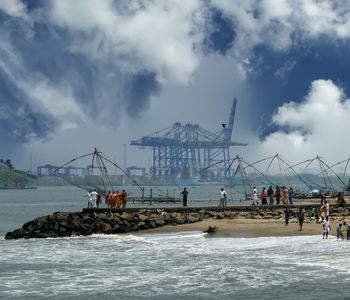
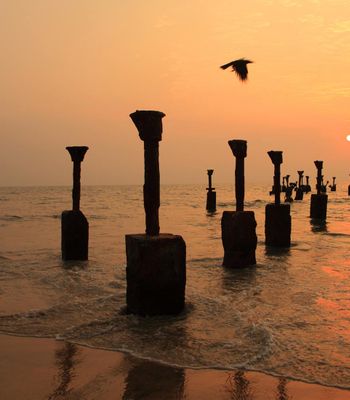
As afternoon fades, make your way to the island's shoreline. Across the water, the silhouettes of Fort Kochi's famous Chinese fishing nets rise and dip like giant mechanical birds. The sky deepens — amber, then molten gold — and its colors pool across the still surface of the lake. Fishing boats glide home in single file, their outlines dark against the glow. With the palace standing tall behind you, every angle becomes a photograph worth keeping.
A Living Museum of Multicultural Kochi
Kochi has welcomed — and absorbed — traders from the Middle East, China, Portugal, the Netherlands, and Britain over the centuries. Each wave left fingerprints on the city's food, faith, and architecture. Bolgatty Palace is a direct artifact of that layered exchange, a physical reminder that this corner of India has been global for far longer than the word "globalization" has existed.
Keep an eye on the palace's event calendar. The grounds occasionally host traditional Kerala art performances — the dramatic, painted faces of Kathakali dancers or the fluid grace of Mohiniyattam. Experiencing classical dance under the glow of lanterns, framed by centuries-old colonial walls, creates the kind of memory that doesn't fade easily. If your dates align, don't miss it.
Locals, too, hold this place close. It's one of Kochi's most coveted venues for weddings and celebrations, where the waterfront setting and heritage atmosphere transform even a simple gathering into something cinematic.
Your Practical Guide to Getting There and Settling In
Regular ferries depart from Kochi's High Court Jetty and Ernakulam Boat Jetty throughout the day, operated by the Kerala State Water Transport Department. The crossing takes just 10 to 15 minutes — long enough to snap a few harbor photos, short enough to feel effortless. A road bridge also connects the island to the mainland, so taxis and auto rickshaws can deliver you directly to the palace gate if you prefer dry land.
When the Weather Is on Your Side
Kerala's tropical warmth never truly disappears, but October through March brings the most comfortable conditions — milder temperatures, lower humidity, and skies scrubbed clean after the monsoon. Outdoor exploration feels like a pleasure rather than an endurance test during these months. Visiting between June and September? Expect torrential monsoon downpours, but also a landscape so intensely green it almost vibrates. There's a moody beauty to the rain-drenched palace that has its own devoted fans.
Sleeping Inside History
Because the palace operates as a KTDC heritage hotel, you can do more than visit — you can stay the night. Accommodations range from heritage rooms tucked inside the original Dutch-era building to modern cottages and waterfront villas scattered across the grounds. For the full experience, request a room in the original wing: falling asleep beneath centuries-old wooden beams, with the soft lap of backwater waves outside your window, is worth every rupee. Rates shift with the season, so book ahead during peak travel months (December through February) to secure your spot.
What's Just a Ferry Ride Away
From Bolgatty Island, Kochi's greatest hits are tantalizingly close. Hop a ferry to Fort Kochi and lose yourself among colonial churches, narrow spice-scented lanes, and those iconic Chinese fishing nets silhouetted against the sky. The Mattancherry Palace and the centuries-old Jewish Synagogue in Jew Town sit just a short drive beyond. Spend a full day exploring these landmarks, then let the evening ferry carry you back to the island's hush — the contrast alone is worth planning for.
Slow Down, and Let the Island Do Its Work
Here's the secret to Bolgatty Palace: it rewards stillness. Resist the urge to check every box in an hour. Instead, find a bench along the waterfront and watch egrets skim the lake's surface. Follow a garden path with no destination in mind. Order a cup of Kerala's rich, cardamom-laced tea and cradle it on the veranda as the afternoon light softens around you. This place has been standing for nearly 280 years — it has patience to spare, and it quietly asks the same of you. Leave, and you'll carry home something rare: not just photos of a beautiful palace, but a deeper, slower understanding of the remarkable city that grew up around it.