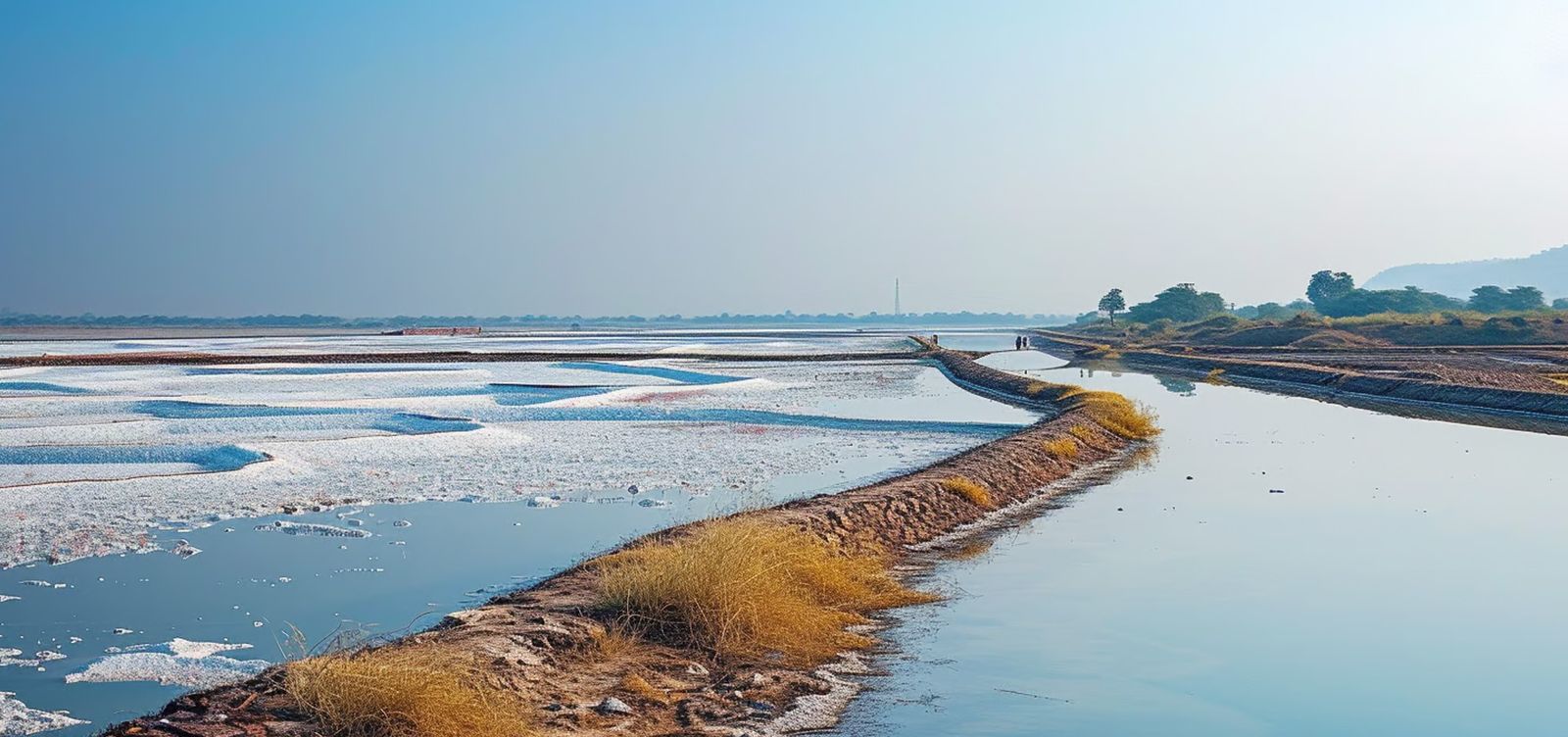
The first thing that hits you is the silence — vast, unbroken, almost sacred. Then your eyes adjust, and there it is: a shimmering expanse of saline water stretched across the Thar Desert floor like a secret the sand has been keeping for centuries. Pachpadra Lake, tucked near the town of Barmer in western Rajasthan, is nothing like the golden dune-scapes you'd expect from this corner of India. It's stranger, quieter, and far more captivating.
A Lake That's Been Feeding India for Centuries
Beneath that glassy, sun-scorched surface lies one of the purest natural salt deposits in the entire country. Salt production here isn't some recent enterprise — it stretches back hundreds of years, woven into the land and its people like thread through fabric.
The Kharwals, a local community of hereditary salt harvesters, have been drawing crystalline treasure from this lake bed for generations. Their wooden tools haven't changed. Their techniques haven't wavered. Standing at the lake's edge, watching a Kharwal worker scrape salt from the earth with practiced hands, you feel the weight of a tradition that refuses to be forgotten.
This isn't just a body of water sitting quietly in the desert. It's a living archive — and visiting it means stepping into a story that's still being written.
Where the Desert Turns to Crystal
Under the relentless Rajasthani sun, Pachpadra Lake becomes almost hallucinatory. Its saline waters throw light back at the sky like a massive desert mirror, and depending on the season, the surface shifts between pale silver and soft, iridescent blues that feel impossible in this arid landscape.
Salt Flats That Look Like Another Planet
Walk toward the shoreline and the ground beneath your feet transforms. Thick crusts of white salt radiate outward from the water's edge, cracking and glinting in geometric patterns that make you feel like you've wandered onto the surface of some distant moon. The contrast is staggering — harsh, tawny desert on one side, this crystalline alien terrain on the other.
Run your fingers along a salt formation. Feel the rough, cold texture against your skin. It's hard to believe something this surreal exists just a few hours from Jodhpur.
Wings Over the Salt Flats
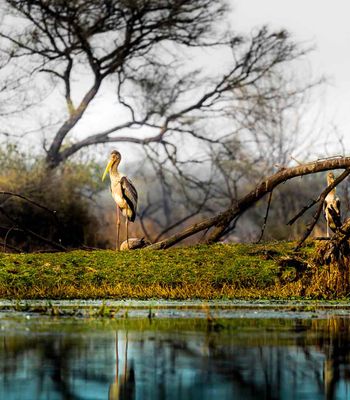
Here's what surprises most visitors: despite the punishing desert climate, Pachpadra Lake teems with birdlife. The saline shallows act as a magnet along migratory routes, drawing species you wouldn't expect to find within a hundred miles of here.
- Flamingos wading through the shallows in loose, pink-tinged clusters
- Waders and shorebirds picking their way along the muddy fringes
- Desert birds darting through the surrounding scrubland
- Egrets and herons standing impossibly still near the water's edge
Hardy shrubs, desert grasses, and salt-tolerant plants form a thin but stubborn green border around parts of the lake — just enough to sustain this fragile ecosystem. Bring binoculars. You'll need them.
The Ancient Art of Pulling Salt from the Earth
No experience at Pachpadra compares to watching the Kharwal salt harvesters at work. There's a rhythm to it — the scrape of wood against lake bed, the soft splash of brine, the careful stacking of salt mounds drying white under the sun. The air itself tastes faintly mineral, a sharp tang on your lips that reminds you exactly where you are.
Salt collected here has historically been prized across the subcontinent for its exceptionally high sodium chloride content. Communities throughout Rajasthan have preferred it for cooking and preservation for as long as anyone can remember. Strike up a respectful conversation with one of the workers, and you'll hear stories passed down through families — tales of monsoons that flooded the flats, of seasons when the salt ran thick and sweet.
These aren't museum exhibits. They're people carrying forward a living tradition, and their generosity in sharing it makes the encounter feel genuinely rare.
How to Spend Your Time at This Desert Gem
Don't come expecting manicured boardwalks or souvenir shops. Pachpadra Lake's raw, unpolished character is precisely what makes it extraordinary. Here's how to make the most of it.
Golden Hour on the Salt Flats
Arrive early or stay late — that's the photographer's rule here. When the low desert sun spills across the salt formations at dawn or dusk, the entire landscape ignites in amber and copper. Long shadows stretch from the Kharwal workers as they move through their routines, and the lake's surface turns molten gold. Even a phone camera can capture something breathtaking in this light.
Morning Birding by the Shallows
Winter months transform the lake into a birder's haven. Bundle up against the cool desert morning air, position yourself along the water's edge before sunrise, and wait. The first flamingos usually appear as pale silhouettes against the brightening sky, followed by waves of shorebirds settling into the mudflats. Patience rewards you generously here.
Conversations That Stay With You
Some of the richest moments at Pachpadra happen off-script — a Kharwal elder demonstrating the proper grip on a harvesting tool, a child playing near the salt mounds, a local guide explaining how the monsoon reshapes the lake each year. Approach with curiosity and respect, and these small human exchanges become the memories you'll carry home longest.
Getting There Without the Headaches
Pachpadra Lake sits near the town of Pachpadra in Barmer district. From Jodhpur, the drive takes roughly three to four hours by road — manageable as a day trip, though an overnight stay in the Barmer area lets you soak in the landscape without rushing.
State-run buses connect Barmer to surrounding cities, but hiring a private car or taxi gives you far more freedom to explore at your own pace. Barmer also has its own railway station with train connections to both Jodhpur and Jaisalmer, so you can weave the lake into a broader western Rajasthan itinerary. From Barmer town, auto rickshaws and taxis make the final leg easy — just be prepared for some rough road stretches. A sturdy vehicle makes all the difference.
Why This Quiet Desert Lake Stays With You
Pachpadra Lake doesn't shout for your attention the way Jaisalmer's fort or Jodhpur's blue city does. It whispers. It asks you to slow down, to notice the way light moves across salt, to listen to the crunch of crystals under your boots, to appreciate a craft that has survived centuries of change.
Pair your visit with other attractions in the Barmer region, and you'll discover a side of western Rajasthan that most travelers never see — raw, unhurried, deeply human. Whether the birdlife drew you in, the photography pulled you closer, or the Kharwal salt harvesters made you stay longer than planned, one thing becomes clear: the best travel moments in Rajasthan aren't always behind palace walls. Sometimes they're out on a shimmering salt flat, under an impossibly wide sky, in a place you almost didn't visit.