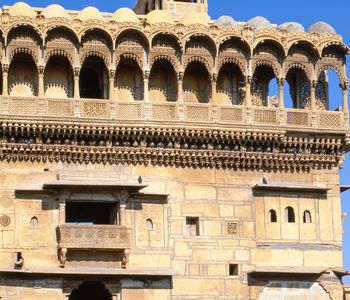
Two brothers. One mansion. And a challenge that would test their artistry to its limits. In 1885, master craftsmen Hathi and Lulu were each given one half of a grand haveli to build — working independently, without comparing notes. The result? A golden sandstone masterpiece in the heart of Jaisalmer where both halves look nearly identical from a distance, yet reveal delightfully subtle differences the closer you look. Welcome to Nathmal Ki Haveli.
A Rivalry Carved in Stone
Commissioned as a residence for Prime Minister Diwan Mohata Nathmal — a powerful statesman in the court of the Maharawal of Jaisalmer — this haveli was never meant to be ordinary. Its very construction was a creative dare: two brothers, two halves, zero collaboration.
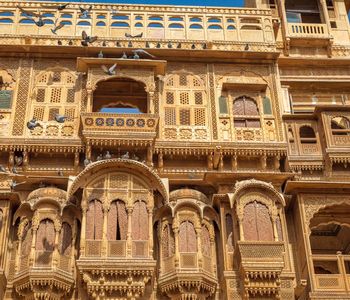
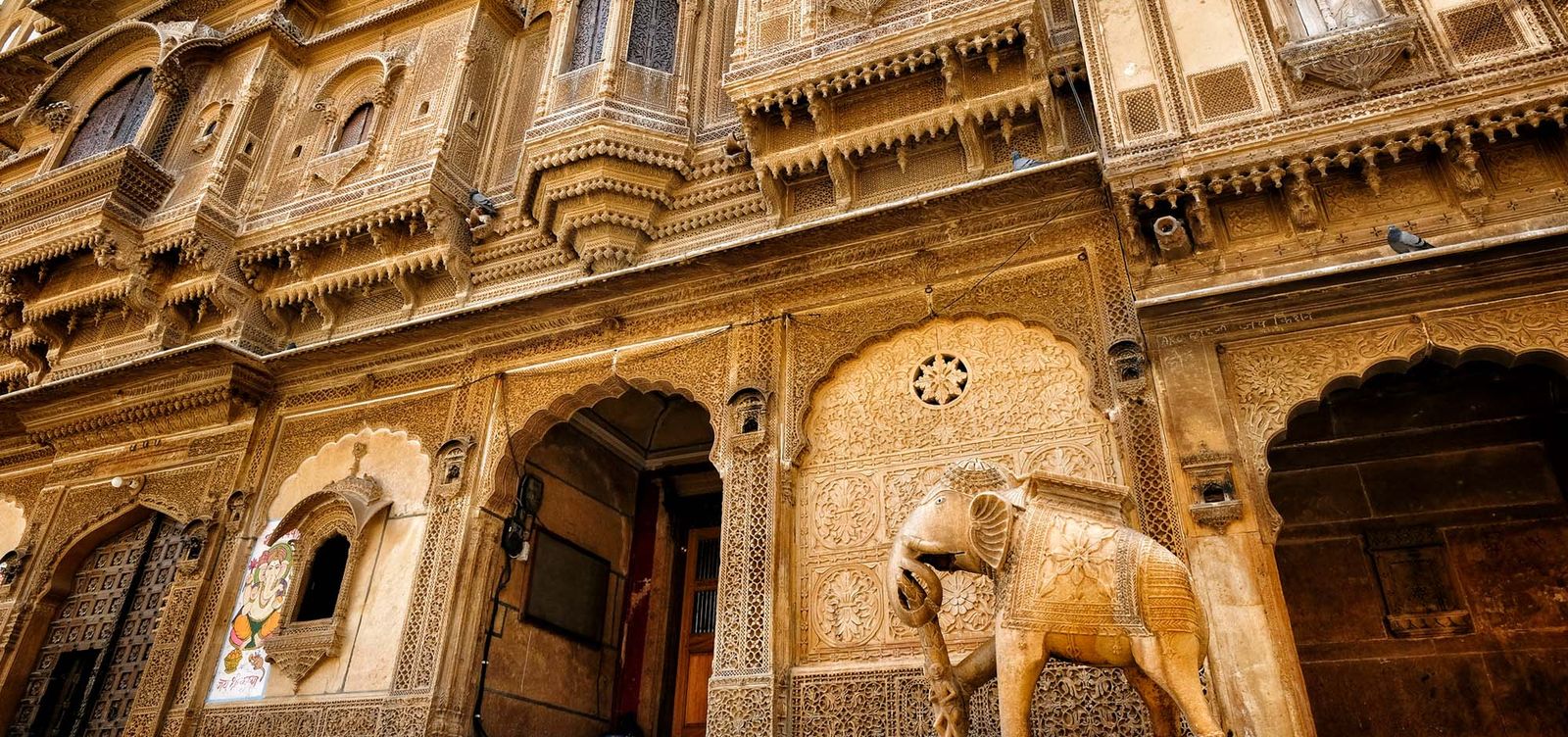
Stand before the façade and you'll swear the symmetry is flawless. But lean in. Trace the carvings with your eyes. One side features an elephant with its trunk curled slightly differently. A floral motif spirals clockwise here, counterclockwise there. These quiet imperfections aren't mistakes — they're signatures, proof of two independent imaginations arriving at the same vision through separate paths.
That story alone makes Nathmal Ki Haveli worth the visit. But the building has so much more to say.
When Sandstone Catches Fire
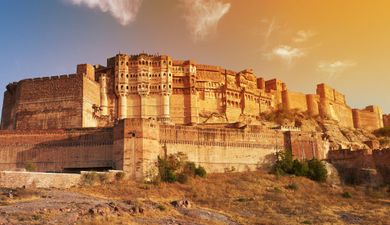
Late afternoon in Jaisalmer is alchemy. The desert sun drops low, and the yellow Jaisalmer sandstone that makes up this haveli doesn't just glow — it ignites. Every carved surface seems to radiate warmth from within, as if the building is breathing out the heat of centuries.
A Façade That Tells a Thousand Stories
Run your gaze across the exterior and prepare to be astonished. Artisans chiseled floral garlands, marching elephants, rearing horses, and soldiers into stone so finely it could pass for lacework. Then there's the detail that stops everyone mid-step: carved depictions of motor vehicles. In the 1880s. These craftsmen were etching the future into sandstone before most of India had ever seen an automobile.
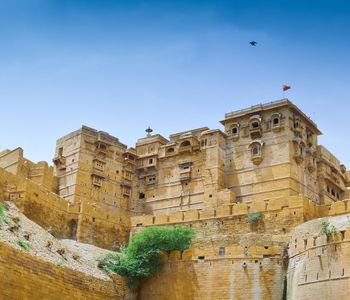
Above, ornate jharokhas — projecting balconies laced with delicate stone screens — jut out over the street. In their day, these allowed the household's women to watch the bustle of the bazaar below without being seen. The interplay of shadow and light through that lattice is reason enough to keep looking up.
Behind the Carved Doors
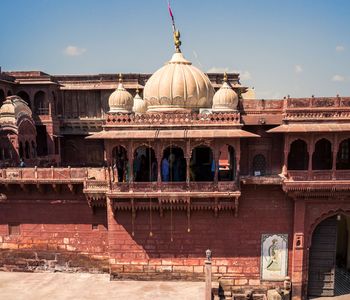
Step inside, and the artistry only intensifies. Painted murals in rich ochre and indigo sweep across walls. Tiny mirrors wink from decorative alcoves, catching stray beams of sunlight. Yellow sandstone columns rise into arched doorways, framing rooms where Rajput boldness meets Mughal refinement in every brushstroke and carved motif.
Miniature paintings and ornamental objects are displayed throughout, offering a window into the elegant daily life of 19th-century Rajasthani nobility. Keep in mind that descendants of the original family still live in parts of the haveli, so certain rooms remain off-limits. What you can see, though, is more than enough to leave you speechless.
More Than Beautiful Walls
Havelis weren't just homes in Rajasthan — they were declarations. Of wealth. Of taste. Of influence. When powerful merchants and ministers like Diwan Mohata Nathmal commissioned these mansions, they weren't simply building residences; they were fueling an entire ecosystem of artisans known as Silawats, master stone carvers whose skills passed from father to son across generations.
Jaisalmer's position along the ancient Silk Route brought waves of prosperity that transformed the city into a canvas of carved sandstone. Nathmal Ki Haveli is one of the finest surviving chapters of that golden era. Walking through it, you're not just admiring architecture — you're touching the economic lifeline that sustained an entire desert civilization.
Your Game Plan for Visiting
A little planning goes a long way toward making this experience unforgettable. Here's what you need to know before you go.
Hours and Entry
The haveli generally welcomes visitors from around 8:00 a.m. to 6:00 p.m. daily. Since it remains partially private property, hours can shift — check with your hotel or a local tourism office before heading over. A nominal entry fee helps maintain this aging treasure, and it's money well spent.
When to Time Your Trip
- October through February: The sweet spot. Cool, crisp air makes wandering Jaisalmer's lanes a pleasure rather than an endurance test.
- March to April: Warming up, but early morning visits remain comfortable — and the crowds thin out.
- May through September: Temperatures regularly soar past 104°F. If you're here in summer, hit the haveli at dawn before the heat becomes punishing.
Photographers, take note: the façade practically performs during golden hour. Arrive in the soft light of early morning or late afternoon and watch the sandstone shift from honey to amber to molten gold right before your lens.
Finding Your Way There
Nestled deep in Jaisalmer's old city, Nathmal Ki Haveli sits within a tangle of narrow lanes that feel like they haven't changed in a hundred years. That's part of the charm.
How to Get There
- On foot: Staying near Jaisalmer Fort? Lace up your walking shoes. The haveli is a short, atmospheric stroll through lanes buzzing with shopkeepers and the scent of street food.
- Auto rickshaw: The most fun way to zip through the old city's tight streets — affordable and easy to flag down.
- Taxi: Readily available from hotels across town for a more comfortable ride.
Arriving from farther afield? Jaisalmer Railway Station connects to Jaipur, Jodhpur, and Delhi. From the station, an auto rickshaw will deliver you to the haveli's doorstep in minutes.
Linger, Wander, Sip Chai
Don't rush away after your visit. Nathmal Ki Haveli sits within easy reach of the iconic Jaisalmer Fort, the sprawling Patwon Ki Haveli, and the distinctive Salim Singh Ki Haveli — together, they form a masterclass in Rajasthani architecture that fills an entire day with wonder.
Between landmarks, let yourself drift through the surrounding market lanes. Artisans spread hand-embroidered textiles across their stalls while silver jewelry catches the light from every direction. The sharp clink of a metalworker's hammer mixes with Bollywood tunes from a tinny radio. And somewhere nearby, a tea vendor is already pouring masala chai into small clay cups — the ginger-and-cardamom steam curling into the dry desert air. Grab one. Lean against a warm sandstone wall. Let Jaisalmer settle into your bones.
Nathmal Ki Haveli rewards those who slow down. Crouch to examine a carved rosette near the base of the façade. Count the elephants. Spot where one brother's work ends and the other's begins. Every detail you discover adds another layer to a story that's been unfolding in golden stone for nearly a century and a half — and it's waiting for you to become part of it.