The desert wind carries whispers here — through crumbling doorways, across sandstone walls bleached by two centuries of sun, and down a main street where 1,500 people once lived, laughed, and then vanished in a single night. Kuldhara Village, perched 18 kilometers west of Jaisalmer, isn't just an abandoned settlement. It's a mystery written in stone, and every corner you turn poses a question that nobody has fully answered.
Whether you chase history, live for that perfect photograph, or simply crave the kind of experience that raises the hair on the back of your neck — Kuldhara delivers something no other place in India quite can.
A Curse, a Tyrant, and 1,500 People Who Disappeared
Founded around the 13th century, Kuldhara thrived for generations under the stewardship of the Paliwal Brahmin community. These weren't ordinary desert dwellers — they were prosperous, educated, and deeply rooted in the harsh beauty of the Thar. Their fields were green. Their granaries were full. Life was good.
Then came 1825, and a man named Salim Singh.
A minister of the Jaisalmer state, Salim Singh was as powerful as he was ruthless. Local legend holds that he set his sights on the village elder's daughter, demanding her hand in marriage. Refuse, he warned, and crushing taxes would follow. The Paliwal Brahmins faced an impossible choice — and they made a breathtaking one.
They left. All of them. Overnight. Every family, every elder, every child — gone before dawn. And as they walked away from everything they'd built, they are said to have placed a curse on Kuldhara: no one would ever successfully settle here again.
Believe the curse or don't — but the fact remains that nearly 200 years later, Kuldhara sits empty. The Archaeological Survey of India now guards these ruins, preserving the eerie silence and the stubborn sandstone bones of a community that chose dignity over surrender.
Stone Streets That Still Remember
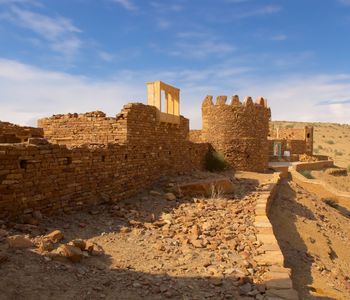
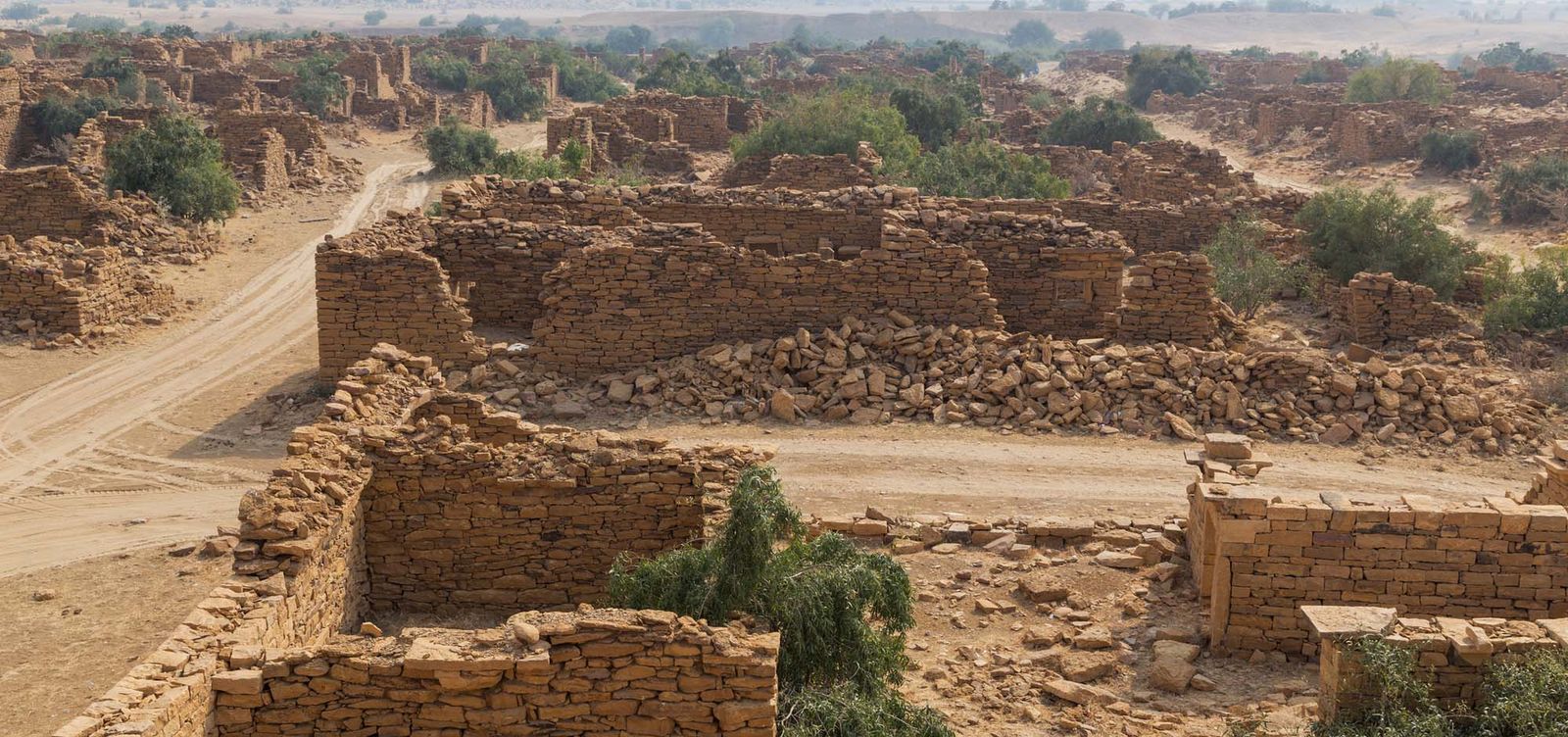
Step through the entrance and the modern world drops away. The crunch of sand beneath your shoes is the loudest sound you'll hear. Kuldhara's original layout remains remarkably intact — and what strikes you first isn't the decay, but the order.
A Village Built with Purpose
A central road runs straight through the settlement's heart, flanked on both sides by rows of homes standing at careful, deliberate intervals. The Paliwal Brahmins were brilliant urban planners — their village feels less like a desert outpost and more like a community designed with intention, precision, and pride.
Homes That Still Tell Stories
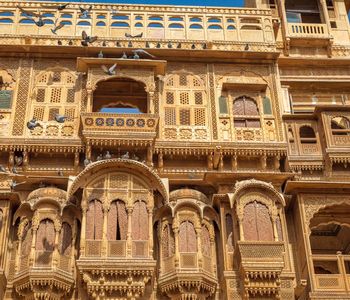
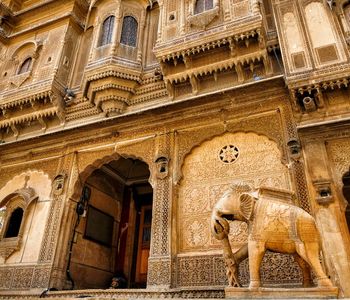
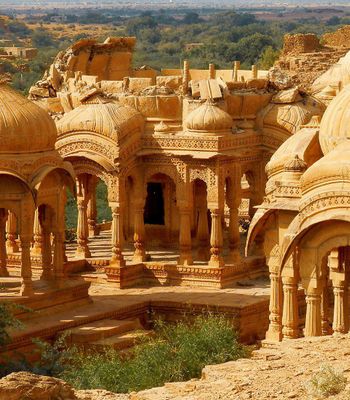
Run your fingers along the sandstone walls (gently — they're fragile) and you'll feel the grain of locally quarried stone, warm from the Rajasthan sun. Many structures have partially surrendered to time, but several doorways still frame empty rooms, and intricate carvings cling to facades like stubborn memories.
Look closely at the foundations and you'll spot something remarkable: underground storage chambers. In a desert where water and grain meant survival, the Paliwal Brahmins engineered cool, subterranean vaults to preserve both. It's the kind of detail that makes you stop and reconsider everything you assumed about "simple" village life.
The Temple at the Heart of It All
Near the village center stands a small temple — one of the best-preserved structures in Kuldhara. There's a hush here that feels different from the silence elsewhere, something heavier, more deliberate. Travelers often linger at this spot, drawn by the sense that the spiritual pulse of an entire community still echoes faintly between these walls.
More Than a Ghost Story
It's tempting to reduce Kuldhara to its supernatural reputation — the cursed village, the haunted ruins. But linger a little longer, and a far more powerful story emerges.
The Paliwal Brahmins were agriculturally innovative in one of the planet's least forgiving landscapes. They were economically self-sufficient and fiercely devoted to their cultural values. When an unjust authority demanded their compliance, they didn't fight and they didn't fold. They walked away — together, as one community — and left behind everything rather than sacrifice their honor.
That act of collective defiance resonates across centuries. Local guides, many of whom are passionate storytellers, will urge you to look past the ghost tales and sit with the human narrative instead. Let them. It's the real reason Kuldhara stays with you.
Everything You Need Before You Go
A little planning turns a good visit into an unforgettable one. Here's what to know before you set out.
Hours and Entry
- Kuldhara opens daily from 8:00 a.m. to 6:00 p.m.
- A small entry fee at the gate helps fund the site's ongoing preservation.
- The Archaeological Survey of India manages the grounds, so stick to official visiting hours.
How to Get There
Just 18 kilometers from Jaisalmer's city center, Kuldhara makes for an easy half-day excursion. You've got options:
- Hire a private taxi or auto-rickshaw from Jaisalmer — comfortable, straightforward, and affordable.
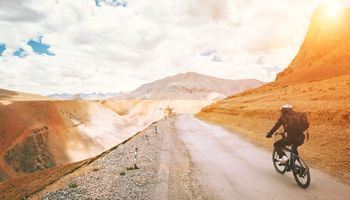
- Rent a two-wheeler and ride through open desert roads with the wind and dust on your skin — the more adventurous route.
- Join an organized tour that bundles Kuldhara with nearby desert attractions, a smart choice if you want logistics handled for you.
When the Desert Plays Nice
October through February is your sweet spot. Temperatures cool to a comfortable range, and you can wander the ruins without the sun beating you into retreat. Summers — April through June — push past 100°F regularly, turning an exploratory stroll into an endurance test. If you must visit in the heat, carry plenty of water, wear a hat, and keep your explorations brief.
Photographers, take note: arrive about an hour before the 6:00 p.m. closing time. As the sun drops toward the dunes, it drenches the sandstone in deep amber and honey gold — the kind of light that makes every crumbling wall look like it belongs in a gallery. You'll still have time to explore, and your camera will thank you.
Build a Full Day Around the Desert
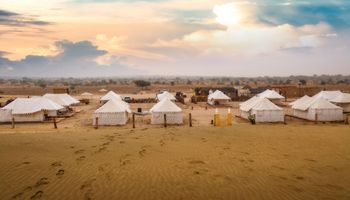
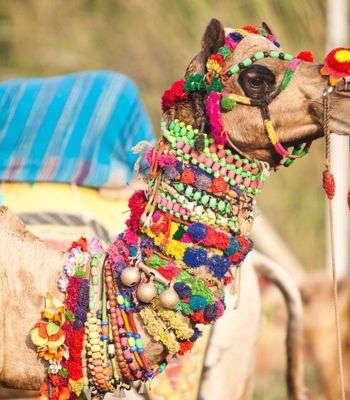
Kuldhara sits along the road to the Sam Sand Dunes, which means combining both in a single day trip feels natural and unhurried. Explore the ruins in the cooler morning hours, then continue west to mount a camel or bounce through the iconic dunes on a jeep safari as the afternoon unfolds.
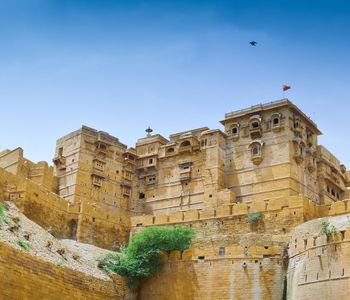
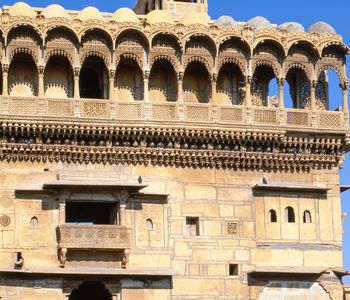
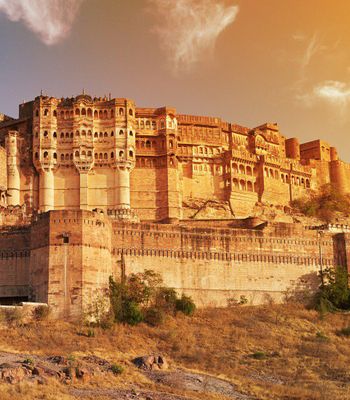
Back in Jaisalmer, the golden ramparts of Jaisalmer Fort glow against the evening sky, and the ornate stonework of Patwon Ki Haveli rewards a slow, appreciative visit. Gadisar Lake, meanwhile, offers a tranquil counterpoint to the day's desert adventures — a place to sit, breathe, and watch the light fade over the water.
Some tour operators run nighttime visits to Kuldhara, particularly around festivals and weekends. Walking through those empty streets after dark is atmospheric in a way that daylight can't replicate — but book only with reputable agencies who provide proper guidance and safety measures throughout the excursion.
Tread Lightly, Leave Nothing Behind
These walls have survived almost 200 years of wind, heat, and time. They won't survive carelessness. Resist the urge to climb crumbling structures or lean against fragile facades. Carry your trash out with you — every wrapper, every bottle. The silence of Kuldhara is part of its power, and keeping the site clean protects that atmosphere for everyone who follows.
Respect here isn't just courtesy. It's preservation.
Long after you've left the Thar behind, Kuldhara has a way of surfacing in quiet moments — the memory of golden light on empty doorways, the weight of a story that refuses to be forgotten, the absolute stillness of a place where 1,500 voices fell silent in a single night. Add it to your Rajasthan itinerary. Walk through a chapter of history that time has never truly been able to close.