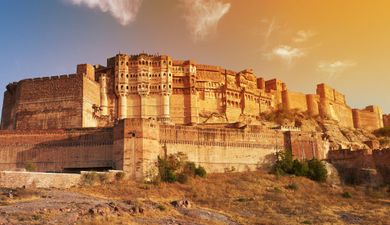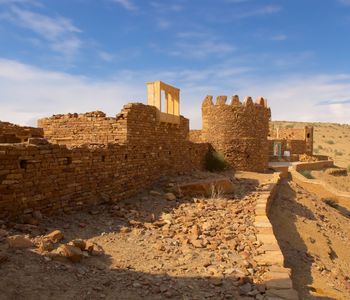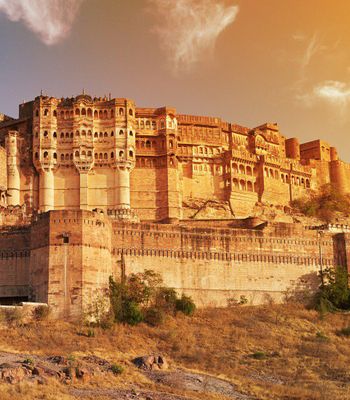
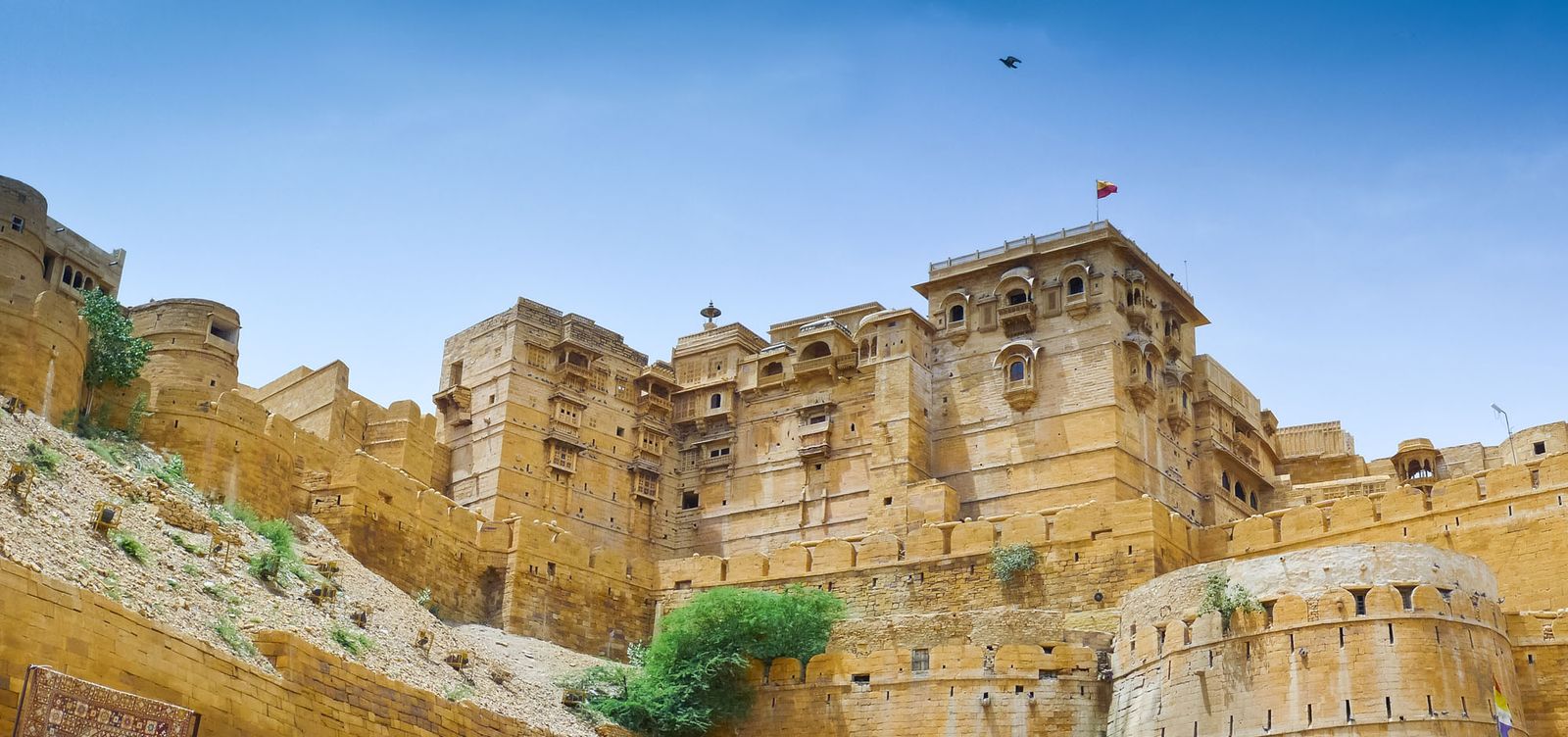
The sun hits the sandstone walls and the entire fortress ignites — a massive golden mirage shimmering above the Thar Desert, so luminous it almost doesn't look real. Jaisalmer Fort, known locally as Sonar Quila (the Golden Fort), isn't some dusty relic frozen behind velvet ropes. This is one of the few living forts on the planet, with nearly 3,000 people carrying on daily life within its ancient walls — hanging laundry from carved balconies, brewing chai in centuries-old kitchens, and greeting you with warm namastes as you wander past their doorsteps.
A Fortress Born from Prophecy
In 1156 AD, the Rajput ruler Rawal Jaisal climbed Trikuta Hill and claimed it for his kingdom — guided, legend says, by the blessing of a holy sage who declared this very spot destined for greatness. He abandoned his previous fort entirely, staking everything on this windswept ridge above the desert.
What followed were centuries of siege, conquest, and fierce resilience. The Delhi Sultanate stormed these walls. Mughal armies tested their strength. Alauddin Khilji's forces launched devastating assaults in the early 14th century. Yet the fort held — battered but unbroken, a sandstone monument to Rajput defiance.
Eventually, the British Empire added its own chapter to the story. Through every upheaval, Jaisalmer Fort endured, earning its place among UNESCO's World Heritage Sites in 2013 as part of the Hill Forts of Rajasthan.
When Sandstone Turns to Gold
Here's what no photograph fully captures: the way the fort changes throughout the day. Built entirely from yellow Jurassic sandstone, it starts the morning as a pale honey-colored silhouette against the blue desert sky. By midday, harsh sunlight turns it into blazing gold. Then, as the sun dips low, the entire structure softens into a deep, warm amber — almost as if the walls themselves are exhaling after a long, hot day.
Walls That Command the Desert
Walk along the outer perimeter — a staggering 1.5 kilometers reinforced by 99 imposing bastions — and you'll feel the sheer audacity of this construction. These circular towers weren't decorative; they were strategic, giving defenders sweeping sightlines across the flat desert terrain. The fortifications rise nearly 100 feet above Trikuta Hill, and from their ramparts, the Thar stretches to the horizon in every direction, an ocean of sand and scrub with nothing to interrupt the view.
A City Within the Walls
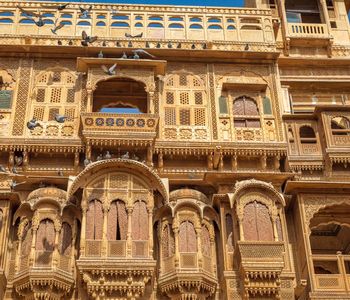
Step through the main gate and the desert silence gives way to something completely different: the hum of a living neighborhood. Narrow cobblestone lanes twist between ornately carved havelis, past Jain temples so detailed you could spend an hour studying a single pillar, and into tiny squares where children play and vendors sell embroidered textiles in jewel-bright colors.
Don't miss these treasures tucked inside the fort:
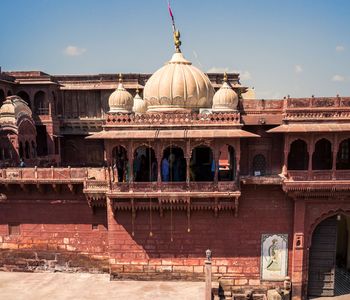
- Raj Mahal (Royal Palace): A multi-story palace dripping with delicate latticework, mirrored tiles, and painted murals that still shimmer with the extravagance of Rajput royalty. Stand in the upper chambers and peer through the carved jharokha windows — the same vantage point queens once used to watch processions below.
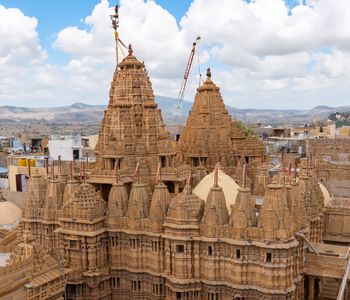
- Jain Temples: Seven intricately carved temples dedicated to Jain tirthankaras, where the yellow sandstone has been sculpted into such impossibly fine detail it looks like lacework rather than stone. The cool, incense-scented interiors offer welcome refuge from the desert heat.
- Laxminath Temple: Dedicated to Lord Vishnu and Goddess Lakshmi, this is no museum piece — locals still worship here daily, filling the air with the soft clang of temple bells and the fragrance of marigold garlands.
Where Ancient Craft Still Lives and Breathes
What makes Jaisalmer Fort extraordinary isn't just its age — it's the fact that it refuses to become a monument. Artisans still sit cross-legged in doorways, stitching traditional embroidery with threads that catch the light. Leatherworkers shape camel-hide into sandals and journals using tools their grandfathers used. Silversmiths tap out delicate jewelry in workshops no bigger than a closet, their tiny hammers creating a rhythm that echoes off the sandstone walls.
Buying directly from these craftspeople isn't just shopping — it's participating in a tradition that has survived wars, empires, and centuries of change. UNESCO's World Heritage designation underscores just how irreplaceable this living culture truly is.
How to Get to the Golden Fort
Reaching Jaisalmer is half the adventure, especially if you choose the right route:
- By Air: Jaisalmer Airport receives regular flights from Jaipur, Delhi, and Mumbai — the fastest way to get here if you're covering long distances.
- By Train: Several express trains connect Jaisalmer to Jodhpur, Jaipur, and Delhi. Book the overnight journey if you can — waking up to the first light of sunrise spilling across the Thar Desert through your train window is worth setting an alarm for.
- By Road: State buses and private taxis link Jaisalmer to Jodhpur and other Rajasthan cities. The highway cuts straight through open desert, and as the landscape grows drier and more dramatic, the anticipation builds until that first golden glimpse of the fort appears on the horizon.
What You'll Pay and When the Gates Open
Because this is a living community, the fort itself remains open throughout the day — you can wander its lanes from dawn until well after dark. Specific attractions like the Royal Palace Museum charge separate entry fees, with a nominal rate for Indian nationals and a slightly higher one for international visitors. Prices are updated periodically, so check the latest rates before you arrive. One practical tip: bring cash. Some ticket counters inside the fort don't accept digital payments.
Timing Is Everything
The desert doesn't forgive bad timing. Visit wisely and the fort rewards you tenfold:
- October to February: This is your sweet spot. Winter temperatures hover between a comfortable 45°F and 77°F, perfect for unhurried exploration without the punishing heat. Evening light during these months is particularly spectacular against the golden walls.
- February to March: Time your trip to coincide with the annual Desert Festival and you'll witness Jaisalmer at its most exuberant — camel races kicking up clouds of sand, folk musicians filling the night air with haunting melodies, and dancers swirling in brilliant reds and oranges under a star-drenched sky.
- April to June: Temperatures regularly rocket past 110°F. If summer is your only option, explore early in the morning or late in the evening, and spend midday in the shade of the Jain temples with a cold lassi in hand.
Beyond the Fort Walls
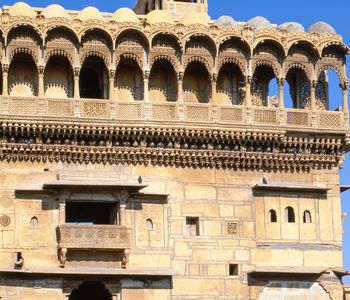
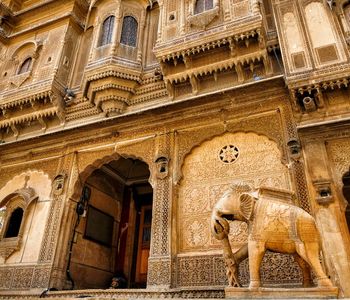
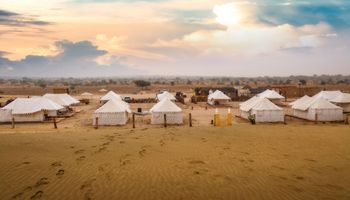
Save at least a day for what lies beyond the ramparts. At the Sam Sand Dunes, roughly 40 kilometers west, you can climb onto a camel and ride into the open desert as the sky turns from blazing orange to deep violet — then sleep under a canopy of stars so dense it feels like the Milky Way might brush your face. Back in town, Patwon Ki Haveli — a cluster of five elaborately carved mansions — will stop you mid-step with its impossibly detailed façade, every inch of sandstone sculpted into flowers, elephants, and geometric patterns.
Together, these landmarks weave an itinerary that could easily fill three or four days — and still leave you wanting more.
Jaisalmer Fort isn't something you simply visit. You feel it — the warmth of sun-baked stone under your fingertips, the muezzin's call drifting over rooftops at dusk, the taste of saffron-laced kulfi from a street vendor who knows your name by your second visit. Sonar Quila has been standing for nearly nine centuries, and once you've walked its lanes, a piece of it stays with you — golden and glowing — long after the desert dust has been shaken from your shoes.