The wind carries nothing but silence here. No vendors, no temple bells, no chatter of daily life — just the low moan of desert gusts sweeping through doorways that haven't welcomed anyone home in nearly two hundred years. Khaba Fort, rising from the sun-scorched sands about 40 kilometers from Jaisalmer, is the kind of place that stops you mid-step and makes you whisper, What happened here?
This abandoned fort and its surrounding ghost village hold the answer — a story of pride, defiance, and an entire community that vanished in a single night. If you're the kind of traveler who craves something raw and off the beaten path, Khaba Fort will stay with you long after the desert dust has been shaken from your shoes.
A Community That Chose to Disappear
The story begins with the Paliwal Brahmins — a remarkably prosperous and intellectually gifted community that once thrived across 84 villages scattered through the Thar Desert. These weren't people merely surviving the harsh sands. They mastered them. Through ingenious agricultural techniques, sharp trade acumen, and striking architectural skill, they coaxed fertility from one of the most unforgiving landscapes on Earth.
Then, sometime in the early 19th century, everything changed. Salim Singh, the local ruler, tightened his grip with crushing taxes and relentless demands. Rather than bend, the Paliwal Brahmins made a decision so dramatic it still echoes through Jaisalmer's cultural memory: they left. All of them. In one night.
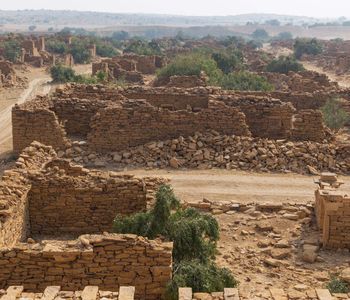
No negotiations. No compromise. They simply walked away from their ancestral homes, their carefully tended fields, their carved stone doorways — and never looked back. What they left behind is what you'll find today: a ghost town frozen in time, its crumbling walls still holding the shape of a life abruptly abandoned.
The Rajasthan government now manages Khaba Fort as a museum and heritage site, preserving the Paliwal legacy for every traveler willing to make the journey.
Sandstone Walls That Glow Like Embers
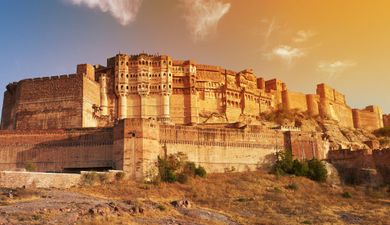
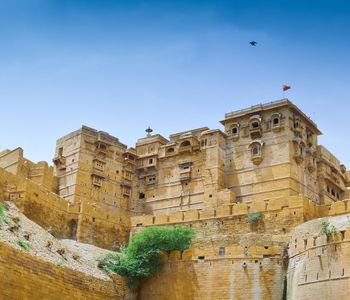
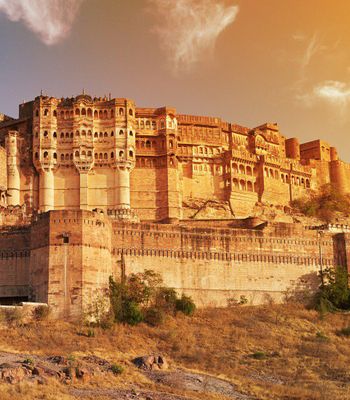
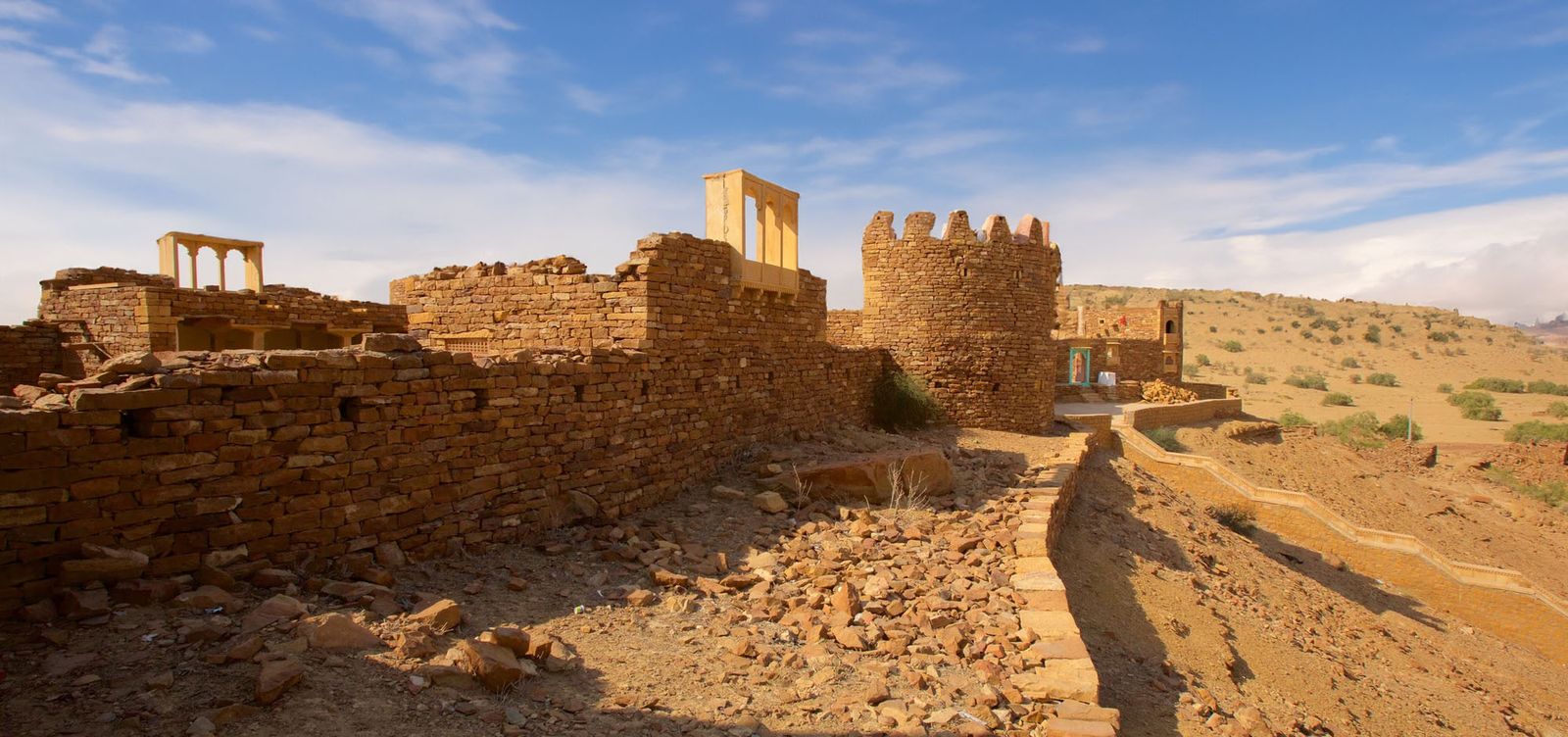
Built from locally quarried yellow sandstone, Khaba Fort doesn't just sit in the desert — it seems to grow from it. The stone matches the tawny earth so perfectly that from a distance, the fort looks like a natural outcrop shaped by centuries of wind rather than human hands.
Climb to the elevated perch where the fort stands, and the view alone is worth the trip. Below you, the skeletal remains of the village fan outward — roofless stone houses, carved doorways leading to open sky, pathways that once bustled with merchants and children. Beyond that, the Thar Desert unrolls to the horizon in every direction, an ocean of gold and rust.
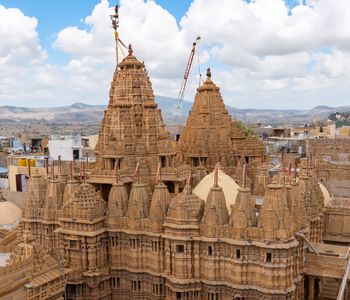
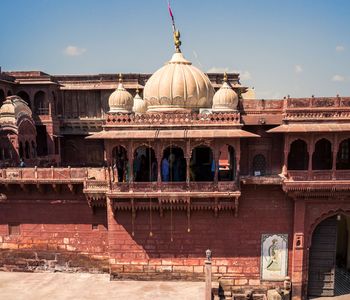
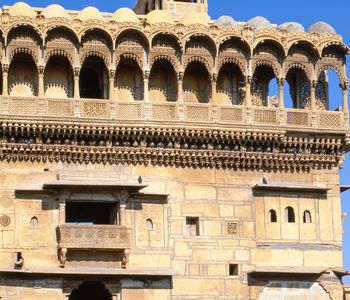
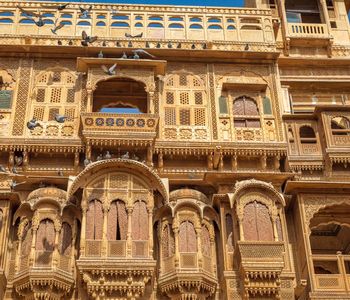
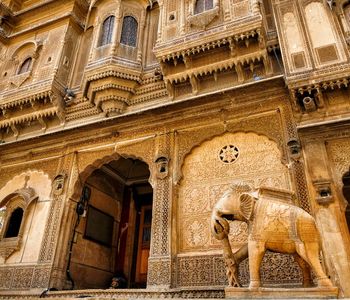
Run your fingers along the fort's weathered walls and you'll feel the remnants of fine craftsmanship beneath the grit — intricate stone carvings, surprisingly detailed for such a remote outpost. Narrow corridors thread between tiered levels, opening into courtyards where sunlight pools on ancient flagstones. Each room whispers of the ruling family that once lived here, of meals shared, decisions debated, evenings spent watching the desert sky ignite with stars.
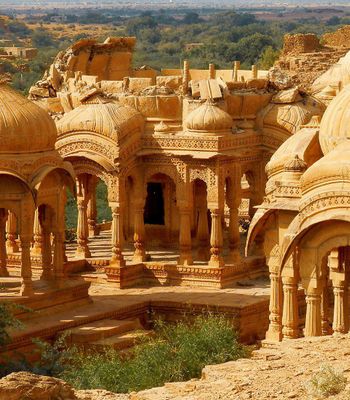
Below the fort, the village ruins are hauntingly atmospheric. Stone houses stand like hollow shells, their carved facades still dignified despite decades of neglect. Walk slowly through these empty lanes and the stillness settles into your bones — it's impossible not to feel the weight of all those lives, suddenly and completely gone.
Defiance Carved in Stone
What makes Khaba Fort pulse with meaning isn't the architecture alone — it's the act of collective courage embedded in every abandoned wall. The Paliwal Brahmins didn't flee in shame or scatter in disarray. They made a unified, deliberate choice: dignity over submission. That decision has become one of the defining legends of the Jaisalmer region, and locals still recount it with unmistakable reverence.
Before you explore the ruins, spend time in the fort's small but surprisingly rich museum. Glass cases hold artifacts and tools that once belonged to the Paliwal community. Faded photographs line the walls alongside informational panels detailing their sophisticated water harvesting systems, their trade networks, their social structures. Understanding who these people were transforms the ghost village from a curiosity into something that genuinely moves you.
Where Gazelles Roam Through Ruins
Here's something most visitors don't expect: Khaba Fort isn't empty. Two centuries of human absence have turned it into a quiet wildlife sanctuary. As you pick your way through crumbling doorways, a flash of tawny movement catches your eye — an Indian blackbuck, dark-horned and elegant, grazing calmly among the ruins as if this has always been its home. Chinkara gazelles appear too, their delicate frames startlingly graceful against the rough stone.
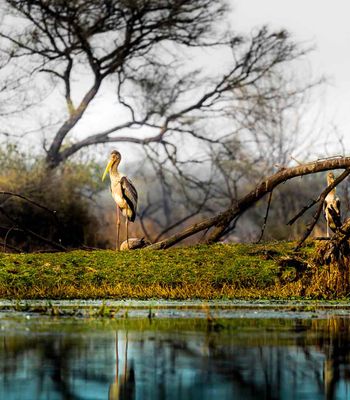
The contrast is extraordinary. Where families once gathered, wild creatures now drift like ghosts of a different kind, breathing life back into the silence. Birdwatchers should keep binoculars ready — the open desert terrain and rocky outcrops attract a surprising variety of species, making Khaba a quietly rewarding spot for anyone who loves both history and the natural world.
Getting to Khaba: Your Desert Road Trip Guide
The Route
From Jaisalmer city, Khaba Fort sits about 40 kilometers into the desert — close enough for a comfortable half-day trip, far enough to feel like a proper adventure. The most practical option is hiring a private car or jeep from Jaisalmer, and many local tour operators bundle Khaba into broader desert excursions that include the Sam Sand Dunes.
- By car or jeep: Roughly 45 minutes to one hour from Jaisalmer city center
- By guided tour: Several Jaisalmer operators run day trips that include Khaba Fort alongside other desert highlights
- By motorcycle: Totally doable if you're an experienced rider comfortable navigating rural desert roads — and the ride itself is spectacular
Entry Fees and Timings
Khaba Fort welcomes visitors daily, generally from around 8 a.m. to 6 p.m. A modest entry fee covers access to both the fort and the museum. Rates can shift, so check with your hotel or a local tourism office before heading out.
When the Desert Plays Nice
October through February is your sweet spot. Winter temperatures make walking the ruins genuinely pleasant, and the desert light during these months has a clarity that makes everything look like a film set. Summer? Think twice — the Thar regularly climbs past 45°C, turning outdoor exploration into an endurance test.
If you have any flexibility at all, time your visit for late afternoon. As the sun sinks toward the horizon, Khaba's yellow sandstone catches the golden hour light and practically glows from within. Photographers, you've been warned — you'll burn through your memory card.
Slow Down, Soak It In
Forget the jostling crowds of Rajasthan's blockbuster forts. Khaba is blissfully quiet, often just you and a handful of other visitors sharing the ruins with the gazelles. That solitude is the whole point.
Start in the museum to ground yourself in the Paliwal story. Then wander through the ghost village, letting your pace slow to match the stillness. Finally, climb up to the fort itself, where the panoramic desert view puts everything into perspective — the vast, indifferent landscape that swallowed an entire civilization overnight.
Khaba Fort is more than crumbling stone and desert wind. It's a deeply human story of courage and loss, set against one of India's most staggeringly beautiful backdrops. Whether history draws you in, the architecture stops you cold, the wildlife surprises you, or the sheer haunting beauty of an abandoned village takes root in your imagination — this place delivers something you won't find anywhere else on your Jaisalmer itinerary. Go. Walk those silent lanes. And understand why no one who visits Khaba ever quite forgets it.