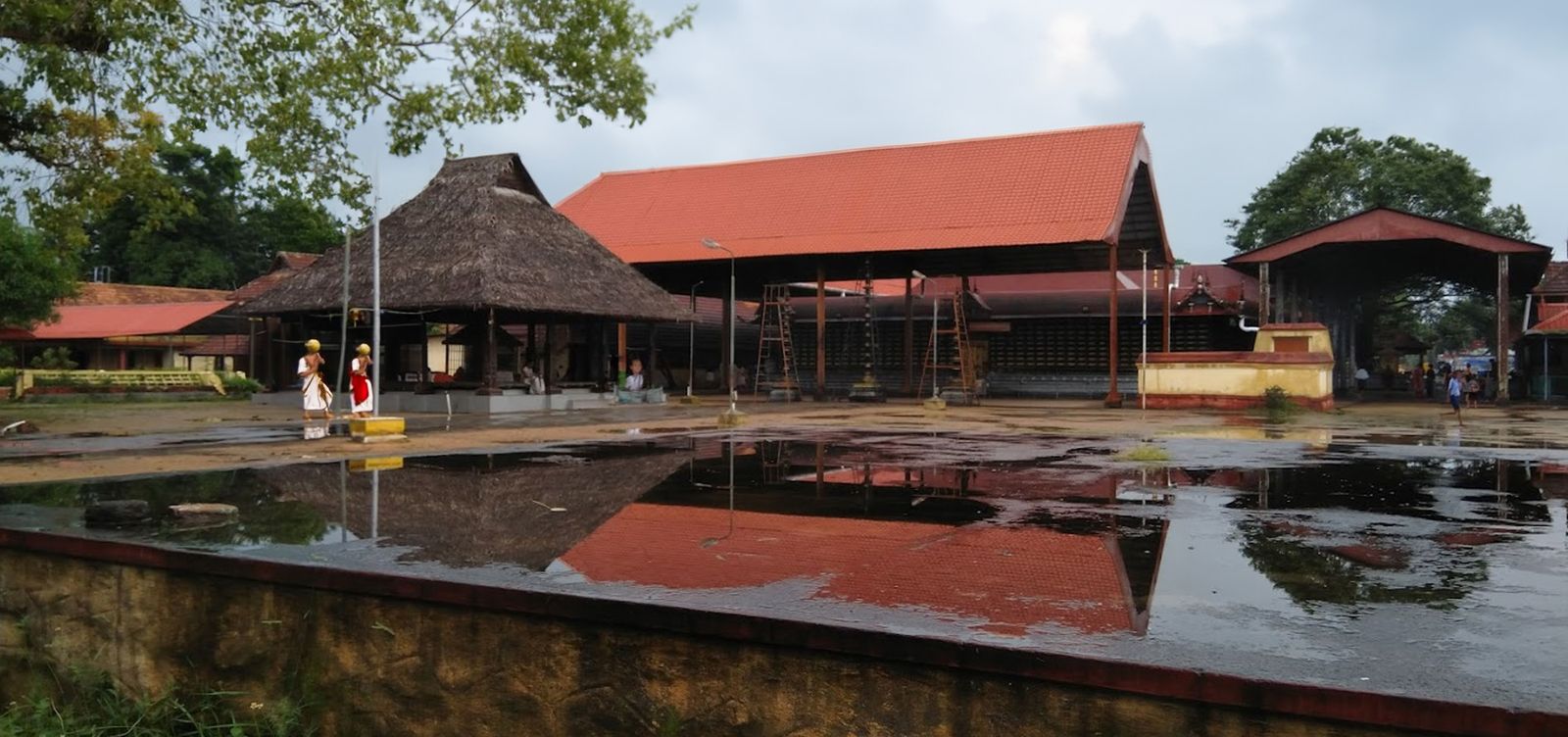
The first thing you notice isn't the temple itself — it's the aroma. Sweet, milky, impossibly rich, the scent of slow-cooked Palpayasam drifts through the morning air like a whispered invitation. Follow it past the ancient compound walls, through the eastern gopuram, and into one of Kerala's most beloved sacred spaces: the Ambalapuzha Sree Krishna Swamy Temple.
Nestled in the Alappuzha district, this temple dedicated to Lord Krishna has drawn devoted pilgrims and wide-eyed travelers for centuries. Its fame rests on three pillars — a legendarily sweet offering, breathtaking Kerala-style architecture, and one of the region's most electrifying boat race festivals. Whether you've come seeking spiritual solace or simply want to understand what makes South Indian temple traditions so magnetic, Ambalapuzha delivers something that lingers long after you leave.
Centuries of Devotion: How It All Began
Chembakassery Pooradam Thirunal Devanarayanan Thampuran, a ruler of the erstwhile Chembakassery kingdom, laid the foundation for this temple during a golden age of sacred architecture. Most historians date its origins between the 15th and 17th centuries, when rival kings across Kerala poured their ambitions — and their treasuries — into building ever-grander houses of worship.
What makes Ambalapuzha quietly different is its deity: Lord Krishna in his child form, known as Unni Kannan. There's a tenderness here you won't find in more imposing temples — a softness in the devotion, as if the entire complex were built to cradle something precious. Successive rulers expanded the temple's size and influence, and remarkably, its religious practices survived centuries of political upheaval and colonial interference nearly unbroken.
Today, the Travancore Devaswom Board oversees daily operations and annual festivals, carrying forward traditions that stretch back hundreds of years with quiet, unwavering dedication.
Stone, Copper, and Centuries of Craft
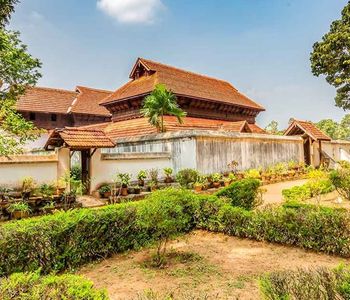
Forget the soaring gopurams of Tamil Nadu. Ambalapuzha speaks in a different architectural language — restrained, elegant, almost meditative. A large rectangular compound wall wraps around the entire complex, and as you step through the grand eastern entrance, the scale shifts from impressive to intimate.
At the heart of it all sits the Sreekovil, the central shrine housing Lord Krishna's idol. Granite walls rise to meet copper-plate roofing that glows warm in the Kerala sun. The craftsmanship is meticulous — every joint, every surface speaks of hands that understood both precision and prayer. Surrounding this inner sanctum, a spacious Nalambalam — a covered cloister — offers welcome shade as devotees circle the shrine during rituals, their footsteps keeping time with centuries of tradition.
Walls That Tell Stories
Art lovers, prepare to lose track of time. The murals painted across the temple walls are nothing short of mesmerizing — vivid scenes from the Bhagavata Purana and the Mahabharata rendered in the traditional Kerala mural style. Natural pigments in deep reds, greens, and golds pop against bold black outlines, turning divine narratives into visual feasts that seem to shimmer in the filtered light.
Look up, and the wooden carvings along pillars and ceilings reveal intricate floral patterns and mythological figures, each one carved with a patience that borders on devotion itself. Every element — functional and sacred at once — weaves architecture and spirituality into a single, seamless experience. These murals alone are worth the journey.
A Game of Chess, a Porridge for Eternity
Here's a story that has enchanted visitors for generations. Lord Krishna, so the legend goes, once appeared at the temple disguised as a wandering sage and challenged the reigning king to a game of chess. His wager seemed laughably modest: grains of rice placed on the chessboard, one on the first square, doubled on each square after that.
The king, brimming with confidence, agreed without hesitation. You can guess what happened next — the exponential doubling spiraled so wildly that all the rice in the kingdom couldn't cover the debt. When the king conceded defeat, Krishna revealed his true form and offered a gracious compromise: instead of delivering the impossible sum at once, the temple would serve Palpayasam — a sweet porridge of rice, milk, and sugar — to every single visitor, forever.
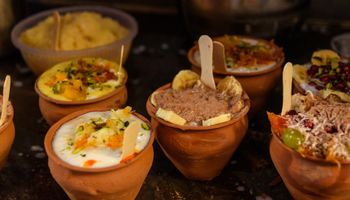
Remarkably, that promise still holds. Walk through the temple doors today, and a small clay cup of warm, fragrant Palpayasam will find its way into your hands as prasadam. The sweetness is gentle, the texture silky, and for many devotees, this single spoonful carries as much spiritual weight as the darshan itself. Don't rush it — let it dissolve slowly on your tongue.
When the Backwaters Come Alive: Festivals Worth Planning Around
Drums thunder across the water. Oars slice the surface in perfect unison. Dozens of elaborately decorated snake boats — long, sleek, and gleaming — surge forward as rhythmic chanting rises from the rowers. This is the Champakulam Moolam Boat Race, the oldest of its kind in Kerala, and it unfolds right here along the waterways near Ambalapuzha. Thousands pack the riverbanks, craning for a view, the energy absolutely electric.
Equally unforgettable is the Aaraattu festival, a ten-day extravaganza of decorated elephants, roaring fireworks, and the thunderous percussion ensembles of Panchavadyam and Pancharimelam — sounds so powerful you feel them in your chest. During these days, the temple compound transforms into the beating heart of community life, with families traveling from across Kerala and far beyond.
Krishna Jayanthi, celebrating Lord Krishna's birth, brings its own magic — special pujas, elaborate decorations, and cultural performances that fill the temple with color and song. Time your visit to coincide with any of these celebrations, and you won't just observe Kerala's living culture — you'll be swept right into it.
Everything You Need to Know Before You Go
The temple opens its doors early — morning hours run from 4:30 a.m. to 11:00 a.m., with evening darshan from 5:00 p.m. to 8:00 p.m. There's no entrance fee, but dress respectfully. Men should wear a mundu or dhoti, and women need to cover their shoulders and legs. If your clothing doesn't meet the guidelines, you'll be asked to change before entering — so plan ahead.
Finding Your Way There
Just 14 kilometers south of Alappuzha town, the temple is an easy 30-minute ride by auto rickshaw or taxi. Budget-conscious travelers can hop on a Kerala State Road Transport Corporation bus connecting Alappuzha to Ambalapuzha — frequent, affordable, and straightforward.
Arriving by train? Ambalapuzha railway station sits a short distance from the temple grounds. Flying in from farther afield? Cochin International Airport lies roughly 85 kilometers to the north, with plenty of road transport options to whisk you south to Alappuzha.
Small Details That Make a Big Difference
Festival days and weekends bring crowds — sometimes enormous ones. For a quieter, more contemplative visit, arrive early on a weekday morning when the compound is still cool and the chanting echoes more clearly. Kerala's tropical heat is relentless year-round, so carry water and layer light, breathable clothing beneath your temple-appropriate attire.
Slip-on shoes are your best friend here, since footwear comes off before you step onto the temple premises. And while photography is restricted inside the main shrine, the outer courtyard and surrounding architecture offer gorgeous frames — morning light on copper roofing, shadows playing across carved pillars, the symmetry of ancient stone.
Beyond the Temple: Alappuzha's Irresistible Charms
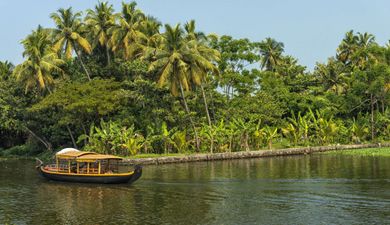
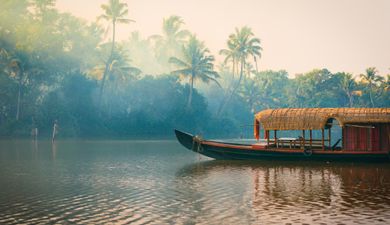
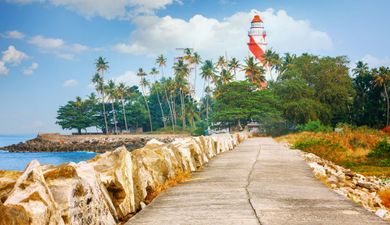
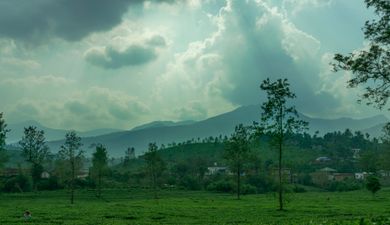
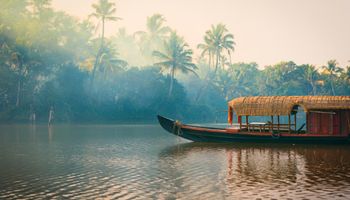
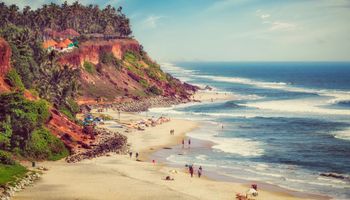
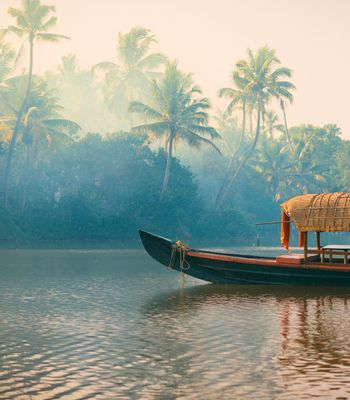
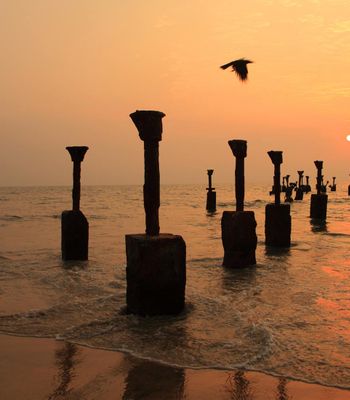
Once you step back through the gopuram, the wider Alappuzha district unfolds like a second gift. Often called the "Venice of the East," this region is laced with glassy backwater channels, floating houseboats, and emerald paddy fields stretching to the horizon. Book an afternoon houseboat cruise and drift through a landscape so serene it barely feels real. Nearby, Alappuzha Beach and its historic pier make for a golden-hour stroll with salt air on your skin and fishing boats bobbing offshore.
Hungry? You will be. Seek out a local restaurant and dig into appam with creamy stew, crispy karimeen fry pulled fresh from the backwaters, and rich coconut-based curries that warm you from the inside out. Together with the temple experience, these flavors paint a complete portrait of coastal Kerala's soul.
Ambalapuzha Sree Krishna Swamy Temple is more than stone and ritual — it's a living monument where artistic heritage, spiritual depth, and centuries of community tradition converge in a single, extraordinary place. Visit, taste the Palpayasam, stand quietly beneath the murals, and let the timeless rhythm of this sacred site settle into your memory. Some places you visit; Ambalapuzha is one that stays with you.