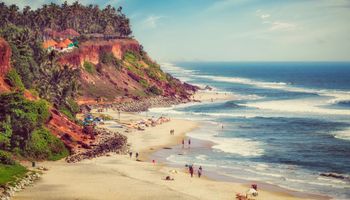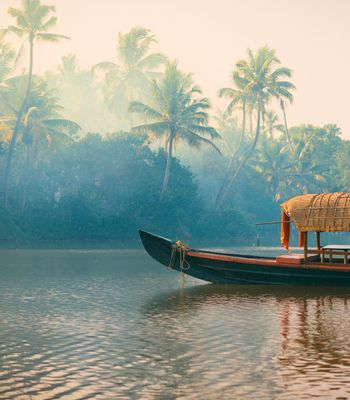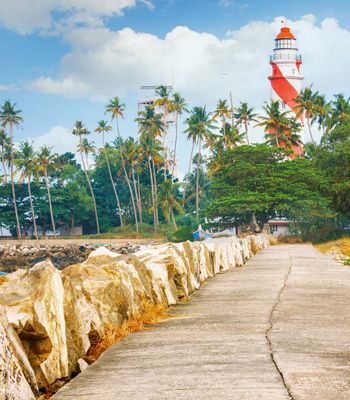
The first thing that hits you isn't the sight of the sea — it's the wind. A warm, salt-laced breeze rolls off the Arabian Sea and tangles through the coconut palms before it reaches your skin, carrying with it the faint scent of dried coir and roasting banana chips from a nearby stall. Welcome to Alappuzha Beach, the golden-sand heart of a town the world has nicknamed the "Venice of the East." But this stretch of Kerala coastline is no mere postcard. A 160-year-old pier juts into the waves, a lighthouse punctuates the skyline, and just beyond the shore, a vast network of backwater canals hums with life. It's a place where colonial history, raw coastal beauty, and Kerala's irresistible warmth converge — and it rewards every minute you linger.
Where the Arabian Sea Puts On a Show Every Evening
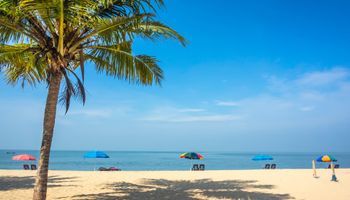
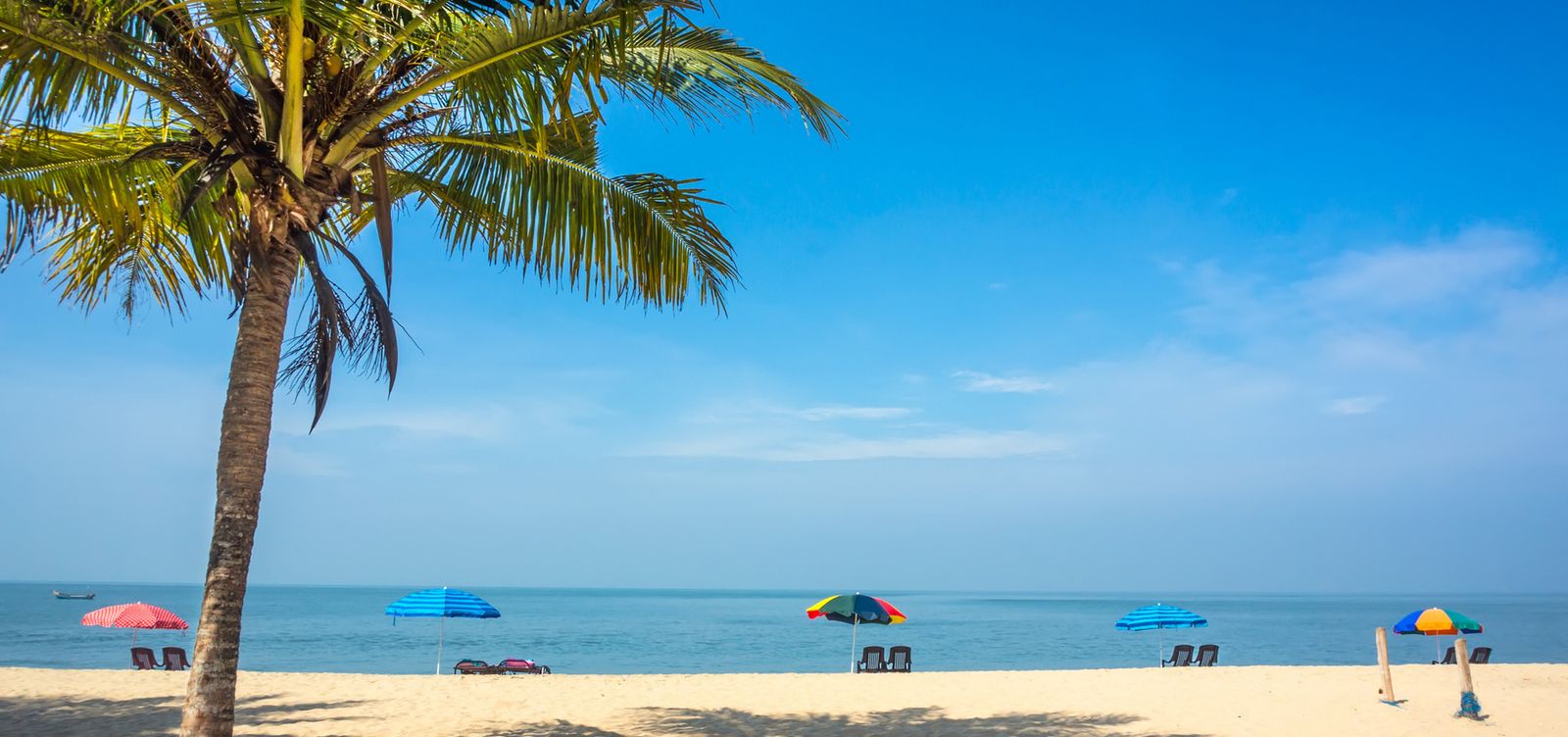
Dark golden sand spreads wide beneath your feet, firm and flat enough for long, unhurried walks as the tide whispers in and out. Kerala's west-facing coastline means one thing: sunsets that stop you mid-sentence.
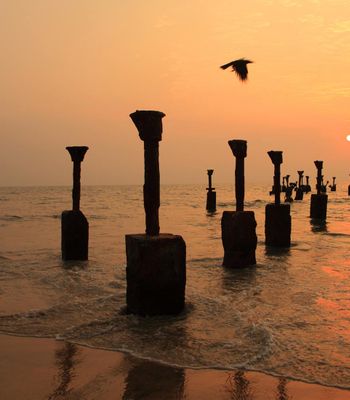
And these aren't subtle affairs. The sky catches fire — amber bleeding into crimson, then deepening to violet — while the water mirrors every shifting hue. Locals perch on the sand with cups of chai, and even seasoned photographers find themselves snapping frame after frame, unable to put the camera down.
Coconut palms fringe the beach, their fronds ticking in the breeze like slow metronomes, throwing welcome bands of shade when the midday heat presses down. Even during peak season, the shoreline never feels suffocating; there's always a quiet pocket of sand waiting for you, a rarity along India's more frenetic coasts.
Between October and March, the sea stays relatively gentle — ideal for wading and letting the warm foam swirl around your ankles. Monsoon months (June through September) bring a wilder personality: towering clouds, dramatic surges, and the kind of churning surf best admired from a safe distance. Lifeguard coverage can be inconsistent, so respect the water regardless of when you arrive.
A Pier That Remembers the Spice Trade
Step onto the Alappuzha Pier and you're walking a timeline. Constructed in 1862, during the height of British colonial commerce, this weathered structure once bustled with merchants loading coir, copra, and fragrant spices onto ships bound for distant ports. Alappuzha ranked among the Malabar Coast's busiest harbors — and the pier was its beating heart.
Today, trade has moved on, but the pier's soul remains. Stroll its length as the evening light softens, and you'll share the planks with fishermen hauling in their catch, families leaning against the railing, and couples silently watching the horizon swallow the sun. The salt air carries the low rumble of waves striking the pilings below your feet.
Decades of repair have kept the structure standing, yet it wears its age honestly — barnacled, sun-bleached, and all the more beautiful for it. From the far end, turn back toward shore: the coastline curves away in both directions, fringed by palms, and the lighthouse rises like an exclamation point against the dusky sky.
Climb the Lighthouse, See a Whole World of Water
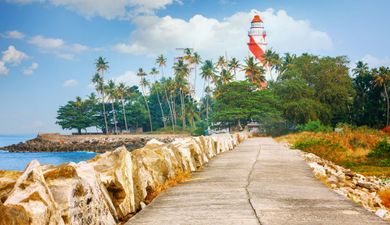
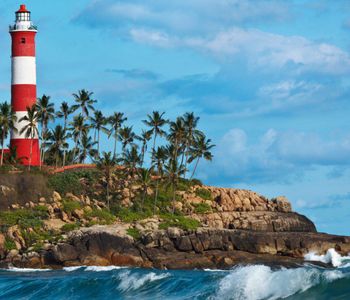
Near the beach's southern end, the Alappuzha Lighthouse towers above the palm canopy. An original structure went up in 1862 alongside the pier, though the version standing today dates to a later rebuild — taller, sturdier, and open to anyone willing to tackle its narrow, spiraling staircase.
Your calves will know they've worked by the time you reach the top. But the reward erases the effort in an instant: a sweeping 360-degree panorama that lays bare Alappuzha's split personality. To the west, the Arabian Sea stretches to infinity. To the east, a glittering maze of canals and lagoons threads through the town, connecting the coast to Kerala's legendary backwaters. From up here, you truly grasp how water defines every contour of this place.
The lighthouse is open during daytime hours for a small entry fee. Wear shoes with good grip — the steps are steep and tight — and arrive early to beat both the heat and the crowds.
Where Every Hour Feels Like an Adventure
Alappuzha Beach isn't a water-sports hub, and honestly, it doesn't need to be. Its pleasures are slower, more layered. The beach park that hugs the shoreline is a green, manicured haven with winding paths, flowering gardens, and play areas where children shriek with delight while parents stretch out on benches under the shade.
Flavors You'll Crave Long After You Leave
Follow your nose to the food stalls clustered near the sand. Crispy banana chips — paper-thin, fried in coconut oil, dusted with salt or chili — crunch between your teeth with an addictive intensity that explains why they're a Kerala obsession. Crack open a fresh coconut and drink the cool, sweet water straight from the shell while the vendor hacks it apart with a machete in two swift strokes.
When real hunger sets in, duck into a nearby restaurant for fish curry simmered in tangy kokum and coconut milk, paired with steaming rice. Or tear into soft, lacy appam dipped in a fragrant chicken or vegetable stew. Karimeen fry — pearl spot fish, marinated in red spices and pan-crisped — is the dish this coast is famous for, and the flesh practically melts off the bone. Seafood this close to the source tastes like an entirely different category of food.
Gateway to Kerala's Backwater Labyrinth
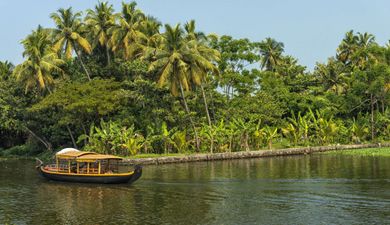
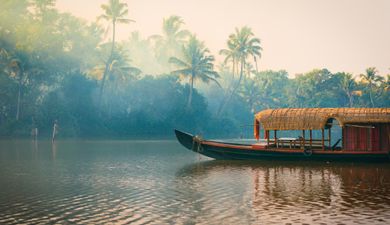
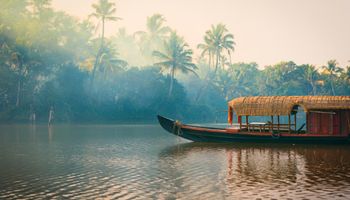
One of Alappuzha Beach's greatest gifts is proximity. A short ride from the sand brings you to the Alappuzha boat jetty, launchpad for Kerala's iconic houseboat cruises. These kettuvallam — traditional rice barges converted into floating lodges — glide through a serene labyrinth of canals, lagoons, and lakes.
Kingfishers dart between the palms. Paddy fields ripple like green silk on either side. Village life unfolds at the water's edge: women washing clothes on stone steps, children waving from wooden bridges, fishermen casting Chinese nets with practiced grace. Whether you opt for a daylong cruise or an overnight stay under the stars, pairing a backwater journey with a beach morning gives you two of Kerala's crown jewels in a single, unforgettable day.
When to Go (and When to Have the Sand to Yourself)
October through February is the sweet spot. Humidity drops, rain retreats, and temperatures settle into a comfortable range of 72 to 90 °F — perfect for hours of outdoor wandering without wilting.
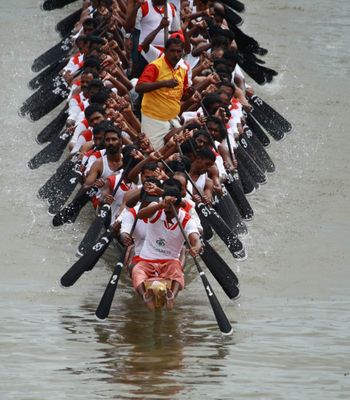
Crave something electrifying? Time your trip for the second Saturday of August, when the Nehru Trophy Boat Race erupts on Punnamada Lake just outside town. Enormous snake boats — over a hundred feet long, powered by dozens of synchronized oarsmen — slice through the water while thousands of spectators roar from the banks. The race itself happens on the lake, not the beach, but the entire town pulses with drumbeats, processions, and festival energy for days around it.
For solitude seekers, weekday mornings are golden. Arrive early and the beach is yours — just the rhythmic crash of surf, the distant call of a crow, and wide-open sand still cool under your bare feet. Weekends and holidays, especially late afternoon, draw larger local crowds, so plan accordingly.
Getting There Without the Hassle
Cochin International Airport, roughly 53 miles north, is the closest air hub. A taxi or pre-booked car covers the distance in about 90 minutes, winding through palm-lined roads that offer a gentle introduction to Kerala's green countryside.
Rail travelers will find Alappuzha Railway Station well connected, with regular trains rolling in from Kochi, Thiruvananthapuram, and Bangalore. From the platform to the beach is less than two miles — an easy auto-rickshaw hop that costs next to nothing.
Buses operated by the Kerala State Road Transport Corporation link Alappuzha to neighboring towns frequently and affordably. Once in town, auto-rickshaws and ride-sharing apps make reaching the shore quick and painless.
Tips to Squeeze Out Every Last Drop of Magic
No entrance fee stands between you and the sand — Alappuzha Beach is open to everyone. Slather on sunscreen and bring a hat; the tropical sun is no joke, especially between 11 a.m. and 3 p.m. Tuck a bottle of water into your bag, too, because vendors don't always station themselves along the beach's full length.
Block out at least half a day. Wander the pier first, climb the lighthouse, cool off in the park, then settle onto the sand for that unforgettable sunset. Better yet, extend the adventure: lace a backwater cruise onto your afternoon, or lose yourself in Alappuzha's canal-side streets where old warehouses and Chinese fishing nets still line the water.
This is a beach that doesn't shout for your attention. It earns it — with the glow of a dying sun on dark gold sand, the creak of a colonial pier under your shoes, and the quiet certainty that Kerala's coast has something no other shoreline quite replicates. Slow down, breathe in the salt air, and let Alappuzha do what it does best: make you never want to leave.