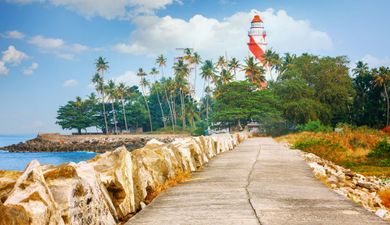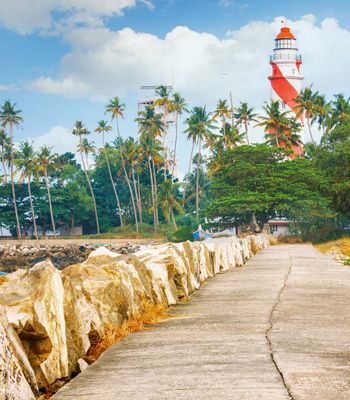
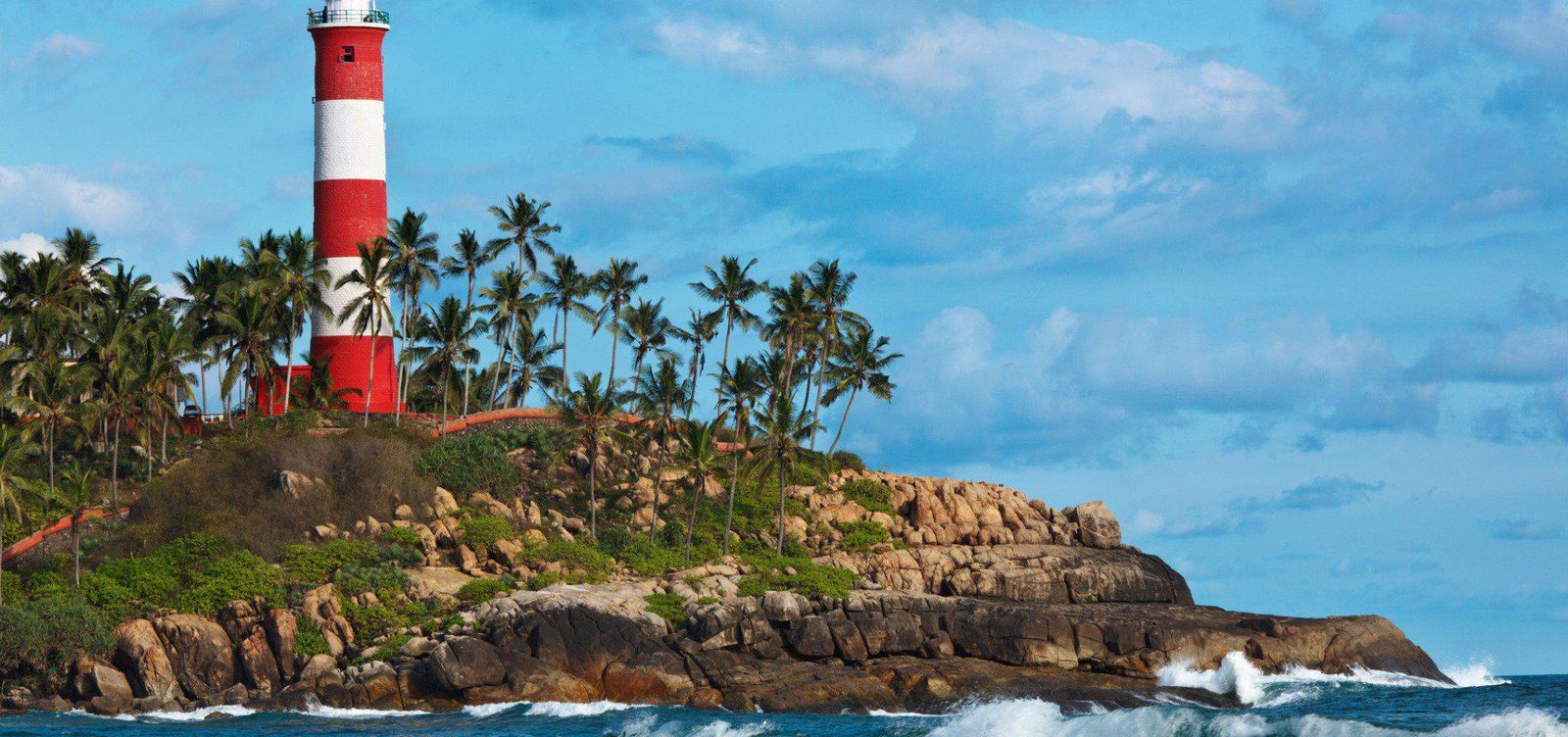
The wind hits you first — warm, salt-laced, carrying the faint rhythm of waves crashing somewhere below. Then you look up, and there it is: the Alappuzha Lighthouse, its bold red and white stripes cutting against a sky so blue it almost hurts. Standing sentinel along the golden shoreline of Alappuzha Beach, this 19th-century beacon has guided ships through the Arabian Sea for generations — and today, it pulls travelers upward through 140 spiraling steps toward one of Kerala's most breathtaking coastal panoramas.
For a town affectionately called the "Venice of the East," this lighthouse feels like the exclamation point at the end of a love letter to the sea. Whether you've just stepped off a houseboat drifting through Alappuzha's legendary backwaters or you're still shaking sand from your sandals after a morning on the beach, this landmark deserves a spot on your itinerary.
A Beacon Born of Spice and Commerce
Back in 1862, Alappuzha was no sleepy coastal village. It was a bustling port town, its docks fragrant with cinnamon, cardamom, and coir, its harbor thick with merchant vessels bound for distant shores. The British colonial administration recognized what every captain navigating the Malabar Coast already knew — these waters demanded a reliable light.
So they built one. That original lighthouse stood watch for a century before age and the elements took their toll. In 1962, a new tower rose in its place — sturdier, taller, fitted with modern optics — yet carrying the same essential mission. Here's what makes it remarkable: this isn't a museum piece. The Alappuzha Lighthouse still functions as an active navigational aid, its beam sweeping across dark waters every single night.
Red Stripes, Spiral Stairs, and Engineering That Speaks Volumes
Those candy-cane bands of red and white aren't just eye-catching — they're a sailor's ID card. Lighthouses around the world wear distinct color patterns so mariners can identify specific beacons in broad daylight, long before their lights flicker on at dusk. At roughly 30 meters tall, this concrete tower punches well above the flat, palm-fringed coastline surrounding it.
Step inside, and a spiral staircase coils upward like the interior of a seashell. About 140 steps separate you from the observation gallery — and yes, in Kerala's sticky humidity, you'll feel every one of them. But here's the secret: narrow windows punctuate the ascent, each one framing a slightly higher slice of coastline. Pause, catch your breath, and watch the Arabian Sea grow wider with every flight.
At the very top, the lantern room still houses the light apparatus that earns this tower its keep after sundown. The whole structure is beautifully no-nonsense — clean lines, functional bones, mid-20th-century engineering that chose durability over decoration.
Where the Arabian Sea Meets the Sky
Nothing prepares you for the moment you step onto the observation deck. The Arabian Sea unfurls to the west in an endless sheet of turquoise and silver, waves unraveling in slow white lines along the beach far below. Fishing boats bob like scattered seeds across the water's surface.
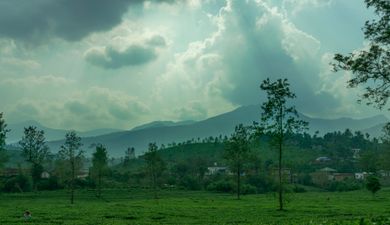
Swing your gaze inland, and a completely different world emerges — terracotta rooftops, coconut groves swaying in unison, ribbons of water threading through the green patchwork of Kerala's famous backwaters. It's the kind of view that makes you forget you're holding your phone, because for a few seconds, you just want to look.
Photographers, take note: late afternoon transforms this spot into something magical. The western sun pours liquid gold across the coastline, and clouds stack up over the sea in dramatic formations that practically compose themselves. Bring a light scarf — the breeze at the top is persistent and the sun unforgiving.
More Than a Landmark — A Piece of Alappuzha's Soul
Ask any local about the lighthouse, and you'll hear more than directions. You'll hear pride. This tower represents something deeper — a time when Alappuzha was among the Malabar region's most powerful commercial hubs, sending coir, copra, and spices across oceans to markets the townspeople would never see.
That mercantile energy may have shifted, but the lighthouse remains rooted at the heart of daily life. Families gather on the beach beside it for evening strolls. Festival celebrations swirl around its base. It shows up on postcards, tourism posters, and in the stories grandparents tell about the old port days. In a town defined by water, this tower of stone and light is the anchor.
Everything You Need to Know Before You Go
When the Doors Open
The lighthouse typically welcomes visitors between 3 p.m. and 5 p.m. daily, though timings can shift — always double-check the current schedule before heading over. Entry runs around 25 rupees for adults, with a small additional fee for cameras. Since the Directorate General of Lighthouses and Lightships actively manages the facility, occasional maintenance closures are possible.
Timing Your Trip for Perfect Weather
October through February is your sweet spot. Kerala's winter brings temperatures between 25 and 30 degrees Celsius, lower humidity, and skies that cooperate beautifully with your camera. Monsoon season — June through September — delivers dramatic downpours that can shrink visibility from the observation deck to almost nothing. If golden-hour photography is your goal, aim for the last hour before closing, when that western light does extraordinary things to the coastline.
Getting There Without the Hassle
You won't need a map. The lighthouse sits in plain sight along Alappuzha Beach, roughly two kilometers from the town center. Flag down an auto rickshaw or taxi — every driver knows exactly where it is — or hop on a local bus heading toward the beach area if you're watching your budget.
Arriving from farther afield? Alappuzha's railway station connects regularly to Kochi, Trivandrum, and other major Kerala cities, and the lighthouse is just three kilometers from the platform. Travelers based in Kochi can make the drive in about 90 minutes, turning this into an effortless day trip from the commercial capital.
While You're Here — Don't Stop at the Lighthouse
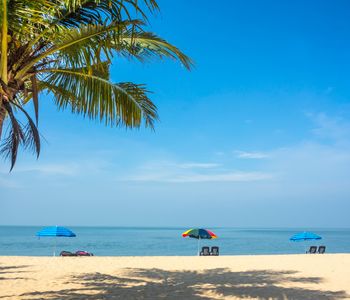
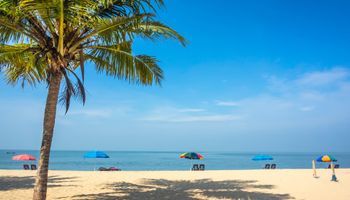
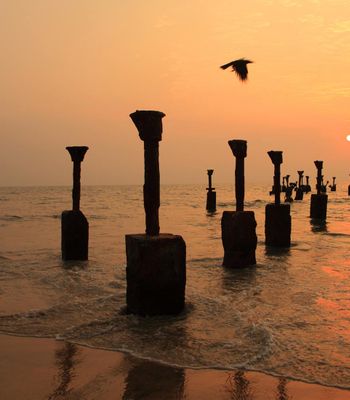
Alappuzha Beach stretches out from the lighthouse's base like an invitation you can't refuse. Wander onto the historic sea bridge — a long pier reaching straight into the Arabian Sea — and feel the spray on your face as waves crash against the pilings below. Along the promenade, vendors grill fresh fish over smoky coals, crack open coconuts with a single machete swing, and pile plates high with crispy local snacks that taste best eaten standing up, sand between your toes.
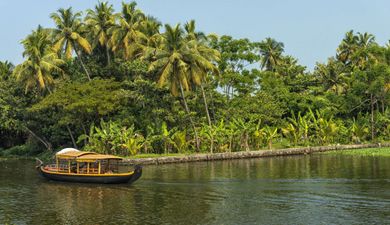
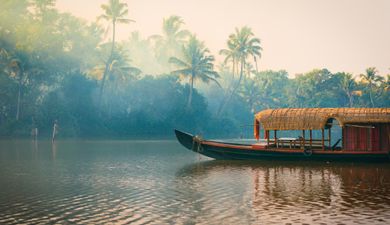
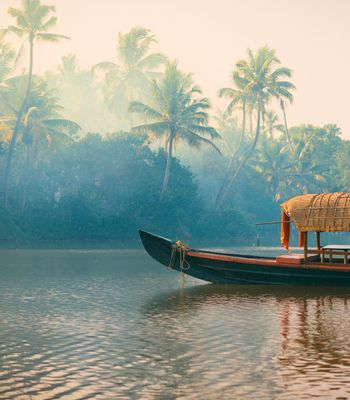
Beyond the shore, Alappuzha's backwaters are calling. Drift through Vembanad Lake on a traditional houseboat, watching village life unfold along palm-shaded canals — women washing clothes at the water's edge, children waving from narrow bridges, kingfishers diving in flashes of electric blue. If you're visiting in August, time your trip for the Nehru Trophy Boat Race on Punnamada Lake, where massive snake boats slice through the water to the roar of thousands.
History lovers should save an hour for the Revi Karunakaran Museum, a quirky treasure trove of art, antiques, and crystal that reveals yet another layer of this town's surprising depth.
There's a quiet magic in standing atop a tower that still does exactly what it was built to do — guiding ships home through darkness, just as it has for over a century. The Alappuzha Lighthouse isn't the tallest landmark you'll ever climb, nor the flashiest. But as you stand on that wind-swept observation deck, the Arabian Sea glittering endlessly before you and the green heart of Kerala spread out behind, you'll understand why some lights are worth following.