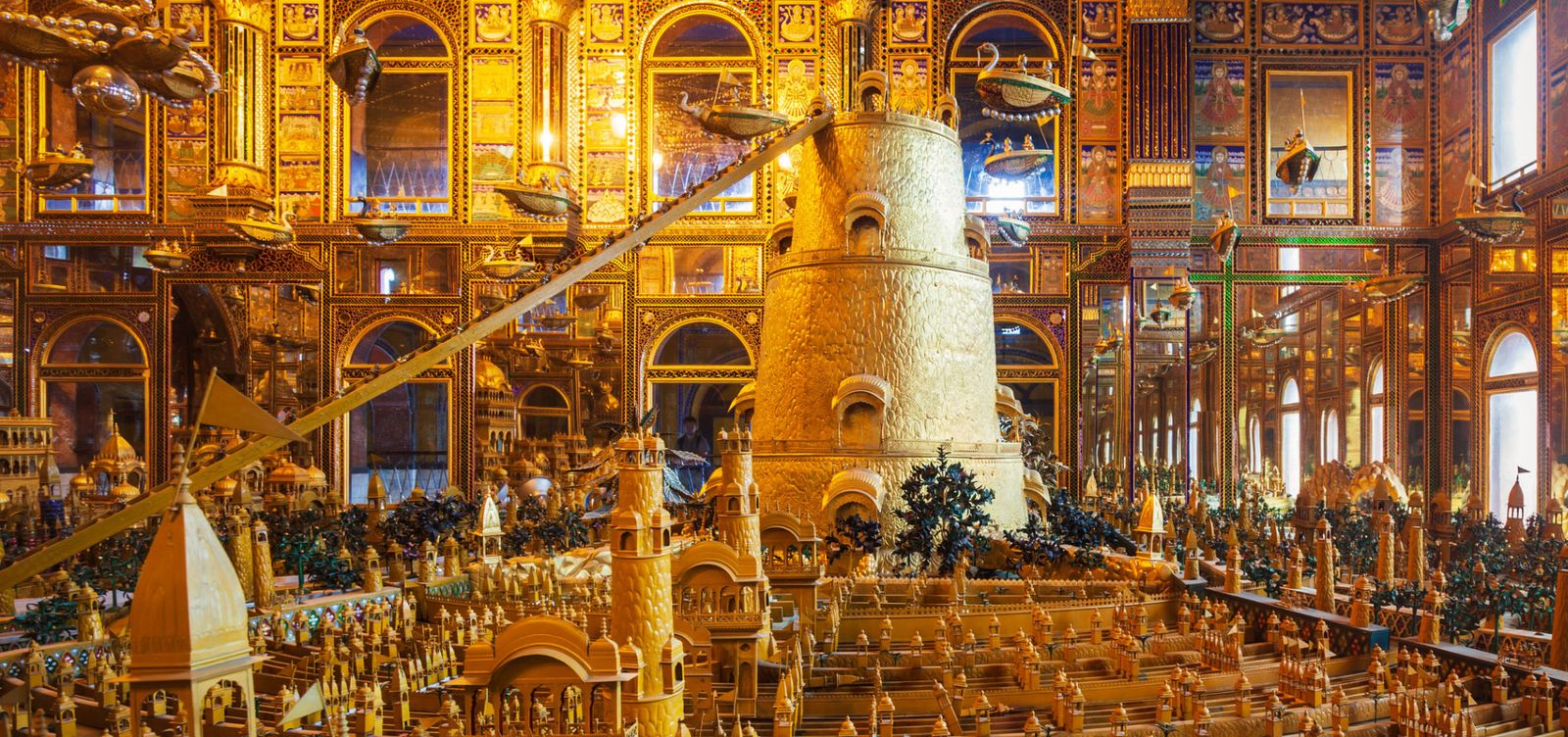
The first time you step into the main hall of Soni Ji Ki Nasiya, you forget to breathe. Above you, suspended behind glass, hangs a model of the universe rendered in gold, silver, and precious stones — five tons of it, by some accounts — depicting the Jain cosmology of Ayodhya, the celestial city. Flying chariots. Golden temples. Jewelled gateways. Miniature elephants the size of your thumb. You stand there, neck craned, slightly dizzy, and realise you've walked into one of the strangest, most obsessively crafted religious displays in India.
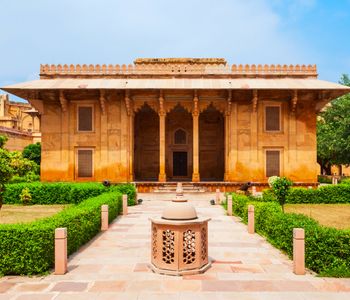
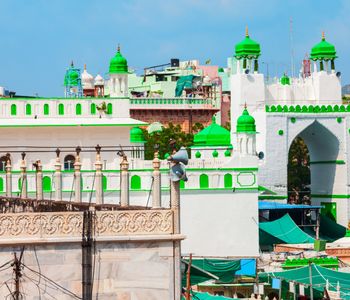
This is Ajmer's quietest showstopper. A short walk from the Dargah of Khwaja Moinuddin Chishti — where the crowds swell and the qawwali music drifts through the lanes — sits a red sandstone temple that almost no one mentions in the same breath. Which is a shame. Because what waits inside is, frankly, unforgettable.
A Merchant's Devotion, Cast in Gold
The temple was commissioned in 1865 by Seth Moolchand Soni, a wealthy Jain merchant whose family name still clings to the building. The Sonis were jewellers and bankers, and they spared nothing. Construction of the inner hall — the Swarna Nagari, or "City of Gold" — reportedly took several decades and the labour of Jaipur's finest artisans.
Soni Ji Ki Nasiya is dedicated to Rishabhdev, the first of the twenty-four Jain Tirthankaras. His image sits in the sanctum, but the building's real obsession is the depiction of his life — and the elaborate Jain conception of the cosmos that surrounds it.
Some call it the Red Temple, after the deep ochre sandstone of its facade. Locals just call it Nasiyan.
The Hall That Stops You Cold
The temple has two parts, and most visitors blur them together in memory. The outer worship area is reserved for practising Jains and is closed to non-devotees. Fair enough. What you've come to see is the two-storey hall behind it — the Svarna Nagari Hall — open to everyone for a small entrance fee.
You walk in at ground level. The diorama looms above and around you, encased behind glass, lit from within. It depicts the five auspicious events in Rishabhdev's life and the structure of the Jain universe according to ancient texts. Gold-leafed palaces stacked like wedding cakes. Silver gods riding peacocks. Tiny figures in procession, each one painted, each one positioned with the patience of a watchmaker.
Then you climb the narrow staircase to the upper gallery, and the whole thing unfolds again from above — a god's-eye view of a city no one will ever visit, built for the devotion of people you'll never meet.
The Detail That Makes It Worth the Trip
Look for the airships. Yes — airships. The Jain texts describe vimanas, flying vehicles used by celestial beings to travel between worlds. The artisans rendered them in beaten gold, hanging mid-air from invisible threads, frozen in flight above the gilded cities below. It's the kind of detail no photograph quite captures. You have to stand there and let your eyes adjust to the scale.
Belgian stained glass lines parts of the upper hall — an unexpected European touch that catches the afternoon sun and throws coloured light across the gold. The effect lands somewhere between a Mughal miniature painting and a Wes Anderson film set.
How to Behave, What to Expect
Photography inside the Svarna Nagari Hall is prohibited. The signs are clear, the attendants are watchful, and there is no negotiating this. Leave your camera in your bag. Honestly, this works in your favour — without the impulse to frame everything, you actually look.
Shoes come off before you enter the hall. Leather items — belts, wallets, handbags — should be removed and left at the counter, in accordance with Jain custom. Dress modestly; covered shoulders and knees are expected, though not enforced as strictly as at the Dargah down the road.
The hall is small. On a busy weekend afternoon you'll share it with a few dozen others, and the space can feel cramped. Go early, ideally just after opening, when the morning light is still slanting through the windows and you can stand in the middle of the floor undisturbed.
Finding the Temple
Soni Ji Ki Nasiya sits on Prithviraj Marg, in the centre of Ajmer's old quarter. From the railway station it's a ten-minute auto-rickshaw ride, though traffic in the narrow lanes can make it longer. From the Dargah, you can walk it in fifteen minutes if you don't get distracted by the rose-sellers and biryani stalls along the way. You probably will.
The temple is open daily, generally from around 8:30 in the morning until 5:30 in the evening, though hours can shift during Jain festival days. Entry to the Svarna Nagari Hall costs a nominal fee — usually around 25 rupees for Indian visitors and slightly more for foreign tourists. Children under a certain age go free.
Pairing It With the Rest of Ajmer
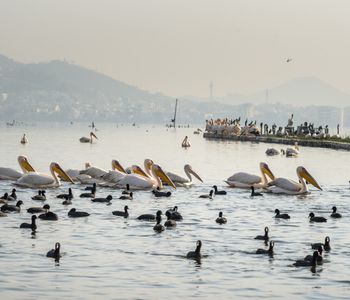
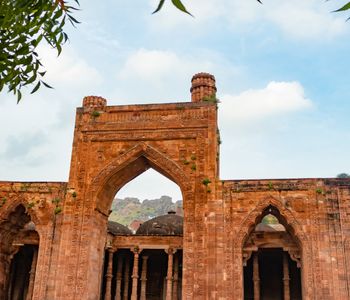
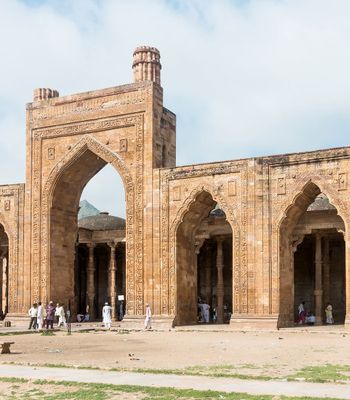
Most travellers come to Ajmer for the Dargah, and many stay only a few hours before pushing on to Pushkar. This is a mistake. Soni Ji Ki Nasiya deserves an hour of your day, maybe ninety minutes if you take the upper gallery slowly. Combine it with a visit to Ana Sagar Lake at sunset and the Adhai Din Ka Jhonpra mosque, and you've built yourself a proper day in Ajmer rather than a hurried pilgrimage stopover.
The streets immediately around the temple are full of small sweet shops selling sohan halwa — a dense, ghee-rich confection that Ajmer claims as its own. Buy a small box. Eat half of it before you get back to your hotel.
Why It Stays With You
There is something about the sheer ambition of the Svarna Nagari Hall that lodges in the memory. It is not the largest temple in Rajasthan, nor the oldest, nor the most architecturally important. But it is, in its peculiar way, one of the most committed. A single family decided to render an entire cosmology in precious metal — not for tourism, not for spectacle, but as an act of faith — and then quietly opened the doors so that anyone could come and look.
Ajmer asks for patience. The Dargah will overwhelm you, the markets will exhaust you, and the heat in summer is genuinely punishing. But step inside Soni Ji Ki Nasiya, tilt your head back, and you'll find yourself reminded that India still holds rooms most travel brochures forget to mention. Go before the crowds catch up.